
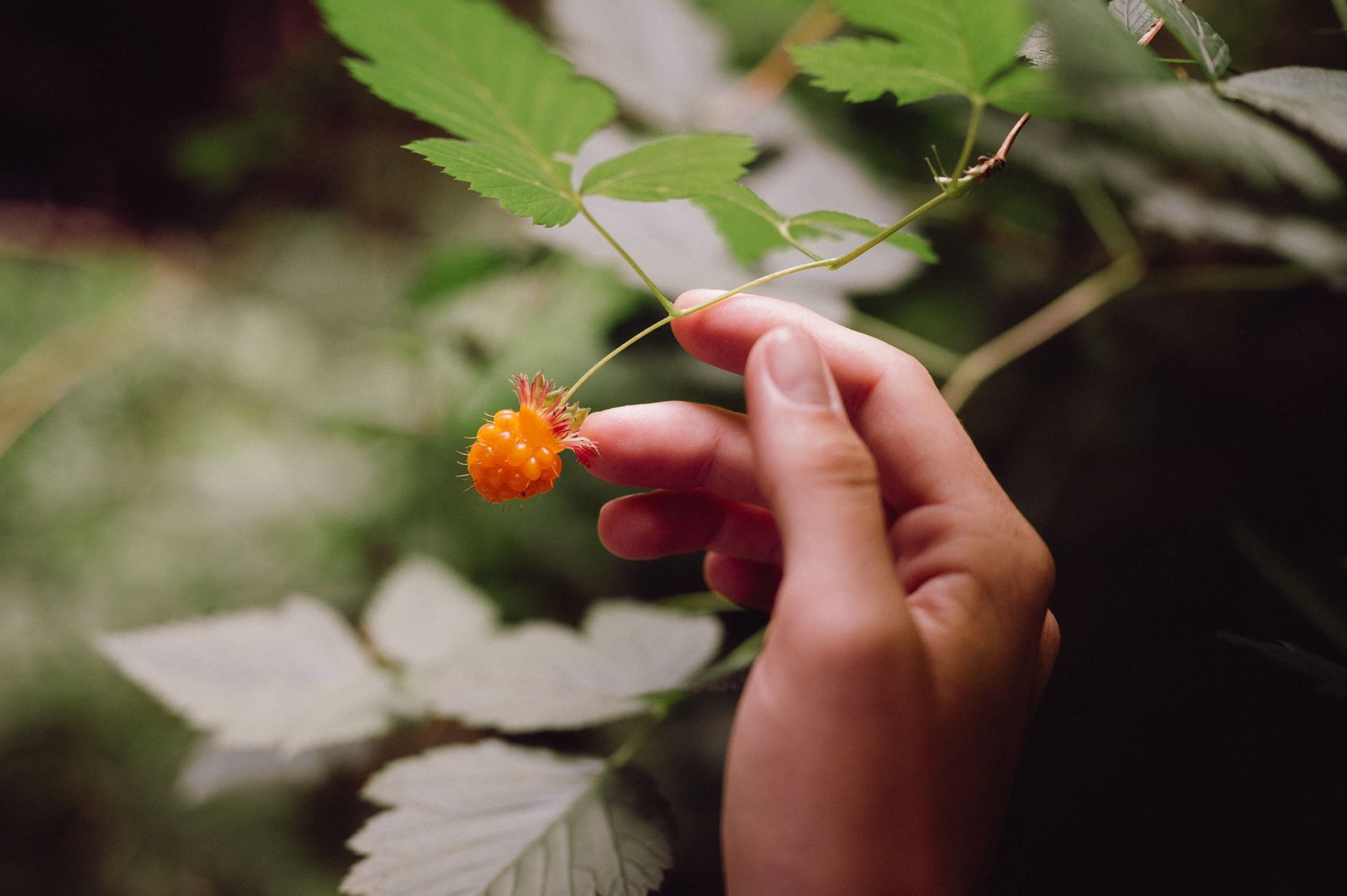

Salmonberries are the aggregate fruit of Rubus spectabilis, a deciduous shrub in the rose family that grows wild along the Pacific Northwest coast from Alaska south through British Columbia, Washington, and Oregon. The soft, raspberry-like drupelets deliver a notable amount of vitamin C, manganese, and dietary fiber, along with seed-derived omega-3 fatty acids. Ripe fruit also shows measurable levels of anthocyanins and ellagic acid, two compounds tied to antioxidant activity in lab studies.
This guide covers what salmonberries offer nutritionally, the health perks research has linked to them, potential drawbacks to weigh, and tips for safely identifying and preparing the fruit at home.
What Salmonberries Are and Where They Thrive
Rubus spectabilis earns its common name from the salmon-pink color of its early spring flowers, not the fruit itself. The shrub reaches 1 to 4 meters tall, spreads aggressively through underground rhizomes, and forms dense thickets along streams, forest edges, and recently logged slopes across the coastal Pacific Northwest.
Native Range and Growing Conditions
Its range stretches from the Aleutian Islands and coastal Alaska down through British Columbia’s coast, Washington’s Olympic Peninsula, and Oregon’s coastal forests. The plant prefers moist, acidic soils and partial shade, and it often colonizes disturbed ground where fire, landslides, or logging have opened the canopy. A single thicket can produce hundreds of ripe fruits within a few weeks of late June or early July.
Cultural and Historical Significance
Coastal Indigenous communities, including Tlingit and Haida peoples, harvested these berries for centuries as a fresh-season staple and a winter-preserved food. Families dried the fruits on cedar racks, pressed them into cakes, and mixed them with oolichan grease or salmon roe to make rich, calorie-dense foods for the cold months. The harvest marked a social event as much as a food source, with families moving to traditional picking sites together.
That deep food history still shapes the regional food culture. The fruit shows up at farmers’ markets in Sitka and Seattle, in jams labeled with coastal place names, and in foraging walks led by tribal cultural programs.
That geographic range shapes the nutrient profile, since soil, light, and moisture all leave their mark on the fruit.
The Nutritional Makeup Behind the Benefits
Because wild salmonberries aren’t widely cultivated, published analyses remain limited compared with store-bought berries. Available data and comparisons with related Rubus species point to meaningful levels of vitamin C, manganese, and fiber, plus seed oils that contribute small amounts of plant-based omega-3s.
Vitamins, Minerals, and Fiber
Vitamin C content often matches or exceeds cultivated raspberries, with ripe fruit commonly delivering a substantial share of daily needs per 100 grams. Manganese, a trace mineral involved in bone formation and metabolism, is also present at useful levels. Dietary fiber runs high for a soft fruit, supporting slow sugar release and satiety. The tiny seeds inside each drupelet hold alpha-linolenic acid, the plant form of omega-3, though the absolute amount per berry is small.
Antioxidant Compounds and Polyphenols
Red and purple pigments come from anthocyanins, the same family of antioxidants that gives blueberries their color and much of their protective reputation. Salmonberries also contain ellagic acid, a polyphenol studied for anti-inflammatory effects, along with smaller amounts of catechin and quercetin. Antioxidant capacity tends to climb as the fruit darkens, so fully ripe, deeply colored berries typically score higher in lab assays than pale or unripe ones.
| Nutrient (per 100 g fresh, approximate) | Amount | Why it matters |
|---|---|---|
| Vitamin C | 15–30 mg | Immune function, collagen production, antioxidant recycling |
| Manganese | 0.3–0.6 mg | Bone development, enzyme activation, metabolism |
| Dietary fiber | 4–6 g | Digestion, satiety, blood sugar regulation |
| Anthocyanins | 15–60 mg | Plant pigments with antioxidant activity |
| Ellagic acid | Trace to several mg | Polyphenol linked to anti-inflammatory research |
| Alpha-linolenic acid (seed oil) | Small fraction of seed mass | Plant-based omega-3 fatty acid |
Numbers shift with ripeness, soil, sunlight, and even the specific clone you’re picking. Berries grown in full sun on rich, moist ground tend to test higher in sugars and pigments than shaded, dry-site fruit.
Those compositional differences explain why researchers see inconsistent results across studies, depending on the source of the berries tested.
Evidence-Based Health Benefits Worth Knowing
The benefits that show up consistently in the research reflect what the fruit contains: vitamin C, fiber, anthocyanins, and ellagic acid. None of these effects are unique to salmonberries, but the combination in a single wild food is unusual, and the levels compare well with cultivated cousins.
Antioxidant and Anti-Inflammatory Support
Anthocyanins and ellagic acid act as antioxidants in cell studies, helping neutralize reactive oxygen species that contribute to chronic inflammation. Diets high in anthocyanin-rich berries have been associated with lower markers of inflammation in observational research, though specific salmonberry trials in humans are limited. Eating a colorful mix of berries, including these, fits the broader pattern of antioxidant-rich eating.
Immune Function and Vitamin C
White blood cells, collagen production, and antioxidant recycling all depend on a steady supply of this essential vitamin. A 100-gram serving of ripe salmonberries can deliver a meaningful share of an adult’s daily vitamin C target, comparable to a similar weight of strawberries or raspberries. That makes them a useful seasonal source when other fresh fruit is scarce.
Digestion, Satiety, and Blood Sugar
Fiber slows gastric emptying, which can help with fullness after a meal and blunt post-meal blood sugar spikes. Because the fruit is low in calories and high in water, it fits easily into snacks or breakfasts without a heavy glycemic load. The seed content adds a small mechanical component to digestion as well.
Tip: Pair the berries with a protein or fat source, like a handful of nuts or plain yogurt, to slow sugar absorption further and steady energy.
Possible Side Effects and Who Should Be Cautious
Most people tolerate ripe, fresh fruit without trouble. The risks cluster around ripeness, individual sensitivity, foraging conditions, and a few drug interactions worth flagging.
Digestive Upset and Unripe Fruit
Unripe berries are notably tart and contain higher levels of certain organic acids and tannins that can irritate the stomach in large servings. Eating a cup of fully red, soft, ripe fruit rarely causes problems, but the same volume of firm, pale fruit can lead to cramping, gas, or loose stools. Taste one first: if the flavor is balanced and sweet-tart rather than sharp, the rest of the cluster is likely ready.
Allergies and Rosaceae Sensitivity
Salmonberries belong to the Rosaceae family, which includes raspberries, blackberries, strawberries, apples, and roses. People with known allergies to those plants can react to it with itching, swelling, hives, or, rarely, more serious symptoms. The seeds can also trap small amounts of pollen, so anyone with severe oral allergy syndrome should introduce a small amount first and stop if symptoms appear.
Foraging and Contamination Risks
Picking from roadsides, industrial sites, or sprayed areas risks heavy metal or pesticide residue that the soft fruit absorbs easily. The shrub also has look-alike cousins in the same family that can confuse new foragers, so confirming the flower color (bright magenta-pink) and the leaf shape (compound with three sharply toothed leaflets) matters.
Medication Interactions
The anthocyanin and ellagic acid content can theoretically affect blood clotting and blood sugar regulation, especially in concentrated forms like extracts or large daily servings of jam. People taking anticoagulants, antiplatelet drugs, or diabetes medications should talk with a qualified healthcare professional before making wild berries a routine habit in medicinal amounts. Routine culinary portions, a handful a few times a week, generally fall well below the levels studied in supplement research, but personal situations vary.
A careful picker can sidestep most of those risks by knowing exactly what they’re bringing home from the field.
Identifying, Harvesting, and Preparing Them Safely
Field identification matters more with wild fruit than with anything from a grocery shelf. Rubus spectabilis is easy to recognize once you’ve seen it, and the harvest window lasts long enough for several return trips to the same thicket.
Visual and Tactile Cues for Ripe Fruit
Ripe berries pull away from the receptacle (the inner core) the way a raspberry does, leaving a hollow center. Color alone is misleading: some plants naturally produce yellow or orange ripe fruit, so taste and softness matter as much as hue. A ripe berry feels plump and yields slightly to a gentle squeeze; underripe fruit feels firm and resists pulling.
Sustainable Harvesting Practices
Because the shrubs spread by rhizome, harvesting does not kill the plant, but repeated trampling can compact the soil around young shoots. Pick from accessible edges, leave clusters on inner stems for birds and small mammals, and avoid stripping any single thicket completely. A few practical moves protect the patch for next year:
- Pick every other cluster rather than clearing a single stem.
- Step on logs or rocks when possible to avoid crushing new shoots.
- Avoid harvesting during rain when soft fruit bruises easily and molds quickly.
- Note the GPS or landmark so productive patches can be found again next season.
- Ask local Indigenous land stewards before foraging on tribal or culturally significant land.
Flavor Profile and Culinary Comparisons
The taste sits in a familiar family: mild, sweet-tart, with a soft floral note that recalls raspberry but with less intensity and a more watery, melon-like finish. Compared to a thimbleberry (Rubus parviflorus), it are smaller, more seeded, and more variable in color. Against a cloudberry (Rubus chamaemorus), they’re less aromatic but easier to find in volume along coastal North America.
Cooking, Drying, and Preserving
Heat breaks down vitamin C, so fresh berries deliver the most of that nutrient. Jam, syrup, and sauce cooking concentrates flavor and sugars but reduces heat-sensitive vitamins. Dried berries, a traditional preservation method, hold onto fiber and polyphenols well and rehydrate nicely in oatmeal or baking. A light simmer for jam preserves more color and aroma than a long rolling boil, and a splash of lemon juice helps the natural pectin set while boosting tang.
Warning: Forage only where the identification is certain, away from sprayed or polluted sites, and never eat any wild berry that can’t be positively identified.
Bottom Line
it offer a real nutritional package: notable vitamin C and manganese, solid fiber, and a useful mix of anthocyanins and ellagic acid. The traditional Indigenous use of the fruit, both fresh and preserved, lines up with what modern food science says about antioxidant-rich berries. Most people can enjoy them in moderation, but unripe fruit, Rosaceae allergies, contamination risk during foraging, and a few medication interactions are real concerns worth respecting before any harvest begins.
FAQ
What are the health benefits of salmonberries?
They deliver vitamin C, manganese, fiber, and anthocyanins that support antioxidant defenses, immune function, and steady digestion. The mix is similar to other Rubus berries, though specific human trials on this species are limited.
Are salmonberries safe to eat raw?
Fully ripe, properly identified specimens can be eaten straight off the plant without issue. Avoid unripe, very firm, or pale berries, which can cause digestive upset, and never eat any wild fruit that can’t be positively identified.
Do salmonberries have any side effects?
Mild stomach upset can follow large servings of unripe fruit. People allergic to plants in the Rosaceae family may react, and concentrated forms may interact with blood thinners or diabetes medications.
What nutrients are in salmonberries?
A 100-gram serving typically provides a meaningful share of daily vitamin C, useful manganese, 4 to 6 grams of fiber, plus anthocyanins and ellagic acid. Exact amounts shift with ripeness and growing conditions.
How do salmonberries compare to raspberries?
They share the hollow-centered, aggregate-fruit shape and a similar sweet-tart flavor, but it are usually softer, more variable in color, and milder in aroma. Nutritionally, the two berries overlap closely, with minor differences in vitamin and mineral levels.
When are salmonberries in season?
Most coastal Pacific Northwest thickets ripen from late June through mid-August, depending on latitude and elevation. The harvest window at any one site usually runs two to three weeks.