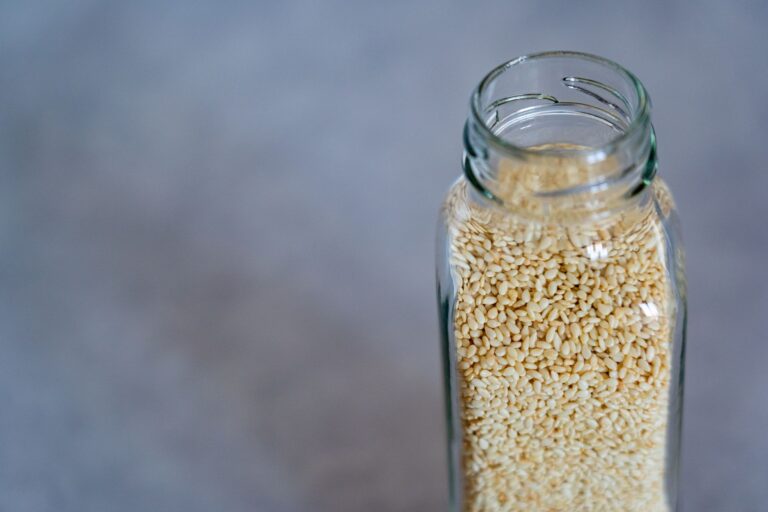


One tablespoon of these tiny seeds delivers about 975mg of calcium, 50% unsaturated fat, 17 to 20g of plant-based protein, and the antioxidant lignans sesamin and sesamolin, pairing with magnesium, iron, fiber, and B vitamins to make them one of the most nutrient-dense items in most kitchens.
You will find what sesame actually contains, the benefits worth chasing, the side effects to watch for, how it compares to flax, chia, and pumpkin seeds, and practical ways to work it into your week.
Sesame Seeds at a Glance: An Ancient Seed With Modern Relevance
Sesame has been cultivated for more than 3,000 years, which makes Sesamum indicum one of the oldest oilseed crops still in use. Excavations in the Indus Valley and the Middle East keep turning up sesame residues alongside wheat and barley, evidence that ancient kitchens treated the seed as both a flavoring and a source of stored calories.
What you buy at the grocery store comes in several distinct forms:
- Hulled seeds with the outer shell removed, lighter in color, milder in taste, but lower in calcium and fiber.
- Unhulled seeds with the shell intact, holding onto more minerals but a slightly bitter edge.
- Black sesame, unhulled and richer in antioxidants, common across Asian cuisine.
- Toasted seeds, dry-roasted until fragrant, with deeper flavor and better nutrient availability.
One detail that matters at the grocery shelf: sesame is recognized as a major food allergen in the US, EU, Canada, and Australia. Since 2023 the FDA has required it to be declared by name on packaged foods, a shift that has changed how tahini, hummus, and even some bread labels read.
What Sesame Seeds Actually Contain, From Calcium to Lignans
A 100g serving delivers a profile that punches well above its size. The table below captures the headline numbers, with the caveat that a typical sprinkle on a salad is closer to 5 to 10g, not 100g.
| Nutrient (per 100g) | Approximate Amount | Why It Matters |
|---|---|---|
| Calories | ~573 kcal | Energy-dense; portions add up fast |
| Fat (mostly unsaturated) | ~50g | Cell membranes, hormone production |
| Protein | 17 to 20g | Useful for vegetarian and vegan diets |
| Carbohydrate | ~23g | Includes about 12g of fiber |
| Calcium | ~975mg | Among the richest plant sources, mostly in the hull |
| Magnesium | ~350mg | Muscle and nerve function |
| Iron | ~14mg | Oxygen transport, often low in plant-based eaters |
| Zinc | ~7.8mg | Immune support and skin repair |
| Sesamin and sesamolin | Unique lignans | Antioxidant action few other seeds offer |
The mineral layer is what sets sesame apart from flax or chia. Hulled seeds lose a meaningful share of their calcium during processing, so anyone relying on sesame as a calcium source should reach for unhulled or black varieties, or pair the seed with dairy or fortified alternatives.
The Lignan Advantage
Sesamin and sesamolin are not buzzwords; they are the two compounds most often credited for sesame’s antioxidant activity, and they appear in only a handful of foods. These lignans may help reduce oxidative stress markers in the body, a point supported by a 2017 review in Food Science and Human Wellness, though the work is still early.
Heat and pressure can convert sesamin into a related compound called sesamol, which is part of why toasted sesame oil carries that distinctive roasted aroma and a slightly different antioxidant profile than the raw seed.
Evidence-Based Health Benefits Worth Knowing
The strongest evidence sits in a few specific areas. The breakdown below covers what research has actually explored, with the honest caveat that much of it comes from small or short-term studies.
Bone Strength
Calcium, magnesium, and phosphorus work together to support bone density, and sesame provides all three in meaningful amounts. For people who avoid dairy, unhulled sesame ranks among the more useful plant sources, though the calcium in hulled varieties is far lower.
Cardiovascular Markers
Regular sesame consumption has been linked to modest reductions in blood pressure and improvements in lipid profiles, a finding summarized in resources from the National Institutes of Health. The effect is not large, but it stacks well with other dietary changes such as eating more vegetables and cutting back on sodium.
Antioxidant and Anti-Inflammatory Action
Sesamol, sesamin, and the vitamin E family in sesame seeds help neutralize free radicals in cell membranes. The result is a small but real contribution to your overall antioxidant intake, especially when sesame replaces more processed toppings.
Blood Sugar Regulation
Fiber, unsaturated fats, and protein slow glucose absorption, and sesame has all three. Adults who consumed sesame daily showed improved fasting blood sugar in a small 2021 study in Food Science and Nutrition, though the sample was small and more research is needed.
Skin and Hair Support
Healthy fats and trace minerals like zinc feed the structural proteins that keep skin and hair strong. The effect is gradual rather than dramatic, and it shows up more in long-term diet patterns than in a single serving.
Those cumulative effects matter, yet they also depend on how much you eat and whether your body tolerates the seed at all.
Think of sesame as background nutrition, not a quick fix. The benefit shows up over months of steady, sensible use, not in one tahini-heavy week.
Side Effects, Allergies, and Who Should Be Cautious
Sesame seeds side effects are real, even if the seed looks harmless on a bagel. The same compounds delivering benefits can also cause problems at higher intakes.
Allergy Risk
Sesame allergy can trigger hives, swelling, and in severe cases anaphylaxis. Reactions sometimes appear in people who ate sesame without trouble for years, and cross-reactivity with peanuts or tree nuts is common enough to ask your allergist about if you have a known seed or nut allergy.
Oxalates and Phytic Acid
Sesame contains oxalates, which can bind calcium and contribute to kidney stone formation in susceptible people. Phytic acid, sometimes called an anti-nutrient, reduces absorption of iron, zinc, and calcium when sesame makes up a large share of the diet. Soaking, sprouting, or toasting lowers both compounds somewhat.
Calorie Density
At roughly 573 calories per 100g, sesame is one of the more energy-dense foods you can sprinkle. A few tablespoons add up faster than most people expect, which matters for anyone tracking energy intake carefully.
Digestive Sensitivity
People on a low-FODMAP diet sometimes react to more than a tablespoon at a sitting, with bloating or gas as the typical complaint. If that sounds familiar, start with a small portion and build up.
Special Cautions
Anyone with a history of kidney stones, diverticulitis flares, or consistently low blood pressure should talk with a qualified healthcare provider before making sesame a daily habit. The same goes for people taking medications that lower blood pressure or blood sugar, since sesame can amplify those effects. If you are pregnant, nursing, or managing a chronic condition, a quick conversation with your doctor is worth the call before you lean on any seed as a daily staple.
Sesame Seeds Compared With Flax, Chia, and Pumpkin Seeds
Stacking sesame against other popular seeds makes the trade-offs easier to see. The table below uses per-100g figures pulled from USDA FoodData Central, the standard reference for nutrition comparison in the US.
| Nutrient (per 100g) | Sesame | Flaxseed | Chia | Pumpkin |
|---|---|---|---|---|
| Calories | ~573 | ~534 | ~486 | ~559 |
| Protein | 17 to 20g | ~18g | ~17g | ~30g |
| Calcium | ~975mg | ~255mg | ~631mg | ~46mg |
| Iron | ~14mg | ~5.7mg | ~7.7mg | ~8.8mg |
| Omega-3 ALA | Low | Very high | Very high | Low |
| Signature Lignans | Sesamin, sesamolin | Secoisolariciresinol | Minor | Minor |
| Best Use | Calcium and flavor | Omega-3 boost | Gel-forming fiber | Iron and zinc |
For a calcium boost, sesame wins clearly. For omega-3 ALA, flax and chia run circles around it. For iron and zinc, pumpkin seeds edge ahead. The smart move is to rotate several across the week rather than over-relying on any single one.
Toasting Changes the Equation
Dry-toasting sesame in a pan for 2 to 3 minutes deepens the flavor and improves calcium and amino acid availability. Flax and chia do not need this step, and overheating flax actually damages its fragile omega-3s, so the seeds are not interchangeable in the kitchen.
Serving Sizes, Smart Ways to Eat Them, and Final Takeaways
Start with portion, not superstition. A daily serving of 1 to 2 tablespoons gives meaningful nutrients without overloading you on calories or oxalates. Going past that rarely adds benefit and can crowd out other foods.
Practical Ways to Use Them
- Sprinkle on grain bowls, salads, and roasted vegetables for a nutty finish.
- Blend into tahini, then whisk with lemon and garlic for a quick dressing.
- Stir into yogurt or oatmeal for crunch and a calcium lift.
- Coat proteins in a sesame crust before baking or pan-searing.
- Add to homemade granola or energy balls for binding and flavor.
Storage Matters
Sesame oils turn rancid faster than most people realize. Keep seeds in an airtight container in a cool, dark place, and refrigerate if you buy in bulk or live in a warm climate. Toasted seeds go stale faster than raw, so toast only what you will use within a week.
Toasting tip: shake the pan constantly over medium heat for 2 to 3 minutes, then pull off the burner the moment you smell that first wave of nutty aroma. Seeds burn fast, and burned seeds taste bitter.
Bottom Line
Sesame earns a place in a varied diet because of its calcium, plant protein, healthy fats, and unique lignans, not because it works any single miracle. Treat it as a flavorful, nutrient-dense food with one important caveat: it is a major allergen, and portions add up quickly. Rotate it with flax, chia, and pumpkin across the week, keep servings modest, and the benefits tend to show up quietly and steadily.
FAQ
Are sesame seeds healthy to eat every day?
For most people, 1 to 2 tablespoons of sesame seeds each day fits comfortably into a balanced diet. The seed contributes calcium, plant protein, healthy fats, and fiber without excess calories. Anyone with a sesame allergy, a history of kidney stones, or a low-FODMAP sensitivity should moderate intake or talk with a healthcare provider first.
What are the nutritional benefits of sesame seeds?
Sesame seeds supply roughly 975mg of calcium per 100g, around 17 to 20g of plant-based protein, about 50% unsaturated fat, plus magnesium, iron, zinc, and fiber. The seed also contains sesamin and sesamolin, two antioxidant lignans that most other seeds do not provide in meaningful amounts.
Do sesame seeds have any side effects?
Common side effects include allergic reactions (sometimes severe), digestive discomfort at high intakes, and reduced mineral absorption from oxalates and phytic acid. Sesame is calorie-dense, so large portions can quietly add up if you are watching energy intake. People prone to kidney stones or low blood pressure should moderate intake and consult a qualified provider.
How many calories are in sesame seeds?
A 100g serving of these seeds contains about 573 calories, which works out to roughly 52 calories per tablespoon. A typical sprinkle of 1 to 2 tablespoons adds flavor and nutrients for around 50 to 100 calories, while larger amounts can quickly push the total higher.
Can sesame seeds cause allergies?
Yes, and sesame allergy is recognized as a major food allergen in the US, EU, Canada, and Australia. Reactions can range from mild itching to anaphylaxis, and the FDA has required sesame to be declared by name on US food labels since 2023. Anyone with a known seed or nut allergy should ask an allergist before adding sesame to their diet.