
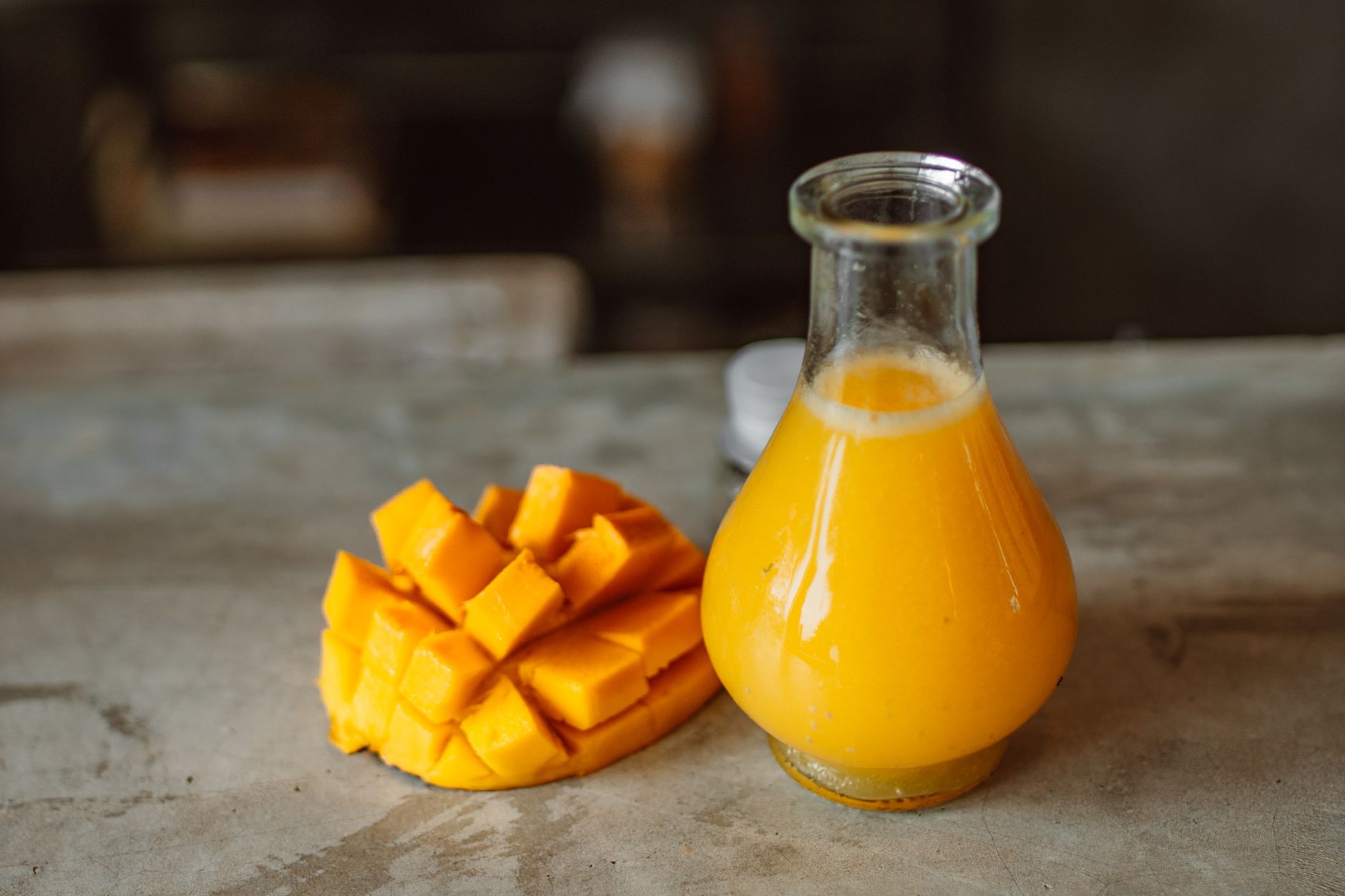

Ripe Mangifera indica fruit yields a liquid with most of its natural fiber stripped away during extraction. A standard 250 ml glass delivers about 120 to 150 calories and 28 to 30 grams of natural sugar, alongside dense amounts of vitamin C, vitamin A, and beta-carotene. That mix of sweetness and nutrients places it in a middle spot: more nourishing than soda, more concentrated than eating the whole mango.
This practical walkthrough helps anyone weighing mango juice as part of their daily diet sort fact from marketing, from how it stacks up against whole fruit and soda to what the research actually supports.
Mango Juice and Where It Sits Among Beverages
Once ripe mangoes pass through a blender or commercial press, the result is a thick, sweet liquid that behaves differently from the whole fruit. The mechanical action breaks cell walls and releases simple sugars, mainly fructose and glucose, that were locked inside the pulp. The drink delivers the fruit’s color, flavor, and most of its micronutrients, but strips away much of the fiber that slows sugar absorption in the body.
That structural change puts mango juice in an unusual spot on the beverage spectrum. It carries more vitamin C and beta-carotene than apple or grape juice, yet it shares the same basic concern as those drinks: concentrated sugar without much fiber to buffer it. A 250 ml glass of apple juice typically clocks around 110 calories and 24 grams of sugar, while grape juice can reach 150 calories and 35 grams per serving.
Pulp, Clarified, Nectar, and Concentrate
Terminology on the shelf can be confusing, and the differences matter for both nutrition and taste.
- 100% juice: Made only from mango, with no added sugar. May be pulpy, clarified, or somewhere in between.
- Nectar: Mango pulp blended with water and added sugar, usually 10 to 20 grams of extra sugar per serving.
- From concentrate: Water is removed for cheaper shipping, then re-added before packaging. Nutrient loss is minor but flavor often suffers.
- Cold-pressed: Mechanically pressed without heat, often retaining more vitamin C and a brighter color.
The simplest rule is to read the ingredient list: a shorter list with “mango” as the only fruit usually signals a more nutrient-dense choice.
The Nutritional Profile Behind a Single Glass
A 250 ml serving of pure mango juice provides about 120 to 150 calories and 28 to 30 grams of sugar, putting a single glass within striking distance of the World Health Organization’s daily added-sugar guideline of 25 grams. The drink also delivers roughly 60 to 90 milligrams of vitamin C, covering 65 to 100% of the daily target for most adults, plus a meaningful dose of vitamin A in the form of beta-carotene.
Key Vitamins and Minerals
Beyond the headline nutrients, mango juice contributes several supporting players. Folate lands around 15 to 20 micrograms per glass, useful for cell turnover and especially relevant during pregnancy. Potassium hovers near 200 milligrams, and small amounts of vitamin K, magnesium, and B vitamins round out the profile. USDA FoodData Central lists these as modest but consistent contributors, especially compared with juices like apple or pear that offer almost nothing beyond sugar.
Antioxidants and Phytonutrients
The orange-gold color of mango juice signals the presence of carotenoids, primarily beta-carotene and beta-cryptoxanthin, both of which the body can convert into vitamin A. Polyphenols such as quercetin and gallic acid appear in smaller amounts and add to the drink’s antioxidant capacity. These compounds form a more complex nutritional package than the calorie count alone would suggest.
That antioxidant density has drawn researchers’ attention, and a growing body of work has begun testing what it might actually do in the body.
What the Research Says About Health Benefits
Most documented benefits of mango juice trace back to its concentration of specific micronutrients rather than any unique property of the fruit itself. The evidence is strongest where the active compound is well understood and present in meaningful amounts.
A few areas stand out, with the right amount of caution:
- Immune support: A single glass can meet most of your daily vitamin C need, and that nutrient plays a documented role in white blood cell function.
- Skin and eye health: Beta-carotene and beta-cryptoxanthin are vitamin A precursors, and fruit-based carotenoids tend to be more bioavailable than those from supplements.
- Mild digestive aid: Mango contains sorbitol, a sugar alcohol with a gentle laxative effect, though fiber loss during juicing reduces the fruit’s digestive benefits.
- Recovery after exercise: Natural potassium and magnesium make this a reasonable post-workout option, especially diluted with water or paired with a protein source.
None of these benefits is unique to it. Orange juice, carrot juice, and several other fruit and vegetable juices overlap in these compounds. Mango’s edge is the combination of vitamin C density and carotenoid variety in a single glass.
Side Effects and Who Should Think Twice
The same concentration that makes it nutrient-dense also makes it risky in specific situations. The drink’s high natural sugar content and active plant compounds can interact with medications, trigger allergic reactions, or cause problems when hygiene slips during preparation.
Blood Sugar Spikes and Diabetes Risk
A 250 ml glass contains roughly 28 to 30 grams of sugar with almost no fiber to slow absorption. That combination produces a faster and higher glycemic response than eating a whole mango of equivalent weight. People managing diabetes, insulin resistance, or metabolic syndrome should treat the drink more like a dessert than a health food, and a qualified healthcare professional can help determine how much fits a specific eating plan.
Medication Interactions
Mango contains vitamin K and natural salicylates, both of which can interfere with blood-thinning medications such as warfarin. A single glass is unlikely to cause problems, but consistent daily intake can swing INR readings. Anyone on anticoagulants should mention it to their prescribing clinician, especially if it becomes a routine habit.
Allergic Reactions and Oral Allergy Syndrome
People sensitive to urushiol, the compound in poison ivy and cashew shells, sometimes react to mango skin and, less often, to the pulp. Oral allergy syndrome can cause itching or swelling around the mouth, particularly in those allergic to birch pollen. Symptoms range from mildly annoying to genuinely dangerous, so anyone with a known mango allergy should avoid the juice entirely.
Unpasteurized fresh-pressed juice carries a real bacterial risk. Salmonella and E. coli outbreaks have been linked to unpasteurized fruit juices, including mango. If you press your own, wash the fruit thoroughly and refrigerate the juice within two hours.
Fresh, Packaged, and Homemade Compared
How it is processed changes its nutritional value, taste, and safety profile. The same fruit can produce wildly different drinks depending on whether it is cold-pressed, pasteurized, diluted with sugar, or blended at home.
| Type | Typical Processing | Nutrient Retention | Added Ingredients |
|---|---|---|---|
| Cold-pressed commercial | Mechanical press, no heat | High vitamin C, full carotenoids | Usually none |
| Pasteurized bottled | Heat-treated for shelf stability | 10 to 20% vitamin C loss | Sometimes added sugar or preservatives |
| From concentrate | Water removed, then restored | Minor losses in transport | Often added sugar for flavor |
| Homemade blended | Whole fruit with water optional | Highest, especially with pulp | None unless added |
Why Homemade Usually Wins on Nutrition
Blending a whole mango at home preserves the pulp, which means more dietary fiber and slightly slower sugar absorption. It also lets you skip the additives found in many commercial products, including citric acid, ascorbic acid for shelf life, and added cane sugar in nectar-style drinks. A basic homemade version needs only ripe mango, a splash of water for consistency, and optionally a few mint leaves or a squeeze of lime for brightness.
Store-bought juice still has a place, especially for convenience, but the ingredient list is the deciding factor. Products listing “mango” alone, or “mango, water,” tend to be the cleanest options on the shelf.
Choosing the right version matters, though, because how mango juice fits into an overall diet depends on what’s actually in the glass.
Smarter Ways to Include Mango Juice in a Balanced Diet
Portion size and pairing matter more than the brand on the label. A small glass of it can add flavor and nutrients to a meal without overwhelming your daily sugar budget.
Sensible Serving Sizes
For most healthy adults, 150 to 200 ml is a reasonable portion, about two-thirds of a standard glass. Children should get less, generally capped at 100 to 120 ml per serving. A smaller glass means roughly 18 to 22 grams of sugar, which leaves more room for other foods throughout the day.
Pairing to Blunt the Sugar Spike
Combining it with protein, fat, or fiber slows glucose absorption and reduces the sharp insulin response. A few practical pairings work well:
- With breakfast: A small glass alongside eggs, Greek yogurt, or nut butter on whole-grain toast.
- As a smoothie base: Blend with frozen banana, spinach, and protein powder instead of drinking it straight.
- Diluted: Mix equal parts juice and sparkling water for a longer drink with half the sugar per cup.
When to Skip It Entirely
There are situations where even a small serving works against your goals. During active weight-loss phases or strict low-carb eating, the sugar load is hard to justify. For anyone managing diabetes, the better option is usually the whole fruit, where fiber and water fill the stomach and slow absorption. If you have kidney disease, the potassium content may also be worth discussing with a healthcare provider.
The Bottom Line
it sits in a useful but limited niche: more nutrient-dense than most fruit juices, less balanced than eating the whole fruit. A small glass delivers genuine value through vitamin C, beta-carotene, and a pleasant dose of natural sugars. A large glass, especially from a sugar-sweetened commercial bottle, can quietly push you past recommended sugar limits. Treat it like a treat with benefits, not a daily health drink, and pair it with food whenever you can.
FAQ
What are the benefits of drinking mango juice?
it supplies a meaningful amount of vitamin C, beta-carotene, and antioxidants that support immune function, skin health, and post-exercise recovery. The drink also contains potassium and small amounts of several B vitamins, though most benefits are dose-dependent and best realized in small portions.
Is mango juice good for health?
In moderation, yes. A 150 to 200 ml serving provides useful nutrients without overloading your sugar intake. Drinking it daily in large amounts adds up quickly, since the natural sugar concentration is high and the fiber is mostly removed during juicing.
What are the side effects of mango juice?
The most common side effect is a rapid rise in blood sugar due to the concentrated fructose. Some people on blood thinners may see interactions from vitamin K and natural salicylates. Allergic reactions, including oral allergy syndrome, can occur in those sensitive to mango or related plants.
How many calories are in mango juice?
A 250 ml glass typically contains 120 to 150 calories, depending on whether the juice is clarified, pulpy, or diluted. Smaller servings of 150 to 200 ml bring the total down to roughly 70 to 110 calories.
Is mango juice high in sugar?
Yes, naturally. A 250 ml serving delivers around 28 to 30 grams of sugar, comparable to the same volume of grape juice and higher than orange juice. Choosing pulpier versions or diluting with water reduces the effective sugar load per sip.
Can you drink mango juice every day?
For most healthy adults, a small daily serving is fine as part of a balanced diet. Keep the portion modest, ideally under 200 ml, and offset it by reducing other sweet foods and drinks throughout the day. Anyone with diabetes or on blood thinners should consult a healthcare professional before making it a routine.