
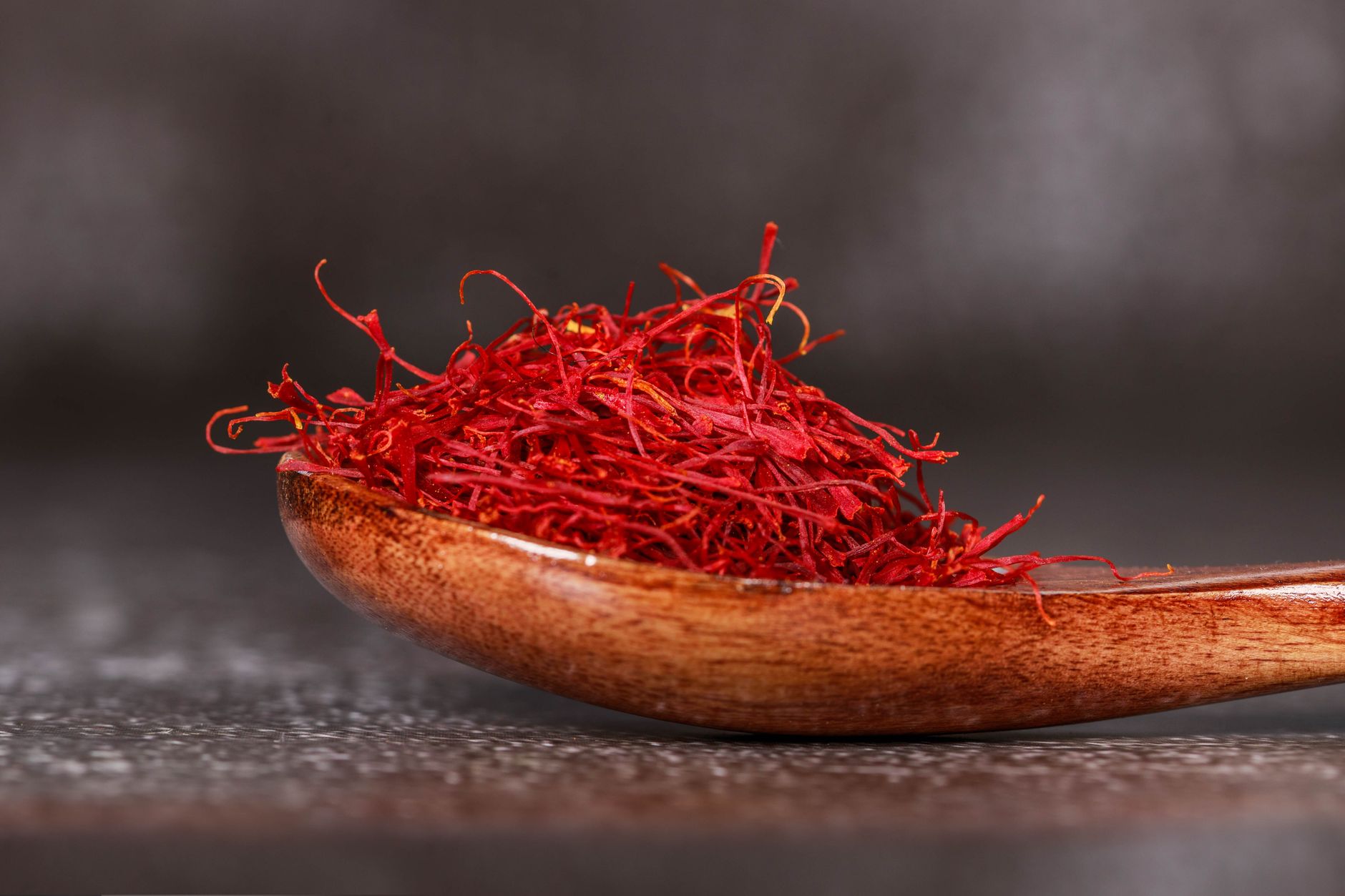

Three molecules, crocin, picrocrocin, and safranal, sit inside the dried red stigma of Crocus sativus and drive most of its studied effects. Roughly 150 flowers yield a single gram, which explains both the price and the potency. Most of the studied effects on mood, PMS, and antioxidant activity trace back to those compounds working in concert across small, carefully measured doses.
This practical walkthrough breaks down what saffron actually does, from the crocin and safranal driving its mood-lifting and antioxidant reputation to realistic dosing and the people who should pause before supplementing.
Saffron at a Glance: What Makes the World’s Most Expensive Spice
Each crimson thread is one of three tiny stigmas hand-picked from a single Crocus sativus flower, separated by hand before drying. Roughly 150 flowers collapse into a single gram, and that labor alone sets the price apart from every other culinary spice in your pantry.
Iran grows about 90 percent of the global crop, with Spain, India (especially Kashmir), and Greece producing most of the rest. Climate, soil, and harvest timing shift aroma and color strength enough that origin matters when you compare samples. Spanish threads often run lighter and more floral, while Iranian and Kashmiri saffron lands deeper red and more bitter.
Three Compounds That Define the Spice
Crocin gives saffron its deep red-orange hue and acts as a water-soluble carotenoid antioxidant. Picrocrocin contributes the slightly bitter, hay-like taste that lingers on your palate. Safranal, which forms as picrocrocin breaks down during drying, delivers the signature honey-and-flower aroma you notice when you open a fresh jar.
Together those compounds account for most of the spice’s studied biological activity. When research papers credit saffron for a mood or memory effect, crocin and safranal are almost always doing the work behind the headline number.
Forms You Can Buy
| Form | Best For | Potency | Shelf Life |
|---|---|---|---|
| Whole threads (stigmas) | Cooking, steeping, visual quality check | Highest, when fresh | 1–2 years, sealed and dark |
| Ground powder | Quick addition to liquids, baking | Variable, loses aroma fast | 6–12 months |
| Standardized extract capsules | Studied doses for mood, PMS, or vision | Measured crocin/safranal content | 1–2 years per label |
Threads win for cooking because you can see, smell, and steep them. Capsules win when you want a precise dose without the flavor in food. Powder sits in the middle: convenient, but harder for you to verify for purity at the point of purchase.
Nutritional Profile and Active Compounds Behind the Claims
A single gram of saffron delivers meaningful manganese, a useful hit of vitamin C, and smaller contributions of iron, magnesium, potassium, and several B vitamins. Most recipes call for only a few threads, so the absolute nutrient amounts stay small, yet the concentration per gram ranks high among spices on a weight basis.
Crocin, safranal, and picrocrocin carry the antioxidant and anti-inflammatory load that drives most of the research. ORAC testing, which measures a food’s ability to neutralize free radicals in a lab, places saffron near the top of the spice scale relative to serving size, though the small portion you actually eat keeps the absolute contribution modest.
Why Form and Preparation Matter
Threads keep the volatile oils protected until you steep them in warm water, milk, or broth. Powder begins losing safranal the moment the cell walls are broken, so aroma fades within months. Capsules use a standardized extract designed to deliver a consistent crocin and safranal dose without the variability of a fresh harvest.
Steep threads in warm liquid for 10 to 15 minutes before adding them to your dish. Hot liquid pulls crocin and safranal out of the stigma quickly, and skipping this step is the most common reason a recipe ends up yellow instead of deep amber.
Pairing saffron with a small amount of healthy fat, like olive oil, ghee, or whole milk, improves your absorption of the carotenoid compounds. That is why so many traditional preparations start with a bloomed thread infusion in a fat-based liquid.
That fat-soluble chemistry helps explain why researchers keep finding small but meaningful effects when saffron is tested in clinical settings.
Evidence-Based Health Benefits Worth Knowing
The most studied saffron benefits sit in three areas: mood, female hormonal symptoms, and vision or memory support. Most clinical trials run 6 to 12 weeks and use standardized extract rather than culinary doses, which is why the milligram amounts in research look much smaller than the jar in your pantry.
Mood and Mild to Moderate Depression
In multiple randomized trials, a daily dose of 30 mg of saffron extract, split into two servings, has lowered scores on standard depression rating scales for people with mild to moderate symptoms. Short-term results in head-to-head studies have run comparable to low-dose SSRI medications, though the studies stay small and usually under 12 weeks long.
Researchers point to crocin and safranal’s influence on serotonin and dopamine pathways as the likely mechanism, along with antioxidant protection in neural tissue. If you already take a prescription antidepressant, do not stack saffron on top without a clinician’s input, since both can affect the same brain chemistry.
PMS, Menstrual Discomfort, and Sexual Function
Trials in women have found that 15 to 30 mg of saffron extract daily can reduce the severity of premenstrual syndrome symptoms, including mood swings, irritability, and physical discomfort. Dysmenorrhea studies, where painful periods are the focus, have also shown reductions in pain scores compared with placebo.
Early research in men and women with reduced sexual desire has reported modest improvements in arousal and satisfaction scores at similar doses. The traditional reputation of saffron as an aphrodisiac has some clinical backing, though the effect size stays small and individual responses vary.
Memory, Vision, and Broader Antioxidant Effects
Small studies in older adults with mild cognitive complaints have found that saffron extract may support memory and focus, and early trials in age-related macular changes suggest possible protection of retinal cells from oxidative stress. These findings are preliminary, but they line up with what the antioxidant profile would predict.
Anti-inflammatory and antioxidant activity likely contributes to the broader cardiometabolic signals seen in animal and small human studies, including modest effects on blood sugar and blood pressure. None of these are strong enough to replace standard care, but they help explain why saffron keeps showing up in research pipelines.
Practical Ways to Use Saffron in the Kitchen and Beyond
Culinary use and therapeutic use follow different rules. A few threads bloomed in warm liquid for color and aroma is a kitchen move; a measured 30 mg extract capsule is a clinical-style dose. Knowing which role you want the spice to play changes the form, amount, and timing for your situation.
Cooking Techniques That Release Full Flavor
- Bloom first, always: Steep 5 to 10 threads in 2 to 3 tablespoons of warm water, milk, or broth for 10 to 15 minutes before adding the liquid to rice, stews, or risotto.
- Add early for color: Color develops with heat and time, so add the bloomed liquid near the start of cooking for the deepest amber hue.
- Pair with classic partners: Cardamom, rose, honey, citrus zest, and warm spices like cinnamon and cumin complement saffron’s floral-bitter profile.
- Use sparingly: More than a pinch overwhelms a dish and can turn medicinal; start with a few threads and adjust next time.
- Try beyond rice: Bloomed saffron works in paella, bouillabaisse, Persian tahdig, Indian biryani, golden milk, and even simple sugar syrups for desserts.
Grinding threads with a small pinch of sugar in a mortar breaks the cell walls and speeds up the bloom. The sugar also acts as a mild abrasive, helping you release pigment without grinding the delicate stigmas to dust.
Beyond the Kitchen
Saffron tea is the simplest non-culinary use: a few threads steeped in hot water with optional honey and lemon produces a mild, aromatic drink that some people find calming before bed. Saffron milk, a warm infusion with a small amount of honey and a pinch of cardamom, follows the same idea and shows up in Ayurvedic tradition for general well-being.
Encapsulated extracts make more sense when you want a measured dose for a specific goal, such as a 6 to 12 week mood support trial or a menstrual-symptom protocol. Reputable third-party tested brands give you consistent crocin and safranal levels without the daily cooking step.
Storage That Preserves Potency
Keep threads in an airtight container, away from light, heat, and moisture. A small dark glass jar in a cool cabinet works well. Properly stored threads stay potent for one to two years, though the brightest color and strongest aroma peak in the first six months after harvest.
Dosage, Safety, and Who Should Approach With Caution
Most research-backed benefits show up at 15 to 30 mg of standardized extract per day, usually split into two doses. Culinary use sits far below that range, often around 0.5 to 2 mg per serving, which is why everyday cooking carries minimal safety risk for most adults and answers the question of is saffron safe to take daily for normal food use.
Toxicity becomes a real concern only at very high doses. Amounts above 5 grams in a single sitting, roughly a full teaspoon, have been linked to vomiting, dizziness, and in rare cases more serious effects. Standard recipes use a tiny fraction of that, so a few threads in your risotto will not put you anywhere near a problem.
Who Should Avoid Concentrated Saffron
- Pregnant women: Therapeutic doses may stimulate uterine activity, so concentrated saffron and high-dose supplements are generally avoided during pregnancy. Small culinary amounts in food are usually fine.
- People on blood thinners: Saffron can affect platelet activity, so warfarin, aspirin, clopidogrel, and similar medications may interact with concentrated doses.
- That pressure drugs: Saffron may lower blood pressure slightly, which can stack with prescription antihypertensives.
- People on antidepressants: Because saffron may influence serotonin and dopamine, combining it with SSRIs, SNRIs, or MAOIs deserves a clinician’s review before starting.
- Children: Keep therapeutic doses for adults; small culinary amounts in family meals are appropriate.
Start low and track how you feel. If you are trying saffron for a specific goal, keep a simple daily note on dose, timing, and any changes in mood, sleep, or symptoms for the first two to three weeks.
Talking with a qualified healthcare professional before starting a supplement is a good idea for anyone who is pregnant, nursing, taking medication, or living with a chronic condition. Saffron is a studied botanical, not a free pass.
Buying from a reputable source matters even more once you understand how concentrated,and occasionally adulterated,this spice can be.
Spotting Quality and Avoiding Adulterated Saffron
High price creates pressure to cut threads with lookalike materials, and the fakes have grown more sophisticated. ISO 3632 is the international standard that grades saffron into three categories based on crocin content, color strength, and moisture levels. Category I is the strongest, with the highest crocin concentration and the lowest allowed moisture, and that is what you want to look for on a reputable label.
That said, the standard only grades what is in the jar, not what the threads actually are. Visual checks and water tests help you catch the most common fakes before you buy or use them.
Physical Clues and the Water Test
Genuine saffron threads are trumpet-shaped, with a slightly flared red tip and a paler yellow or white base where the stigma attached to the flower. Fakes often look uniformly red, unnaturally bright, or oddly stiff. Real threads feel slightly dry and delicate, not wiry or plastic-like.
Drop a few threads in a small glass of warm water. Real saffron releases color slowly, turning the water a steady golden-amber over 10 to 15 minutes, while the threads themselves keep their shape. Instant bright red or yellow dye bleed in seconds often signals dyed corn silk, paper strips, or other fillers. The aroma should build gradually, not smell like synthetic fragrance.
Buying Checklist
- Look for origin labeling: Iranian, Spanish, or Kashmiri origin with a named region or cooperative is more trustworthy than a generic imported tag.
- Check the lot or batch number: Real producers track harvest year and batch; anonymous bulk packaging is a red flag.
- Prefer sealed, opaque packaging: Light and air degrade crocin and safranal quickly.
- Compare price per gram honestly: Genuine saffron rarely sells for less than several dollars per gram; rock-bottom prices almost always signal adulteration.
- Choose third-party tested supplements: For capsules, look for recognized certification to verify the extract matches the label.
Storing threads in a cool, dark, airtight container preserves the crocin and aroma compounds you paid for. A small investment in proper storage pays off in deeper color and stronger flavor for every dish you cook.
Bottom Line
Saffron’s reputation rests on three real compounds, crocin, picrocrocin, and safranal, that drive both its color and most of its studied effects. A few threads in your cooking adds aroma and antioxidants without safety concerns, while standardized extracts at 15 to 30 mg daily have the strongest research backing for mood, PMS, and certain memory or vision markers. Buy from trusted sources, store threads well, and check with a clinician before stacking supplements with medications.
FAQ
What are the health benefits of saffron?
Research points to mood support in mild to moderate depression, reduced PMS and menstrual discomfort, modest memory and vision protection, and antioxidant effects throughout the body. Most benefits show up at 15 to 30 mg of standardized extract daily over 6 to 12 weeks, while culinary doses add flavor and small amounts of nutrients without strong therapeutic impact.
How much saffron should I take per day?
For studied effects, 15 to 30 mg of standardized extract split into two doses is the most common range in clinical trials. Cooking uses a few threads, often less than 2 mg per dish, which adds color and aroma without reaching therapeutic levels. Do not exceed 5 grams in a single day, since doses that high have caused toxicity.
What are the side effects of taking saffron?
At normal culinary or supplement doses, side effects are usually mild and can include dry mouth, dizziness, nausea, headache, or appetite changes. High doses above 5 grams can cause vomiting, sedation, and more serious effects. Concentrated saffron may also interact with blood thinners, blood pressure drugs, and antidepressants.
Does saffron help with anxiety and depression?
In head-to-head trials, 30 mg of saffron extract daily has matched standard SSRIs at easing mild to moderate depression over the short term, and some of those studies also recorded drops in anxiety scores. The evidence is promising but limited in size and duration, so saffron is best viewed as a complement to professional care rather than a replacement for it.
Is saffron good for skin and hair?
Saffron’s antioxidant and anti-inflammatory compounds may support skin health when used in traditional topical preparations, and some small studies suggest possible benefits for complexion and mild irritation. Direct research on hair is thin, so claims of hair growth from saffron remain mostly traditional rather than clinically proven.
Who should not take saffron supplements?
Pregnant women should avoid therapeutic doses because saffron may stimulate uterine activity. People on blood thinners, blood pressure medications, or antidepressants should talk with a qualified healthcare professional before starting a saffron supplement, since interactions are possible. Children and people with serious medical conditions should also consult a clinician first.