
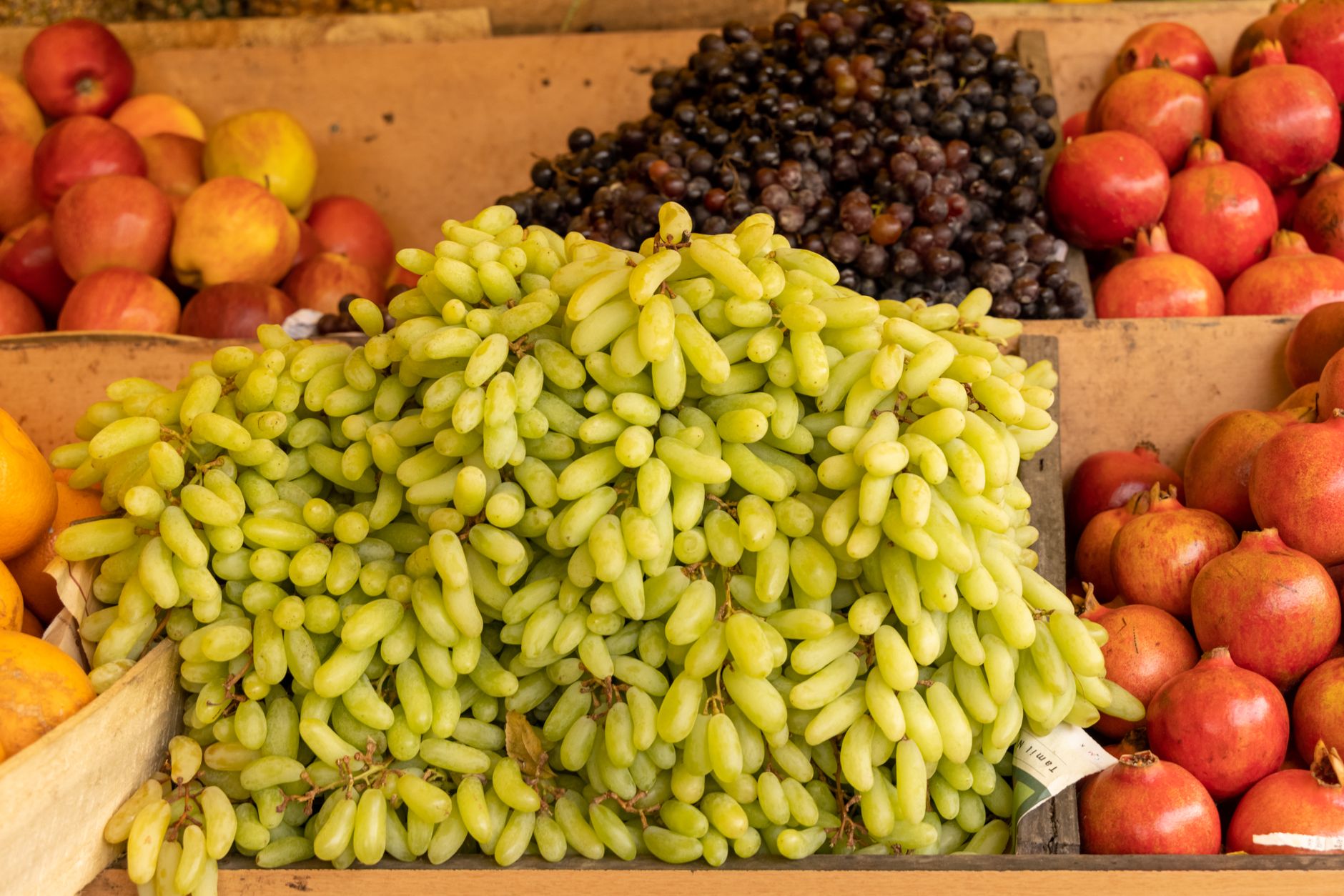

Red grapes are a Vitis vinifera fruit whose skin carries resveratrol, quercetin, and anthocyanins, plant pigments that act as antioxidants inside your cells, while one cup delivers roughly 104 calories and 27 grams of carbohydrates alongside fiber and vitamins that support heart, immune, and bone health. A single cup covers about 28% of your daily vitamin K and 27% of your vitamin C, numbers that make this fruit a steady, everyday food rather than a supplement in disguise.
This guide explains what red grapes actually contain, the science behind the common health claims, how they compare to green and black varieties, and how to fit them safely into your week.
What Red Grapes Actually Contain
Calories, Carbs, and the Fiber That Slows the Sugar
A single cup of red grapes, about 151 grams, lands near 104 calories, with 27 grams of carbohydrates, 1.1 grams of protein, and barely any fat. Of those carbs, roughly 23 grams come from natural sugars, mainly glucose and fructose, and about 1.4 grams arrive as fiber. That fiber matters more than the sugar count alone suggests, because it slows how fast those sugars hit your bloodstream.
The glycemic index of grapes sits in the low-to-moderate range, typically 43 to 59 depending on variety and ripeness. A medium banana lands closer to 60, while a glazed donut pushes past 70. A measured cup of grapes behaves differently than a candy bar with the same sugar count, because the fiber and water change the absorption curve.
Vitamins, Minerals, and the Polyphenol Trio
One cup covers about 28% of your daily vitamin K, a nutrient that helps your blood clot properly and your bones stay dense. It also delivers around 27% of your vitamin C for immune support and collagen production, plus small but useful amounts of copper, potassium, and B vitamins like thiamine and riboflavin. These numbers come from USDA FoodData Central, the public nutrient database most registered dietitians use as a reference.
Where red grapes really pull ahead is in the polyphenol trio found mostly in the skin and seeds:
- Resveratrol concentration: the most famous grape compound, studied for heart and cellular aging support, with most of it sitting in the skin.
- Quercetin levels: a flavonoid with anti-inflammatory properties that also shows up in onions and apples.
- Anthocyanin density: the red, blue, and purple pigments that give red grapes their color and act as antioxidants inside your body.
Discard the skin and you lose most of these compounds. Concord and other deeply pigmented varieties carry the highest anthocyanin loads by weight.
That chemistry only matters if the research bears it out, so the next section weighs the human and animal evidence behind each claim.
The Evidence Behind the Health Claims
Heart Health and Blood Pressure
Better cardiovascular markers, including lower blood pressure and improved lipid numbers, have been observed in human trials linking grape consumption to measurable heart-health gains. A 2015 randomized trial in the journal Nutrients found that people eating grape powder for four weeks saw improvements in blood pressure and lipid numbers compared to a placebo group. The American Heart Association highlights grapes as a heart-smart fruit in its dietary guidance, largely because of the polyphenol-fiber combination.
The strongest evidence pairs grapes with broader Mediterranean-style eating patterns, where fruit, vegetables, fish, and olive oil work together. A handful of grapes on top of a fast-food diet will not undo the rest of the plate.
Blood Sugar, Inflammation, and the Resveratrol Question
For blood sugar, multiple small human studies show grapes produce a gentler post-meal glucose spike than refined carbohydrates of equal calories, and the fiber and polyphenols both contribute. For inflammation, a 2020 review of grape and wine polyphenols found reduced markers like C-reactive protein in regular grape consumers, though most studies ran 8 to 12 weeks and involved concentrated powders or extracts rather than whole fruit.
Resveratrol research in humans remains thin, and concentrated supplement doses used in cell and animal studies do not match what a normal serving of grapes provides.
The resveratrol dose absorbed from a cup of grapes is far smaller than what’s been tested in cell cultures and lab animals, so anti-aging or cancer-protective claims should be read with healthy skepticism. Whole-fruit benefits are far better documented than any single compound.
Red Grapes Against Green and Black Varieties
Nutrition Side by Side
| Per 1 cup (151g) | Red Grapes | Green Grapes | Concord Black Grapes |
|---|---|---|---|
| Calories | 104 | 104 | 96 |
| Total Carbs | 27 g | 27 g | 25 g |
| Fiber | 1.4 g | 1.4 g | 1.6 g |
| Sugar | 23 g | 23 g | 22 g |
| Vitamin C | 27% DV | 27% DV | 22% DV |
| Vitamin K | 28% DV | 28% DV | 31% DV |
| Anthocyanins | High | Minimal | Highest |
Calories and sugar are nearly identical across colors. The real difference is anthocyanin content, where deep red and Concord grapes win, and minor variations in vitamin K, where black grapes have a slight edge. Green grapes contain most of the same resveratrol and quercetin but lack the red pigments entirely.
When the Variety Actually Matters
Pick red or Concord when you’re chasing antioxidant load, especially if you eat the skin. Choose green when you want a milder flavor that disappears into chicken salad or kid snacks. Black Concord grapes often show up as juice, jellies, and frozen concentrate, and their anthocyanin density can be two to three times that of table grapes by weight. For plain snacking, your taste preference matters more than the color.
Side Effects, Allergies, and Pesticide Realities
Digestive Limits and Blood-Thinner Interactions
Eating more than two to three cups in a sitting can cause bloating, gas, or loose stools because fructose draws water into the gut and ferments when intake outpaces absorption. If your stomach reacts to other high-fructose fruits like apples or pears, expect a similar response from grapes.
The vitamin K content, while useful for bone health, can interfere with warfarin and other blood thinners. Consistent vitamin K intake matters more than total avoidance, so tell your doctor if you plan to eat grapes daily. Sudden large changes in leafy greens, grapes, or other vitamin K foods are what trigger INR fluctuations (a blood-clotting measure your doctor tracks), not occasional servings.
Oral Allergy Syndrome and Pesticide Residue
Itching or mouth tingling after biting into raw grapes can signal oral allergy syndrome, which shows up in people sensitive to birch pollen, peaches, or latex. Cooking grapes breaks down the trigger proteins, so jam and roasted grapes usually cause fewer symptoms than raw fruit. Severe grape allergies do exist but are uncommon in US adults.
Grapes routinely appear on the Environmental Working Group’s Dirty Dozen list, meaning conventional samples tend to carry measurable pesticide residue. A 30-second rinse under cool running water removes surface dust and roughly half of residue on smooth-skinned fruit, though waxy coatings trap some chemicals. Peeling strips most residue but also strips the polyphenols. Buying organic reduces exposure but costs more, and the residue levels on conventional grapes remain below federal tolerance limits.
Once you accept that washing has trade-offs, the practical question becomes how to pick, store, and prep grapes without undoing their benefits.
Selecting, Storing, and Preparing Red Grapes
Ripeness Cues That Predict Quality
Look for plump, firm berries tightly attached to flexible green stems. Brown, brittle stems mean the bunch has been off the vine too long. Color should be deep and uniform without green patches, which signal under-ripeness and lower sugar. A powdery white bloom on the skin is natural yeast and a freshness marker, not mold.
Smell matters too. A faint sweet, floral aroma at the stem end usually means the sugars have developed fully.
Storage and Form Choices
Refrigerate unwashed grapes in a breathable container or perforated bag for up to two weeks. Whole grapes freeze beautifully and turn into a natural popsicle substitute straight from the freezer. Drying concentrates the sugar fourfold, so a tablespoon of raisins delivers the same calories as a small bunch of fresh grapes.
Choose the form based on your goal. Fresh grapes win for fiber, water content, and snacking. Frozen grapes suit smoothies and hot-day treats. Juice strips the fiber but keeps the polyphenols. Raisins work for baking and trail mix, but portion carefully because the calorie density jumps dramatically.
Everyday Ways to Use Red Grapes Beyond Snacking
Savory Pairings and Roasting
Roasted grapes concentrate sweetness and pair well with roasted chicken, pork tenderloin, or grain bowls. Toss a cup of halved grapes with olive oil, salt, and thyme, and roast at 400°F for 15 minutes. The result is jammy, slightly caramelized, and a strong counterpoint to savory proteins.
For salads, halved grapes add crunch and brightness alongside feta, walnuts, and arugula. The natural sugar balances bitter greens and salty cheese in a way most fruits cannot.
Smoothies and Baking Swaps
Frozen grapes blend into smoothies without diluting flavor the way ice does, since the fruit itself is mostly water. Combine them with Greek yogurt, spinach, and a splash of almond milk for a balanced post-workout drink.
In baking, chopped red grapes can replace up to one-third of the sugar in muffins and quick breads, since they add moisture along with natural sweetness. The skins also add specks of color and tannin that deepen flavor, much like the effect of wine in a sauce.
Cooking creativity is one thing, yet daily intake still depends on individual health profiles, so the final section maps who benefits and who should slow down.
Who Should Eat More, Who Should Pause, and How Much
Portion Guidance by Situation
A standard serving is one cup, roughly 16 to 20 grapes, and contains about 24 grams of net carbs once you subtract fiber. That fits comfortably in most diabetic meal plans, especially when paired with a protein or fat source like cheese or almonds, which blunt the glucose response further.
For weight loss, treat grapes like any other carbohydrate-dense fruit and count them toward your daily carb budget rather than adding them on top. For children, half a cup is plenty as a snack. For people on warfarin, keep portions consistent from day to day rather than avoiding grapes entirely.
Conventional vs. Organic, and a Simple Starter Plan
Buy organic when you eat grapes daily or feed them to children, since long-term cumulative exposure to multiple pesticide residues remains under study. Conventional grapes washed thoroughly are a reasonable choice for occasional servings, especially when local and in-season.
Try a one-week starter pattern: one cup as an afternoon snack three days, sliced into a salad twice, and frozen as a dessert twice. That’s seven servings across seven days, well within any reasonable dietary framework and enough to deliver the polyphenol and fiber benefits without spiking your sugar load. After a week, adjust up or down based on your energy, digestion, and overall carb budget.
FAQ
What are the main health benefits of eating red grapes?
Red grapes support heart health, blood pressure control, and inflammation management through their fiber, vitamin K, and antioxidant polyphenols like resveratrol, quercetin, and anthocyanins. The strongest human evidence ties regular grape consumption to improved cardiovascular markers rather than any single dramatic cure.
Are red grapes good for your heart?
Yes, in the context of an overall balanced diet. Polyphenols and fiber in red grapes help relax blood vessels, reduce LDL cholesterol oxidation, and lower blood pressure modestly, according to multiple human trials reviewed by the American Heart Association.
How many calories are in a cup of red grapes?
A single cup of red grapes delivers roughly 104 calories, 27 grams of carbohydrates, and about 1 gram of protein to your daily tally.4 grams of fiber, and minimal fat or protein, based on USDA FoodData Central entries.
Can eating red grapes help lower blood pressure?
Small human studies show mild blood pressure reductions after several weeks of regular grape consumption, likely from the combined effects of potassium, polyphenols, and nitrates. The effect is modest and works best alongside reduced sodium intake and exercise.
What happens if you eat too many red grapes?
Eating several cups at once can cause bloating, gas, or loose stools from fructose overload, and may spike blood sugar in people with insulin resistance. The vitamin K content can also interact with blood thinners if your intake changes suddenly from one day to the next.
Is it better to eat red grapes with or without seeds?
Seedy varieties like Concord contain extra polyphenols and proanthocyanidins in the seeds, which are mildly bitter but nutrient-dense. If the texture bothers you, seeded varieties blended into a smoothie or strained as juice still deliver most of the benefits without the chew.