

At roughly 43 calories per 100 grams, a serving of these small, soft berries delivers a meaningful dose of vitamin C, iron, and anthocyanin pigments that give black mulberries their deep purple stain. The same species fed silkworms for roughly four thousand years and flavored traditional Chinese tonics long before modern nutrition science caught up. The honest story sits between the hype and the skepticism, where the fiber does some work and the sugar stays reasonable.
This guide covers what the science actually says about mulberries, walking through their nutritional makeup, the benefits supported by real evidence, potential side effects, and the meaningful differences between white, black, and red varieties.
What Mulberries Are and Where They Come From
Mulberries grow on trees of the Morus genus, a family of deciduous species native to temperate regions across Asia, Europe, and the Americas. The three most commonly eaten varieties are Morus alba (white), Morus nigra (black), and Morus rubra (red). Each one carries a different color, flavor, and cultural footprint, but all share the same fragile, finger-staining quality that makes them both beloved and frustrating at the market.
A Brief History From Silk Worms to Soup Pots
Humans and mulberry trees share a long, intertwined history. For roughly four thousand years, Morus alba leaves served as the exclusive diet of silkworms, and entire regions of China organized their agriculture around sericulture. The same leaves and roots later entered traditional Chinese and Ayurvedic medicine, where practitioners used them to cool the blood, support the liver, and help regulate blood sugar. That historical overlap explains why mulberry products, especially leaf teas, still appear in modern wellness catalogs alongside the fruit.
How the Three Main Varieties Differ
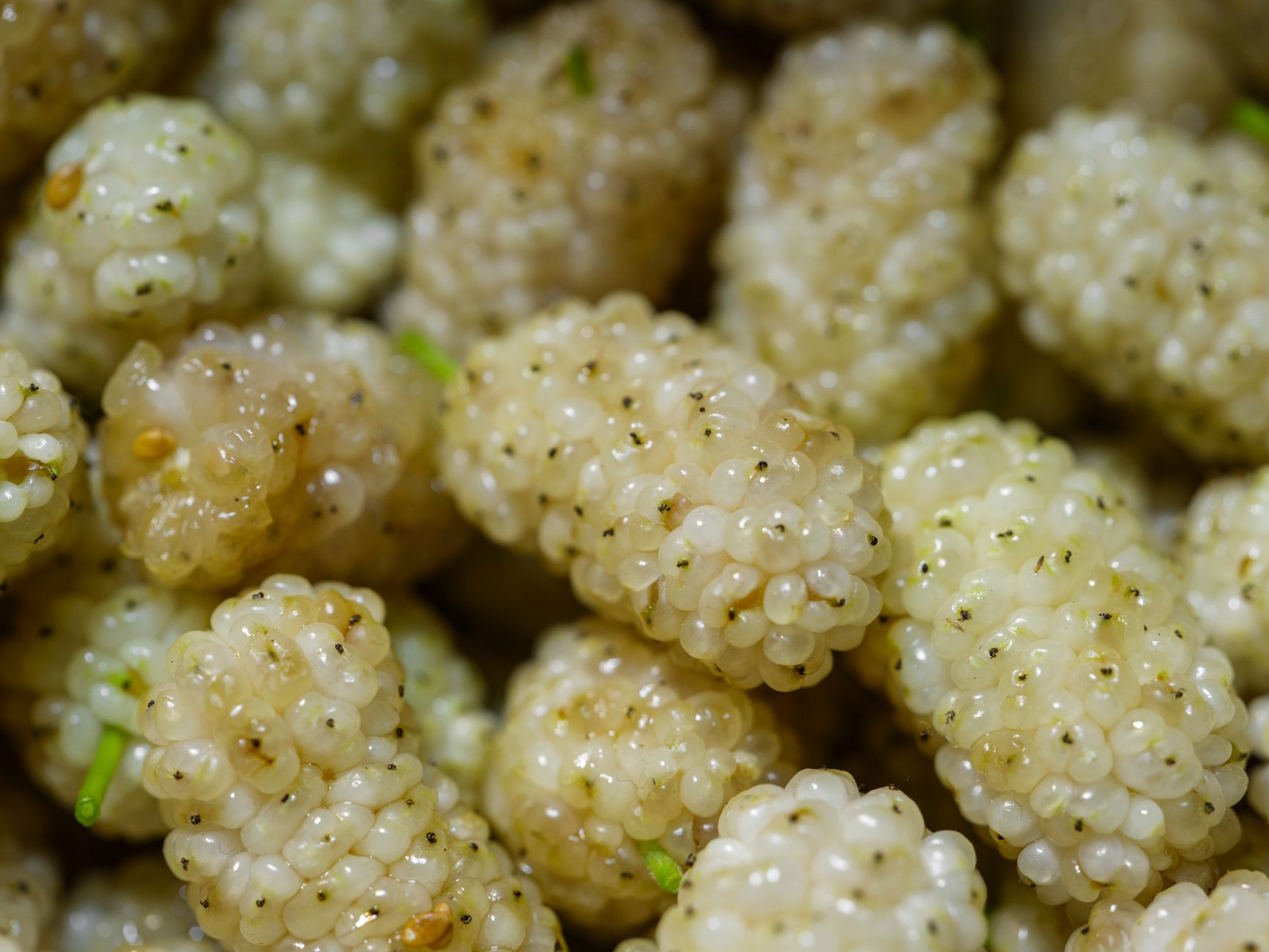
Black mulberries (Morus nigra) carry the deepest flavor, rich and almost wine-like, with the highest anthocyanin content of the three. Red mulberries (Morus rubra) are a native North American species, balanced between sweetness and tartness, and rarely exported because they bruise so easily. White mulberries (Morus alba) taste the mildest, often compared to honey with a vegetal edge, and they are the variety most studied for blood-sugar effects through leaf compounds rather than the fruit itself.
Fresh mulberries at peak ripeness balance mild sweetness with a subtle tartness and a deep, almost floral aroma. The texture is softer than a raspberry and juicier than a blackberry, which is part of why they don’t ship well and tend to be a seasonal treat rather than a year-round staple.
The Nutritional Profile Behind the Hype
Fresh mulberries earn their reputation through density, not drama. A 100-gram serving, roughly two-thirds of a cup, delivers about 43 calories, 1.7 grams of protein, and nearly 88 percent water, according to data published by the USDA FoodData Central. The macronutrient picture is modest by design: this is a fruit that fills you with fiber and fluid rather than fuel.
Key Vitamins and Minerals Per Serving
The micronutrient contribution is where mulberries quietly outperform more common berries. A 100-gram serving provides a meaningful share of your daily vitamin C, a solid hit of vitamin K for blood-clotting function, plus iron, potassium, and small but useful amounts of calcium. The dietary fiber lands around 1.7 grams per 100 grams, enough to slow the fruit’s own sugars from hitting your bloodstream all at once.
Antioxidants: Anthocyanins and Resveratrol
The color story matters more than the calorie story. Black mulberries get their deep purple-black hue from anthocyanins, the same class of pigments that colors blueberries and blackberries, and these compounds carry strong antioxidant capacity in laboratory studies. Mulberries also contain resveratrol, the same polyphenol found in red grape skins and red wine, which researchers have linked in broader nutritional literature to cardiovascular support. The combination of anthocyanins, resveratrol, and vitamin C gives the fruit a layered defense against oxidative stress, the cellular wear-and-tear that accumulates with age and poor diet.
| Nutrient (per 100 g) | Fresh Mulberries | Dried Mulberries |
|---|---|---|
| Calories | ~43 | ~325 |
| Water content | ~88% | ~12% |
| Sugar | ~8 g | ~70 g |
| Dietary fiber | ~1.7 g | ~6 g |
| Protein | ~1.7 g | ~5 g |
The dried form concentrates everything, including the natural sugars, which is why a quarter-cup of dried mulberries behaves more like a sweetener than a snack. Fresh fruit carries a moderate glycemic index, making it a relatively blood-sugar-friendly choice when eaten whole.
That gentle glycemic footprint, combined with the fiber and polyphenols they carry, helps explain why the health claims around mulberries have drawn real scientific interest.
Evidence-Based Health Benefits Worth Paying Attention To
Mulberries are good for you in ways that are modest, specific, and worth understanding. The benefits don’t come from a single magic compound; they come from the way anthocyanins, resveratrol, potassium, and fiber work together inside a low-calorie package.
Heart Health and Blood Vessel Protection
Resveratrol and anthocyanins both show anti-inflammatory and vessel-protective effects in clinical research, and the potassium content helps offset the sodium-driven blood pressure spikes common in modern diets. Together, these compounds may support healthier blood vessel linings and more stable blood pressure over time. Eating the fruit won’t replace medication or override a poor diet, but as a daily habit it adds a layer of protection that compounds with everything else you do right.
Blood Sugar Regulation and White Mulberry Leaf
Most of the blood-sugar attention around mulberries actually comes from the leaves of Morus alba, not the fruit. Several studies suggest white mulberry leaf extracts slow the absorption of carbohydrates by inhibiting enzymes that break down starch in the gut, which can blunt the post-meal glucose spike. The fresh fruit itself has a moderate glycemic load and delivers fiber that helps moderate the same response, though the effect is gentler than what concentrated leaf extracts provide.
White mulberry leaf tea is a traditional remedy worth trying, but treat it as a complement to dietary changes rather than a substitute for guidance from your doctor, especially if you’re managing blood sugar with medication.
Antioxidant, Anti-Inflammatory, and Iron Support
Vitamin C paired with iron does something subtle but useful: vitamin C improves the absorption of non-heme iron, the kind found in plant foods. A small bowl of mulberries alongside a lentil salad or a spinach dish can quietly boost how much iron your body actually pulls from the meal. The anti-inflammatory compounds, anthocyanins and resveratrol, work alongside this, offering a mild, daily contribution to lowering baseline inflammation without dramatic intervention.
Side Effects, Risks, and Who Should Be Cautious
The same compounds that make mulberries nutritious can cause problems under specific circumstances. Most side effects of eating mulberries are tied to the unripe fruit, the leaves, or the dried form rather than fresh, ripe berries eaten in normal amounts.
Unripe Fruit and Latex Compounds
Unripe mulberries, especially white and black varieties, contain latex-like alkaloids that can trigger nausea, vomiting, or digestive upset in some people. The same compounds appear in raw white mulberry leaves, which is why traditional preparations always involve cooking or drying. Stick to fully ripe fruit (deep color, soft flesh, easy stem release) and avoid grazing from backyard trees where ripeness is hard to judge.
Pesticide Residue and Allergy Considerations
Conventional mulberry production often involves pesticide spraying, and the fruit’s soft, absorbent skin makes residue a real concern. Buying organic when possible, or sourcing from small farms you trust, cuts this risk. Allergic reactions are uncommon but documented, and the high vitamin K content means people on blood-thinning medication such as warfarin should keep intake consistent and flag mulberries to their prescribing clinician.
The Dried Mulberry Sugar Trap
Dried mulberries are essentially nature’s candy: chewy, sweet, and easy to overeat. A small handful delivers the sugar equivalent of several servings of fresh fruit, which matters for anyone watching blood sugar or calorie intake. Treat dried mulberries as a sweetener, not a snack, and aim for a tablespoon or two rather than a full quarter-cup when adding them to trail mix or baking.
Comparing White, Black, and Red Mulberry Varieties
Mulberry nutritional value shifts depending on which variety you choose. Color signals antioxidant load, flavor intensity, and how the fruit behaves in recipes, so picking the right one for the job makes a real difference.
| Variety | Best Feature | Ideal Use |
|---|---|---|
| Black (Morus nigra) | Highest anthocyanins, deepest flavor | Fresh snacking, jams, syrups |
| Red (Morus rubra) | Balanced sweetness, native species | Fresh eating, regional foraging |
| White (Morus alba) | Mild taste, well-studied leaves | Dried snacks, leaf tea, baking |
Black mulberries win the antioxidant race and the flavor contest, but they stain everything they touch, including your fingers, your cutting board, and your best white shirt. Red mulberries offer a more balanced eating experience and shine in the southeastern United States where they grow wild. White mulberries are the workhorse: mild enough for baking, sweet enough to dry, and the only variety whose leaves have been extensively studied for blood-sugar support.
Practical Ways to Eat, Cook, and Store Mulberries
Learning how to eat mulberries starts with accepting that fresh ones are a same-day event. Their thin skin and high water content mean spoilage arrives within two to three days of picking, even with refrigeration. The good news is that several simple strategies stretch their usefulness well beyond that window.
Selecting Ripe Fruit at the Market
Look for berries with deep, even color (purple-black for nigra, dusty red for rubra, pale cream-to-pink for alba), a soft give when gently pressed, and stems that release without tugging. Avoid any container where juice has pooled at the bottom, which signals crushing and early spoilage. Carry them home in a single layer if possible, and don’t wash until you’re ready to eat; moisture accelerates mold.
Storage and Preservation Strategies
Fresh mulberries last two to three days in the refrigerator, loosely covered. For longer storage, freeze them on a parchment-lined sheet before transferring to a bag, which keeps them from clumping. Drying concentrates sweetness into chewy, raisin-like pieces that keep for months in an airtight container. You can also turn slightly past-prime berries into jam, syrup, or a shrub (a fruit-and-vinegar concentrate) that captures their flavor in a shelf-stable form.
Simple Recipe Ideas
- Yogurt topping: Scatter fresh mulberries over plain Greek yogurt with a drizzle of honey and a few chopped walnuts.
- Salad accent: Toss a handful into a spinach or arugula salad with goat cheese, pecans, and balsamic.
- Infused water: Muddle a few berries in the bottom of a pitcher for a lightly tinted, lightly sweet drink.
- Jam or syrup: Cook equal parts fruit and sugar with a squeeze of lemon until thick; can in small jars for winter use.
- Trail mix sweetener: Replace some of the raisins with dried mulberries in homemade granola or nut mixes.
Dried mulberries act as a no-cook sweetener in baking, folding into oatmeal cookies, energy bars, and homemade granola without the moisture that fresh fruit adds. A quarter-cup folded into standard muffin batter lends a honeyed chew without extra sugar.
Common Mistakes and Smart Habits for Mulberry Eaters
First encounters with mulberries often come with a few avoidable errors. The habits below keep the experience positive and the nutrition working in your favor.
Mistakes to Avoid
- Eating unripe fruit: The latex compounds in green or partially colored mulberries can cause nausea; wait for full color and softness.
- Over-snacking on dried mulberries: A small handful carries the sugar of a full serving of fresh fruit; measure by the tablespoon if blood sugar matters.
- Washing before storing: Moisture on the skin invites mold within hours; rinse only right before eating or cooking.
- Assuming all varieties are interchangeable: Black mulberries cook down into a richer jam; white mulberries disappear into batters more cleanly.
Smart Habits That Pay Off
Buy organic when budget allows, especially for fresh fruit you’ll eat with the skin on. Pair mulberries with protein or fat, like nut butter, cheese, or Greek yogurt, to slow the glucose response and extend satiety. If you’re trying them for the first time, start with a small handful fresh, then move to dried or cooked forms once you know your stomach tolerates them well. Check the intended use before you buy: snacking calls for ripe fresh fruit, baking tolerates slightly past-prime berries, and long storage points you toward freezing or drying.
The Bottom Line
Mulberries are a low-calorie, fiber-rich fruit that delivers real nutrition without drama, especially when you choose black or red varieties for their anthocyanin content and eat them fresh and ripe. The evidence-based benefits cluster around heart health, blood-sugar moderation, and antioxidant support, while the side effects mostly come from eating unripe fruit or treating dried mulberries as a free snack. Your simplest move: pick ripe berries at the market, eat them within a few days, and use the dried form as a measured sweetener rather than a default munch.
FAQ
What are the main health benefits of eating mulberries?
Mulberries support heart health, blood-sugar regulation, and antioxidant defenses through anthocyanins, resveratrol, vitamin C, fiber, and potassium. The fruit may also boost iron absorption when paired with plant-based meals, thanks to its vitamin C content.
What nutrients are found in mulberries?
A 100-gram serving of fresh mulberries provides about 43 calories, 1.7 grams of protein, 1.7 grams of fiber, 8 grams of natural sugar, and meaningful amounts of vitamin C, vitamin K, iron, and potassium. Dried mulberries concentrate the sugars, calories, and fiber at much higher levels per gram.
Are there any side effects or risks from eating mulberries?
Unripe mulberries contain latex-like compounds that can cause nausea or digestive upset, and some people experience allergic reactions or oral irritation. Dried mulberries can spike blood sugar if eaten in large amounts due to concentrated natural sugars.
How many calories and how much sugar do mulberries contain?
Fresh mulberries contain about 43 calories and 8 grams of natural sugar per 100 grams, with a moderate glycemic index. Dried mulberries carry roughly 325 calories and 70 grams of sugar per 100 grams and should be portioned carefully.
What is the difference between white, black, and red mulberries?
Black mulberries (Morus nigra) deliver the highest anthocyanin content and richest flavor. Red mulberries (Morus rubra) are a native North American species with balanced sweetness. White mulberries (Morus alba) taste mildest and are the variety most studied for blood-sugar effects through their leaf compounds.
How do you eat fresh mulberries and what do they taste like?
Fresh mulberries taste mildly sweet with a subtle tartness and a deep, almost floral aroma, softer than a raspberry and juicier than a blackberry. You can eat them straight from the container, scatter them on yogurt or oatmeal, fold them into salads, or cook them into jam and syrup.