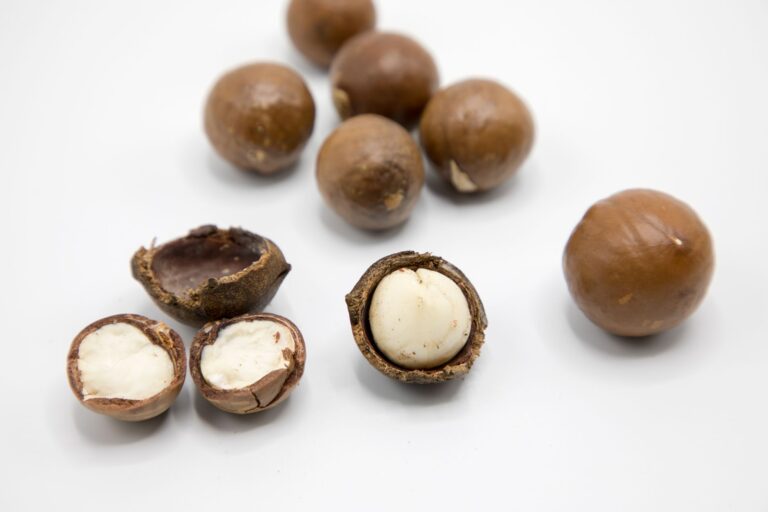

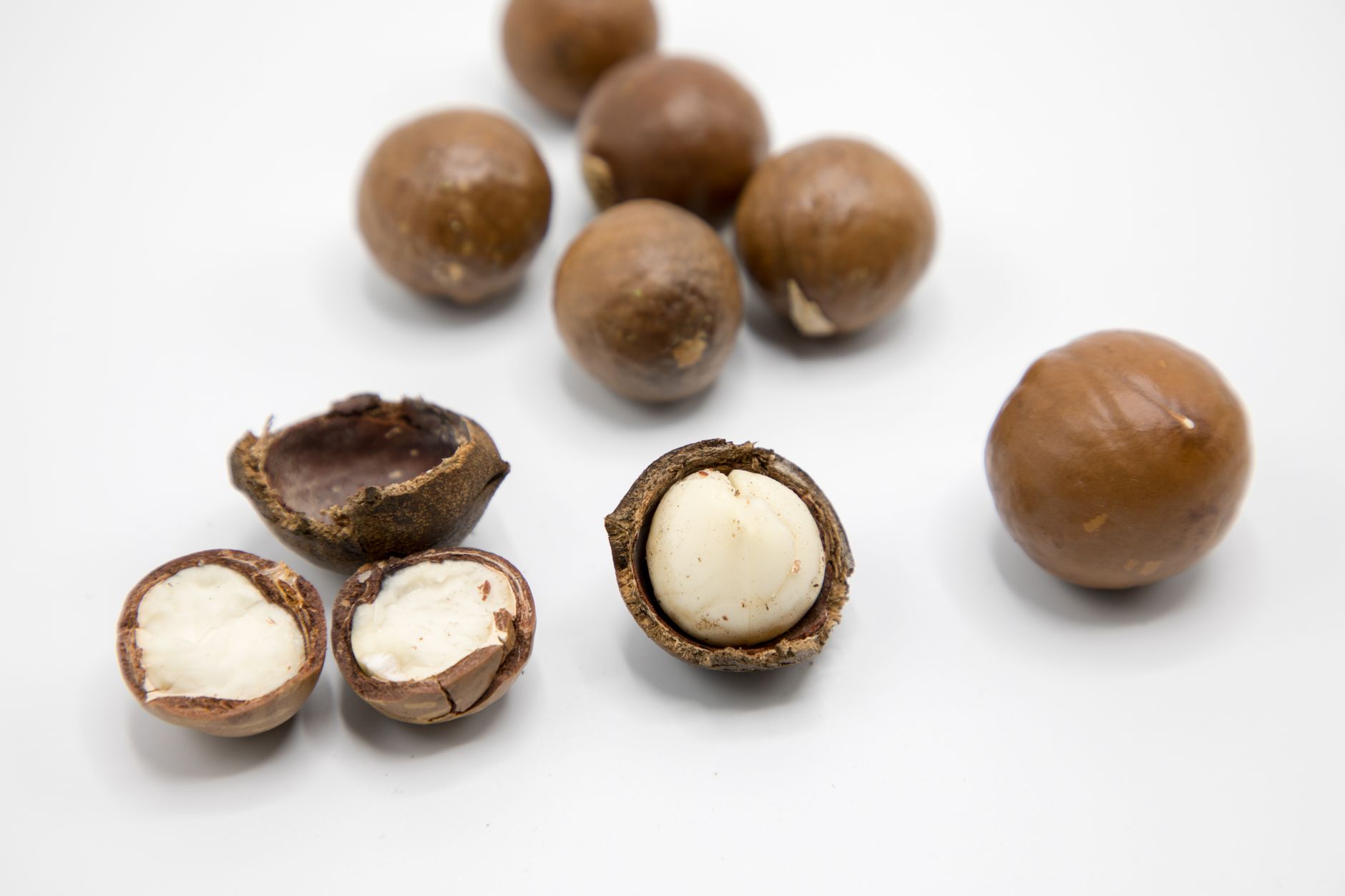

A single ounce delivers roughly 21 grams of mostly monounsaturated fat, making the buttery kernel one of the richest plant-based sources on the shelf. A single ounce delivers roughly 200 calories and about 21 grams of fat, mostly oleic acid, the same compound that gives olive oil its reputation. The high fat count is exactly why dietitians recommend macadamias in moderation, not avoidance.
This guide covers the full picture: where the trees originated, the complete nutrient profile, the heart and metabolic effects backed by research, the real cautions, and how to buy, store, and serve them without waste.
From Australian Rainforest to Global Pantry
Two species supply almost the entire commercial crop: Macadamia integrifolia and Macadamia tetraphylla, both native to subtropical rainforests in eastern Australia. Aboriginal communities harvested them long before any commercial orchard existed, cracking the rock-hard shells with stones and grinding the kernels into paste.
Hawaiian Roots and Modern Production
In the 1880s, Australian seedlings reached Hawaii, where growers spent decades breeding trees that could handle volcanic soil and island wind. The first commercial Hawaiian plantation took root in the 1880s, and by the 1950s the Kona region had built a global reputation for quality kernels. That Hawaiian push turned a wild Australian tree into a cultivated crop.
South Africa now leads world production, followed by Australia and Kenya. The climate in each of these regions delivers the warm days, cool nights, and well-drained soil that macadamia trees need to set heavy crops.
What a Raw Kernel Looks and Tastes Like
A raw macadamia kernel is round, creamy white, and noticeably softer than an almond. The fat content sits around 76 percent by weight, far higher than almonds (about 50 percent) or cashews (about 46 percent). That high fat is precisely what gives macadamias their smooth, almost coconut-like texture and makes them feel richer than other nuts in baking or on a cheese board.
That same richness shapes what lands in your hand once you crack one open.
What a One-Ounce Serving Actually Delivers
One ounce (about 28 grams) works out to roughly 10 to 12 whole kernels, and it contains around 200 calories with 21 grams of fat. That number feels high only until you look at what the fat actually is.
The Fat Profile: Mostly the Good Kind
About 80 percent of the fat in macadamias is monounsaturated, dominated by oleic acid (the same fatty acid in olive oil) and palmitoleic acid, an omega-7 fatty acid less common in the food supply. Saturated fat accounts for roughly 12 percent, mostly palmitic acid, and polyunsaturated fat fills the rest. Walnuts run heavy on polyunsaturated omega-6 and omega-3 fats, while macadamias lean almost entirely toward the monounsaturated side.
Standout Micronutrients
The same one-ounce serving delivers about 58 percent of the Daily Value for manganese, a mineral your body uses to build bone and activate enzymes. Thiamine (vitamin B1) reaches roughly 22 percent of the DV, supporting how your cells turn food into energy. Copper comes in around 17 percent of the DV, helping your body absorb and use iron. Magnesium and dietary fiber each contribute a smaller but still useful share.
Quick Comparison With Other Nuts
| Nut (1 oz / 28 g) | Calories | Total Fat | Dominant Fat Type | Key Standout Nutrient |
|---|---|---|---|---|
| Macadamia | ~200 | ~21 g | Monounsaturated (oleic) | Manganese |
| Almond | ~164 | ~14 g | Monounsaturated (oleic) | Vitamin E |
| Cashew | ~157 | ~12 g | Monounsaturated (oleic) | Copper |
| Walnut | ~185 | ~18 g | Polyunsaturated (omega-3) | ALA omega-3 |
The trade-off shows up clearly: macadamias win on monounsaturated fats and calories per kernel, but almonds carry more vitamin E and walnuts deliver plant-based omega-3s that macadamias simply lack.
The Heart, Brain, and Metabolic Benefits Worth Knowing
Multiple controlled studies point to real benefits, especially for blood lipids and blood-sugar control.
Cholesterol and Lipid Improvements
Swapping saturated fat for monounsaturated fat in the diet tends to shift blood lipids in a healthier direction, and macadamias make that swap taste good. A 2023 review in the journal Nutrients found that eating macadamia nuts daily lowered LDL cholesterol and raised HDL cholesterol, improving the overall lipid ratio in adults with mildly elevated cholesterol.
Antioxidants and Inflammation
Macadamias contain tocotrienols, a less common form of vitamin E, along with polyphenols that act as antioxidants. Light dry roasting does not significantly reduce these compounds, which is why a handful of roasted kernels still delivers a useful antioxidant load. Those same compounds help counter oxidative stress, one driver of chronic inflammation.
Blood Sugar and Weight Management
Despite the calorie density, macadamias produce a low glycemic response because their fat and fiber slow carbohydrate absorption. Several weight-loss studies that included macadamias in moderate portions found no weight gain and, in some cases, modest weight loss when the nuts replaced refined carbohydrates rather than adding to an existing diet. Palmitoleic acid, the omega-7 fatty acid in macadamias, has shown early promise in animal and lab studies for improving insulin sensitivity, though human research is still limited.
Those early findings are encouraging, yet they sit alongside practical concerns that deserve equal attention.
Treat macadamias as a replacement food, not an addition. The benefit comes from what they push off the plate, not from eating them on top of everything else.
Allergies, Oxalates, and Other Honest Cautions
Macadamia nut side effects are real for some people, and ignoring them turns a healthy habit into a hospital visit. Four specific risks deserve attention.
Tree Nut Allergy
Macadamias are classified as tree nuts by the U.S. Food and Drug Administration and listed among the major food allergens that must appear on packaged food labels. An allergic reaction can range from itching and hives to anaphylaxis, a severe and potentially life-threatening response. If you carry an epinephrine auto-injector for nut allergies, treat macadamias the same way you treat any other tree nut.
Oxalates and Kidney Stones
Every handful carries measurable oxalates, organic acids that can crystallize with urinary calcium into painful stones in people who are already prone to them. The level is moderate rather than extreme, so most people can eat them freely. If you have a history of calcium-oxalate stones, ask your doctor or a renal dietitian how macadamias fit into your personal oxalate budget.
Digestive Tolerance and Portion Control
Eating a whole bag in one sitting is a common mistake. The high fat content can overwhelm digestion, leading to bloating, cramping, or loose stools. A small handful, about 1 ounce or 10 to 12 kernels, tends to sit well and keeps calories in a reasonable range.
Toxicity in Dogs
Macadamias are one of the few nuts genuinely toxic to dogs. Even a small handful can cause weakness, vomiting, tremors, and hyperthermia in pets. Symptoms usually appear within 12 hours and resolve with veterinary care, but every confirmed case warrants a call to your vet right away. Keep bags sealed and stored out of reach.
How Macadamias Stack Up Against Other Nuts
Macadamias vs other nuts nutrition comparisons usually come down to fat type, micronutrients, and price.
Fat and Calorie Differences
Macadamias deliver the highest monounsaturated fat content of any common tree nut, with almonds a close second. Walnuts lead the field on polyunsaturated omega-3 ALA, and cashews sit in the middle on both metrics. The calorie gap reflects that fat load: macadamias are the most calorie-dense nut per ounce by a small margin.
Price and Practical Trade-offs
Macadamias usually cost more per ounce than almonds, cashews, or walnuts because the trees take seven to ten years to produce a full crop and harvesting remains labor-intensive. Paying more makes sense when you want the specific oleic-acid-dominant fat profile, the buttery texture in baking, or a low-omega-6 option to balance a diet heavy in seed oils.
Rotating Nuts for Nutritional Breadth
Eating only one nut variety, no matter how nutritious, leaves gaps. Macadamias cover manganese and monounsaturated fat; walnuts cover omega-3; almonds cover vitamin E; pistachios cover potassium. Rotating two or three across the week builds a broader nutrient intake without much extra effort.
Rotation only works if what you bring home stays fresh long enough to use.
Buying, Storing, and Using Macadamias Without Waste
Buying, storing, and using macadamia nuts well comes down to three decisions: format, storage, and portion.
Raw, Roasted, Oil-Roasted, or Salted?
Raw kernels work best for baking, homemade nut milk, and recipes where you control the salt and oil. Dry-roasted (no added oil) keeps the nutrient profile close to raw and adds a deeper flavor. Oil-roasted versions taste richer but add extra calories from the cooking oil. Salted macadamias are a flavor trade-off: the sodium per serving can climb fast, so check the label if you track salt intake.
Storage Rules to Prevent Rancidity
The same unsaturated fats that make macadamias heart-healthy also make them vulnerable to oxidation. Store an opened bag in an airtight container in the fridge for up to three months, or in the freezer for up to a year. A faint paint-like or crayon-like smell means the oils have turned, and the batch should be tossed. Vacuum-sealed bags bought from bulk bins go rancid faster than factory-sealed packs, so buy smaller amounts more often if you shop that way.
Simple Ways to Use Them
- Morning oats: Chop a few kernels over oatmeal for crunch and steady energy release.
- Salad topping: Toast lightly and sprinkle on a green salad with citrus vinaigrette.
- Low-carb baking: Pulse into flour for pie crusts or fold whole into brownie batter.
- Homemade nut milk: Blend 1 cup soaked kernels with 4 cups water, strain, and use within four days.
- Trail mix base: Combine with dried fruit and seeds for a balanced, calorie-aware snack.
Smart Daily Portion
About 1 ounce, roughly a small handful, hits the sweet spot for getting the cholesterol and antioxidant benefits without overshooting calories. If you eat them daily, weigh or count the kernels occasionally so your portion stays honest. The gap between a healthy 200 calories and a 600-calorie overage often comes down to whether you eat from a bowl or straight from the bag.
Bottom Line
Macadamias earn their reputation as one of the most nutrient-dense nuts you can eat, thanks to a fat profile dominated by monounsaturated oleic acid and a micronutrient lineup led by manganese. They support heart health, blood-sugar control, and antioxidant intake when eaten in modest portions. The cautions are real but narrow: tree nut allergy, oxalate sensitivity, overeating, and toxicity in dogs. Buy them raw or dry-roasted, store them cold, and rotate with other nuts for a broader nutrient mix.
FAQ
What are the nutritional benefits of macadamia nuts?
Macadamia nuts deliver about 200 calories per ounce, mostly as monounsaturated oleic acid, plus strong amounts of manganese, thiamine, and copper. They also contain tocotrienols and palmitoleic acid, both linked to heart and metabolic health in research studies.
Are macadamia nuts high in fat and is that healthy?
Yes, fat makes up roughly 76 percent of their weight, but most of it is monounsaturated oleic acid, the same fat associated with olive oil’s heart benefits. Replacing saturated fat with this type of fat tends to improve blood cholesterol levels.
Can eating macadamia nuts help lower cholesterol?
Multiple studies, including a 2023 review in Nutrients, found that regular macadamia consumption lowered LDL cholesterol and raised HDL cholesterol in adults. Effects are most consistent when the nuts replace refined carbs or saturated fat in the diet.
How many macadamia nuts should you eat per day?
About 1 ounce, or 10 to 12 whole kernels, is the most commonly studied portion. That serving delivers the documented heart and metabolic benefits while keeping calories near 200.
What are the side effects or risks of eating macadamia nuts?
The main risks are allergic reactions in people with tree nut allergies, possible kidney stone formation in those prone to calcium-oxalate stones, digestive upset from overeating, and toxicity in dogs even at small amounts.
Do macadamia nuts cause weight gain?
At controlled portions (about 1 ounce daily), studies show no weight gain and sometimes modest weight loss when macadamias replace higher-calorie or refined-carb foods. Weight gain usually comes from eating well beyond a measured serving.