

Mangosteen (Garcinia mangostana) is a slow-growing tropical evergreen native to Southeast Asia, recognized by its thick purple rind and soft, snow-white segmented arils. Marketed as the “queen of fruits” and a premium antioxidant fruit, it now appears in US wellness aisles as fresh segments, bottled juice, freeze-dried pericarp powder, and capsules. Beneath the marketing sit real compounds, mainly xanthones concentrated in the inedible rind, with documented antioxidant and anti-inflammatory activity in laboratory studies.
This article explains mangosteen’s nutritional profile, the xanthones driving its wellness reputation, and what the evidence actually supports, helping curious shoppers weigh the fruit, juice, or capsule options on today’s shelves.
Where Mangosteen Grows and Why It Matters
The Malay Archipelago is the birthplace of Garcinia mangostana, and commercial cultivation still clusters across Indonesia, Malaysia, Thailand, Vietnam, and the Philippines. The tree can take close to a decade to bear fruit, which helps explain why fresh mangosteen rarely travels far from where it ripens in May–September.
The Tree, the Rind, and the White Segments Inside
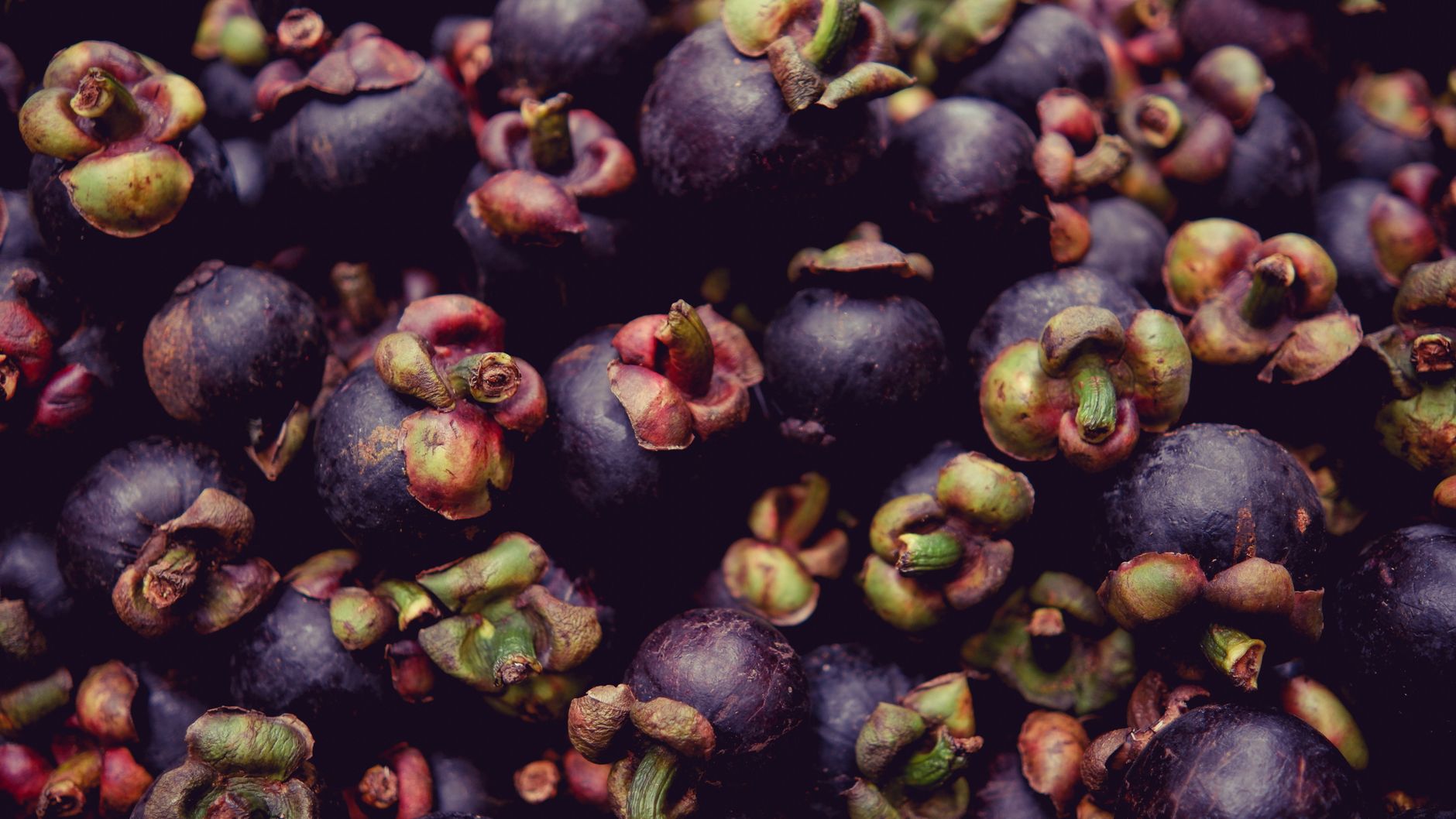
Walk up to a fruiting tree in July and the canopy looks almost waxy, a deep green that hides clusters of round purple spheres the size of a small apple. Press your thumb against one and you’ll feel a slight give when it’s ripe, much like a ripe plum. The thick, leathery rind protects four or five soft white segments that taste like a cross between lychee and peach with a faint citrus tang.
Cultural weight surrounds the fruit across its native range. In Thailand, serving fresh mangosteen to honored guests signals deep respect, and the phrase “queen of fruits” reportedly dates back centuries. That reverence followed it into global wellness culture, where the fruit now sits beside acai and goji as a so-called superfruit, marketed for immune support, skin clarity, and inflammation control.
- Origin: Malay Archipelago, cultivated across Indonesia, Malaysia, Thailand, Vietnam, and the Philippines.
- Tree profile: Garcinia mangostana, slow-growing evergreen, 6–25 meters tall.
- Edible portion: soft, white, segmented arils, typically 4–5 per fruit.
- Inedible portion: thick purple pericarp (rind) that holds most of the xanthones.
- Cultural status: traditional gift of honor in Thai and Malay customs; “queen of fruits.”
Nutritional Profile of Fresh Mangosteen and Its Edible Flesh
The white flesh is light, mildly sweet, and nutritionally modest. A 100-gram serving lands around 60 calories, most of it from simple carbohydrates, with a useful splash of vitamin C and a few minerals that quietly support daily function.
Macronutrients and the Vitamins That Show Up
Fresh arils deliver about 0.5 grams of protein and under 0.5 grams of fat per 100 grams, so the macronutrient story is really about carbohydrates and water. Vitamin C sits in the single-digit milligrams per 100-gram range, enough to contribute to your daily intake but not enough to replace a serving of citrus. B-complex vitamins including folate, thiamine, and riboflavin appear in small but useful amounts, particularly for pregnant women watching their folate intake.
Manganese and copper are the standout minerals. Manganese supports enzyme function and bone health, while copper plays a role in forming red blood cells and defending cells against oxidative damage. Dietary fiber rounds out the picture, generally 1.5–2 grams per 100 grams, giving the fruit a mild digestive benefit alongside trace potassium and magnesium.
Nutritional Snapshot at a Glance
| Nutrient (per 100 g fresh arils) | Approximate Amount | What It Supports |
|---|---|---|
| Calories | ~60 kcal | Light energy source |
| Carbohydrates | ~14 g | Quick fuel |
| Fiber | ~1.8 g | Digestion, satiety |
| Vitamin C | ~2.5 mg | Collagen, immune function |
| Folate | ~31 mcg | Cell division, pregnancy |
| Manganese | ~0.1 mg | Enzymes, bone health |
| Copper | ~0.07 mg | Red blood cells, antioxidant defense |
USDA FoodData Central lists these values for raw, unsweetened mangosteen arils, and they hold up across most commercial samples. The numbers are modest, which is exactly the point: the fruit is a refreshing food, not a multivitamin.
The Compounds Behind the Hype, From Xanthones to Polyphenols
The real story of mangosteen chemistry lives in the pericarp, the thick purple rind that most people throw away. There, a class of plant compounds called xanthones dominates, with alpha-mangostin and gamma-mangostin leading the way.
Alpha-Mangostin, Gamma-Mangostin, and Lab-Only Results
Alpha-mangostin and gamma-mangostin are the two xanthones that show up most in research. In cell cultures and animal models, both have demonstrated antioxidant activity, scavenging free radicals that contribute to cellular wear over time. Lab work also points to anti-inflammatory effects, where these compounds appear to interrupt signaling pathways involved in swelling and irritation.
Traditional medicine in Southeast Asia has leaned on the dried rind for generations, grinding it into pastes for skin infections, wounds, dysentery, and fever. Thai folk medicine and Ayurveda both document these uses, which is part of why Western supplement makers became interested. The catch: most of the bioactive compounds sit in the inedible rind, not the white flesh, and the body of evidence in humans is thin.
Freeze-dried pericarp extracts preserve more xanthones than heat-processed juices, because alpha-mangostin breaks down under high temperatures and prolonged storage.
Translation of cell-study results into confirmed effects in the human body is still incomplete. Animal doses often run far higher than what any dietary portion provides, and small human studies have produced mixed signals. Until larger, well-controlled trials land, claims about treating specific conditions should be taken as preliminary.
Evidence-Based Health Benefits Worth Knowing
Eating the whole fruit in normal amounts is a reasonable addition to a varied diet, and a few benefits have enough backing to talk about honestly. None of them are cure-alls, and the gap between promising early findings and large, rigorous human clinical trials is real.
What the Fruit May Actually Support
Antioxidant support is the most defensible claim. The xanthones in the rind, plus the vitamin C and copper in the flesh, contribute to a wider antioxidant network that helps counter everyday oxidative stress. Anti-inflammatory potential shows up in preliminary research, suggesting possible relevance to joint comfort and skin clarity, though the human data is thin.
Skin health and wound recovery have a traditional root. Dried rind pastes were applied to skin infections and minor wounds for centuries, and modern lab work has begun to probe the mechanisms behind that use. Modest support for digestive comfort and gut regularity comes from the fruit’s fiber and tannins, which can soothe mild GI upset in normal servings. Pregnant women sometimes look to fresh arils for folate, though the amount is moderate rather than high.
- Antioxidant support: xanthones, vitamin C, and copper help counter everyday oxidative stress.
- Anti-inflammatory potential: early research suggests possible joint and skin comfort benefits.
- Skin and wound care: traditional rind pastes align with emerging lab work on tissue repair.
- Digestive comfort: fiber and tannins support regularity when eaten in normal amounts.
- Folate contribution: modest amounts useful for pregnancy planning alongside other sources.
Where the Evidence Stops
Large, rigorous human clinical trials are sparse. Most published studies are small, short, or conducted in cell cultures or animals, leaving a wide gap between what the rind can do in a Petri dish and what it does after a person eats the fruit. Marketers have rushed ahead of the science, which is the main reason so many wellness claims sound more confident than the data justifies.
That gap between marketing and evidence is exactly why the safety profile deserves close attention before anyone adds it to a routine.
Side Effects, Safety Concerns, and Who Should Be Cautious
Whole fruit in normal food amounts is safe for most healthy adults and most children, but a few real risks deserve attention. They tend to show up when people lean heavily on juice, supplements, or extracts rather than the fresh arils.
Common Reactions and Who Should Hold Back
Rare allergic reactions have been reported, ranging from mild skin rashes to more serious sensitivities. People with a known allergy to other tropical fruits should approach with caution. The tannin-rich rind and excess juice intake can cause digestive upset, including constipation, and the tannins can reduce iron absorption if consumed in large amounts with meals.
More serious case reports describe lactic acidosis tied to heavy it juice consumption in people with kidney impairment. The mechanism is not fully understood, but the pattern is consistent enough that clinicians warn against juice cleanses or megadoses for anyone with reduced kidney function. Supplements and concentrated juices have also been flagged for potential interactions with blood thinners, certain chemotherapy agents, and diabetes medications.
- Allergy risk: rare skin rashes and sensitivities, especially in those with other fruit allergies.
- Digestive upset: excess juice or rind can cause constipation or stomach discomfort.
- Iron interference: high tannin intake may reduce iron absorption when paired with meals.
- Kidney concerns: case reports of lactic acidosis with heavy juice use and impaired kidneys.
- Drug interactions: possible interactions with blood thinners, chemo drugs, and diabetes medications.
No it supplement or juice is FDA-approved to treat, cure, or prevent any medical condition. Talk to a qualified healthcare professional before starting one, especially if you take medication or live with a chronic condition.
People who are pregnant, nursing, or managing chronic illness should consult an appropriate specialist before adding concentrated extracts to their routine. Whole-fruit servings eaten as food carry far less risk than megadoses of juice or capsules.
Choosing, Eating, and Comparing Mangosteen to Other Superfruits
Finding fresh it in a typical US grocery store is hit-or-miss, but specialty Asian markets and online importers carry it during the May–September window. Knowing how to pick a ripe one and open it without staining your hands turns an unfamiliar fruit into a regular treat.
Picking, Opening, and Serving Fresh Fruit
Hold the fruit in your palm and press gently. A ripe one yields slightly, like a ripe plum, without feeling mushy. The rind should be a deep, even purple without major blemishes, and the green calyx at the top should still look fresh rather than dried out. Hard, rock-solid fruit usually needs another day or two at room temperature.
Opening one takes a small knife and a light touch. Score the rind around the equator, just deep enough to break the skin, then twist the two halves apart. The white segments lift out cleanly. Wear an apron or old shirt if you care about your clothes, because the rind stains purple, and wash your hands right after to avoid transferring the color.
Fresh Fruit vs. Juice, Capsules, and Other Superfruits
Freeze-dried pericarp extracts preserve more xanthones than heat-processed juices, so a powdered extract is a more concentrated source if you want the rind compounds specifically. Juices vary widely; many are blended with apple or grape and contain very little actual it. Capsules, often marketed under names like Xango or it Plus, range from freeze-dried rind powder to highly processed blends with added flavors.
| Fruit (per 100 g) | Calories | Vitamin C | Key Antioxidant Class |
|---|---|---|---|
| it arils | ~60 | ~2.5 mg | Xanthones (rind, not flesh) |
| Pomegranate arils | ~83 | ~10 mg | Punicalagins |
| Acai pulp | ~70 | ~trace | Anthocyanins |
| Goji berries (dried) | ~349 | ~48 mg | Carotenoids, polysaccharides |
Each of these fruits brings something different. Pomegranate delivers more vitamin C and a stronger clinical record. Acai and goji berries offer their own antioxidant classes. it’s edge is its unique xanthone profile, but the fresh arils are not a vitamin bomb; they are a flavorful, low-calorie way to round out a varied diet.
Simple Ways to Use Fresh Mangosteen
Treat the white segments the way you would any delicate tropical fruit. Toss them into a green salad with mint and lime, fold them into a fruit salsa for grilled fish, or blend them last into a smoothie so the texture holds. Keep portions sensible; a half cup of arils is plenty for a snack, and it gives you a few grams of fiber without piling on sugar.
The Big Picture
it is a real, delicious tropical fruit with a nutritional profile that complements a balanced diet, plus a unique class of compounds that show genuine promise in early research. It is not a miracle cure, and the gap between cell-study results and confirmed human benefits is wide enough to justify skepticism. Enjoy the fresh arils when you can find them, treat concentrated extracts and juices with caution, and let a qualified clinician weigh in if you take medication or live with a chronic condition.
FAQ
What are the health benefits of mangosteen?
The fruit offers modest antioxidant support from its vitamin C, copper, and pericarp xanthones, with early research pointing to anti-inflammatory potential and traditional uses for skin and digestive comfort. Most claims about treating specific conditions are not yet backed by large human trials, so the safest framing is “may support” rather than “treats.”
Is it safe to eat mangosteen every day?
For most healthy adults, eating fresh arils daily in normal food amounts, around a half cup to a cup, is generally safe. Heavy consumption of juice or concentrated extracts carries more risk, especially for people with kidney issues or those on blood thinners or diabetes medication. Check with a qualified healthcare professional if you have a chronic condition.
What are the side effects of eating mangosteen?
Rare allergic reactions, including skin rashes, have been reported. The tannin-rich rind can cause digestive upset and may interfere with iron absorption when consumed in large quantities. Case reports also link heavy it juice consumption to lactic acidosis in people with kidney impairment.
What nutrients are in mangosteen fruit?
Fresh arils provide about 60 calories per 100 grams, mostly from carbohydrates, with small amounts of vitamin C, folate, manganese, copper, and dietary fiber. The xanthones that get most of the attention sit in the inedible purple rind, not the white flesh.
Can mangosteen help with inflammation?
Lab and animal studies suggest alpha-mangostin and gamma-mangostin have anti-inflammatory activity, but human clinical evidence is still limited. Eating the fruit as part of an overall anti-inflammatory diet is reasonable, while expecting a measurable effect from a capsule is not yet supported by strong data.
How do you eat a mangosteen?
Score the rind around the equator with a small knife, twist the two halves apart, and lift out the white segments. Wear an apron because the rind stains, and choose fruit that yields slightly to gentle pressure, has a deep purple color, and a fresh-looking green calyx at the top.