A stiff neck after a long flight, a sore upper back from hours at a desk, or a restless night that leaves you groggy by morning, the right neck pillow can quietly change how you feel the next day. The trick is matching the shape to how you actually use it: a contoured memory foam pillow for bed sleep, or a compact wrap-around design for planes, trains, and road trips.
This lineup covers both worlds. You’ll find three bed pillows built around ergonomic foam cradles, plus three travel pillows designed to keep your chin from dropping forward on long-haul flights. Each pick below solves a slightly different problem, so the “best” really depends on where and how you plan to use it.
The Lineup, Simplified

CloudNook Ergonomic Cervical Pillow, Grey, 60×36×13cm

ANYNEST Neck Pillow, 3-Hole Memory Foam, Gray
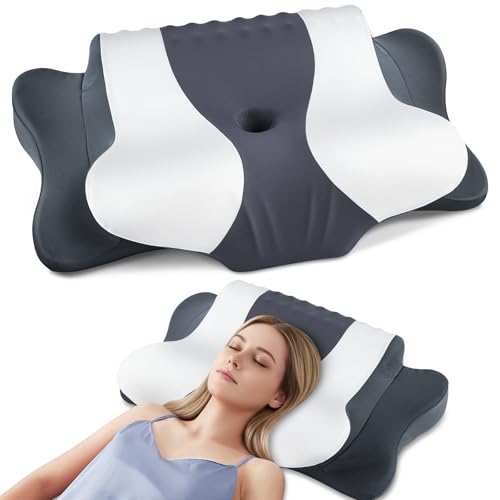
DONAMA Cervical Pillow, Ergonomic Memory Foam Contour
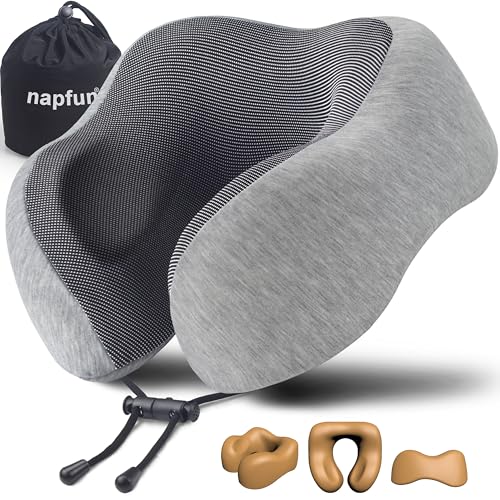
napfun Neck Pillow for Traveling, Memory Foam, Light Grey

napfun Neck Pillow for Travel, Memory Foam, Full Black

napfun Neck Pillow for Travel, Memory Foam, Pink
More On The Choices That Made The List
If your pillow just isn’t cutting it, the CloudNook design attacks the problem from a specific angle: a hollow center that lets your head sink into the pillow while the raised sides catch your neck’s natural curve. The 60 by 36 centimeter footprint fits a standard pillowcase, and the 13 centimeter loft keeps side sleepers’ spines better aligned than a flatter cushion would.
Compared to the basic bed pillows you’ve owned, the contour here does more of the support work for you, so your neck muscles aren’t quietly straining through the night. For anyone who wakes up feeling like they barely rested, the shape matters more than the fluff.
What It Does Well
- Hollow-center cradle reduces pressure on the back of your skull.
- Raised edges support the cervical curve, the natural forward arc of your neck.
- 13 cm loft suits medium-frame side sleepers without tilting the head.
- Memory foam holds shape across the night rather than collapsing flat.
- Standard sizing slips into a regular pillowcase, so no specialty linens needed.
Points To Keep In Mind
- Memory foam can sleep warm; a cooler room helps if you run hot at night.
- Contour pillows need an adjustment period, often a week or two, before the neck fully settles into the shape.
Quick Facts
Whose Bed It Belongs On
Side sleepers and older adults dealing with morning stiffness will get the most from the CloudNook shape.
Look Elsewhere When
Anyone who flips between back and side sleeping through the night should reach for the DONAMA Cervical Pillow, whose butterfly contour handles both positions.
The ANYNEST pillow goes a step beyond the standard contour with three cutouts carved into the foam, including channels for your ears and jaw to rest in without compression. That’s a small detail that matters more than it sounds: pressing your ear into a flat foam slab for seven hours leaves it numb by morning.
The memory foam core (foam that softens with body heat and molds to your shape, then bounces back) does the heavy lifting for neck support, while the cutouts handle the comfort job. Side sleepers with sensitive ears or TMJ discomfort, the aching of the temporomandibular joint that connects your jaw to your skull, will appreciate the engineering. Compared to the CloudNook pick, this one trades the deep hollow center for a more segmented approach.
Where It Helps
- Ear and jaw channels reduce pressure on sensitive areas.
- Center indentation cradles the head without forcing it into one position.
- Memory foam rebounds after each movement, holding its supportive shape.
- Works for side sleepers and people who nap propped up on the couch.
Worth Noting
- The 3-hole layout makes the pillow narrower than a standard pillow, so the foam edges feel firm right against your cheek.
- Spot-cleaning is usually required rather than a full machine wash, which owners commonly note when the cover wears.
The Right Fit
Side sleepers with ear or jaw sensitivity benefit most from the ANYNEST 3-Hole design.
Skip It When
Anyone who moves frequently between back and side should consider the DONAMA Cervical Pillow, whose butterfly contour supports both positions.
The DONAMA pillow leans into a butterfly silhouette: winged extensions at the sides cradle your head from either direction, while the central contour supports the curve of your neck. That shape gives you two distinct loft zones, taller in the middle for side sleepers, lower at the front for back sleepers.
For restless sleepers who shift positions through the night, the DONAMA covers more ground than the CloudNook or ANYNEST picks, both of which are tuned primarily for one sleeping style. The memory foam does the work of filling in the gaps between your neck and the mattress. For anyone who treats bed as a rotating position rather than a fixed one, that flexibility is the whole point.
Advantages To Know
- Butterfly contour supports both back and side sleeping.
- Two loft zones let you flip without losing alignment.
- Memory foam holds the neck curve without flattening over months of use.
- Sculpted edges keep your shoulders from rolling forward during sleep.
Some Limits To Know
- The contoured shape makes the pillow feel bulky under a standard pillowcase.
- New memory foam often carries a mild factory scent that fades over several days.
Feature Snapshot
Made For
Position-switchers and anyone whose current pillow feels too flat or too tall will appreciate the DONAMA’s two-zone contour.
A Better Fit Elsewhere
Travelers should ignore the DONAMA and head straight for the napfun neck pillow line, which collapses small enough for a carry-on.
Planes, trains, and long car rides create a very different problem than your bed: you sit upright, your head wants to fall forward, and a standard pillow can’t help. The napfun travel pillow addresses the specific issue of the chin dropping onto the chest with a raised front lip that props your jaw up.
Made from 100 percent memory foam, the pillow wraps around the neck and stays put without a strap, a small detail that frequent flyers appreciate. The light grey cover keeps it neutral enough for any outfit. Unlike the bed pillows above, this one compresses small enough to clip to a backpack. For red-eye flights or any trip longer than four hours, that chin support is the difference between arriving rested and arriving wrecked.
Useful Touches
- Chin-support lip keeps your head from dropping forward during sleep.
- Memory foam core molds to your neck shape and holds it.
- Light grey colorway stays discreet in business or premium-economy cabins.
- Wraps the neck securely without needing a strap or buckle.
Trade Offs
- Travel pillows run warm, so on humid flights the foam can feel sticky against bare skin.
- The fixed shape only works when you’re upright, so it can’t double as a lumbar cushion.
Best Suited To
Frequent flyers and anyone taking long bus or train trips where upright head support matters.
Swap It Out When
If you want the same travel design in a darker color, the napfun Neck Pillow in Full Black is the direct alternative.
The Full Black napfun pillow delivers the same chin-supporting memory foam core as the Light Grey version, but swaps the fabric for an all-black cover that hides wear from months of stuffing into overhead bins. For people who fly several times a month, that darker fabric stays presentable longer.
It still wraps the neck without a strap, still uses 100 percent memory foam, and still folds down small enough for a carry-on side pocket. Where the Light Grey version blends in, this one looks more like a piece of travel gear, which some travelers prefer. The honest read is that the only meaningful difference from the previous pick is cosmetic.
Features That Help
- Dark fabric hides scuffs and stains from frequent handling.
- Chin-support lip prevents the head-drop that wrecks long flights.
- Memory foam core cradles the neck in upright positions.
- Strap-free wrap stays in place without adjustments.
Smaller Caveats
- Black fabric absorbs heat more than lighter shades, which can feel warm on summer flights.
- The memory foam off-gasses (releases a faint chemical smell common to new foam) for the first few uses.
Right Fit For
Business travelers and frequent flyers who want a travel pillow that looks sharper and wears longer than lighter options.
Another Choice May Suit
Anyone wanting softer color options should reach for the napfun Neck Pillow in Pink, which uses the same design language.
The Pink napfun travel pillow rounds out the line with the same chin-supporting memory foam, just wrapped in a brighter cover that stands out in the overhead bin. Beyond the colorway, nothing else changes: same wrap-around shape, same strap-free fit, same 100 percent memory foam fill.
For travelers who lose track of black and grey accessories on the road, a pink pillow is much easier to spot in a shared hotel room or rental car. Otherwise, this is functionally a twin of the Light Grey and Full Black picks above. Worth grabbing if color matters to you, less so if you only care about the support.
What Pays Off
- Bright pink cover is easy to spot in luggage and shared rooms.
- Chin-support lip prevents forward head-drop on long flights.
- Memory foam adapts to your neck’s curve within a few minutes of wear.
- Strap-free wrap stays put without fiddling.
Practical Considerations
- Pink fabric can show makeup or sunscreen smudges more visibly than darker covers.
- Like all memory foam travel pillows, it takes up space in a carry-on even when compressed.
Who Should Grab It
Style-focused travelers and anyone who wants their gear to stand out from the standard black-and-grey crowd.
Not Your Match When
For a quieter, more professional look, the napfun Neck Pillow in Full Black handles the same job with a more understated colorway.
Choosing The Right Neck Pillow For Your Sleep Style
Before picking a pillow, think about how you actually sleep. Side sleepers need taller loft (the height of the pillow when uncompressed, measured from base to peak) to fill the gap between ear and shoulder, while back sleepers generally do better with a medium profile that supports the neck curve without pushing the chin down. Stomach sleepers, on the other hand, usually want a thinner pillow or none at all, since anything thick forces the neck into an awkward twist.
Foam density (how heavy the foam feels per cubic foot, a rough proxy for firmness and durability) also matters more than people expect. Low-density foams feel plush at first but flatten within a year. High-density foams feel firmer out of the box but keep their support much longer.
Travel pillows are a different category entirely. The job isn’t aligning your spine on a flat mattress; it’s preventing your head from dropping forward in a seat. Look for chin support, strap-free stability, and a cover that breathes (allows air to pass through so heat and moisture don’t build up). Memory foam is the common material because it compresses small but expands into a supportive shape once worn.
Loft, Firmness, and Sleeping Position
Side sleepers should aim for a loft that matches shoulder width, roughly 12 to 15 cm for most adults. Back sleepers usually do best at 10 to 12 cm, while stomach sleepers want under 10 cm. Firmness is personal: people with broader shoulders often need firmer foam to avoid their head sinking too low.
Foam Type and Heat Management
Memory foam cradles well but sleeps warm, so a pillow with cooling gel, ventilation holes, or a breathable cover helps if you run hot. Latex foam (a bouncier, more breathable alternative made from natural or blended rubber) sleeps cooler but costs more and feels less contour-hugging. Polyester fill is the budget option, but it flattens fastest and offers the least neck support.
Travel-Specific Features
For flights, trains, or road trips, prioritize chin support, strap-free fit, and a removable washable cover. The napfun line addresses all three, which is why it appears three times in this roundup with different colorways. Lightweight compression matters too if you carry only a small bag.
Common Slip Ups Shoppers Run Into
Mistakes Worth Dodging
The most common error is buying a contoured cervical pillow without accounting for the adjustment period. A neck pillow feels awkward for the first week because your muscles have adapted to your old pillow. Give it at least 14 nights before deciding.
Another trap: assuming a softer pillow is more comfortable. For neck support, you actually want firmer foam that holds its shape, especially under the head’s weight. Fluffy fill collapses and leaves the neck unsupported.
Where The Extra Money Goes
Premium cervical pillows cost more for a few clear reasons: higher-density memory foam that resists flattening, breathable covers that reduce heat, and contour shapes refined through iteration. The upgrade matters most if you sleep on your pillow every night for years. For occasional travel use, mid-range picks handle the job well.