

Standing on hard floors for eight hours, walking the dog twice a day, or logging weekend miles in stiff boots takes a quiet toll on the heel. The right insert can change how the whole day feels underfoot, easing the ache that builds by mid-afternoon or the sharp stab that greets you out of bed. I put together this list for anyone whose heels complain more than they should, from retail workers and nurses to new runners and people whose shoes just don’t fit quite right anymore.
A Fast Comparison Of The Options

FLYSTORY 4D Cloud Insoles XL (2 Pairs)
PLERE Plantar Fasciitis Insoles (Trimmable)

ARIAT ATS Round Toe Gel Insole
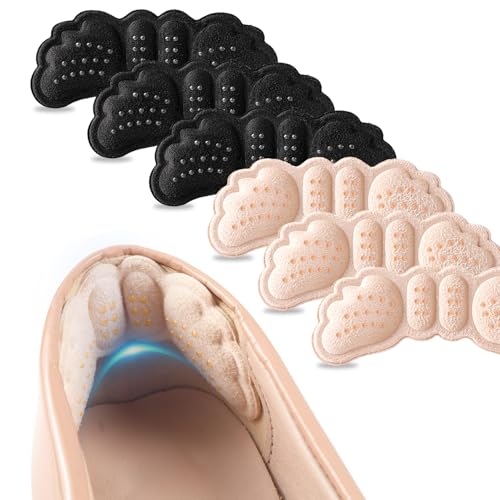
EIRMAT Heel Pads Too Big Shoes, Black & Beige, 6 Pairs

EIRMAT Heel Pads Too Big Shoes, Beige, 6 Pairs

EIRMAT Heel Pads Too Big Shoes, Black, 6 Pairs
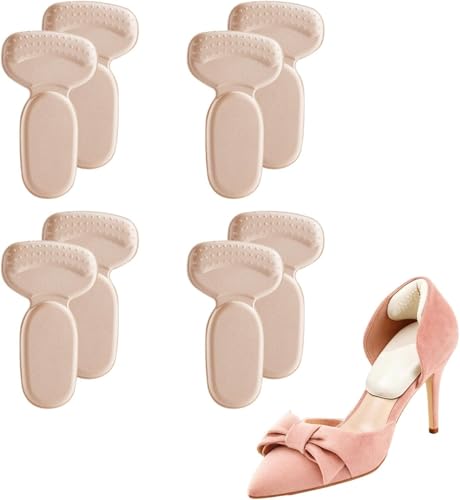
BYXIWA Heel Grips Liner Cushions (Beige, 4 Pairs)
Why These Options Stand Out
FLYSTORY’s 4D Cloud Insoles are built around a layered memory-foam feel that softens every step, especially across the heel where impact tends to land hardest. The XL sizing covers men’s 11–13.5 and women’s 12+, so anyone with a larger boot who has been ignored by standard inserts finally has an option that doesn’t bunch or run short.
For people whose days involve standing on concrete, tile, or factory floors, the cushioning absorbs the kind of low-grade pounding that builds into evening heel pain. I think of these as a quiet upgrade for anyone whose current insole has packed out and lost its bounce.
Practical Advantages
- Memory-foam construction cradles the heel and reduces the sharp impact of each step
- Two-pair pack lets you rotate inserts between pairs of shoes without downtime
- XL size fits hard-to-fit larger feet that many standard insoles skip
- Trimmable along guidelines for a more personalized fit inside boots or sneakers
- Targets arch fatigue as well as heel pain, addressing two common complaints at once
Things To Consider
- Memory foam compresses over time, so heavy daily users may notice reduced rebound after several months
- Bulkier profile may crowd tighter dress shoes
Quick Facts
Made For
Nurses, warehouse workers, and larger-footed shoppers who stand more than six hours a day and want noticeable heel cushioning without a custom orthotic.
Consider Something Else When
Flat-footed walkers with strong arch pain get a more tailored fit from the PLERE Plantar Fasciitis Insoles reviewed below.
The PLERE insert earns its spot by letting you choose your arch height, low, medium, or high, rather than guessing. Combined with five trimmable sizes, it’s the closest you get to a custom orthotic at off-the-shelf pricing. For someone with pronounced flat feet or unusually high arches, that choice matters more than any cushion.
Compared to the cloud-soft FLYSTORY pick above, this is a more corrective-feeling insert, firmer under the arch with a deeper heel cup. It works equally well slipped into work boots, sneakers, or casual lace-ups during the morning shift.
Positive Takeaways
- Three arch options address flat feet, neutral arches, and high arches without compromise
- Trimmable sizing lets you dial in a precise fit, which directly improves heel alignment
- Deep heel cupping cradles and stabilizes the rear foot during long walks
Points To Note
- Firmer construction feels more corrective than plush; not the soft “cloud” sensation some prefer
- Trimming requires care to avoid cutting too aggressively along the toe line
- Heel-only pain sufferers may not use the full arch support it offers
Right Fit For
Flat-footed or high-arched walkers dealing with plantar fasciitis symptoms who want a configurable insole rather than a one-shape-fits-all cushion.
Skip It When
Boots-and-cowboy crowds wanting a slimmer, gel-pocketed insole should look at the ARIAT Men’s ATS Round Toe Gel Insole.
The ARIAT ATS Round Toe Insole is shaped to fit the wide, round-toe footprint of western and work boots, an issue most generic inserts ignore. Its gel cushion zone sits right under the heel, which is where fatigue starts when you’re on your feet around a stable or worksite for hours.
This is a more focused, niche pick than the all-around PLERE or the cushion-heavy FLYSTORY. If your heel hurts specifically inside cowboy boots or ropers, the geometry matches your footwear instead of fighting it.
Points In Its Favor
- Built for the round-toe boot shape, not forced into a sneaker mold
- Targeted gel heel pocket softens impact in boots with little built-in cushion
Honest Caveats
- Narrow fit profile makes it a poor swap into roomy sneakers
- Limited sizing flexibility if your boots fall between ARIAT’s labeled ranges
- Less corrective arch support than the PLERE option for pronounced flat feet
Best Suited To
Riders, ranchers, and boot wearers who want a gel-soft heel without altering the fit of their western footwear.
Look Elsewhere When
Sneaker-and-trail runners wanting all-day arch correction should reach for the PLERE Plantar Fasciitis Insoles instead.
This EIRMAT bundle solves a different problem than the arch inserts above: shoes that are about a half size too roomy, where the heel lifts with every stride and friction builds into blisters. The 0.27-inch heel pads take up that extra space and grip the back of the foot, which is exactly what loose-fitting shoes need.
The black-and-beige split pack covers dress shoes, casual sneakers, and boots without forcing a single color choice. Six pairs mean you’re stocked for a while even as the adhesive wears out and you cycle a fresh set in.
Bright Spots
- Six pairs spread across two colors match a wider shoe wardrobe
- 0.27-inch fill absorbs the gap in shoes a half size too big
- Contoured shape and grip surface limit the heel slip that causes blisters
Trade Offs
- Only addresses fit, not arch or gait correction
- Adhesive-backed pads typically need re-application every few weeks
- Not recommended in shoes that already fit snugly
Perfect Match For
Anyone whose everyday shoes run a half size large and who keeps losing the heel or fighting friction blisters at the back of the foot.
A Better Fit Elsewhere
People wanting arch correction and heel pain relief should turn back to the PLERE Plantar Fasciitis Insoles.
If your loose-shoe problem centers on nude flats, loafers, or heels where a black pad would peek out the back, this all-beige six-pack is the discreet version of the EIRMAT lineup. Same 0.27-inch thickness and same grip-friendly surface, just dressed for lighter shoes.
Compared to the black-and-beige combo above, this is the option to grab if every shoe you’re trying to rescue is in a light color. It’s a small detail that keeps the fix invisible.
Useful Highlights
- Beige tone disappears inside nude and light-colored flats
- Same 0.27-inch fit correction as the multi-color pack
- Six pairs last through multiple re-application cycles
Points To Keep In Mind
- Shows through open-back sandals or very low-cut heels
- Still only solves fit, not arch mechanics
Who Should Grab It
Dress-shoe and flat wearers whose loose-fitting pairs are light-colored and need an invisible in-shoe fix.
Reach For A Different Pick When
Mostly boot and sneaker wardrobes are better served by the black EIRMAT pack later in this list.
The all-black EIRMAT pack is the version for runners, hikers, and boot wearers who don’t want a beige pad flashing at the back of a sneaker collar. Same shape and 0.27-inch depth as the other EIRMAT packs, just monochrome for darker shoes.
It handles the same problem as the combo pack, which makes it a duplicate solution in a single color. If your entire loose-shoe problem lives in sneakers or boots, this is the cleanest fit.
Well-Handled Touches
- Black finish stays hidden in sneakers, boots, and oxfords
- Six-pair quantity covers multiple shoes at once
- Targets the exact half-size-too-big gap that causes heel slip
Less-Strong Areas
- Visible against light-colored shoes, so it’s a single-color tool
- Adhesive eventually loosens with sweat and heat, common wear behavior
Built With In Mind
Sneakerheads, hikers, and boot wearers fighting heel lift in dark-colored shoes.
Where Another Pick Suits Better
Anyone who also needs arch support should consider the BYXIWA Heel Grips below or the PLERE Plantar Fasciitis Insoles.
BYXIWA’s heel grips are the closest cousin to the EIRMAT packs in this list, with a softer sponge construction and a peel-and-stick design meant for breaking in stiff new shoes. The 0.27-inch feel fills loose space while cushioning the friction that causes fresh-shoe blisters.
Where it differs from the EIRMAT lineup is the foam density and the four-pair count. Lighter and softer, which makes it a better choice for break-in discomfort rather than chronic half-size gaps.
The Case For It
- Soft sponge layer softens the rigid heel area of brand-new shoes
- Peel-and-stick backing stays put through daily wear
- Skin-friendly fabric cover reduces the friction that causes blisters
- Works in sneakers, flats, heels, and boots
Practical Considerations
- Only four pairs per pack, less coverage than the EIRMAT six-pairs
- No arch component, so it’s not a structural fix for flat feet
Feature Snapshot
Whose Shelf It Belongs On
People breaking in stiff new shoes or anyone fighting heel blisters on dress shoes that fit slightly loose.
Not Your Match When
Chronic arch pain or plantar fasciitis sufferers need the structural support of the PLERE Plantar Fasciitis Insoles.
What Matters Most Before Choosing Heel Support Shoe Inserts
Match The Insert To The Problem
Heel pain has a few common culprits: plantar fasciitis (sharp pain at the heel base, especially with first steps in the morning), general impact fatigue from standing on hard surfaces, and shoes that simply fit too loose around the heel. Full-length arch insoles like the FLYSTORY or PLERE picks target the first two problems by changing how force travels through the foot. Heel-only pads like the EIRMAT packs and BYXIWA grips target the third by filling gap and absorbing friction.
If your heel pain shows up first thing in the morning, look for an insole with a deep heel cup and real arch support. If your shoes simply slip when you walk, a heel pad will solve it faster and cheaper than rebuilding arch support.
Arch Height Is Worth Getting Right
Arch height, the curve under the middle of your foot, is one of those specs that quietly makes or breaks an insole. A high-arch foot sitting on a flat insert will feel like a hammock with no support. A flat foot sitting on a high-arch insert will feel like a golf ball under the midfoot. The PLERE pick is the rare off-the-shelf option that offers three arch heights in one product, which removes the guess.
Boot Shape Matters More Than You’d Think
Western boots, safety toes, and work boots use round or wide toe boxes that don’t match a sneaker-shaped insole. Forcing a generic insert into that footprint creates bunching under the ball of the foot and a sloppy fit through the heel. Boot-shaped options like the ARIAT ATS Round Toe exist specifically to match that geometry, and the difference shows up the moment you lace up.
Fit-Loss Inserts Are A Different Tool
The EIRMAT and BYXIWA picks are not arch inserts. They are friction and fit-loss fixes: thin heel-only pads designed to fill space in shoes a half size too big. That makes them ideal for dress shoes, loafers, and any shoe where the heel lifts but the overall length is fine. Treat them as a separate category from full-foot insoles and you’ll choose better.
Key Considerations Across These Picks
Where Shoppers Go Wrong
The most common slip-up is grabbing a cushy gel insert and expecting it to fix plantar fasciitis. Cushion alone doesn’t unload the plantar fascia; arch geometry does. The reverse mistake is buying a hard corrective insole expecting pillowy comfort and returning it because it felt “too firm”. Honest expectations on day one save returns on day thirty.
What The Higher Tier Buys
The pricier end of the insole category typically buys you better materials and a more anatomically shaped heel cup, not just more cushion. A molded deep heel cup holds the fatty pad under the heel in place, which is the difference between absorbing impact and letting it radiate up the ankle. For most shoppers, mid-tier picks with a real heel cup deliver nearly all of the benefit at a fraction of the upgrade cost.
Frequently Asked Questions
How long do heel support shoe inserts usually last?
Most foam and gel inserts hold their supportive feel for roughly six months under daily wear before the cushioning packs out and the arch begins to flatten.
Can I move inserts between pairs of shoes?
Yes, swapping them between two or three pairs is fine, though each transfer slightly compresses the foam, so dedicated rotation extends the useful life of every set.
Do I need different inserts for work and running shoes?
Most runners do better with a more flexible, lower-profile insert, while standing work often rewards a firmer, deeper-heel-cup design. Matching the insert to the activity tends to matter more than matching it to the shoe brand.
Will heel pads make tight shoes fit better?
No, heel pads are designed for shoes that are too loose; using them in snug shoes usually causes heel pressure, slip, and new blisters.
Are full-length insoles better than heel-only pads?
Full-length insoles correct how force moves through the whole foot, while heel-only pads fix fit and friction at the back. The right choice depends on whether the heel pain comes from structure or from shoe fit.