


Sitting wrong for eight hours a day quietly tightens everything around an already-curved spine. The right chair spreads load along the back, lets the pelvis sit forward, and gives the lumbar region something to lean against without collapsing into it. Pick one that matches your body, your desk height, and the hours you log, and a lot of small daily aches quietly fade into the background.
A Quick View Of The Lineup

Boss Office Products B245-BK Be Well Medical Spa Stool

COTYFLY Ergonomic Office Chair with Footrest & Massage Lumbar Support

AreShark Criss Cross Ergonomic Cross Legged Office Chair

Synorla Ergonomic High Back Office Chair 330LBS

DurayLoly Criss Cross Chair with Flip-Up Arms

COMHOMA Big and Tall Office Chair with Footrest

AtHope Ergonomic Cross Legged Office Chair with Wheels
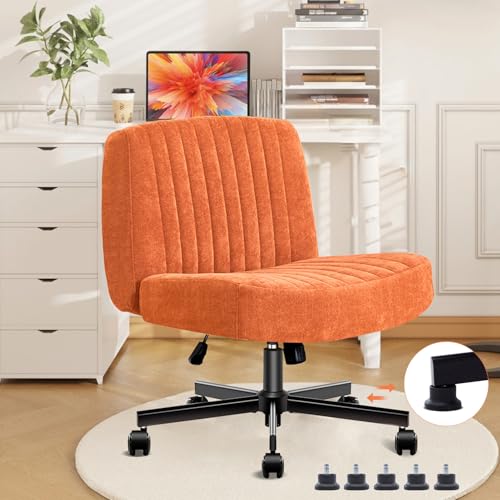
Shipborne Convertible Base Criss Cross Chair (Orange)

NYPOT Ergonomic Kneeling Chair with Adjustable Seats
A Breakdown Of The Leading Choices
The Boss B245-BK earns its spot here by staying out of the way. Where most of the picks on this list are tall task chairs or wide floor seats, this is a slim rolling stool with a small supportive back, sized for tight treatment rooms or standing-desk setups.
It rolls on dual-wheel casters and uses a Caressoft vinyl seat that wipes clean in seconds. For someone who bounces between a counter, a desk, and a treatment table, the light footprint and modest lumbar support make it a useful third chair rather than a primary seat.
Standout Benefits
- Compact rolling base fits small workspaces.
- Wipe-clean vinyl surface handles daily messes.
- Modest backrest nudges the spine upright without forcing posture.
- Pairs well with standing-desk routines.
Things To Consider
- Seat height and cushioning are basic for long workdays.
- Limited adjustment range compared with full task chairs.
- Vinyl can feel cool against bare skin in air-conditioned offices.
Who It Suits Best
Best for clinicians, estheticians, and short-session home users who want a low-profile stool with light back support.
A Better Fit Elsewhere
For full eight-hour desk days, the Synorla Ergonomic High Back Office Chair 330LBS offers the deeper cushioning and adjustability this stool lacks.
The COTYFLY chair tries to do everything at once, and on paper the list is long: 3D finger-pressure kneading nodes along the lumbar region, 4D headrest and armrests, adjustable seat depth and back height, a retractable footrest, and a 400-pound capacity.
For someone with a pronounced curve who ends the day with a tight lower back, the cordless massage nodes are the real hook. They let you knead tense muscles between meetings without leaving the seat. The footrest also helps when you want to shift weight off the pelvis mid-afternoon.
A Few Strong Suits
- Lumbar massage targets tension without a separate device.
- Wide weight capacity suits heavier users.
- Adjustable seat depth fits longer and shorter torsos.
- Retractable footrest supports short recline breaks.
Worth Noting
- Massage nodes run on a battery that needs recharging.
- The control scheme has a learning curve.
- Footrest extension narrows the chair’s footprint underneath a desk.
Feature Snapshot
Made For
Heavier users and remote workers logging long hours who want massage-based lumbar relief built into the chair.
Look Elsewhere When
Simpler routines may find the COMHOMA Big and Tall Office Chair with Footrest a more straightforward heavy-duty option without the electronics.
The AreShark takes the criss-cross geometry seriously. The seat is wide and deeply cushioned, with a 4-inch plush layer that supports cross-legged, kneeling, or sideways sitting without your hip bones digging in.
The dual-back design hugs the lumbar and thoracic regions separately, which is meaningful for scoliotic spines: rather than one wide pillow that misses the curve, two panels meet the back where it actually bends. The stretchable footrest rotates out when you want to unfold your legs.
Good Reasons To Consider
- Dual backrest tracks spinal curvature.
- Wide cushion suits varied sitting styles.
- Rotating footrest supports leg movement.
- Works for meditation breaks between tasks.
Trade Offs
- Large footprint crowds smaller desks.
- Low height may not suit tall standing-desk users.
- Leather-style upholstery needs wiping to stay clean.
Right Fit For
Cross-legged sitters, yoga practitioners, and anyone whose scoliotic curve shifts their comfortable hip position through the day.
Swap It Out When
Taller users who need a higher seat may prefer the AtHope Ergonomic Cross Legged Office Chair with Wheels for its adjustable height range.
The Synorla reads like the sensible middle of the roundup: a tall-back task chair with a 330-pound capacity, an S-shaped backrest profile, and flip-up armrests that tuck away when you want to roll closer to the desk.
Where the AreShark encourages variety, the Synorla encourages consistency. Seat height, lumbar support, and headrest all adjust independently, which lets you dial in a neutral posture and keep it through a long coding block or a stack of documents. The high back supports the upper spine, helpful when your curve runs into the thoracic region.
Reasons It Performs
- S-shaped backrest follows natural spinal contour.
- Flip-up arms save shoulder room at the desk.
- Strong load rating suits larger users.
- Headrest supports the neck during recline breaks.
Minor Gripes
- Assembly takes time and a second pair of hands.
- Standard mesh upholstery wears with heavy daily use.
- Recline tension may need frequent re-tuning.
Feature Rundown
Who Will Love This
Office workers and remote employees who need a dependable, adjustable task chair for full workdays.
Skip It When
Anyone wanting cross-legged flexibility should look at the AreShark Criss Cross Ergonomic Cross Legged Office Chair instead.
The DurayLoly keeps the criss-cross format simple. Where the AreShark leans into dual-back engineering, this one offers a thick padded backrest, 5-gear adjustable armrests, and a height range that adapts to most standard desks.
For someone who wants the cross-legged option without a complicated spec sheet, the trade-off feels right. The armrests tilt at five positions, so they stop hitting your ribs whether you sit upright or curl sideways with a laptop.
Positive Points
- Five-position armrests suit varied postures.
- Generous padding softens long sits.
- Compact base fits smaller rooms.
- Adjustable height works with standard desks.
Room For Improvement
- No dedicated lumbar panel for pronounced curves.
- Cushion compresses faster than denser foams.
- Limited recline compared with full task chairs.
Perfect Match For
Casual home users and students who shift between cross-legged, upright, and side-leaning positions throughout the day.
Reach For A Different Pick When
Anyone needing stronger lumbar targeting should move up to the AreShark Criss Cross Ergonomic Cross Legged Office Chair.
The COMHOMA looks like a heavy-duty gaming chair but reads as a serious ergonomic seat. The high back has prominent side wings that hug the thoracic region, and the headrest is generously padded for tall frames.
A spring lumbar system flexes with movement, so when you shift to relieve one side of a curve the support shifts with you rather than fighting your motion. The 150-degree recline and retractable footrest let you lie back fully between focus blocks.
Noteworthy Benefits
- Reinforced frame supports larger bodies.
- Side wings cradle the thoracic spine.
- Spring lumbar tracks posture shifts.
- Deep recline supports rest breaks.
Points To Note
- Large footprint fills a corner of the room.
- Gaming-chair aesthetic may not fit minimal offices.
- Headrest sits high for users under 5’6″.
Quick Facts
Best Suited To
Taller and broader users who want a reinforced frame, deep recline, and cradled upper-back support in one seat.
Consider Something Else When
Those wanting massage-driven relief should consider the COTYFLY Ergonomic Office Chair with Footrest & Massage Lumbar Support.
The AtHope takes the criss-cross idea and adds a height range that actually reaches standard desk level. For most people, the seat rises high enough to keep elbows at a comfortable typing angle without a footrest.
It also rolls, which sounds minor until you try to move a wide floor chair across a room. Lumbar support sits in the right place for an upright sitter, and the geometry accommodates kneeling, cross-legged, and squat-style positions for short meditation breaks between tasks.
Where It Helps
- Height range reaches standard desk height.
- Wheels add practical mobility.
- Wide seat supports varied sitting styles.
- Useful for short meditation resets.
Honest Caveats
- Headrest is minimal for tall bodies.
- Lumbar panel sits fixed, not adjustable.
- Casters can drift on hard floors without a mat.
Built With In Mind
ADHD sitters, yoga practitioners, and anyone who values mobility and varied posture over a single locked-in position.
Where A Sibling Pick Shines
For dedicated lumbar engineering on a criss-cross frame, the AreShark Criss Cross Ergonomic Cross Legged Office Chair offers more targeted back support.
The Shipborne is the warmest-looking chair in the roundup. Orange chenille fabric covers a 25-inch-wide cushion that sinks in softly, and the convertible base lets you angle the seat for upright or reclined work.
For a home office that doubles as a living space, that matters: it looks more like a reading chair than a workstation. The cushion thickness is roughly 4.8 inches, which protects hip bones during long cross-legged sessions.
Bright Spots
- Soft chenille feels gentle against bare arms.
- Wide seat suits tall and broad users.
- Convertible base shifts between work and lounge.
- Bright color adds warmth to neutral rooms.
Less Ideal Details
- Chenille can snag with pets or jewelry.
- Base mechanism may need occasional tightening.
- Bold color limits styling flexibility.
Feature Card
Whose Shelf It Belongs On
Home-office decorators and pet households who want an ergonomic criss-cross chair that doubles as a living-room accent.
Not Your Match When
Offices needing a more neutral aesthetic should consider the AtHope Ergonomic Cross Legged Office Chair with Wheels.
The NYPOT does the opposite of a reclining chair. By tilting the pelvis forward and resting the shins on a lower cushion, it shifts your center of gravity so the spine stacks vertically rather than collapsing into the seat back.
For scoliotic curves, that vertical stacking can relieve the compression that builds during long standard sits. Adjustable seat height fits desks ranging from roughly 29 to 35 inches, and the design supports up to 250 pounds.
Notable Upsides
- Forward tilt redistributes pressure off the lumbar spine.
- Height range fits common desk heights.
- Rocking base encourages subtle movement.
- Compact frame fits tight spaces.
Things To Weigh
- Knees and shins can fatigue after extended use.
- Lower weight capacity than heavy-duty picks.
- Not ideal for users with knee sensitivity.
At A Glance
The Right Fit
Beginners exploring posture correction and anyone wanting short focused sessions with a neutral spine rather than full recline comfort.
A Better Fit Elsewhere
For long all-day sessions with cushioned lumbar support, the Synorla Ergonomic High Back Office Chair 330LBS remains the more forgiving option.
Matching Seating To Your Spine Curve
The right chair for scoliosis depends on where your curve sits and how long you sit each day. Lumbar support matters most for lower curves, while thoracic curves need taller backs that follow the spine upward.
Measure your dominant curve first. C-curves (one bend) usually respond well to a single supportive back panel like the Synorla. S-curves (two opposing bends) often need split or dual-back designs, which is where the AreShark and AtHope earn their keep.
Seat depth and back height should match your torso length, not your total height. A chair that fits a six-foot user may crush a five-foot-four sitter’s knees against the seat pan. Check the seat-depth adjustment and minimum seat-height numbers before choosing.
Material choice matters for daily comfort. Mesh breathes well in warm climates but compresses faster. Foam holds shape longer but can feel warm. Vinyl wipes clean easily for clinical or shared spaces. Match the upholstery to your climate, not your aesthetic preference.
For households with kids and pets, stain-resistant fabric matters more than support ratings. Chenille and boucle look inviting but snag easily. Vinyl and treated mesh survive daily life better.
What Separates Budget Picks From Premium Chairs
Common Shopping Slip Ups
Many shoppers pick a chair based on looks or one strong spec, then skip the adjustment checks. A chair with five lumbar settings still fails if the seat height minimum sits too tall for the user’s legs. Always confirm minimum seat height before deciding, especially for shorter users.
Where The Extra Money Goes
Premium picks on this list add features that justify their cost for specific needs. The COTYFLY’s massage nodes, the COMHOMA’s reinforced frame, and the Shipborne’s convertible base each solve a different problem. The upgrade is worth it when the feature directly addresses your daily pain point, and worth skipping when it adds complexity you will not use.
Frequently Asked Questions
How long should I sit in a scoliosis-friendly chair each day?
Start with one to two hours and increase gradually as your body adapts. Most chairs perform best when paired with standing breaks every 45 to 60 minutes.
Can a chair actually improve scoliosis?
A chair supports posture and reduces strain but does not correct spinal curvature on its own. Pair it with movement breaks and professional guidance for best results.
What feature matters most for scoliosis?
Targeted lumbar support that follows your specific curve. Look for adjustable panels, dual-back designs, or split backrests rather than flat pillows.
Are kneeling chairs better than standard task chairs?
Kneeling chairs shift posture forward and reduce lumbar compression, but they tire the knees over time. They work best as a secondary seat for focused tasks.
Do I need a headrest for scoliosis?
A headrest helps if your curve extends into the upper back or you recline often. If you sit upright all day, headrest support matters less than lumbar fit.
The Takeaway
The honest read is this: scoliosis needs a chair that fits your specific curve, your hours, and your space. The Synorla suits full-day desk work, the AreShark fits restless sitters, and the NYPOT rewards anyone willing to retrain how they sit. Pick the one that matches your daily pattern rather than chasing the most features.