

Jumper’s knee, or patellar tendinitis, flares when the tendon connecting your kneecap to your shin takes on more load than it can handle. Runners, basketball players, and anyone spending long hours on their feet feel it as a dull ache just below the kneecap that worsens with stairs or jumping. The right strap or sleeve can offload that tendon during the activities that trigger it, letting you keep moving while the tissue recovers. Below are eight options worth weighing, ranging from thin everyday straps to sturdier sleeves with side stabilizers.
A Quick View Of The Lineup

Movary Patellar Tendon Support Strap 2-Pack, 3 Adjustable Straps

PUPTUT Patellar Tendon Support Strap, Dual-Strap Silicone Knee Brace

MAXVIVA Patellar Tendon Support Strap, Knee Brace
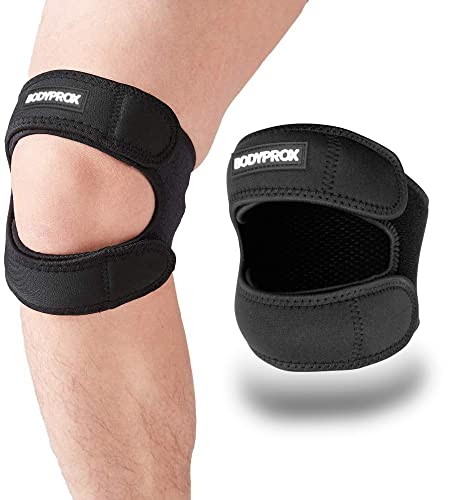
Bodyprox Patellar Tendon Support Strap (Large), Neoprene
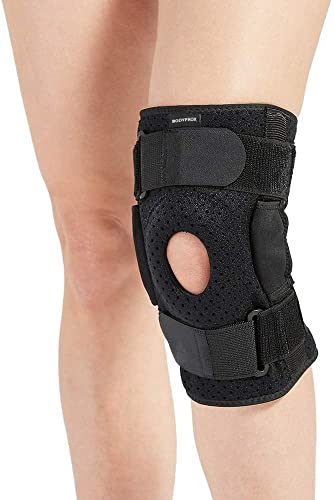
Bodyprox Hinged Knee Brace for ACL and Ligament Support

Mueller Sport Care Jumpers Knee Strap, One Size
Bodyprox Knee Brace with Side Stabilizers & Patella Gel Pads

Bodyprox Patella Tendon Knee Strap 2 Pack
Taking A Closer Look At The Options
The Movary strap lands first because it solves a real problem most single-strap designs ignore: knee size isn’t one-size-fits-all. The two-pack ships with three different strap lengths in the box, so you swap in the one that matches your leg rather than wrestling a too-long tail of hook-and-loop into a bulky knot behind your knee.
A medical-grade cushion sits directly below the kneecap to ease stress on the tendon, the exact spot jumper’s knee flares up. You wear it low, just under the patella, and the compression targets the inflamed tissue rather than wrapping the whole joint. Compared to the PUPTUT entry below, the Movary leans on length variety instead of dual silicone grips.
What Makes Sense
- Three included strap lengths let you dial in a snug, no-bunching fit on thinner or thicker legs.
- Targeted compression pad sits below the kneecap to offload the patellar tendon during jumps.
- Lightweight build keeps the strap comfortable from a morning commute to an evening gym session.
- Two-pack value covers both knees if your tendinitis flares bilaterally.
Things To Consider
- Three straps to choose from may feel like overkill for shoppers who just want a quick on-and-off option.
- Hook-and-loop closures can wear out faster than stitched seams with daily gym use.
Who It Suits Best
Active adults with recurring patellar tendon flare-ups who want a tunable fit under a work pant or shorts leg.
Consider Something Else When
The Mueller Sport Care Jumpers Knee Strap suits shoppers who want a single, no-fuss strap they can slide on in seconds.
PUPTUT trades the multi-strap approach for a different idea: two silicone-lined bands that anchor the brace above and below the kneecap, hugging the patellar tendon between them. The silicone keeps the strap from sliding down your calf during basketball, volleyball, or tennis when you’re cutting and pivoting hard.
A pressure pad cups the patella area for stability, and the single-pack format makes it an easy choice when only one knee complains. Versus the Movary that opens this list, PUPTUT relies on grip rather than length adjustment, so the sizing matters more. If you sit between sizes, the dual silicone bands may pinch the back of the knee crease on deeper bends.
Standout Benefits
- Dual silicone bands grip the skin above and below the patella for slip-resistant court play.
- Focused pressure pad tracks the patellar tendon for steady, low-bulk compression.
- Single-strap simplicity fits quickly under a warmup pant or shorts before practice.
Worth Noting
- Limited sizing range compared to the Movary’s three-strap system.
- Silicone lines can feel warm under summer heat during long outdoor sessions.
- Single pack only, so a second knee means a second purchase.
Made For
Court-sport athletes who cut, pivot, and jump hard and need a strap that refuses to migrate.
Look Elsewhere When
The MAXVIVA Patellar Tendon Support Strap works better for shoppers who want a single strap flexible enough for both casual gym days and longer weekend hikes.
MAXVIVA is the strap you reach for when you don’t want to think about your knee between sets, climbs, and errands. The band is built to stay put during running, gym work, or tennis, and the unisex fit covers a wide range of leg sizes without custom sizing.
The design goal here is joint alignment support and tendon offload during everyday activity rather than aggressive sports recovery. If you compare it to the PUPTUT two spots up, MAXVIVA swaps silicone grip for a softer, more flexible feel that’s easier to forget you’re wearing. It works well for the person who wants one strap to span morning walks, desk hours, and an evening lift.
A Few Highlights
- Soft, flexible construction makes it easy to wear under pants through a full workday.
- Stable enough for running and gym sessions without constant re-tightening.
- Unisex sizing covers most adult leg shapes without measuring.
Trade Offs
- Lacks the dual silicone bands that keep the PUPTUT locked in during aggressive cuts.
- May need periodic readjustment on longer trail runs.
Right Fit For
Commuters, weekend hikers, and casual gym-goers who want light daily support without bulk.
A Better Fit Elsewhere
The Bodyprox Patellar Tendon Support Strap (Large) suits people with larger legs who need the extra neoprene padding for long sessions.
Bodyprox’s large-size strap answers the complaint that thinner neoprene straps dig in or roll down on bigger legs. The neoprene build adds a soft, cushioned feel against the skin, which matters when you’re wearing the brace for an hour-long lift or a long shift on your feet.
It targets patellar tendon pain, jumper’s knee, runner’s knee, and arthritis-related discomfort through focused compression directly below the kneecap. Compared to the MAXVIVA, this Bodyprox model leans into plush padding over flexible minimalism. The trade-off is more material against your skin, which can trap sweat in humid conditions.
The Upside
- Large sizing accommodates fuller legs that smaller straps struggle to wrap snugly.
- Neoprene padding adds cushioning that softens long wearing sessions.
- Compression aims at multiple tendon and arthritis-related pain points.
Minor Gripes
- Neoprene runs warmer than the MAXVIVA’s lighter fabric on hot days.
- Bulkier profile may show through fitted pants.
Best Suited To
Adults with larger legs or anyone who finds thinner straps uncomfortable during extended wear.
Skip It When
The PUPTUT dual-strap silicone design suits athletes who prioritize grip over plush padding during fast lateral sports.
The hinged Bodyprox brace is a different category of support than the slim straps above. Metal or rigid hinges on either side of the joint control medial and lateral movement, so the knee tracks more predictably when ligaments are swollen or healing. You reach for this when a patellar strap alone isn’t enough.
It covers ACL, PCL, MCL, and LCL concerns, plus meniscus injuries and mild osteoarthritis, making it a recovery-room companion rather than a daily gym accessory. Against the Movary at the top of the list, this brace is heavier, hotter, and overkill for simple jumper’s knee. It earns its place when the joint needs guidance through every step.
Key Advantages
- Rigid side hinges guide medial and lateral motion during recovery.
- Full-coverage sleeve stabilizes the entire knee, not just the tendon.
- Adjustable straps adapt the brace to swelling through the day.
Honest Caveats
- Bulkier and warmer than any strap on this list, so it’s a poor fit for running.
- More involved to put on than simple hook-and-loop straps.
- Overbuilt for mild jumper’s knee that responds to lighter compression.
Built With In Mind
People recovering from ligament injuries, meniscus tears, or post-op swelling who need structured joint control.
Reach For A Different Pick When
The Bodyprox Knee Brace with Side Stabilizers and Patella Gel Pads offers lighter lateral support for active use without full hinged framing.
Mueller has been in the sports medicine aisle longer than most of its competitors, and this single-strap jumper’s knee band carries that reputation. The design is intentionally minimal: one tubular strap, one compression tube, and a hook-and-loop closure. You slide it on under the kneecap and go.
There’s nothing fancy here, and that’s the point. Versus the Movary three-strap system, Mueller trades customization for speed. In our view, the one-size design works best for average adult legs and may run short on larger calves or feel loose on very slender knees.
A Few Strong Suits
- Single-strap simplicity makes it fast to put on and remove between sets.
- Long-standing brand with broad retail availability.
- Light, low-profile fit disappears under shorts and tights.
Points To Note
- One-size sizing won’t fit every calf shape snugly.
- Limited coverage compared to the full-sleeve Bodyprox hinged brace.
- Hook-and-loop wear shows up faster on daily gym users.
Who Should Grab It
Shoppers who want a quick, no-thinking strap from a familiar name and don’t need custom sizing.
Swap It Out When
The Movary Patellar Tendon Support Strap makes more sense if your leg falls outside the average one-size range.
This Bodyprox sleeve blends two ideas: a flexible spring stabilizer on each side of the knee and a silicone gel pad hugging the patella. The springs flex with your bend while keeping the joint from wobbling side to side, and the gel pad cushions the kneecap against direct pressure.
It comes in four sizes from XS to XL, which is more granular than the Mueller one-size band. The fabric mix, mostly SBR (a synthetic rubber) with nylon and a small amount of spandex, balances stretch and structure. Compared to the heavy hinged brace earlier in the list, this option gives you lateral control without the bulk of a true recovery brace.
Good Reasons To Consider
- Spring stabilizers on both sides limit lateral wobble during direction changes.
- Silicone gel pad cushions the patella on kneel-heavy activities.
- Four size steps fit a wider range of leg shapes than one-size straps.
Points To Keep In Mind
- More material than a thin strap, so it runs warm in summer sports.
- Sizing chart review is required to avoid a poor fit on the first try.
Whose Shelf It Belongs On
Active adults who want sleeve-style coverage with a touch of lateral stability, especially for hiking and court sports.
Another Choice May Suit
The MAXVIVA Patellar Tendon Support Strap fits shoppers who prefer a simpler band with no sleeve coverage at all.
The Bodyprox two-pack wraps the same adjustability story into a value format: two straps for both knees at a single purchase. Each strap adjusts to fit knee circumferences from roughly 13 to 18 inches, so most adult legs land comfortably inside that range.
The strap’s job is targeted patellar support with built-in cushioning to keep the band from digging into the soft tissue below the kneecap. Against the Movary that opens this list, you give up the three-length system for a more conventional single-strap design, but you also get a second strap ready to go. It’s the smart pick if both knees tend to flare up together, or if you want a backup strap in your gym bag.
Features That Help
- Two-strap pack covers both knees for bilateral tendinitis flare-ups.
- Wide 13 to 18 inch fit range adapts to most adult leg sizes.
- Built-in cushioning softens the pressure point below the patella.
- Fully adjustable closure lets you tune compression to the activity.
Some Limits To Know
- Single-strap design lacks the grippy silicone bands of the PUPTUT entry.
- Both straps share one construction style, so no variety within the pack.
Perfect Match For
Households with two active knees, or anyone who wants a backup strap on hand for travel and gym-bag rotation.
Consider Something Else When
The Bodyprox Patellar Tendon Support Strap (Large) suits shoppers with bigger legs who need the neoprene-cushioned large fit instead.
What To Weigh Before Choosing A Jumper’s Knee Brace
A strap that targets jumper’s knee works by compressing the patellar tendon just below the kneecap, redirecting force away from the inflamed tissue. The design that fits you depends on the kind of stress you put on your knee each day, not just the brand name.
Compression Style And Pad Placement
The single-strap design with a built-in pressure pad handles most mild-to-moderate jumper’s knee cases. The pad should sit directly below the kneecap, where the tendon meets the tibia, and stay there as you move. Dual-strap and silicone-lined designs add grip for fast lateral sports like tennis or basketball, where plain straps tend to slide down the calf.
Material, Breathability, And Skin Comfort
Neoprene straps cushion the skin but trap heat, so they suit cooler gyms and indoor sessions. Lighter nylon and spandex blends breathe better for summer runs or long shifts on your feet. You may find neoprene too warm during humid outdoor workouts, while thin straps can dig into the skin during deeper squats.
Sizing And Adjustability
Measure your knee circumference and check the manufacturer’s chart before ordering, since straps that run too tight cut off circulation and ones that run too loose migrate during movement. Adjustable hook-and-loop closures help, but the starting length matters most. Systems that include multiple strap lengths, like the Movary entry earlier, sidestep this problem for shoppers between standard sizes.
Coverage Level Versus Activity
Match the brace to the activity, not the other way around. A thin strap covers running, gym work, and daily wear. A sleeve with side springs adds light lateral stability for hiking and court sports. A hinged brace belongs in recovery scenarios after ligament or meniscus injuries, not on the basketball court. The honest read is that buying more brace than you need usually means more bulk, more heat, and less compliance.
Key Considerations Across These Picks
Common Shopping Slip Ups
The most common error is sizing by shoe size or guesswork instead of measuring the actual knee circumference. Another is buying a heavy hinged brace for simple jumper’s knee, which adds bulk without the targeted tendon compression you actually need. Skipping the size chart on sleeve-style braces is the third, since fabric blends don’t stretch as forgivingly as plain hook-and-loop straps.
What The Higher Tier Buys
A higher-priced strap or sleeve typically spends your money on grip technology (silicone bands, gel pads), better fabric blends, or modular sizing systems. The premium tier also includes hinged braces with rigid stays, which are appropriate when ligaments or cartilage need mechanical support rather than just compression. For straightforward jumper’s knee, that upgrade rarely pays off, and a well-built mid-range strap handles the job.
Frequently Asked Questions
What does a jumper’s knee brace actually do? It applies focused compression just below the kneecap, offloading the patellar tendon during running, stairs, and jumping so the inflamed tissue can recover while you stay active.
Can you wear a patellar strap all day? Most thin straps are fine for daily wear under pants, though you may want to remove them during long periods of sitting to avoid skin irritation behind the knee.
Should you wear the strap above or below the kneecap? Position it directly below the kneecap, where the patellar tendon meets the shin bone, so the compression pad presses on the inflamed tissue.
Do these braces fit both knees? Most adjustable straps fit either leg, but always check the manufacturer’s sizing chart and confirm the closure direction works for both sides before relying on a single strap for bilateral use.
When does a strap stop being enough? A strap alone won’t help if the knee buckles, swells significantly, or locks during motion, since those signs point to ligament or cartilage injuries that need a hinged brace or professional evaluation.
Closing Thoughts
Pick the strap that matches the stress you put on your knee, not the one with the most features on the box. For most active adults with mild-to-moderate jumper’s knee, a focused compression band worn just below the kneecap does the heavy lifting. Heavier braces earn their place when the joint itself needs structural support, not just tendon offload. The right fit keeps you moving while the tissue recovers, which is the whole point.