Watching a dog limp on a hind leg is tough, especially when the vet mentions a torn cruciate ligament, the canine equivalent of an ACL. A well-fitted brace can steady the joint, support recovery after surgery, or simply help an older dog stay mobile on daily walks. The picks below cover different support styles, sizes, and use cases so you can match one to your dog’s stage of injury, breed, and daily routine.
A Snapshot Of The Selections

BaoGuai Dog Knee Brace for ACL/CCL Hind Leg

Noorace Dog Knee Brace for ACL CCL Support

RihanYol Dog Knee Brace for Hind and Rear Legs
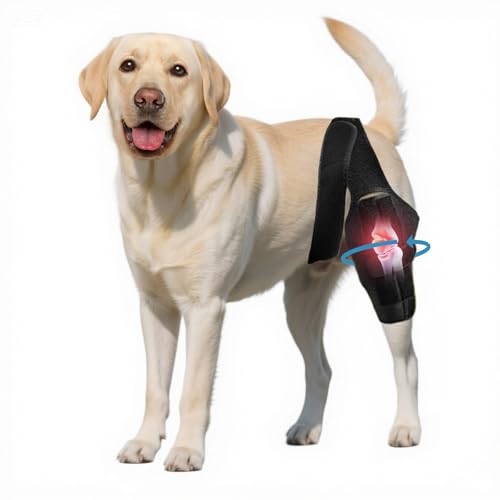
Nylvian Dog Knee Brace for Torn ACL Hind Leg

Helwyth Paw Protectors for Dogs Black and Orange

Helwyth Paw Protectors for Dogs Small Black Green
More On The Choices That Made The List
For dogs whose knees buckle sideways when they try to stand, BaoGuai’s brace takes a more structural approach than most. Dual metal springs run along both sides of the joint, creating a frame that resists the lateral wobble that comes with a torn cruciate ligament. The neoprene wrap around those springs keeps the brace snug without feeling rigid, which matters when a dog is wearing it through the day at home.
The design works on either the left or right hind leg and is offered in seven sizes, so a precise fit is realistic for everything from a small terrier to a large retriever. The shape leaves room for bathroom breaks without removing the brace, a small but meaningful detail for owners who otherwise have to wrestle a sleeve on and off every few hours.
Where It Helps
- Spring-loaded side stabilizers reduce side-to-side wobble during walks and stairs
- Breathable neoprene keeps the joint warm to relax stiff muscles
- Snug fit creates a physical barrier that discourages licking and chewing
- Remains in place during typical daily movement, including play
Things To Consider
- Springs add a little weight compared to soft-only braces
- Accurate thigh measurement is essential, weight alone can mislead sizing
Who It Suits Best
Medium to large dogs with a confirmed ACL/CCL tear or post-surgical rehab needs where lateral stability is the priority.
Consider Something Else When
A short-coated, very small dog who dislikes bulk around the knee may be more comfortable in the lighter RihanYol compression brace instead.
Noorace leans into adjustability rather than rigid hardware, which makes it a sensible option for owners managing a dog’s mobility over the long term. The straps wrap around the thigh and upper shin, letting you tune compression as swelling changes through the day. Compared with BaoGuai’s spring-loaded frame, this one feels closer to a structured sleeve than a brace.
The pattern fits either hind leg and offers multiple sizes, so a careful measurement matters before ordering. For dogs in the middle of a recovery window who need steady support but not the bulk of a metal-stabilized design, the balance lands in a useful middle ground.
Everyday Perks
- Flexible straps let you dial compression up or down as swelling shifts
- Works on either hind leg, useful if both joints are affected over time
- Lower profile than spring-style braces for everyday wear
- Helps maintain confidence when standing and walking around the house
Points To Note
- Less lateral rigidity than spring-based braces for severe wobble
- Straps can loosen on very active dogs and need periodic re-tightening
Made For
Dogs with mild to moderate ACL/CCL instability or early-stage arthritis that need reliable daily compression rather than maximum bracing.
Look Elsewhere When
Your dog’s knee visibly buckles side-to-side, since the spring-loaded BaoGuai brace handles that motion more directly.
RihanYol’s compression brace is the gentlest option in this roundup, aimed at dogs who reject bulkier supports. The fabric wrap focuses on warmth and light stabilization rather than rigid control, which works well for sensitive breeds or dogs early in a limping phase. Compared with the spring-reinforced BaoGuai design, it sacrifices structure for comfort.
The piece fits both left and right hind legs and is offered in a range of sizes, so a careful thigh measurement still matters. For owners whose dogs tolerate clothing but draw the line at metal hardware, this is the kind of brace worth trying first.
Practical Advantages
- Soft, flexible fabric lowers the chance of skin irritation on short coats
- Lightweight enough for daily wear without overheating the joint
- Washable construction makes ongoing care straightforward
- Suits dogs with mild limping or post-surgery tenderness
Honest Caveats
- Limited structural support for dogs with pronounced knee buckling
- Fabric can stretch over time and may need replacement sooner than rigid braces
Key Specs
Right Fit For
Small or sensitive dogs in early injury stages who need gentle compression and warmth rather than rigid bracing.
Swap It Out When
Your dog shows clear lateral buckling, in which case the BaoGuai brace with dual side springs is a stronger structural match.
Nylvian builds its brace around the daily rhythm of older dogs, where arthritis and age-related joint stiffness are as much of a concern as the original ACL injury. The breathable fabric and flexible support strips move with the dog rather than fighting the gait, which matters when stiffness is the bigger barrier than instability.
Adjustable compression targets ACL/CCL tears, luxating patella (a kneecap that slides out of place), and arthritis-related discomfort in the back leg. Compared with BaoGuai’s heavier-duty frame, this one trades raw rigidity for all-day wearability on a senior dog.
A Few Highlights
- Flexible strips move with the joint to reduce rubbing during long wear
- Adjustable compression helps manage arthritis flare-ups
- Breathable fabric minimizes skin irritation over full-day use
- Useful for senior dogs whose mobility is limited by multiple joint issues
Some Limits To Know
- Not as stabilizing as spring-based braces for severe ACL tears
- Compression may need re-adjustment as a senior dog’s muscle tone changes
Best Suited To
Senior dogs whose hind leg issues mix arthritis with prior ligament damage and need a brace comfortable enough for full-day wear.
A Better Fit Elsewhere
A younger, active dog recovering from surgery will get more direct support from the Noorace adjustable brace.
This pick shifts the focus from the knee down to the paw, addressing the secondary problem many ACL/CCL dogs develop: dragging or knuckling the back paw. The boot-style design lifts the toes into a natural position, protecting the top of the paw from scrapes while the non-slip sole gives traction on hardwood, ice, or rough ground.
Unlike the soft compression wraps above, this is a corrective tool for gait, not a joint stabilizer. The adjustable strap system holds the boot in place on dogs that twist or pivot, which is a common complaint with lighter paw protectors.
Real-World Strengths
- Corrective shape lifts dragging paws into a healthier walking angle
- Durable sole handles trails, snow, and hot pavement alike
- Multi-point strap system resists slipping on active dogs
- Distributes weight across the paw to ease joint stress
Worth Bearing In Mind
- Does not stabilize the knee itself, it supports the paw below it
- Boots require a brief fitting period before dogs accept wearing them
Who Should Grab It
Dogs recovering from IVDD, spinal injury, or ACL/CCL damage who drag or knuckle their back paws during walks.
Reach For A Different Pick When
The issue is lateral knee wobble rather than paw positioning, where the BaoGuai brace targets the joint more directly.
The smaller-sized version of the Helwyth boot uses the same corrective design as the larger Black and Orange pair above, scaled down for toy breeds and small dogs. For little dogs with knuckling or paw dragging tied to IVDD or post-surgery weakness, the smaller profile sits more naturally on a compact leg.
The trade-off is capacity: a small paw limits how much sole surface you get, which can matter on longer outdoor walks. Owners of small breeds tend to find this fits a city or apartment routine very well, though it can run warm in summer.
What Works In Its Favor
- Smaller boot profile suits toy breeds and short-legged small dogs
- Lifts paw into a natural angle to prevent scraping injuries
- Adjustable straps hold the boot on during typical walks
Possible Compromises
- Less sole surface than larger boots for extended outdoor use
- Not a knee brace, so it complements rather than replaces joint support
Built With In Mind
Small-breed owners whose dogs drag or knuckle their back paws due to spinal issues or post-surgical weakness.
Where Another Pick Suits Better
If the primary issue is joint instability rather than paw positioning, the RihanYol compression brace addresses the knee itself.
Picking The Right Support For Your Dog’s Hind Leg
A brace works best when it matches the type of problem your dog actually has. Knee instability, post-surgical recovery, arthritis, and paw dragging each respond to different features, so identifying the core issue shapes everything else.
Start by measuring the thigh circumference, not just relying on weight or breed. Most braces in this category include a sizing chart and a clear note that leg shape varies even within the same weight class. A brace that slides down or bunches at the hock does very little for the joint, while a snug fit transfers support exactly where the knee needs it.
Consider the recovery stage. A dog two weeks post-surgery typically needs structured bracing (the BaoGuai design handles that best), while a senior dog managing chronic arthritis often does better with a flexible compression wrap (Nylvian or RihanYol). For gait issues below the knee, the Helwyth boots offer a different kind of help entirely.
Think about daily logistics too. A brace that has to come off for every bathroom break becomes a hassle quickly. The picks above either stay on through elimination or remove in seconds, which sounds minor but matters over weeks of wear.
Key Considerations Across These Picks
Common Shopping Slip Ups
The most frequent mistake is ordering by weight rather than thigh circumference. Dogs of the same weight can have very different leg shapes, and a brace that’s too loose shifts around and may rub the skin raw. Measure carefully and cross-check against the published chart.
Another trap is choosing maximum rigidity when the dog actually needs gentle compression, or vice versa. A spring-loaded brace on a sensitive small dog often gets rejected, while a soft wrap on a knee that visibly buckles won’t prevent further injury.
What The Higher Tier Buys
A premium brace tends to offer better hardware (real metal springs rather than plastic stays), more precise sizing options, and fabrics that hold their compression over months of wear. The upgrade pays off when a dog wears the brace daily for long recovery periods or for chronic conditions like arthritis, where a stretched-out wrap stops doing its job.
For short-term recovery or very mild instability, a budget-friendly option usually performs just fine, and the saved money can go toward vet follow-ups or rehab sessions.
Frequently Asked Questions
How long does a dog typically wear a knee brace each day?
Most dogs start with shorter wear periods of one to two hours and build up to full-day use as they tolerate the brace. Your vet can guide the schedule based on the injury stage.
Can a brace fully replace surgery for a torn ACL?
A brace can stabilize the joint and manage symptoms, but it doesn’t repair the ligament itself. Many dogs still need surgical intervention for a complete tear, with the brace supporting recovery afterward.
Will my dog accept wearing a brace?
Most dogs adjust within a few days, especially when the brace fits snugly and lets them move more comfortably. Short, positive introductions with treats help speed up the acceptance period.
How do I clean a dog knee brace?
Most fabric braces can be hand-washed with mild soap and air-dried away from direct heat. Remove any rigid stays if the design allows before washing.
Are paw protectors and knee braces interchangeable?
No, they serve different purposes. Knee braces stabilize the joint itself, while paw protectors correct gait issues like knuckling or dragging below the knee.
Closing Remarks
The right brace for a canine ACL tear depends on where your dog is in the recovery arc, how the leg moves, and how much daily wear the support needs to handle. Match the design to the actual problem, measure carefully, and your dog has a real shot at moving more comfortably through the weeks ahead.