

Arthritic knees reward thoughtful support. Walking the dog, climbing stairs at work, or simply standing through a long grocery run puts steady pressure on cartilage that already feels tender, and the right brace can take the edge off that grind. This roundup looks at six options across different styles: slim patellar straps, full wraparound sleeves, and structured hinged braces built for heavier-duty days.
You’ll find lightweight picks for casual movement, mid-level wraps for daily errands, and sturdier designs for active weekends. Each entry below is written from the standpoint of how it actually feels to wear one, so you can match a brace to your routine instead of guessing.
An Overview Of The Picks

Movary Patellar Tendon Support Strap 2-Pack with 3 Adjustable Straps

Back on Track Physio Knee Brace 4-Way Stretch 1107 (Black, X-Large)

Borecy Adjustable Knee Brace with Side Spring Stabilizers (Medium)

Gymsax Meniscus Knee Support with Side Stabilizers (M)

MAXVIVA Patellar Tendon Support Strap, Knee Brace for Women & Men
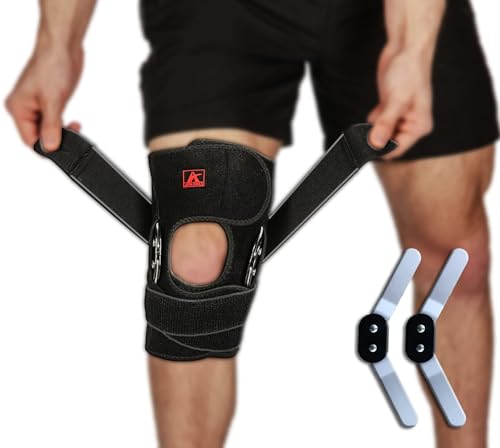
ATHLEDICT Hinged Knee Brace with Side Patella Stabilizers
What Each Pick Brings To The Table
The Movary strap set targets the narrow strip just below the kneecap, which is exactly where patellar tendon strain tends to announce itself during a long run or a hard basketball session. A small medical-grade cushion presses into the tendon while the strap wraps around the lower knee, distributing pressure without squeezing the whole joint.
Three different-length straps come in the box, so you can dial in compression that suits your leg shape and your tolerance for tightness. Where the heavier wraparound options cover the entire knee, this Movary design leaves most of the joint free to bend, which runners and stair-climbers tend to appreciate. The hook-and-loop closures hold tension through gym sessions, and the lightweight build works well under pants or shorts.
Features That Help
- Targeted compression right below the kneecap reduces tendon strain without locking the joint
- Three included strap lengths let you swap fit as swelling or activity changes
- Lightweight enough to wear during running, cycling, and long work shifts
- Two-pack means you can rotate or share between workouts
Points To Note
- A single-band design offers little medial or lateral stability for wobbly knees
- Hook-and-loop can collect lint and lose grip after repeated heavy use
Who Should Grab It
Active people dealing with patellar tendon irritation, runner’s knee, or Osgood-Schlatter discomfort who want minimal bulk during workouts.
A Better Fit Elsewhere
For users needing firmer side-to-side support through daily chores, the Borecy Adjustable Knee Brace offers more structured wraparound stability.
The Back on Track Physio Knee Brace takes a softer approach compared to the Movary strap’s targeted pressure. It slides over the knee like a sleeve, and its 4-way stretch fabric moves with your leg rather than anchoring it in place. That’s a meaningful difference for anyone whose arthritis flares up during long sedentary stretches and then settles once they’re moving again.
The defining feature is Welltex technology, a fabric treatment the brand describes as reflecting body heat as far-infrared energy (a wavelength of light just beyond what the eye can see, often used in wearable therapy). The intended effect is improved circulation around stiff joints, which can soften the rough first steps after sitting for a while. Elastic rings at the top and bottom keep the sleeve from rolling, and the breathable weave handles all-day wear without turning into a sweat trap.
Everyday Advantages
- Heat-reflecting fabric may help loosen stiff joints on chilly mornings
- 4-way stretch and elastic cuffs stay put during walks and light chores
- Slim profile fits comfortably under trousers for office days
- Soft construction feels gentler on sensitive knees than rigid braces
Honest Caveats
- No hinges or stays, so it offers limited protection during athletic pivots
- X-Large sizing may run small for larger thighs, so measuring matters
- Fabric benefits build gradually and aren’t felt on the first wear
Best Suited To
People whose arthritis shows up most as morning stiffness and want a sleeve they can pull on without thinking about it.
Look Elsewhere When
You need structured lateral support for active recovery days, in which case the ATHLEDICT Hinged Knee Brace offers more mechanical reinforcement.
The Borecy brace is the most versatile wraparound option in this roundup. It covers the entire kneecap and uses a neoprene-rich blend (about 60% neoprene, with nylon, polyester, and spandex filling out the rest) for warmth and compression. Two flexible side springs sit along the joint, offering side-to-side support without the bulk of full hinges.
Where the Movary strap hovers over a single tendon, this design wraps the whole knee, which matters for arthritis sufferers who feel grinding across the entire joint. Dual cross compression straps let you fine-tune the squeeze, and a silicone strip on the inside keeps the sleeve from sliding down during a hike or a long shift on your feet. The mesh vents also help with heat, though neoprene braces do warm up faster than the Back on Track sleeve.
A Few Highlights
- Side spring stabilizers add lateral support without rigid hinges
- Cross straps and silicone grip keep the brace positioned during movement
- Full-knee coverage suits generalized arthritis discomfort
- Neoprene blend holds therapeutic warmth on cool mornings
Trade Offs
- Neoprene can feel warm during summer walks or in heated indoor spaces
- More bulk than a sleeve, so it shows under fitted clothing
Built With In Mind
Everyday wearers who want wraparound compression for aching joints and mild meniscus or ACL concerns without committing to a hinged brace.
Swap It Out When
You want a tighter, customizable fit for variable swelling, where the Gymsax Meniscus Knee Support offers a multi-strap locking system.
Quick Facts
The Gymsax knee support treats arthritis bracing like a customizable harness rather than a simple sleeve. A wide Velcro base anchors the fit around the knee, then V-shaped crisscross straps add rotational stability, and an adjustable calf strap keeps everything from drifting south as you move. The brand calls this a three-stage dynamic locking system, and in practice it lets you ratchet the compression up or down as your swelling shifts during the day.
Where the Borecy brace leans on a single pair of cross straps, Gymsax layers them, so the support feels more even across the joint. Side stabilizers offer mild lateral protection, and the wraparound profile suits people whose pain moves around rather than staying in one spot. Velcro does take a bit of practice to line up neatly, especially first thing in the morning.
Good Reasons To Consider
- Three-stage strap system adapts to fluctuating swelling
- V-shaped compression wraps the joint more evenly than single-strap designs
- Adjustable calf strap keeps the brace from sliding during long days
- Side stabilizers add confidence during uneven terrain
Small Caveats
- More straps mean a longer learning curve to put on quickly
- Velcro can snag loose-fitting pants when dressing
Made For
Wearers who need to tweak compression several times a day and want a brace that adapts as symptoms shift.
Reach For A Different Pick When
You prefer a quick on-and-off sleeve without strap adjustments, in which case the Back on Track Physio Knee Brace is easier to slide on.
The MAXVIVA patellar strap keeps things simple. It’s a single-band design with a built-in pressure pad that sits just below the kneecap, so you get focused compression without the bulk of a full wraparound brace. For people whose arthritis pain traces back to patellar tendon strain, that narrow targeting can feel more useful than a sleeve that spreads pressure everywhere at once.
Unlike the Movary 2-pack, this MAXVIVA option arrives as a single strap, which makes it a budget-friendly way to try tendon support before investing in multiples. It works for basketball, tennis, cycling, and casual walking, and the low profile disappears under most pants. There’s no rigid structure here, so it’s best treated as a daily wear or warm-up aid rather than heavy-duty joint protection.
Everyday Wins
- Compact strap fits easily under pants and shorts
- Built-in pressure pad targets patellar tendon strain
- Light enough for running, gym sessions, and long workdays
- Adjustable closure works across a range of leg sizes
Things To Weigh
- No side-to-side support for wobbly knees or active pivoting
- Single strap means no backup if it wears out unexpectedly
Whose Shelf It Belongs On
Shoppers seeking an affordable entry into patellar tendon support without the extras of a 2-pack or full sleeve.
Where A Sibling Pick Shines
For users wanting two straps or a wider fit range, the Movary Patellar Tendon Support Strap 2-Pack adds value and adjustability.
Key Attributes
The ATHLEDICT hinge brace is the most structured option in this lineup. Polycentric hinges (small metal joints that flex along the natural curve of the knee) flank both sides of the joint, controlling how far the leg bends and extends, while side patella stabilizers keep the kneecap tracking properly. This is the brace to reach for when arthritis pain is paired with ligament concerns or post-injury recovery.
The wraparound compression shell adds warmth and general support, and adjustable straps above and below the knee let you dial in fit over different layers of clothing. Compared to the Borecy brace, this design trades flexibility for mechanical control, which is exactly what active recovery days often call for. It’s bulkier than a sleeve, so most users reserve it for workouts, physical therapy, or tougher chores.
Practical Pluses
- Polycentric hinges limit risky bending angles during recovery
- Side patella stabilizers improve kneecap tracking
- Adjustable straps suit thicker thighs or layered clothing
- Compression shell holds therapeutic warmth across the joint
Some Limits To Know
- Bulkier than sleeves, so it doesn’t suit office outfits
- Hinges take practice to align correctly on first fitting
The Right Fit
Active adults managing arthritis alongside meniscus, ACL, or MCL concerns who want mechanical joint control during movement.
Not Your Match When
You want a low-profile sleeve for casual daily wear, where the Back on Track Physio Knee Brace slides on more discreetly.
Feature Snapshot
Factors Worth Weighing When Picking a Knee Brace
Where the pain actually lives matters more than the size of the brace. Tendon-focused straps like the Movary and MAXVIVA options work best when discomfort sits in a narrow band below the kneecap. Wraparound sleeves with side stabilizers, like the Borecy and Gymsax designs, distribute pressure across the whole joint and suit generalized arthritis grinding. Hinged braces like the ATHLEDICT model add mechanical control when pain travels with ligament instability.
Compression level should match your daily rhythm, not just your pain level. Soft sleeves (Back on Track) feel gentle enough for office days and slow walks. Mid-level neoprene wraps handle errands, hikes, and long shifts on your feet. Heavy-duty hinged braces earn their bulk on workout days, physical therapy, or uneven terrain where a slip could set back recovery.
Heat and breathability shape how long a brace stays comfortable. Neoprene blends hold warmth, which soothes stiff joints on cool mornings but can feel stifling indoors. Mesh-vented designs and Welltex-treated fabrics breathe better and suit warmer climates. Consider your typical wearing environment, not just the worst pain day.
Adjustability matters when swelling shifts. Velcro-based systems (Gymsax, ATHLEDICT) let you tighten or loosen throughout the day, while fixed sleeves give a more consistent but less flexible fit. For arthritis that flares unpredictably, an adjustable wrap usually feels more forgiving over the long haul.
Common Slip-Ups and Upgrade Trade-Offs
Wrong Turns To Avoid
Choosing a brace based on stiffness alone can backfire. Many shoppers grab the most rigid hinge-style brace thinking stronger equals better, then find it too bulky to wear during normal daily activities. A more flexible wraparound or sleeve often delivers steadier relief because you’ll actually keep it on.
Sizing shortcuts cause the most common fit complaints. Knee braces that are too tight restrict circulation and create new pain, while loose ones slide down and stop providing compression. Measuring the thigh circumference a few inches above the knee and matching it against the size chart makes a real difference.
Where The Extra Money Goes
Higher-priced braces typically invest in hinge quality, layered strap systems, and fabric treatments that improve durability over months of use. The ATHLEDICT model, for example, uses bilateral polycentric hinges rather than simple spring stays, which translates to more precise joint control during athletic recovery.
Premium picks also tend to offer wider size ranges and reinforced stitching at stress points. For someone wearing a brace daily through long work shifts, those construction details matter more than flashy extras. The upgrade is worth it when you can feel the difference during real movement, not just on paper.
Frequently Asked Questions
Do knee braces actually help with arthritis pain?
Knee braces can reduce strain on tender joints by providing compression, warmth, and lateral stability, which many people find lowers discomfort during daily activities. They work best as part of a broader routine that includes appropriate exercise, weight management, and professional guidance.
Should I wear a brace all day or just during activity?
Most people benefit from wearing a brace during the activities that trigger pain, such as walking, gardening, or workouts, rather than sleeping in it. All-day wear can be useful for flare-ups, but skin should be checked regularly for irritation.
How do I pick the right size for a knee brace?
Measure the circumference of your thigh a few inches above the kneecap and your calf below the knee, then match those numbers against the manufacturer’s sizing chart. Sizes vary widely between brands, so don’t assume a medium in one brace equals a medium in another.
Can I wear a knee brace under pants?
Slim straps and low-profile sleeves usually fit under trousers or jeans without trouble. Wraparound neoprene braces and hinged designs tend to add visible bulk, so loose pants or athletic wear are more practical choices.
When should I replace my knee brace?
Replace a brace when the elastic loses stretch, Velcro stops holding, padding compresses permanently, or hinges develop wobble. For daily wear, most braces last roughly six to twelve months before showing meaningful wear.
Closing Thoughts
The right knee brace fits the way you actually live. Tendon-focused straps suit runners and active users, while wraparound sleeves and hinged braces carry the heavier lifting for daily wear and structured recovery. Try one, wear it through a real day, and let the fit guide you toward the option that earns a permanent spot in your routine.