An ACL (anterior cruciate ligament) tear changes how a knee behaves on every stair, pivot, and lateral cut, so a brace earns its keep when it calms swelling, stabilizes the joint, and lets you keep moving without re-injury. Runners, return-to-sport athletes, post-op patients, and anyone managing chronic instability all need something different from the same shelf.
You’ll see compression sleeves, hinged braces, and gel ice wraps grouped together because most knee recovery involves all three roles. Compression sleeves handle swelling and proprioception (your brain’s awareness of joint position, important for stability), while hinged braces offer real mechanical support after surgery or major ligament damage. The gel wrap serves the cold-therapy side of recovery.
A Quick View Of The Lineup
A Quick View Of The Lineup

Borecy Knee Brace Adjustable Compression with Side Spring Stabilizers

Gymsax Knee Brace for Meniscus Support with Side Stabilizers (M)

Koo-Care 2 Knee Gel Ice Pack & Wrap for Injuries Reusable Hot Cold Therapy

Incrediwear Knee Sleeve for Joint Pain Relief and Circulation Support
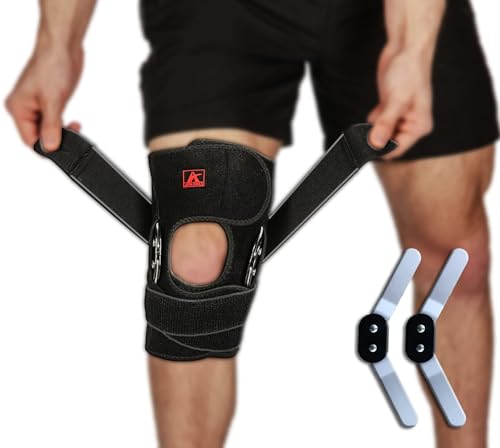
ATHLEDICT Hinged Knee Brace with Strap & Side Patella Stabilizers
Why These Options Stand Out
The Borecy brace lives in the gap between a soft sleeve and a true hinged support, leaning toward the lighter end. Side spring stabilizers run along both sides of the joint, giving the knee a guide rail without locking it into one motion. For someone returning to jogging or a pickup basketball game after a grade 1 or 2 ACL strain (a mild to moderate partial tear), that combination is usually enough.
The fit is where this pick earns most of its reputation. Dual cross compression straps let you dial in tension around the patella (the kneecap) and the joint line, and a silicone grip strip keeps the brace from migrating down the leg mid-run. Breathable mesh panels handle the sweat factor on longer walks and humid summer days.
Real-World Strengths
- Wide size range from S to 8XL accommodates most legs without custom fitting.
- Spring stabilizers offer lateral support (side-to-side resistance) that pure sleeves can’t match, helpful on uneven pavement.
- Adjustable strap system adapts through swelling cycles during early recovery.
- Slim profile fits under trousers or joggers for daily wear without bulk.
Things To Consider
- Not rigid enough for post-surgical use in the first 6 to 8 weeks after ACL reconstruction.
- Owners commonly report that the strap edges can fray where the silicone meets the neoprene over time.
Who Should Grab It
Active adults managing a partial ACL injury, mild chronic instability, or general meniscus support during running, hiking, and gym work.
Skip It When
You need a rigid mechanical lock for post-op recovery, where the ATHLEDICT hinged brace handles the job better.
The Gymsax brace brings a layered strap system that feels closer to a custom athletic tape job than a typical slip-on sleeve. A wide Velcro base anchors the fit around the thigh, V-shaped crisscross straps pull tension across the joint line, and an adjustable calf strap locks everything down below the knee. The result is a brace that moves with you through lateral cuts rather than sliding out of position.
Compared with the Borecy option above, this one is built for higher-impact work where the knee sees real rotational force. Soccer, basketball, tennis, and heavy squat days are the scenarios where the three-stage locking design earns its keep. The compression is adaptive, so the brace can stay on through warm-up, peak effort, and cooldown without constant re-tightening.
What Works In Its Favor
- Three-stage strap system delivers 360-degree compression and rotational control.
- Side stabilizers protect the meniscus during cutting motions on the court or field.
- Adaptive compression means fewer mid-session adjustments.
Honest Caveats
- Bulkier than a simple sleeve, so it shows under slim pants and shorts.
- Strap system has more parts to maintain, with Velcro collecting lint over time.
Right Fit For
Recreational and competitive athletes returning to pivoting sports after a non-surgical ACL injury or meniscus recovery.
Look Elsewhere When
You want all-day comfort for desk work or walking, where the Incrediwear sleeve handles that scenario with less fuss.
The Koo-Care wrap sits in a different category from the other four: it’s a hot-and-cold therapy sleeve rather than a structural brace. A neoprene wrap holds two gel packs against the joint, with long straps that let you dial in compression around the knee without the wrap sliding off mid-treatment.
Cold therapy helps reduce inflammation right after activity or in the first 48 to 72 hours of an acute flare, while heat therapy supports blood flow during stiffness and pre-exercise warm-up. For someone managing an ACL tear’s swelling cycles, that dual role matters: it covers both ends of recovery without buying two separate products.
The Helpful Details
- Reusable gel packs work as both cold compress and warm compress depending on the phase of recovery.
- Long straps let you adjust compression and walk around during treatment.
- Neoprene wrap covers the front, sides, and back of the knee for full contact.
- Useful after workouts, physical therapy sessions, or long days on your feet.
Points To Keep In Mind
- Provides pain and swelling relief rather than structural support, so it pairs with another brace rather than replacing one.
- Gel packs need freezer or microwave time before each use, which adds a planning step.
Quick Facts
Made For
People in early recovery or post-activity swelling management who need a reusable therapy tool alongside a compression or hinged brace.
Another Choice May Suit
When you need mechanical knee support during movement, the Borecy adjustable brace handles that role better for daily wear.
The Incrediwear sleeve skips the hard plastic and metal hardware in favor of a fabric-based approach. The material is element-infused and blended with Lycra and nylon, marketed for circulation support and inflammation relief rather than mechanical locking. That makes it the most discreet pick in this lineup, easy to forget you’re wearing.
Where the Borecy and Gymsax braces aim for structural control, this sleeve targets the recovery and wear-time side of ACL management. It suits desk workers, frequent travelers, and anyone who needs gentle support through long workdays without a bulky profile. You can comfortably layer it under trousers or a uniform and wear it through eight-hour shifts.
What Makes Sense
- Slim fabric sleeve fits under clothing without bulk, ideal for office or travel use.
- Soft material stays comfortable during extended wear, including overnight if needed.
- Breathable blend handles daily activity without trapping heat.
- Useful for chronic joint pain management between physical therapy sessions.
Some Limits To Know
- No rigid hinges or side stabilizers, so it won’t control significant instability on its own.
- May feel too gentle for high-impact sports use, where the Gymsax brace is the better tool.
Whose Shelf It Belongs On
People managing chronic knee inflammation, mild ACL-related discomfort, or post-activity soreness who want unobtrusive all-day wear.
Reach For A Different Pick When
Your knee buckles or shifts under load, where the ATHLEDICT hinged brace provides the mechanical stability this sleeve cannot.
The ATHLEDICT brace is the structural support option in this roundup. Removable metal hinges sit on either side of the joint, controlling the knee’s range of motion so it can’t bend or twist past a safe angle. A front-opening design lets you slide the brace on without pulling fabric over a fresh surgical site or a swollen joint.
For post-ACL reconstruction, MCL (medial collateral ligament) injuries, or significant meniscus tears, that mechanical control is exactly what early recovery demands. Side patella stabilizers keep the kneecap tracking properly during walking and light exercise, which matters when surrounding muscles are still weak.
Everyday Wins
- Removable hinges let you adjust support level as recovery progresses from rigid to flexible.
- Front-opening design is easier to put on than pull-on sleeves, especially post-surgery.
- Side patella stabilizers keep the kneecap aligned during walking and stair use.
- Compression wrap supports multiple ligament injuries including ACL and MCL.
Practical Considerations
- Heavier and bulkier than sleeve-style options, which can be tiring for very long wear.
- Worth pairing with the Koo-Care gel wrap for swelling control in the first few weeks of recovery.
Feature Snapshot
Best Suited To
Post-operative ACL reconstruction patients and people with significant knee instability who need real mechanical joint control during recovery.
Swap It Out When
Your knee only needs light daily compression and you want something you barely notice, where the Incrediwear sleeve fits that low-key role better.
What Matters Most Before Choosing Braces For Acl Tear
Match the Brace to the Injury Phase
An ACL tear isn’t a single condition. Acute injuries (the first few days after the tear) need swelling control and immobilization, which means ice therapy and a rigid hinged brace. Subacute recovery (weeks 2 through 8) shifts toward controlled motion with adjustable hinges. Return-to-sport phases need lateral support for cutting and pivoting without restricting healthy movement. Buying a heavy-duty brace for a mild strain or a sleeve for a full rupture both lead to frustration.
Understand Hinges vs. Sleeves vs. Wraps
Hinged braces use metal or plastic supports on both sides of the knee to control range of motion, ideal for post-op or severe instability. Compression sleeves and wraparound braces apply even pressure to reduce swelling and improve proprioception (joint position awareness), better for daily wear and mild injuries. Gel ice wraps serve cold and hot therapy, useful for managing swelling and stiffness around brace use rather than replacing the brace itself.
Prioritize Fit and Adjustability
A brace that migrates down the leg or pinches behind the knee does more harm than good. Look for adjustable straps, silicone grip strips, and size charts that account for thigh and calf circumference separately. Many users find that braces with multiple strap points stay in place better during running and lateral movements than simple slip-on sleeves.
Consider the Use Environment
Recovery from an ACL tear happens during physical therapy sessions, work commutes, gym workouts, and sleep. Some braces handle all four well, others specialize. A hinged post-op brace may be too bulky for office wear but perfect for rehabilitation. A lightweight sleeve may suit daily activity but fail on the basketball court. Plan around your most demanding scenario first, then check comfort for the rest.
Common Slip Ups and Where the Money Goes
Mistakes Worth Dodging
A common mistake is buying the most rigid brace available for a minor injury, then finding it too uncomfortable to actually wear. Conversely, choosing a soft compression sleeve for a full ligament rupture leaves the knee unprotected during risky movements. Always match the brace’s mechanical support level to the actual injury severity, not to the worst-case scenario you fear.
Another slip is sizing by height or weight alone. Knee braces fit best when matched to the circumference measured around the kneecap and the thigh above it. A brace that’s correct for one leg and wrong for the other is also common, since legs aren’t always symmetrical. Measure both and use the larger measurement.
What the Higher Tier Buys
Premium hinged braces cost more because they use medical-grade hinges, more durable strap materials, and designs tested under rehabilitation protocols. The upgrade is worth it for post-surgical recovery and serious instability, where cheaper hinges may bend or fail under repeated stress. For mild injuries and general compression, the difference between a basic sleeve and a premium one is mostly comfort and fabric quality, not functional support. Spend more when mechanical control matters, save when comfort and consistency are the main goals.
Frequently Asked Questions
How long should you wear a knee brace after an ACL tear?
Wear duration depends on injury severity and your surgeon’s or physical therapist’s guidance. Acute injuries often need bracing during all weight-bearing activities for several weeks, while mild strains may only require support during workouts and sports. Follow your rehab protocol rather than guessing.
Can you sleep in a knee brace?
Light compression sleeves can usually be worn overnight without issue. Rigid hinged braces are typically removed for sleep unless specifically prescribed after surgery. Comfort matters here: a brace that disturbs sleep slows recovery.
Do knee braces help prevent ACL injuries during sports?
Braces can reduce some rotational stress but don’t replace proper neuromuscular training. Strengthening the hamstrings, glutes, and core, plus landing mechanics work, remains the most effective prevention strategy. Braces add a layer of support rather than acting as a substitute for conditioning.
How do you clean a knee brace?
Most fabric sleeves and wraps can be hand-washed in mild soap and air-dried. Hinged braces with metal supports need the fabric portion cleaned separately from the hardware. Avoid machine drying, since heat damages neoprene and elastic straps over time.
When should you replace a knee brace?
Replace when straps lose grip, fabric stretches out, or hinges develop play or rust. Most braces last six months to two years with regular use. Worn-out braces lose their compression and support, which can worsen injury risk.
Final Verdict
The right brace depends entirely on where you are in recovery. Post-surgical patients need the mechanical control of the ATHLEDICT hinged brace, active adults with mild instability benefit most from the Borecy or Gymsax options, and people managing chronic inflammation or swelling cycles get the most value from the Incrediwear sleeve paired with the Koo-Care gel wrap. Match the brace to your specific scenario, and you’ll actually wear it consistently, which is what drives real recovery.