

Sitting hunched over a laptop for ten hours straight tends to catch up with you, often as a stiff neck by Wednesday and a sore upper back by Friday. A well-fitted brace can remind your shoulders where they’re supposed to live, but only if the design matches how you actually sit, stand, and move. This roundup looks at six options built for different daily realities, from desk-bound workers to warehouse crews.
Your Options, Compared

Vicorrect Posture Corrector Adjustable Back Brace (Pink, Small)
SOLOEVER Ultra Breathable Back Brace for Lower Back Pain
SOLOEVER Back Brace Lower Back Pain Relief with Bionic System
SOLOEVER Work Back Brace Adjustable Lower Back Support Belt
Selbite Posture Corrector Adjustable Straightener with Pain Relief

GROKIE Posture Corrector for Rounded Shoulders and Upper Back
A Breakdown Of The Leading Choices
Slipping into something at 9 a.m. that nudges your shoulders back without feeling like armor tends to be the goal for most desk workers, and the Vicorrect sits squarely in that category. The frame is lightweight with breathable mesh, so wearing it under a loose cardigan through a back-to-back meeting block stays manageable. It’s built around the upper back rather than the lumbar zone, which means it targets the rounded-shoulder posture that hours of typing tends to encourage.
Compared to the lower-back focused SOLOEVER picks coming up next, this one doesn’t try to do structural lumbar work. It focuses purely on retraining shoulder position. For someone whose main complaint is a forward slump rather than lower-back strain, that targeted approach usually feels more relevant day to day.
A Few Strong Suits
- Lightweight frame stays comfortable through long desk sessions
- Breathable mesh keeps heat from building up during warm commutes
- Adjustable straps let you tighten gradually as posture improves
- Upper-back focus suits rounded shoulders from laptop use
Honest Caveats
- Smaller sizing runs slim for broader-framed wearers
- Pink colorway may not suit every wardrobe preference
- Provides limited support for active lifting tasks
Who It Suits Best
Students, remote workers, and anyone easing into consistent posture correction during focused seated hours.
Skip It When
You need heavier lumbar support, in which case the SOLOEVER Ultra Breathable Back Brace covers that workload more directly.
Lower-back pain tends to come from a completely different set of habits than rounded shoulders, and this SOLOEVER brace is built specifically for that challenge. The defining feature is a 26-degree bionic support panel that mirrors the natural lumbar curve, providing pressure across the five lumbar vertebrae (L1-L5, the lowest segment of the spine). In practice, that contour tends to feel less like a stiff belt and more like a steady hand against the lower back.
Where the Vicorrect above targets slouching at the shoulders, this option focuses on structural lumbar support for people dealing with nerve compression or disc-related discomfort. The breathable outer layer keeps the panel from getting swampy during long wear, which matters when you intend to keep it on through a full shift.
Notable Upsides
- Curved lumbar panel targets the lower spine without rigid pressure
- Breathable construction reduces heat during extended wear
- Adjustable compression supports a range of body types
- Useful for nerve-related discomfort from long sitting
Points To Keep In Mind
- Focused on lumbar support rather than shoulder retraining
- Fit accuracy matters: incorrect sizing reduces the panel’s effectiveness
Feature Snapshot
Best Suited To
Remote workers, drivers, and adults managing chronic lower-back discomfort who need structured lumbar support during seated hours.
Look Elsewhere When
Your main concern is shoulder rounding rather than lower-back strain, in which case the GROKIE Posture Corrector offers a more relevant profile.
Most lumbar braces are cut with unisex geometry, which often means women with a more pronounced waist-to-hip ratio end up with pressure rolling up toward the rib cage. SOLOEVER’s bionic support system was engineered around that specific fit problem, shaping the panel to follow female contours so compression stays where it should.
The bionic system shares DNA with the SOLOEVER Ultra Breathable option above, but the cut and pressure distribution here are tuned for a different body geometry. For curvier frames, that adjustment can be the difference between a brace you’ll wear for an hour and one you forget you have on through an entire workday.
What It Does Well
- Female-specific shape avoids rib-cage pressure points
- Pressure distributes across the lumbar curve evenly
- Bionic panel adapts to movement without digging in
- Suitable for daily wear under fitted tops
Smaller Limitations
- Shape isn’t optimized for broader male frames
- Hand-washing and air-drying help preserve the panel’s structure over time
Made For
Women with a higher waist-to-hip ratio who find unisex lumbar braces ride up or pinch during seated work.
A Better Fit Elsewhere
If your frame runs straighter, the SOLOEVER Work Back Brace offers a more gender-neutral cut suited to active lifting jobs.
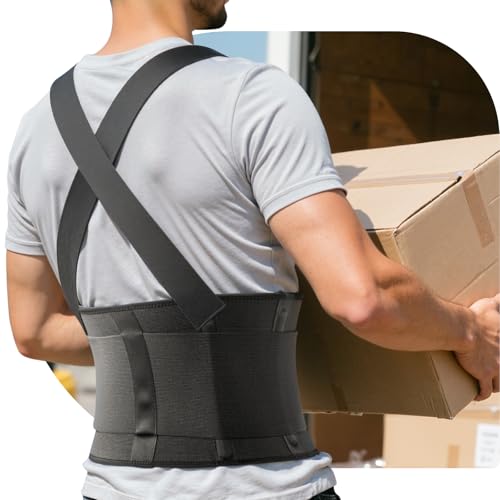
Construction sites and warehouse floors punish a lower back in ways that office chairs never do, and a posture corrector designed for desk work simply won’t survive that environment. SOLOEVER’s work-focused belt is built with durable materials and a wider support band that holds its shape through repeated bending, lifting, and twisting.
The adjustable fit accommodates a range of body sizes, which is useful when the brace is shared between shifts or worn over work clothing. Compared to the lighter Vicorrect at the top of this list, this option trades breathability and minimalism for the structural integrity you need during heavy physical tasks.
The Good Stuff
- Durable build handles construction and warehouse conditions
- Wide support band stabilizes the lumbar zone during lifts
- Adjustable sizing fits over work layers comfortably
Some Limits To Know
- Bulkier than desk-focused braces, less discreet under fitted clothing
- Less suited for upper-back posture retraining
Quick Facts
Built With In Mind
Tradespeople, warehouse workers, and lifters who need firm lumbar reinforcement during physically demanding jobs.
Where A Sibling Pick Shines
If your day involves a chair more than a loading dock, the SOLOEVER Ultra Breathable Back Brace offers a lighter, more breathable profile.
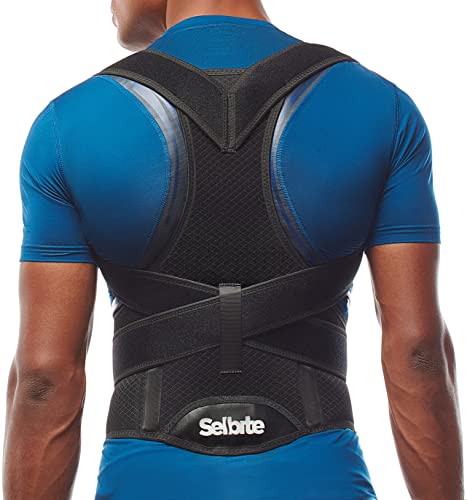
The Selbite takes a different approach from the upper-back-only designs higher on this list. Its wide waist belt anchors at the midsection while adjustable shoulder straps pull the upper back into alignment, creating a full-torso correction system. Mesh panels keep airflow moving, which is helpful when you’re wearing it through a long morning of meetings.
One detail worth highlighting: sizing is based on waist measurement at navel level rather than pants size. If your measurement sits between two ranges, the brand recommends going up for a less restrictive feel. That guidance matters here because a brace that’s too tight tends to get abandoned by lunch.
Key Advantages
- Full-torso coverage supports both upper and lower back
- Mesh panels reduce heat buildup during extended wear
- Waist-anchored design keeps the brace centered during movement
- Adjustable shoulder straps allow gradual tightening
- Works over a shirt or under loose clothing
Practical Considerations
- Hook-and-loop closures can wear on delicate fabrics
- More coverage means more adjustment points to learn
Whose Shelf It Belongs On
Anyone who wants one brace that addresses both shoulder positioning and lumbar awareness through long workdays.
Swap It Out When
You’d rather have a minimalist shoulder-only design, in which case the Vicorrect Posture Corrector keeps things simple.
Working from home tends to blur the line between desk hours and couch hours, and rounded shoulders can set in faster than you’d expect. The GROKIE targets that specific problem with a slim profile designed to disappear under clothing, fitting chest sizes from 32 to 45 inches. Adjustable straps let you dial in the right tension without overcorrecting.
Compared to the Selbite above, this option focuses purely on the upper back and shoulders rather than wrapping the torso. That’s a meaningful difference for anyone who wants posture correction without the bulk of a waist belt during video calls and errands.
Where It Delivers
- Low-profile design stays invisible under most shirts
- Wide chest size range fits a broad spectrum of frames
- Adjustable straps allow customized tension levels
- Breathable construction suits long desk sessions
Less Ideal Details
- No lumbar support component included
- Medium size range may require careful measurement before ordering
Perfect Match For
Remote workers and students who need subtle upper-back support they can wear from morning meetings to evening study sessions.
Another Choice May Suit
If you also want lumbar coverage along with shoulder correction, the Selbite Posture Corrector provides a fuller-torso system.
What To Weigh Before Choosing A Back Brace
Fit Comes First, Everything Else Follows
A brace that pinches at the ribs or rides up at the waist gets abandoned within a week. Measure at the navel for lumbar options, around the chest for upper-back designs, and check size charts against your actual numbers rather than your usual clothing size. Most brands explicitly recommend going up a range when you sit between two sizes, and that guidance exists for a reason.
Match The Brace To The Pain Pattern
Upper-back slouching responds well to shoulder-focused designs like the Vicorrect and GROKIE. Lower-back strain from sitting or lifting needs the structural support of lumbar panels, which is where the SOLOEVER options earn their place. Trying to fix a lumbar problem with a shoulder brace, or vice versa, tends to deliver disappointment.
Breathability Determines Whether You Wear It
Mesh panels and lightweight frames sound like minor details until you try wearing a non-breathable brace through a humid commute. In warm climates or summer months, breathable construction often matters more than maximum compression.
Think About Where You’ll Actually Wear It
A heavy-duty work belt makes sense on a job site but feels excessive at a desk. A discreet upper-back corrector fits under office clothing but won’t support heavy lifting. Match the build to the environment rather than chasing a single brace for every situation.
Key Considerations Across These Picks
Pitfalls Shoppers Hit
A common trap is choosing a brace based on the strongest advertised feature rather than the actual pain pattern. Another is assuming that “adjustable” means “fits everyone” without checking the size chart against your measurements. Finally, wearing a brace too tightly or for too long at the start tends to cause discomfort that drives people to abandon the product entirely, when a gradual approach would have worked better.
Where The Extra Money Goes
Premium lumbar braces like the SOLOEVER Ultra Breathable model invest in engineered support panels that mirror spinal curvature, which costs more than basic elastic belts but distributes pressure more naturally. Female-specific shaping, heavier-duty materials for physical work, and refined mesh systems also explain higher price points. The upgrade usually pays off when the design matches your specific body and use case rather than serving as a one-size-fits-all compromise.
Frequently Asked Questions
How long should a posture brace be worn each day?
Most manufacturers recommend starting with shorter sessions of around 30 minutes to an hour and gradually building up to two or three hours. Wearing a brace for too long initially can cause muscle fatigue rather than improvement.
Can a back brace actually fix posture over time?
A brace acts as a reminder rather than a permanent fix, helping retrain muscle memory so your body holds better alignment on its own. Consistent wear combined with strengthening exercises tends to produce the most lasting results.
Are posture braces safe to wear under clothing?
Slim-profile upper-back designs are generally invisible under loose shirts and light sweaters. Bulkier lumbar belts with structural panels are better suited for wear over a base layer or under outerwear.
What’s the difference between upper-back and lumbar braces?
Upper-back braces focus on shoulder positioning and rounding, while lumbar braces provide structural support across the lower spine. The right choice depends on whether your main issue is slouching or lower-back strain.
How do I know which size to order?
Measure according to the brand’s specific guidance, usually at the navel for lumbar belts and around the chest for upper-back designs. When your measurement sits between two size ranges, going up typically delivers a more comfortable fit.
Closing Remarks
The right back brace depends less on the brand name and more on where your pain actually lives and how your days are structured. Match the design to your dominant posture problem, get the sizing right, and give your body time to adjust. Those three steps cover most of what separates a brace that ends up in a drawer from one that quietly changes how you sit, stand, and move through the day.