

Sitting at a desk for ten hours, hauling boxes around a warehouse, or recovering from a stiff lower back on a Sunday morning all share one thing in common: your spine pays the price. The right back brace can take the edge off daily discomfort, remind you to sit taller, and protect your lumbar region through heavy lifts.
This roundup covers six popular back braces built for different jobs. Some focus on upper-back posture correction, others wrap the lumbar region for warehouse and gym work. A few blend both approaches. Here’s what to know before you pick one.
A Fast Comparison Of The Options

Vicorrect Adjustable Back Brace for Upper Back Support (Pink Small)
Yowayonoe Adjustable Full Back Brace Support
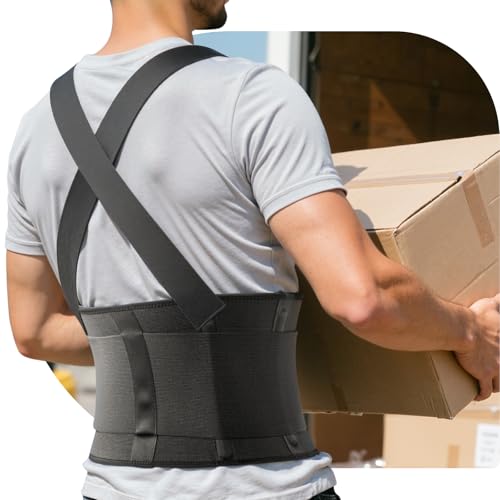
SOLOEVER Adjustable Lower Back Support Belt

SOLOEVER Lower Back Support Belt with Suspenders (Grey, Large)

SOLOEVER Lower Back Support Belt with Suspenders (Pink, Large)

GROKIE Back Brace for Rounded Shoulders, Medium (32-45″ Chest)
Why These Options Stand Out
The Vicorrect Posture Corrector is built for the person who feels their shoulders rounding forward by 3 p.m. and wants a soft daily reminder to sit taller. Its lightweight, breathable build targets the upper back and shoulders rather than the lumbar region, which makes it a natural pick for desk workers, students, and drivers who spend long stretches seated. Compared to heavier lumbar belts like the SOLOEVER picks later in this list, this one feels more like a posture coach than a lifting harness.
The Small sizing runs slim, so users with broader frames should check the sizing chart before committing. For most office-bound users, the breathable construction keeps things comfortable under a shirt for the recommended short sessions, and the adjustable straps let you dial in tension without overdoing it.
The Case For It
- Lightweight design that stays comfortable during two-hour wear sessions
- Targets upper-back slouching rather than lumbar strain
- Adjustable straps accommodate a range of torso shapes
- Breathable construction reduces heat buildup under clothing
Things To Consider
- Not designed for heavy lifting or warehouse-grade lumbar support
- Small sizing may feel snug for broader shoulders and chests
Quick Facts
Who It Suits Best
Office workers, students, and drivers who want a soft upper-back posture nudge during long seated stretches.
Consider Something Else When
Skip this in favor of the SOLOEVER Adjustable Lower Back Support Belt if you haul heavy loads or need dedicated lumbar compression.
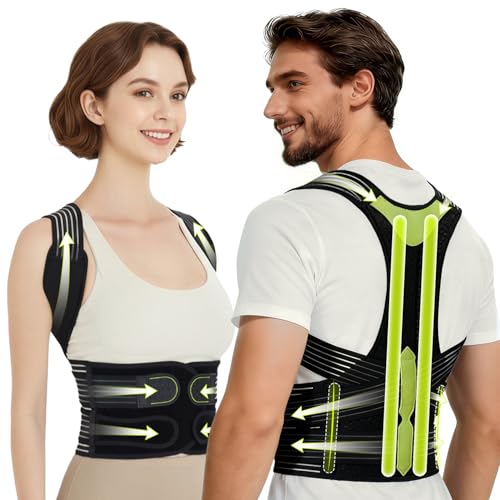
The Yowayonoe Posture Corrector takes a different approach from a passive sling. It uses dual flexible support rods that activate when you slouch and release when you sit upright, essentially coaching your shoulders and upper-back muscles to remember the correct position. That training angle makes it appealing for anyone who has tried posture braces before and felt like they were just being propped up rather than retrained.
The full-back coverage reaches from the upper spine down through the mid-back, which suits users who slouch through their entire torso rather than just the shoulders. For most people running a multi-week posture routine, the adjustable strap system lets you progress from lighter tension early on to firmer support as muscles adapt.
The Helpful Details
- Dual flexible rods respond to slouching in real time
- Encourages muscle retraining rather than pure passive support
- Full-back coverage addresses upper and mid-back rounding
- Adjustable straps support a progressive routine
Worth Noting
- Wider torso coverage can feel restrictive under thin shirts
- Rod-based feedback takes a few sessions to feel natural
Made For
Users committed to a multi-week posture retraining routine who want active feedback rather than passive support.
Look Elsewhere When
Pick the Vicorrect Posture Corrector instead if you want something lighter and less structured for everyday desk wear.
The SOLOEVER Adjustable Lower Back Support Belt is purpose-built for physically demanding work. Where the first two picks in this list focus on upper-back posture, this one wraps the lumbar region with firm support that stabilizes the lower spine during heavy lifting, repetitive bending, and long hours on a warehouse floor. Construction crews, movers, and warehouse workers tend to gravitate toward this style because the compression reminds you to lift with your legs.
Adjustable sizing lets the brace fit a wide range of body types, and the durable material holds up under repeated wear. Owners commonly rotate this brace between shifts and report that the hook-and-loop closure stays grippy after months of use, though the bulk under a fitted shirt means it shines more on the worksite than in a conference room.
Where It Delivers
- Firm lumbar compression suited to heavy lifting tasks
- Adjustable sizing fits a wide range of body types
- Durable material holds up under repeated worksite wear
- Reminds wearers to brace the core before each lift
Points To Keep In Mind
- Bulky profile makes it awkward under fitted clothing
- Not intended for upper-back posture correction
Best Suited To
Construction, warehouse, and moving crews who need lumbar support during physically demanding shifts.
A Better Fit Elsewhere
Choose the SOLOEVER Lower Back Support Belt with Suspenders if you want the same lumbar compression plus shoulder straps that keep the brace from sliding during long shifts.
The SOLOEVER Grey, Large version of the lower back brace adds a key feature to the standard belt: adjustable shoulder suspenders. Those straps anchor the brace in place so it does not migrate down the torso during long shifts, extensive movement, or repeated bending. For workers who spend eight to ten hours on their feet, the suspender design solves the most common complaint about wraparound lumbar belts, which is constant readjustment.
Beyond the suspenders, the brace offers the same substantial lumbar compression as the standard SOLOEVER belt. In our view, the suspender setup earns its place for anyone whose job involves climbing ladders, crouching, or twisting through a full workday. You may find the added strap layer too warm under heavy summer work clothes, in which case the standard belt is the cleaner choice.
Notable Upsides
- Adjustable suspenders keep the brace locked in place during long shifts
- Substantial lumbar support suited to heavy lifting
- Reduces the need for mid-shift readjustments
- Grey colorway hides worksite dirt between washes
Trade Offs
- Extra strap layer can feel warm in hot environments
- More setup time than a basic wraparound belt
Feature Snapshot
Who Will Love This
Warehouse and construction workers logging long shifts who need lumbar compression that stays put without constant readjustment.
Reach For A Different Pick When
Pick the SOLOEVER Adjustable Lower Back Support Belt without suspenders if you want simpler on-and-off wear or run hot during summer shifts.
The Pink, Large version of the SOLOEVER suspender brace offers identical build quality to the Grey sibling, just in a brighter color. That sounds trivial, but on shared worksites or team-based environments where multiple braces are issued, color-coding can simplify inventory and ownership tracking. Some wearers also simply prefer the contrast against standard workwear.
The functional story is the same as the Grey Large model: adjustable suspenders, substantial lumbar compression, and a build aimed at construction, warehouse, and moving work. You can expect the same fit characteristics and care routine, so the choice between this and the Grey version comes down to color preference and inventory needs rather than performance differences.
What Makes Sense
- Same suspender-based stability as the Grey sibling
- Brighter color helps with worksite inventory tracking
- Substantial lumbar compression for demanding shifts
- Large size fits broader frames comfortably
Less Ideal Details
- Same warmth trade-off as the Grey suspender brace
- Bright color may not appeal to every wearer
Right Fit For
Teams or shared worksites that want a color-coded bracing option without sacrificing suspender-based lumbar support.
Swap It Out When
Go with the SOLOEVER Lower Back Support Belt with Suspenders in Grey if you want the same build in a more neutral colorway.
The GROKIE Posture Corrector rounds out this list with a profile designed specifically for desk-bound wear. The Medium size targets chest measurements from 32 to 45 inches, and the breathable construction is tuned for hours under a shirt during computer work. What separates this pick from the Vicorrect model earlier in the list is the focus on invisibility under clothing, which matters for anyone taking video calls or working in a client-facing role.
The adjustable straps allow a custom fit across that chest range, and the breathable material helps with the heat management issue that trips up many posture braces. For most computer-based jobs, this lands in the sweet spot between structure and subtlety. The trade-off is the same one shared by every posture brace: results come from consistent short sessions, not from wearing it all day.
Bright Spots
- Invisible profile under shirts for video calls and client work
- Breathable construction handles long desk sessions
- Chest range of 32 to 45 inches covers a broad audience
- Adjustable straps allow fine-tuned tension control
Practical Considerations
- Requires consistent short sessions to deliver posture benefits
- No lumbar compression for lifting or physical labor
Quick Technical Notes
Whose Shelf It Belongs On
Remote workers and desk-based professionals who need posture support that disappears under a work shirt.
Where Another Pick Suits Better
Pick the SOLOEVER Adjustable Lower Back Support Belt if your day involves lifting or physical labor rather than seated computer work.
Choosing Back Braces For Men That Actually Fit Your Day
The first question to settle is where you actually need support. Upper-back posture braces target the shoulders and thoracic spine, the zone that rounds forward during long seated sessions. Lower-back lumbar belts wrap the spine’s base and stabilize heavy lifting. A few products try to bridge both, but most picks lean toward one job or the other, so identifying your dominant pain point saves time.
Next, consider fit and sizing honestly. A brace that is too loose does nothing, and one that is too tight creates a new set of problems. Measure your chest or waist according to the product’s chart, and check whether the brace runs small or large. Adjustable straps help, but the underlying sizing still matters for comfort during multi-hour wear.
Material and breathability matter more than most first-time shoppers expect. A brace worn under a shirt for two to four hours traps heat quickly, especially in warmer environments. Breathable mesh panels and lightweight fabrics make the difference between a brace you actually wear and one that ends up in a drawer.
Finally, match the brace to your activity. Heavy lifting, posture coaching, and all-day desk wear are three different jobs. Buying a lifting belt for posture correction, or a soft posture brace for warehouse work, leads to frustration on both ends. Pick the tool that matches the task and your routine will stick.
Picking Smart Across The Brace Category
Pitfalls Shoppers Hit
The most common mistake is choosing a brace based on appearance rather than intended use. Posture braces and lumbar belts look similar at a glance, but they target different muscle groups. Wearing a lumbar belt during desk work adds bulk without helping the rounded shoulders that drive most seated discomfort, and wearing a soft posture brace during heavy lifting does not stabilize the spine when it actually needs it.
Sizing slip-ups run a close second. Shoppers often order based on their usual clothing size rather than measuring their chest or waist, then wonder why the brace feels wrong. Manufacturer charts vary between products, so checking the specific chart for the brace you are buying prevents returns and wasted time.
Where The Extra Money Goes
Premium-tier braces typically upgrade three things: materials, hardware, and adjustability. Higher-grade hook-and-loop closures hold tension longer through repeated wear, reinforced stitching extends the brace’s lifespan across heavy workdays, and better strap systems spread pressure more evenly across the torso.
For occasional desk wear, mid-tier options deliver most of the benefit. For daily worksite use or year-round posture routines, the upgrade to reinforced materials and smoother adjustability tends to pay back in comfort and durability over months rather than days.
Frequently Asked Questions
How long should I wear a posture brace each day?
Most manufacturers suggest starting with 20 to 30 minutes per session and building up to one or two hours, depending on comfort. Wearing a posture brace all day can actually weaken the muscles you are trying to train.
Can a back brace help with lifting at work?
Yes, but choose a lumbar support belt with firm compression rather than a soft posture corrector. Lumbar belts stabilize the lower spine and remind you to engage your core before each lift.
Will a brace fit under my regular clothes?
Lightweight posture braces are generally designed to sit invisibly under shirts, though bulkier lumbar belts tend to show under fitted clothing. For client-facing roles, look for braces specifically marketed as invisible under clothes.
How do I clean a back brace?
Most fabric braces can be hand-washed with mild soap and air-dried. Avoid machine drying, since heat weakens hook-and-loop closures and elastic over time.
Are these braces one-size-fits-all?
No. Even adjustable braces have sizing windows based on chest or waist measurements. Always check the manufacturer chart before ordering.
Final Take
The right back brace depends entirely on where your day puts the most strain. Upper-back posture braces suit desk workers and students, lumbar belts serve lifting-heavy jobs, and suspender-equipped models solve the migration problem during long shifts. Match the brace to your routine, measure carefully, and you will end up with gear that actually earns its place in your daily lineup.