

Overpronation shows up when the ankle rolls inward with each step, and the right insert can quietly change how a whole day feels. Runners logging heavy miles, retail workers clocking long shifts, and anyone whose arches ache by dinner all end up shopping in the same crowded aisle. I pulled together seven arch supports for overpronation that earn their keep in real shoes, not just on paper, so you can match a design to your foot, your activity, and the kind of relief you’re after.
The Essentials At A Glance

PowerStep ProTech Control 3/4 Orthotic Inserts

PowerStep ProTech Full Length Orthotic Insoles

PowerStep Pinnacle Maxx Orthotic Insoles
PowerStep Pulse Maxx Running Insoles
PowerStep Pinnacle Low Insoles
OUOKK Arch Support Inserts

Yenta + Posha Modern Sole Wing Insoles
Why These Options Stand Out
The ProTech Control 3/4 length exists because most dress shoes and loafers don’t have room for a full insert. By stopping short of the toe box, this design leaves wiggle room while still anchoring the heel and arch where correction matters most. A firmer, semi-rigid shell shapes the arch, and a moderate foam layer softens each heel strike without feeling spongy.
For someone in business casual shoes five days a week, this is the pick that actually fits. Compared with the full-length ProTech later in this list, the trade-off is less cushioning under the forefoot, but the depth savings make it usable in shoes the longer inserts simply cannot enter.
Useful Touches
- 3/4 length leaves room in shallow-toe shoes where full inserts crowd the toes
- Firmer arch contour, the firm feel is what gives the corrective push, while the foam heel absorbs shock on hard floors
- Mapped to common overpronation issues like plantar fasciitis and arch strain, so it covers more than one complaint at once
- Available across men’s and women’s sizing brackets, which helps households share the brand
Worth Noting
- Lacks forefoot cushioning that the full-length sibling offers, so long walks on hard pavement may feel thinner
- Firmer arch can feel aggressive during the first few wear cycles as feet adjust
Who It Suits Best
Office workers, waitstaff, and anyone whose overpronation pain flares in dress shoes or low-profile sneakers will appreciate the cut-down shape.
A Better Fit Elsewhere
Runners who need full-foot coverage should look at the PowerStep Pulse Maxx Running Insoles instead, since that pick is built specifically for mileage in athletic shoes.
This full-length sibling trades the 3/4 inch’s compact shape for total contact from heel to toe. The arch is the same semi-rigid style, but a memory foam topper softens the heel cup. The result feels more like walking on a contoured mattress than a medical wedge, which matters on long retail or teaching shifts.
Anyone who found the previous ProTech too firm in the heel will probably settle into this one faster. It runs a touch thicker, so shoes with removable factory liners accept it cleanly, while tight casual slip-ons may feel snug.
Useful Highlights
- Full-length platform keeps the foot aligned heel to toe, useful when pain travels up to the ball of the foot
- Memory foam in the heel molds to the wearer’s strike pattern after a few days of break-in
- Designed for plantar fasciitis, arch pain, and mild-to-moderate pronation, so it suits a wide reader base
- Cushioning softens the firmness that the 3/4 version carries, making it friendlier for sensitive feet
Trade Offs
- Thicker profile crowds low-volume shoes like ballet flats and slim sneakers
- Memory foam compresses over many months, so heavy daily users may notice softening long before the shell gives out
Made For
People with mild-to-moderate overpronation who stand or walk for hours and want a cushioned, supportive feel in roomy shoes.
Look Elsewhere When
If your footwear rotation is mostly dress shoes with shallow toe boxes, the PowerStep ProTech Control 3/4 Orthotic Inserts will fit those pairs where this full-length model cannot.
Pinnacle Maxx is the most stability-forward option on this list, and it shows the moment it goes in a shoe. A firm, angled heel post repositions the rearfoot, while the flexible shell through the arch still flexes enough for walking gait. The build is heavier than the lighter ProTech insoles reviewed above, which is a clue that this is meant for sturdier footwear and tougher workloads.
Flat feet and heavier bodies typically benefit most from this kind of structured correction. It is also one of the few inserts here that pushes back on stubborn pronation rather than just cushioning around it.
The Upside
- Angled heel cradle is engineered to actively correct pronation, the rigid post is what makes this a stability tool rather than a comfort layer
- Strong arch holds its shape across years of daily use rather than collapsing early
- Handles heavier wearers and high-impact days on concrete floors
- Made in the USA, which often translates to consistent quality control
Honest Caveats
- Noticeably thicker and stiffer than the standard Pinnacle, so casual slip-ons may not accept it
- Break-in is real, and a few wearers find the heel post too aggressive in the first week
Who Should Grab It
People with pronounced overpronation, flat feet, or those carrying heavier loads who need maximum rearfoot control rather than soft cushioning.
Consider Something Else When
Shoppers wanting a softer, lower-profile daily feel will find the PowerStep Pinnacle Low Insoles more wearable in everyday sneakers and casual shoes.
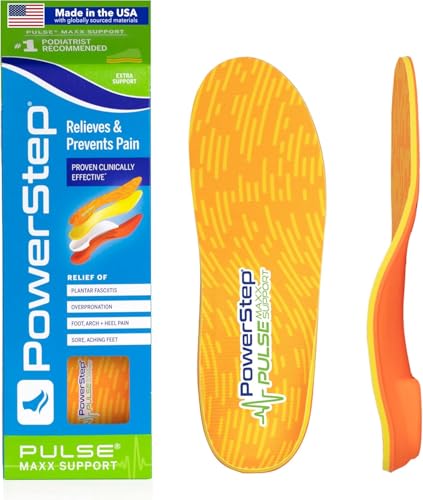
Pulse Maxx is the running-tuned entry on this list, and the build reflects that. A more rigid shell and an angled heel post target the way overpronation shows up across repetitive running cycles. The construction is geared specifically for advanced running shoes, where the wider midsole and removable insole can swallow a thicker, more aggressive insert without squeezing the toes.
Distance runners and walkers in real athletic footwear get the most out of this design. In a casual boot or a fashion sneaker, the rigidity that helps on the road becomes a feeling of fighting the shoe.
Positive Points
- Rigid shell gives strong corrective push-off, useful for runners whose ankles collapse on impact
- Angled heel geometry aligns the rearfoot at the moment it matters most during gait
- Designed for advanced running shoes, so the dimensions match the platforms most serious runners already own
- Motion-control approach that addresses overpronation rather than just absorbing it
Things To Consider
- Too firm and bulky for casual shoes, low-volume sneakers, or boots
- Higher price tier than general-use inserts, so buyers using it for short walks may not recover the cost
The Right Fit For
Runners logging serious mileage in technical running shoes who need corrective support rather than just cushioning underfoot.
Swap It Out When
Casual walkers wearing everyday sneakers should look at the PowerStep Pinnacle Low Insoles, which offer arch support in a more everyday-friendly build.
Pinnacle Low is the brand’s flatter-footed answer, designed for people whose arches sit lower or sit flat on the ground. A firm but flexible arch contour and a deep heel cradle keep the foot centered without forcing a high arch shape that flat feet would reject. Dual-layer cushioning adds a softer daily feel that the heavier Maxx model lacks.
For most standing-and-walking routines, this is the comfortable middle ground between heavy-duty correction and casual cushioning. Anyone who found the previous PowerStep picks too aggressive in the arch will likely find the geometry here more forgiving.
The Case For It
- Low arch geometry aligns with flat-foot anatomy, so the contour supports rather than fights the foot shape
- Dual-layer cushioning adds everyday comfort on long shifts or long walks
- Targets the same overpronation, plantar fasciitis, and arch pain complaints as other PowerStep insoles
- Balances structure and softness, useful as an everyday default rather than a specialty tool
Small Caveats
- Still thicker than a standard factory liner, so tight-fitting shoes need removal of the original insole first
- Lower arch height means it does not address high-arch pain the way neutral or high-arch picks would
Best Suited To
Shoppers with flat feet and overpronation who want solid arch reinforcement for daily walking, work shoes, and casual sneakers.
Where A Sibling Pick Shines
Runners chasing mileage in athletic shoes will find more rigid correction in the PowerStep Pulse Maxx Running Insoles for the same overpronation profile.
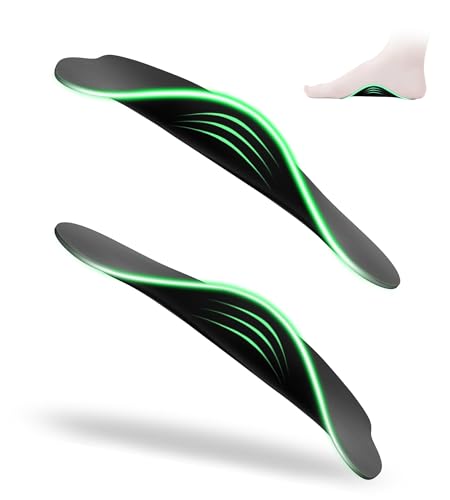
OUOKK sells this insert as a three-height kit, with one listing covering high, medium, and low arches. Each color codes an arch height, so shoppers unsure whether their foot sits flat, neutral, or high can compare fits without buying three separate products. The build is a softer, flexible plastic rather than the rigid medical shells in the other reviews here.
For a household with mixed arch heights, this is a sensible starting point. The trade-off for that flexibility is less aggressive correction, so heavier pronators may still need a more rigid option from earlier in the list.
Features That Help
- Three arch heights in one product, useful when arch type is uncertain
- Targeted relief framing for plantar fasciitis and foot pain covers the most common complaints
- Color-coded design makes swapping between family members easier
- Lower price tier than medical-grade orthotics, so it suits a first-time insert trial
Where It May Fall Short
- Soften plastic shell offers less rigid correction than the semi-rigid PowerStep picks reviewed earlier
- Long-term durability under heavy daily use is less documented than medical-grade options
Perfect Match For
First-time insert shoppers, families with mixed arch heights, and anyone wanting to test arch support without committing to a single rigid design.
Reach For A Different Pick When
Heavy pronators needing firm daily correction should consider the PowerStep ProTech Full Length Orthotic Insoles, which carry a more rigid arch shell.
Modern Sole Wing is built for the shoes most inserts cannot enter, the pointed-toe flats, slim pumps, and low-profile boots where the rest of this list would crowd the toes. An ultra-thin, patented profile still claims shock absorption that outperforms thicker traditional insoles, which sounds unlikely until the slim wings contour into a tight toe box without lifting the heel out of the shoe.
For overpronators whose pain is worse in dress shoes than sneakers, this is the design that fits the wardrobe. It is not a heavy correction tool, and shoppers with severe pronation will still want the structured picks reviewed earlier.
The Good Stuff
- Ultra-thin profile slips into pointed-toe flats where thicker inserts would not fit
- Wing-shape design is shaped specifically for almond and round toe flats in several sizes
- Shock absorption built into a slim layer, which is unusual for this kind of low-profile insole
- Discreet enough that it does not visibly push the foot up out of low-cut shoes
Points To Note
- Limited corrective power for heavier pronators who need rigid arch control
- Only marketed in women’s sizing, so male shoppers with similar shoe needs should look elsewhere on the list
Who Will Love This
Women whose overpronation pain flares in dress flats and slim work shoes will finally get arch support in the silhouettes they actually wear.
Where Another Pick Suits Better
Anyone needing stronger pronation correction in roomy sneakers or athletic footwear should look at the PowerStep Pinnacle Maxx Orthotic Insoles for a more structured build.
What To Weigh Before Choosing Your Insert
Arch height is the first fork in the road. Most overpronators sit in the low-to-neutral arch range, but a quick wet test (wet foot on paper, then check the print) gives a clearer answer than guessing. A flat or low arch wants the contour of the PowerStep Pinnacle Low, while a moderate arch tends to settle into the ProTech styles reviewed earlier.
Length and shoe type matter just as much. A 3/4 length makes dress shoes viable, a full length covers work boots and athletic shoes, and ultra-thin designs reach into flats where everything else fails. Shoe volume, the height inside the shoe once the factory liner is out, decides whether any insert actually fits before its correction even matters.
Activity level changes the math too. Runners logging mileage benefit from a rigid shell like the Pulse Maxx, while retail and teaching shifts usually want the cushioned feel of the ProTech Full Length. Material matters here, because rigid plastics correct and soft foams absorb, and most overpronators need at least some of both.
Key Considerations Across These Picks
Common Slip Ups Worth Dodging
Buying by size alone skips the most important question: will this insert fit inside the shoe you actually wear? Many inserts get returned because they sit fine on a table but lift the heel out of a fitted sneaker. Pulling out the existing liner before ordering is the simplest fix, since most orthotics need that room.
Picking by cushion thickness is another quiet trap. Soft foam feels wonderful in the store but compresses within months on heavy users, while a firmer shell outlasts it. Matching firmness to the wearer’s weight and mileage keeps the insert earning its keep past the honeymoon phase.
When Paying More Pays Off
The premium tier in this category buys firmer correction, longer-lasting shells, and tighter quality control. For overpronators with daily pain or heavier frames, that upgrade matters because soft inserts break down before the foot shape changes. Lighter or occasional users can comfortably stay in the budget tier, but anyone wearing orthotics eight hours a day will feel the difference within a few months.
Frequently Asked Questions
How do I know if I overpronate?
Look at the wear pattern on a pair of well-used shoes. Heel and forefoot wear concentrated on the inner edge, paired with inward-rolling ankles when you walk, are the classic visual cues.
Are arch supports for overpronation the same as orthotics?
Most overpronation inserts sit in the orthotic family, but the term “orthotic” often signals a medical-grade build with a firm shell, while cheaper inserts may rely mostly on cushioning without much correction.
Can I move arch supports between shoes?
Yes, as long as the shoes accept the same size and the original liner is removed. Inserts last longest when rotated between pairs so the foam and shell can dry and recover between wears.
How long do these inserts usually last?
Daily-use orthotics commonly hold up for roughly a year before the foam layers compress and the shell starts losing shape. Lighter wearers can stretch that lifespan, while heavy runners may need to replace sooner.
Will overpronation inserts fix the problem permanently?
Insert support helps manage alignment and reduce pain day to day, but it does not retrain foot mechanics on its own. Combining orthotics with targeted exercises and proper shoe selection gives the best long-term result.