

Anyone with high arches knows the drill: a long day on concrete leaves the middle of the foot burning, and most generic insoles barely register. The right arch support inserts for high arches can change that, lifting the arch, spreading pressure, and dialing down the ache by the end of a shift. I pulled together seven options that take different approaches, from rigid TPU shells to soft gel pads, so there’s something here for nurses, runners, and anyone who just wants to stand at the stove without wincing.
The Leading Options At A Glance

IWELA WATER High Arch Support Insoles Heavy Duty Orthotics Size XL
PLERE Arch Support Insert Plantar Fasciitis Insoles Standing All Day

Aetrex L2200 Men’s Memory Foam Plantar Fasciitis Insoles

Superfeet All-Purpose Medium Arch Support Insoles
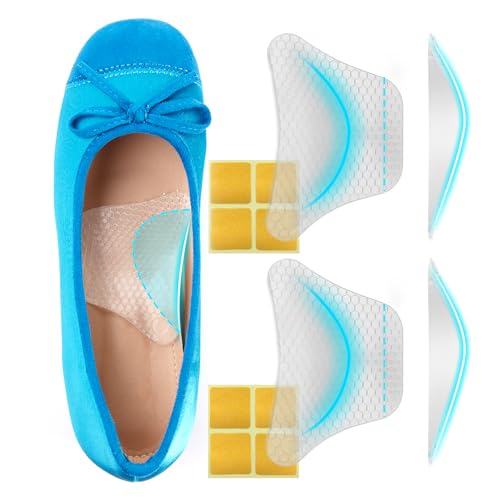
PLERE Non-Slip Gel Arch Pad for High Arch

Superfeet All-Purpose High Arch Support Insoles

Superfeet Women’s High Impact Support Insoles
The Picks, Examined More Closely
IWELA WATER built this insole around a rigid TPU arch (thermoplastic polyurethane, a firm-yet-flexible plastic that holds its shape under load) that follows the curve of a higher arch instead of flattening out. It runs in XL, designed for shoppers who weigh more than average and need support that won’t bottom out by hour eight.
The corrective shape is meant to take tension off the plantar fascia, the thick band of tissue running along the bottom of the foot, which is the usual culprit behind that first-step-in-the-morning sting. Compared to the PLERE insole coming up next, this one trades customization for raw structural support.
The Practical Payoff
- Firm TPU shell resists compression under heavier body weight, so the arch doesn’t collapse mid-shift.
- Contoured profile targets plantar fascia tension, which tends to matter most for workers standing on hard floors.
- XL sizing covers larger feet that smaller orthotics tend to crowd or pinch.
- Works in work boots and casual shoes without aggressive arch humps pressing through thin uppers.
- Unisex fit removes the guessing game for households sharing inserts.
Things To Consider
- The rigid feel takes a few days to break in; sensitive feet may push through a brief adjustment window.
- Trimming may be needed for shoes with shallow toe boxes.
- Less cushion than foam-based picks, so runners may want something softer.
Who It Suits Best
Workers over 220 lbs and anyone needing firm, structured arch support for long standing shifts.
Consider Something Else When
The PLERE insole below suits shoppers who want adjustable arch height rather than one fixed contour.
What sets PLERE apart is the calibration knob: three distinct arch heights (low, medium, high) layered into five trimmable sizes. That means narrow feet and wide feet land on the same SKU, which is rare in this category.
The insole is built for standing-all-day scenarios: retail, teaching, hospital shifts. Compared to the IWELA WATER orthotic above, this one trades rigidity for tunability, a softer ride with arch height you choose rather than accept.
Real-World Strengths
- Three arch heights let multiple foot types share one household purchase.
- Five trimmable sizes fit narrow through wide feet without ordering multiple pairs.
- Designed for work boots, sneakers, and casual shoes without aggressive reshaping.
- Targets plantar fascia strain, helpful for anyone whose first morning steps sting.
- Softer feel than the IWELA WATER shell, easier on sensitive feet during adjustment.
Trade Offs
- Trimming requires a steady hand and the included guide; mis-cuts aren’t reversible.
- Picking the right arch height takes trial; starting too high may feel aggressive in slim shoes.
- Not as rigid as TPU shells, so very heavy users may want more structure.
Feature Snapshot
Made For
Multi-foot-type households and shoppers who want one adjustable insole rather than a one-shape-fits-all rigid shell.
Skip It When
The Aetrex L2200 review below is the better match for anyone craving memory-foam cushioning over structured support.
Aetrex takes a softer path. The L2200 layers lQl50 memory foam (a slow-recovery foam that molds to pressure points) over a performance poron base (a high-density foam that bounces back and absorbs shock), with a cupped heel that hugs the rearfoot. At a quarter-inch thick, it slips into sneakers, flats, and even low heels without crowding the toe box.
The brand’s signature arch support does the structural work underneath the cushion. Versus the PLERE’s tunable heights, this insole commits to one arch profile and pads it generously.
Positive Points
- Memory foam top layer molds to pressure points during long walks.
- Cupped heel cradles the rearfoot, easing strain on the plantar fascia.
- Quarter-inch thickness fits dress shoes and sneakers without lifting the heel out of the bed.
- CopperGuard lining targets odor control during sweaty shifts.
- Engineered arch geometry aligns the foot biomechanically through gait.
Minor Gripes
- Memory foam compresses faster than rigid TPU under very heavy daily mileage.
- Single arch profile means no tuning for low or medium arches.
- Heel cup depth may feel intrusive in shallow Oxford-style shoes.
At A Glance
Right Fit For
Walkers, teachers, nurses, and doctors who want cushioned, biomechanically aligned support across sneakers, flats, and heels.
Look Elsewhere When
The Superfeet All-Purpose Medium below suits shoppers who want a synthetic, structured feel over memory foam cushion.
Superfeet’s medium-arch insole is the brand’s workhorse. It’s trim-to-fit, meaning each pair gets cut to the shoe’s outline before first wear, and built around a structured synthetic chassis. The 7.5–9 men’s / 8.5–10 women’s sizing lands on most average adult feet.
Stabilization runs through the heel cup and arch geometry, easing stress that travels up to ankles, knees, and lower back. Compared to the Aetrex L2200 above, this is firmer underfoot with less pillowy give.
The Upside
- Synthetic chassis holds its shape longer than foam-only insoles.
- Trim-to-fit layout customizes the insole to each shoe’s footprint.
- Heel cup and arch geometry reduce stress traveling to ankles and knees.
- Imported build quality tends to hold up through months of daily wear.
- Slides into sneakers and casual boots without aggressive volume changes.
Points To Note
- Medium arch profile underdelivers for shoppers with genuinely high arches.
- Trim-to-fit setup means following the cutting guide carefully on first install.
- Less cushioned than memory foam options for pure walking comfort.
Best Suited To
Sneaker and boot commuters with medium-arch feet who want firm, long-lasting support without foam softness.
Another Choice May Suit
The Superfeet All-Purpose High review further down is a stronger pick for confirmed tall arches.
PLERE’s gel pad is the smallest, simplest option here, just an adhesive arch cradle designed for dress shoes, heels, and flats where a full-length insole won’t fit. It comes with extra-sticky double-sided tape and a textured non-slip surface to keep it planted through the day.
Three customized arch heights (high, medium, neutral) cover different foot shapes. Compared to the Superfeet All-Purpose Medium above, this is a fractional pad, not a full insole, which means it targets the arch alone.
Notable Upsides
- Compact size fits dress shoes, heels, and flats that reject full-length inserts.
- Included sticky tape plus textured surface keep the pad planted during activity.
- Three arch-height choices (high, medium, neutral) target different foot shapes.
- Gel construction softens impact without the bulk of foam.
- Easy to swap between shoes since the adhesive layer peels cleanly.
Honest Caveats
- Doesn’t cover the heel or forefoot, so shock absorption stays shoe-dependent.
- Adhesive loses grip over time, especially in sweaty or wet conditions.
- Not a substitute for full-length support on long standing shifts.
Feature Card
Perfect Match For
Anyone wearing heels, flats, or loafers who needs arch lift without a full-length insole crowding the toe box.
Reach For A Different Pick When
The IWELA WATER insole reviewed first suits full-day standing shifts that demand full-foot coverage.
Superfeet’s high-arch sibling targets feet that the medium profile leaves under-supported. The deep heel cup works with the body’s natural fat pad (the cushioning layer under the heel bone) for shock absorption, while the taller arch fills more of the midfoot bridge.
It runs in the 9.5–11 men’s / 10.5–12 women’s range and trims down for a precise fit. Versus the PLERE gel pad above, this is a full-length structured insole built for serious mileage.
The Case For It
- Deep heel cup works with the body’s natural cushioning for added shock control.
- High arch profile fills the gap for feet the medium version under-supports.
- Trim-to-fit setup customizes the insole across shoe types.
- Synthetic chassis maintains structure through months of daily wear.
- Sizes 9.5–11 men’s cover many adult feet without ordering up.
Some Limits To Know
- Tall arch profile can feel intrusive in flat, thin shoes.
- Heel cup depth takes adjustment in low-profile footwear.
- Trimming instructions require following the guide carefully.
Feature Rundown
Who Should Grab It
Confirmed tall-arch walkers and hikers who need structured support under heavier daily mileage.
A Better Fit Elsewhere
The Superfeet Women’s High Impact below is the better match for runners and athletes needing impact-tuned cushion.
Superfeet’s high-impact insole is built for runners, court athletes, and anyone logging hard landings on pavement. It layers extra cushion under the heel and forefoot, the two areas that absorb the most force during running gait, while keeping the brand’s signature arch geometry underneath.
Compared to the Superfeet All-Purpose High above, this insole swaps a bit of structure for added rebound and impact absorption, leaning toward athletic use.
Real Benefits
- Extra cushion under heel and forefoot softens hard landings during runs.
- Superfeet’s signature arch geometry keeps biomechanical alignment intact.
- Tuned for impact-heavy activities like running, court sports, and plyometrics.
- Synthetic chassis resists compression better than foam-only inserts.
- Women’s-specific fit accounts for narrower heels and arches.
Practical Considerations
- Cushion focus means less corrective structure than rigid TPU orthotics.
- Adds noticeable volume, so slim-fitting flats and loafers won’t accept the footprint.
- Performance tuning may feel overbuilt for shoppers who only walk.
Built With In Mind
Runners, court athletes, and frequent trainers logging high-impact mileage in running shoes or training sneakers.
Swap It Out When
The Aetrex L2200 reviewed earlier is a better everyday-walking pick for nurses and teachers needing all-day cushion without sport-tuned bulk.
What To Weigh Before Buying Arch Support Inserts For High Arches
Arch Profile And Foot Shape
The first fork in the road is arch height itself. Insoles built for medium arches leave high arches floating, while high-arch supports can feel aggressive under flatter feet. Trim-to-fit models like the Superfeet pair give you a custom footprint, while gel pads and full-length inserts trade precision for convenience.
Cushioning Versus Structure
There’s a real trade-off between cushion and correction. Memory foam and gel soften pressure points but compress faster, while TPU shells and synthetic chassis hold their shape longer but feel firmer underfoot. Standing-all-day shoppers often want both, which is why layered constructions like Aetrex’s foam-over-poron design exist.
Footwear Compatibility
A rigid insole that crushes a dress shoe helps no one. Full-length inserts need depth in the toe box, while thin gel pads slide into heels and loafers without crowding. Trim-to-fit layouts solve most volume issues, but very shallow flats still demand the smallest pads.
Daily Use And Activity Type
Walking, standing, running, and hiking each stress the foot differently. Running adds impact, hiking adds lateral motion, standing adds cumulative load. Choosing an insole aligned to the dominant activity extends its useful life and keeps the foot supported where it matters most.
Key Considerations Across These Picks
Pitfalls Shoppers Hit
The most common mistake is grabbing an insole by shoe size without confirming arch height, which leaves a high-arched foot sitting on a flat platform. Another is trusting memory foam to replace structure, when foam alone compresses under heavier bodies and long shifts. Sizing up blindly in trim-to-fit pairs also backfires, since the heel cup and arch lose their geometry when the insole shifts inside the shoe.
What The Higher Tier Buys
Stepping up in this category usually means a deeper heel cup, a taller arch profile, or a layered foam chassis that holds its shape across months rather than weeks. Premium picks like the Superfeet All-Purpose High and Aetrex L2200 invest in materials that resist compression, which pays off for anyone logging daily mileage. The honest read is that budget gel pads suit dress shoes and lighter wear, while higher tiers cover the long-haul standing and walking scenarios where cheaper inserts flatten out.
Frequently Asked Questions
How Do I Know If I Have High Arches?
A quick check is the wet test: step on a dark paper bag or piece of cardboard with a wet foot, then look at the print. A narrow band or a missing middle section usually points to high arches, while a full footprint suggests flat feet.
Can Arch Support Inserts Help With Plantar Fasciitis?
Inserts that lift and support the arch can reduce the stretch on the plantar fascia during walking, which often eases the sharp morning heel pain tied to that tissue. They work best alongside stretching and proper footwear.
How Long Do These Insoles Usually Last?
Foam-heavy inserts tend to compress within several months of daily wear, while synthetic and TPU chassis often hold their shape through a year or more of regular use. Rotating pairs between shoes can extend the life of any insole.
Can I Move Inserts Between Different Pairs Of Shoes?
Yes, most full-length inserts transfer cleanly between shoes of similar volume, though trim-to-fit pairs are usually shaped for one shoe’s footprint. Gel pads stick where placed and need fresh adhesive when moved.
Do I Need To Break In New Insoles?
A short adjustment window is common, especially with firmer orthotics, and most feet adapt within a few days of gradual wear. Starting with a few hours per day and building up helps the arch and heel cup settle in.