

A rolled ankle on the trail or a tweak during basketball changes how you walk for weeks. The right ankle support for sprain recovery does two jobs at once: it keeps the joint steady while swelling drops, and it lets you keep doing normal things while ligaments knit back together. Below are six options that handle different stages of recovery, from a light sleeve you wear all day to a rigid brace for the rough weeks after a serious twist.
The Main Contenders
WHCOOL Low-Profile Ankle Braces Compression Sleeve

WHCOOL Slim-Fit Ankle Brace Lace Up Support

WHCOOL Slim-Fit Ankle Brace White, Medium
KEKING Ankle Brace Compression Sleeve

ZAMST A2-DX Ankle Brace for Heavy Sprains
PhysFlex Ankle Brace Socks Compression Sleeve
Inside Each Recommended Option
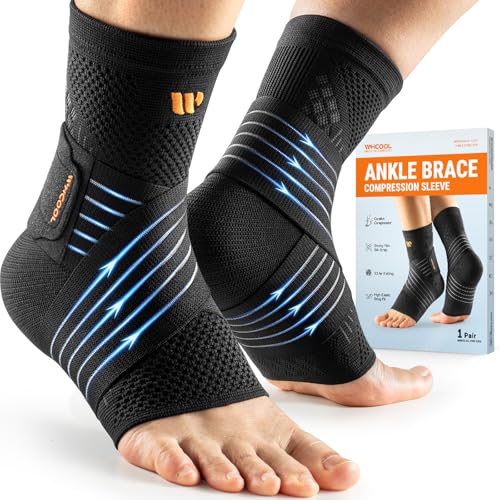
The WHCOOL Low-Profile Ankle Braces Compression Sleeve is built for the everyday stretch of recovery, not the worst day of it. The wide strap lets you dial in compression as swelling rises and falls through the day, which matters when you head to work on a train or push through a grocery run with a sore ankle. Compared to a rigid lace-up option like the WHCOOL Slim-Fit later in this list, this one trades structural support for comfort, so it disappears inside most shoes.
If you rolled your ankle two weeks ago and want something you can wear during desk work, dog walks, and errands, this sleeve makes sense. Runners logging easy miles during a comeback phase also benefit from the steady squeeze without bulk around the joint.
The Value In It
- Customizable compression through a wide external strap that you can tighten or loosen without removing the sleeve
- Low-profile knit that fits inside sneakers, loafers, and most casual shoes without bulging at the ankle
- Knit pattern zones support around the heel and Achilles for tendon comfort during long days on your feet
- Light enough for all-day wear from morning commute to evening on the couch
- Pairs up for left and right ankles in one package
Worth Noting
- Lacks the rigid side stabilizers needed for a fresh, severe sprain in the first week
- The knit fabric can trap sweat in hot weather, so hand-washing and air drying help it stay fresh longer
- Sizing runs on the snug side, so wider ankles may want to size up before ordering
Who It Suits Best
People moving through the later stages of a mild sprain who need steady compression for work, errands, and light walks.
Consider Something Else When
Choose the ZAMST A2-DX if you are dealing with a heavy sprain or chronic instability that needs rigid side stabilizers instead of a flexible sleeve.
The WHCOOL Slim-Fit Ankle Brace Lace Up Support aims at athletes who want a tighter, more structured feel than a basic sleeve offers. Two self-shaping pads sit on either side of the ankle bone, hugging the joint without pressing on the bone itself. The quick lace-up front is a step up from slip-on sleeves, especially when you need to match compression to a specific drill or drill warm-up.
Where the WHCOOL Low-Profile sleeve leans soft, this one leans performance. Basketball players, court-sport regulars, and trail runners in mid-recovery will appreciate the locked-in feel.
Bright Spots
- Auto-shaped pads contour the ankle bone, which keeps pressure off the bony bump while supporting soft tissue
- Lace-up closure allows minute-by-minute tension adjustments during warm-ups and games
- Air-fabric construction breathes better than neoprene, useful for long practices and hot gyms
- Slim profile fits inside athletic shoes without forcing you to size up
Trade Offs
- Lace-up takes longer to put on than a sleeve, which is less appealing for rushed mornings
- Not built for Grade III sprains where you truly need rigid plastic stays
- The Medium variant targets 12 to 13-inch ankle circumference, so measure before ordering
Right Fit For
Active adults working through a light sprain who still want to train, shoot hoops, or run easy miles without wobbling on the joint.
Swap It Out When
Pick the PhysFlex Ankle Brace Socks instead if you want a slip-on design for daily wear and circulation support without any lacing.
The white version of the WHCOOL Slim-Fit Ankle Brace shares the same support logic as the black option above, with a lighter color that hides dust, lint, and chalk less obviously than a black fabric does. That small detail matters if you wear dress shoes to work and want the brace to look clean under slacks. The breathable air fabric still carries sweat away during long shifts on hard floors.
Think of it as the same recovery tool in a different outfit. The fit is identical, so the choice here is mostly about color and how it reads with your wardrobe.
Points In Its Favor
- Lighter color option that visually disappears under light-colored trousers and sneakers
- Two auto-shaped pads deliver consistent lateral support without pressing on the bone
- Quick lace-up front lets you tighten the brace as swelling reduces through the day
- Same slim cut as the black version, so it slides into a variety of shoes without forcing a size up
Small Caveats
- White knit will show dirt and grass stains from outdoor sports more than a darker fabric would
- Still a medium-tension brace, so it is not the right tool for acute, severe sprains that need rigid stays
- You need to measure your ankle and match it to the size chart, since a wrong fit kills the support
Who Will Love This
Office workers and commuters in mid-recovery who want a brace that looks discreet under business-casual outfits and casual shoes.
Reach For A Different Pick When
Choose the KEKING Ankle Brace Compression Sleeve if you want a simple slip-on sleeve for mornings and evening couch time rather than lace-up support.
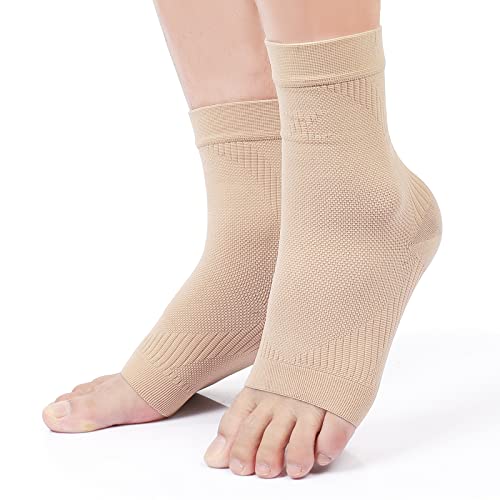
The KEKING Ankle Brace Compression Sleeve uses graduated compression, meaning the squeeze is firmer at the foot and softer up the calf, to push swelling upward and out of the ankle. The knit cradles the arch and heel, so people with plantar fasciitis alongside a sprain often find the same sleeve useful for morning stiffness. Pull it on like a sock and the job is done.
If the lace-up WHCOOL options feel like too much fuss for a desk job, this is the easier path. It is also a smart add-on to a heavier brace for late-stage rehab, where the rigid brace handles walks and workouts and this sleeve handles downtime.
Practical Advantages
- Graduated knit improves circulation to manage swelling without bulky straps or pads
- Slip-on design is faster than laces when you are rushing out the door
- Supports both the arch and the Achilles, useful for plantar fasciitis flare-ups during recovery
- Wearable under socks and casual shoes for full-day comfort
Things To Consider
- Firm compression can feel too tight on swollen ankles, so you may need to size up during the first few days
- Lacks side stabilizers, so it is not a substitute for a rigid brace during heavy activity
- Knit fabric wears out faster than reinforced braces if you pull it on and off many times a day
Best Suited To
Recovering adults who want an easy pull-on sleeve for desk days, sleep, and short walks while swelling is still present.
Look Elsewhere When
Pick the WHCOOL Low-Profile Ankle Braces Compression Sleeve instead if you want an external strap to dial in compression as swelling changes through the day.
The ZAMST A2-DX is the heavy hitter of the list. Side stabilizers run along both sides of the ankle, and the lace-up front locks the heel into a neutral position to prevent the rolling that caused the original injury. It is built for Grade III sprains and chronic ankle instability, where soft sleeves and knit fabric simply do not hold the joint in place.
Rehabbing after surgery, returning to volleyball after a serious twist, or dealing with a chronically loose ankle are the scenarios where this brace earns its keep. Outside of those moments, it is overkill, so most people only wear it for the worst weeks of recovery and switch to something lighter later.
Notable Gains
- Rigid side stabilizers stop the inward roll that re-injures a freshly healed ligament
- Adjustable lace-up lets a clinician or trainer dial the right tension for each phase of rehab
- Right-foot-specific sizing and a Large fit help anchor the brace properly on wider ankles
- Engineered for heavy sprains and chronic instability, not just minor tweaks
Potential Drawbacks
- Bulky profile does not fit inside casual shoes, so you may need to wear it with sneakers or athletic footwear
- Requires time to lace up correctly, which is a non-starter for anyone wanting a quick slip-on
- Right-foot-only build means left-side injuries need a separate order
Whose Shelf It Belongs On
People working through severe sprains, post-surgical rehab, or chronic instability who need rigid support rather than flexible compression.
A Better Fit Elsewhere
Choose the WHCOOL Slim-Fit Ankle Brace if you only need medium-grade support for a light sprain and prefer something that fits inside regular shoes.
Feature Snapshot
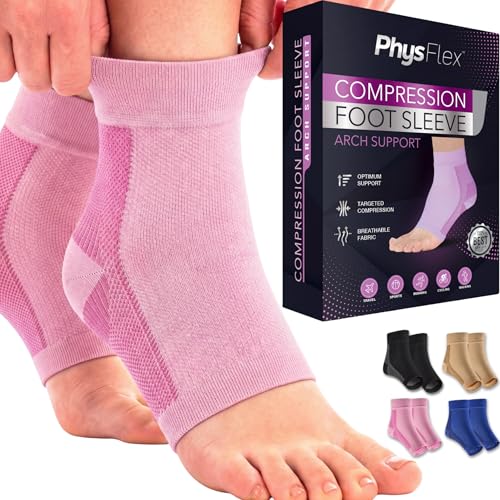
The PhysFlex Ankle Brace Socks take the graduated compression approach and wrap it in a sock-style design that pulls on in seconds. The knit is breathable and moisture-wicking, which matters when you wear it from your morning walk straight into a long day at a standing desk. Compression in the 20-30 mmHg range is firm enough to manage swelling yet wearable for hours.
This is the option for people who forget they are wearing a brace. If you travel for work, stand all day on hard floors, or just want a low-profile sleeve you can wear under jeans and boots, it fits the bill. Compared to the KEKING sleeve earlier in the list, it leans a touch firmer, which heavier users may appreciate.
Well-Handled Touches
- Slip-on sock design removes the need for straps or laces during rushed mornings
- Moisture-wicking knit keeps the brace dry through long commutes and standing shifts
- Firm graduated compression eases swelling and arch fatigue from heel to calf
- Neutral look works under trousers and jeans without drawing attention
Some Limits To Know
- 20-30 mmHg compression feels intense at first; sizing up helps if your ankle is still swollen
- No structural stabilizers, so it cannot replace a rigid brace for a serious sprain
- The tight knit can run hot in summer, so plan rotation with breathable socks if you wear it daily
Made For
People who want a sock-style sleeve for daily wear, travel, and standing work while finishing out a mild sprain.
Skip It When
Pick the ZAMST A2-DX if you need rigid side stabilizers for a Grade III sprain instead of compression alone.
Feature Snapshot
What To Weigh Before Buying Ankle Supports For Sprain
Sprains fall into three grades, and the right brace changes with each one. A Grade I stretch responds well to a flexible compression sleeve, a Grade II partial tear needs structured support with side stabilizers, and a Grade III full tear calls for rigid bracing during the early weeks of rehab. Matching the brace to the grade keeps you from over-bracing a mild injury or under-bracing a serious one.
Fit matters as much as structure. Measure your ankle circumference and match it to the size chart, since a sleeve that bunches behind the heel or a brace that slides during a walk fails at the worst moment. If your foot swells through the day, an adjustable strap design lets you loosen the brace as swelling drops without buying a new size.
Material changes how the brace feels after hour three. Breathable air fabric and moisture-wicking knit work better in warm gyms and summer walks than neoprene, which traps heat. For night wear or sleep, thinner knit reduces itching and skin irritation during recovery.
Consider your activity layer. Rigid braces fit athletic shoes but rarely fit dress shoes, while slim sleeves disappear under casual footwear. Pick the brace that matches the shoes you wear most during recovery, not the shoes you wish you could wear.
Key Considerations Across These Picks
Common Shopping Slip Ups
The biggest mistake is buying a rigid brace for a mild sprain and finding it too bulky for daily life, then abandoning it in a drawer. The opposite mistake is buying a thin sleeve for a serious sprain and re-rolling the ankle a week later. Match the brace to the injury grade first, and lifestyle fit second.
Where The Extra Money Goes
Premium braces like the ZAMST A2-DX cost more because of engineered side stabilizers, denser materials, and sizing that mirrors clinical rehab gear. The upgrade pays off when you need real structural support for a Grade III sprain or chronic instability. For mild sprains and daily wear, mid-range sleeves deliver nearly all the practical benefit.
Frequently Asked Questions
How tight should an ankle support feel?
It should feel snug and supportive without cutting off circulation or causing tingling in the toes. Loosen it if your foot starts to throb or feel cold.
Can you wear an ankle brace all day?
Most compression sleeves are fine for full-day wear, but rigid braces with stabilizers are better used during activity and removed during rest. Listen to your skin and joint for signs of irritation.
When should you switch from a rigid brace to a sleeve?
Most people move to a flexible sleeve once pain drops and swelling stabilizes, often a few weeks into rehab. Your clinician can confirm the right time based on your specific sprain grade.
Do ankle braces help prevent re-injury?
A brace that limits inward rolling lowers the risk of re-spraining the same ligament, especially during sports. It is a useful tool, not a substitute for balance training and rehab exercises.
How do you clean an ankle support?
Hand-washing with mild soap and air drying extends the life of knit sleeves. Avoid dryers, since heat breaks down elastic fibers faster than wear alone.
Bottom Line
Match the brace to the sprain grade, measure your ankle for fit, and pick a profile that works with the shoes you wear most. The right support keeps you moving through recovery without slowing down the days that matter.