Peroneal tendonitis turns simple movement into a careful negotiation. The outside of your ankle aches on every step, and the wrong brace can either do nothing or press exactly where it hurts. You’re not looking for a fashion piece. You want something that compresses the lateral tendons, limits inversion, and stays comfortable long enough to actually wear.
The right support depends on how active you are, how aggressive your flare-up feels, and what shoe you plan to slip it into. A runner returning to mileage has different needs than someone easing through a workday. This shortlist covers rigid stabilizers for serious cases, lace-up wraps for adjustable compression, and sleeve-style options for low-profile daily use.
How The Shortlist Stacks Up

Procare Ankle Support Stabilizer Medium – Model 79-81355
DonJoy Stabilizing Speed Pro Ankle Support Brace
Z Athletics Reinforced Lace Up Ankle Brace

Sleeve Stars Ankle Brace Compression Sleeve (Black, Medium)

Sleeve Stars Ankle Brace w/ Heel Protectors (Light Blue)

Sleeve Stars Ankle Support w/ Compression Strap (Baby Pink)

ZAMST A2-DX Ankle Brace w/ Side Stabilizers (Right, Large)

Z Athletics Lace Up Ankle Brace w/ Side Stabilizers
More Details On Our Top Picks
The Procare stabilizer has been a clinical staple for years, and for good reason. It wraps the ankle in a firm figure-8 configuration that pulls the lateral side of the joint into gentle compression, which is exactly where peroneal tendonitis complains. The medium sizing fits most average adult ankles comfortably under a sneaker.
Compared to the more aggressive lace-up wraps on this list, Procare’s approach feels more like a soft cast than a sport brace. You trade some adjustability for simplicity. Most office workers and light-activity wearers will appreciate not having to re-tie anything mid-day.
Good Reasons To Consider
- Figure-8 strap design specifically supports lateral ankle tendons
- Slim profile fits inside most athletic and casual shoes
- Open-heel construction keeps ventilation decent during long wear
- Trusted clinical brand commonly used in physical therapy settings
Things To Consider
- Sizing runs small for some wearers with wider midfoot profiles
- Lacks rigid side stays found on heavier-duty braces like the ZAMST A2-DX
Who It Suits Best
Working adults and light exercisers managing early-stage or recurring peroneal tendonitis who want stable compression without committing to a rigid brace.
Consider Something Else When
Runners returning to high-mileage training will get more lockdown from the DonJoy Stabilizing Speed Pro covered later in this guide.
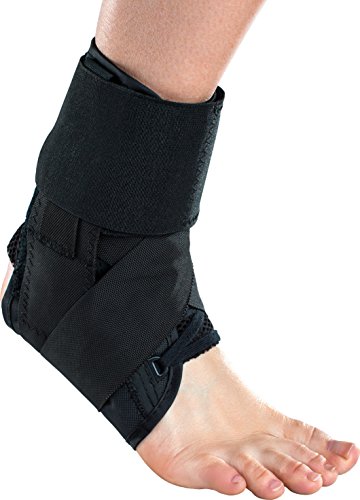
DonJoy built this brace for athletes who treat their ankles like construction equipment. The shell uses 800 denier ballistic nylon (a heavy woven fabric originally developed for tactical gear), with reinforced eyelets where laces take the most stress. The figure-8 strap locks the heel down so inversion (the ankle rolling outward) becomes nearly impossible.
For peroneal tendonitis, the value sits in the rigid forefoot lacing combined with the low-profile Velcro strapping. You can dial in compression over the peroneal tendons specifically, then walk, cut, or jump without the brace loosening. It is overkill for desk work, but right on target for basketball, soccer, and trail running.
Real-World Strengths
- Ballistic nylon construction holds up to daily training abuse
- Figure-8 strapping reduces lateral ankle rolling during cuts
- Speed-lace system allows quick on/off between drills
- Trusted by trainers and sports medicine clinics for return-to-play protocols
- Lateral padding protects the peroneal tendon area from shoe pressure
Trade Offs
- Takes longer to lace than a slip-on sleeve
- Adds noticeable bulk to standard athletic shoes
- Pricier than entry-level options on this shortlist
Feature Snapshot
Made For
Competitive athletes and high-impact sport participants who need aggressive lateral ankle control during training and competition.
Look Elsewhere When
Someone with mild discomfort who wants an easier daily wear experience will find the Sleeve Stars options more comfortable.
Z Athletics positions this as a versatile lace-up that works across basketball, running, and recovery days. The figure-8 lacing system lets you tighten one side harder than the other, which is helpful when peroneal tendonitis flares up more on the right or left foot. It also slips into most athletic shoes without forcing you to size up.
It is a lighter-duty option than the DonJoy but sturdier than the basic sleeves. For someone who trains three or four times a week and wants the same brace for lifting, court sports, and walks, this hits a useful middle ground.
A Few Highlights
- Adjustable figure-8 lacing for targeted lateral compression
- Fits inside most sneakers without bulk complaints
- Reusable across multiple sport types
- Simple hand-wash care extends product lifespan
Points To Note
- Lacks rigid side stabilizers, so heavy inversion moments still feel risky
- Elastic laces can loosen during long sessions and need re-tensioning
Right Fit For
Recreational athletes in court and field sports who want adjustable support without the bulk of a rigid brace.
A Better Fit Elsewhere
Anyone recovering from a grade II or III sprain will get more protection from the ZAMST A2-DX reviewed further down.
Sleeve Stars takes a different approach with a pull-on compression sleeve that targets the lateral and medial ankle tendons. The medium size listed here is sized for ankle circumferences around 10 to 12 inches, which covers a wide range of adult feet. The fabric blend provides graduated compression that supports the peroneal tendons during daily movement.
It is the easiest option on this list to put on and forget about. You pull it up like a sock, and the elastic keeps moderate pressure on the affected area without any lacing or strapping. For someone with mild tendonitis who mostly wants proprioceptive feedback (subtle skin pressure that helps your brain track joint position), it does that job well.
Key Advantages
- Pull-on design takes seconds to apply
- Lightweight enough for all-day wear under pants
- Hand-washable and reusable
- Works as a standalone support or as a base layer under a rigid brace
Honest Caveats
- Cannot prevent a true inversion roll during sports
- Compression strength reduces over months of regular use
Quick Facts
Best Suited To
People with mild peroneal tendonitis symptoms who want a comfortable, no-fuss option for workdays and errands.
Skip It When
Return-to-sport athletes will want the firmer lockdown of the DonJoy Stabilizing Speed Pro instead.
This Sleeve Stars version layers a compression sleeve with an adjustable strap and silicone heel protectors. The combination addresses peroneal tendonitis alongside the heel pain that often travels with it, especially in runners or those standing on hard floors all day. The light blue color is a small touch but makes the brace easy to spot in a gym bag.
Compared to the plain compression sleeve covered earlier, this version adds a strap you can tighten for more focused lateral support when symptoms flare. The heel cups absorb shock and reduce strain on the Achilles and surrounding tendons during walking.
What Earns Its Place
- Adjustable strap adds targeted lateral compression on demand
- Heel protectors reduce impact through the posterior ankle chain
- Combines sleeve comfort with strap stability
- Useful for peroneal tendonitis that coexists with plantar fasciitis
Softer Spots
- Heel cups can feel awkward in low-profile shoes
- Strap requires occasional readjustment during long wear
Who Will Love This
Walkers, retail workers, and runners managing peroneal tendonitis alongside heel pain or plantar discomfort.
Another Choice May Suit
Anyone who needs heavier ankle stabilization for sport should reach for the ZAMST A2-DX instead.
The baby pink colorway aside, this Sleeve Stars brace covers much of the same ground as its siblings: a compression sleeve paired with an adjustable strap. The fabric is breathable enough for office wear, and the strap can be tightened across the lateral ankle when peroneal tendonitis pain ramps up during long days on your feet.
For someone who finds black athletic braces too clinical or uncomfortable against bare skin, this lighter fabric option can feel friendlier. It is best thought of as an everyday-wear support, not a heavy-duty stabilizer for return-to-sport protocols.
A Strong Showing
- Soft fabric reduces irritation during extended wear
- Adjustable strap targets lateral compression when needed
- Color option feels less medical than typical braces
- Easy hand-wash care routine
Worth Bearing In Mind
- Limited sizing guidance visible on the product page
- Strap durability can vary with daily use
Perfect Match For
People prioritizing comfort and consistent daily wear over aggressive stabilization during athletic activity.
Reach For A Different Pick When
Heavier athletic demands call for the reinforced construction of the DonJoy Stabilizing Speed Pro.
The ZAMST A2-DX is the most protective brace on this shortlist. It is built for grade III sprains and chronic ankle instability, which means it brings serious hardware: rigid side stabilizers, an adjustable lace-up front, and straps that prevent the ankle from rolling outward under load. For stubborn peroneal tendonitis tied to repeated inversion events, this level of control makes sense.
The trade-off is bulk. This brace needs a roomy athletic shoe, and it is noticeably heavier than the sleeve options above. It also comes in left/right specific fits, so you must order the correct side. But for someone whose tendonitis keeps flaring because of chronic instability, the structural support is worth the extra footprint.
A Favorable Mix
- Rigid side stabilizers prevent inversion under athletic load
- Lace-up front allows precise compression tuning
- Anatomically designed for left and right feet
- Trusted in return-to-play protocols for serious sprains
- Durable construction handles daily rehab use
Less Ideal Details
- Bulky under standard shoes; requires wider footwear
- More time to put on than simple sleeves
- Heavier on the foot during long wear sessions
Key Attributes
Whose Shelf It Belongs On
People recovering from severe sprains or dealing with chronic ankle instability that drives recurring peroneal tendonitis.
Swap It Out When
Mild cases that only need light compression will feel overwhelmed by the ZAMST; the Sleeve Stars sleeve is more appropriate.
Z Athletics closes the list with a brace that pulls together the best ideas from the rest. It uses a lace-up front like the DonJoy but adds semi-rigid side stabilizers similar to the ZAMST, all in a slimmer package aimed at basketball, volleyball, and running. The figure-8 strapping can be adjusted based on which side of the ankle needs more compression.
It sits between the lighter Z Athletics lace-up reviewed earlier and the heavier ZAMST. You get more protection than a basic wrap, but less bulk than a clinical brace. For multi-sport athletes who want one brace to cover several activities, this is the practical answer.
The Good Stuff
- Side stabilizers add protection without ZAMST-level bulk
- Lace-up design allows personalized compression on each side
- Suitable for basketball, volleyball, running, and recovery
- More versatile than single-purpose sleeves or wraps
Practical Considerations
- Stabilizers are semi-rigid, not fully rigid like the ZAMST
- Lacing takes practice to get consistent tension
Who Should Grab It
Multi-sport athletes and active recreational wearers who want adjustable support and moderate stabilization across different activities.
Where A Sibling Pick Shines
Anyone with documented chronic instability should consider the ZAMST A2-DX for its fully rigid support.
What To Weigh Before Picking Your Ankle Support
Stabilization level matters most. Sleeves and light wraps offer proprioceptive compression, which helps your brain sense ankle position and reduces small micro-rolls during walking. Lace-up braces add medial and lateral support that prevents larger inversion events. Rigid braces like the ZAMST A2-DX go further with hard side stays that physically stop the ankle from rolling. Match the level to your flare-up severity.
Shoe compatibility often decides daily usability. A rigid brace that needs a full size larger shoe gets left in the drawer. Pull-on sleeves slip into nearly anything. Lace-up braces usually fit standard athletic shoes but can crowd narrower casual footwear. Think about which shoes you actually wear on flare-up days before committing.
Adjustability affects comfort over hours. Compression that feels right at 9 a.m. can feel wrong by 2 p.m. as swelling shifts. Braces with figure-8 straps let you re-tension quickly. Fixed sleeves rely on fabric elasticity, which is consistent but not customizable. Long workdays tend to favor adjustable designs.
Cleaning and durability shape long-term value. Hand-washable fabric sleeves typically last six months to a year with daily use. Lace-up braces with metal or reinforced plastic eyelets can last years. Inspect stitching and strap attachment points regularly; a strap that pops mid-walk is worse than no brace at all.
Key Considerations Across These Picks
Mistakes Worth Dodging
Choosing by color or price alone is a common trap. A sleeve that looks appealing but cannot prevent the inversion moment causing your peroneal tendonitis will not help. Start with stabilization level, then refine by comfort and shoe fit.
Another wrong turn is treating the brace as a cure. Supports manage symptoms and protect during activity, but they do not replace loading programs, mobility work, or professional evaluation for recurring flare-ups. Persistent pain deserves a closer look beyond what any brace on this list can offer.
Where The Extra Money Goes
Higher-priced braces tend to invest in tougher shell materials, anatomical left/right designs, and rigid side stabilizers. The DonJoy and ZAMST options cost more because they use reinforced construction that survives daily athletic abuse. Budget-friendly sleeves are fine for mild cases but wear out faster under heavy use. The upgrade pays off when you need real inversion protection, not just gentle compression.
Frequently Asked Questions
What Type Of Brace Works Best For Peroneal Tendonitis?
Lace-up braces with figure-8 strapping generally work best because they allow targeted compression on the lateral ankle where the peroneal tendons sit. Sleeves help with mild cases and daily comfort, while rigid braces are reserved for chronic instability or post-sprain recovery.
Should I Wear An Ankle Brace All Day?
You can wear a comfortable sleeve all day, but rigid braces should be reserved for active hours or specific flare-up windows. Wearing heavy stabilization for prolonged periods can reduce natural ankle strength over time. Match the brace to the activity rather than wearing it around the clock.
Can I Sleep In An Ankle Brace?
Sleeping in a soft compression sleeve is generally fine, but rigid or heavily strapped braces are usually too restrictive for sleep. Elevating the ankle instead is often more helpful overnight than bracing.
How Long Should I Use An Ankle Brace For Tendonitis?
Most people use an ankle brace during recovery phases and gradually reduce wear as symptoms improve. Tendonitis recovery timelines vary widely, but consistent use during the first four to eight weeks of a flare-up is common. Symptoms that persist beyond that window suggest the need for a broader rehab approach.
Will An Ankle Brace Weaken My Ankle Over Time?
Extended daily use of rigid braces can reduce the workload on the surrounding muscles, which may affect strength if never balanced with rehab exercises. Light sleeves and lace-up braces tend to have less impact because they allow more natural movement. Pairing any brace with targeted strengthening work keeps the joint healthy long-term.
Closing Remarks
The right ankle support for peroneal tendonitis matches your activity level, your shoe wardrobe, and how aggressively your symptoms flare. Light sleeves work for everyday comfort, lace-up braces add training-day stability, and rigid options like the ZAMST handle the heavier cases. Start with the lightest option that solves your problem, then move up only if symptoms demand it. Your ankle will tell you when you have found the right fit.