Your ankles carry you up steep switchbacks, across loose scree, and through uneven root tangles on the trail, and a supportive brace can turn a shaky step into a confident one. The right pick depends on where you hike, how often you go, and whether you’re managing an old injury or just preventing a new one. This lineup covers the main support styles on the market, from thin compression sleeves to rigid lace-up stabilizers, so you can match the brace to your terrain and your foot.
The Lineup, Simplified

TechWare Pro Ankle Brace Compression Sleeve (2 Pair)

TayCo RecoverX Ankle Brace (Right, Medium)

TayCo RecoverX Ankle Brace (Left, Medium)
DonJoy Stabilizing Speed Pro Ankle Brace

ZAMST A2-DX Ankle Brace (Right, Large)
PhysFlex Ankle Brace Compression Socks

Strassburg Sock Plantar Fasciitis Compression Sock
Meet The Standout Selections
The TechWare Pro sleeve slips on like a tall sock and stays put under a hiking boot without forcing you to size up. Its thin, moisture-wicking fabric pulls heat away from the skin on long climbs, which matters when you’re crossing a sun-exposed ridge in July. Compared with the bulkier lace-up braces you’ll see further down this list, this one trades rigid structure for repeatable compression that warms up the joint.
Most day hikers managing mild Achilles soreness, plantar fasciitis flares, or general ankle fatigue will appreciate how easily this disappears into a shoe. It’s the kind of pick you toss into the pack for a weekend trip without thinking about it.
Real-World Strengths
- Slim profile fits inside standard hiking boots without pressure points
- Moisture-wicking knit reduces sweat buildup on warm days
- Two-pack format keeps a fresh sleeve ready for the next trip
- Even compression supports mild instability without limiting motion
- Easy hand-wash care after muddy trail days
Worth Noting
- Not rigid enough for acute sprains or post-surgical recovery
- Sizing runs snug; wide feet may find the L/XL tight after hours of wear
Feature Card
Right Fit For
Recreational day hikers who want steady compression and a barely-there feel under their boots.
Look Elsewhere When
You have a Grade III sprain or severe instability, where the ZAMST A2-DX delivers the side stabilizers you actually need.
The TayCo RecoverX is built like a piece of rehab equipment, and hikers dealing with serious instability will recognize that immediately. It fits over your existing hiking shoe rather than replacing it, which avoids the clunky footprint of a full walking boot. For someone moving from acute injury back toward real trails, that difference is meaningful.
Right-foot hikers returning to uneven terrain after a bad sprain get a brace that’s adjustable and engineered to stay aligned during gait. It’s heavier and more visible than the TechWare sleeve you just read about, so casual weekend use isn’t really its lane.
Everyday Wins
- Fits over standard shoes, so no need to size up your hiking footwear
- Adjustable closure supports a controlled, repeatable fit
- Targets the return-to-activity window after significant sprains
- Side-stability design promotes balanced gait on uneven ground
Trade Offs
- Noticeably bulkier than a sleeve, which can fatigue the ankle over full-day hikes
- Right-specific fit means you must match orientation to your injury side
- Style reads as medical gear rather than athletic, even under loose pants
Who Should Grab It
Hikers recovering from a serious right-side sprain who need rigid external support while transitioning away from a walking boot.
Skip It When
You want something nimble for fast day hikes, where the DonJoy Stabilizing Speed Pro offers athletic-grade stability with less weight.
This is the same TayCo RecoverX platform you’ve just read about, mirrored for the left foot. Hikers with left-side chronic instability, recovering peroneal tendon issues, or a recently healed lateral sprain get the same adjustable, shoe-worn design but on the correct side. The right and left versions exist because brace geometry matters when you’re controlling roll and gait.
Think of this as the same tool, simply shaped for the other foot, so the review focus stays on fit, use case, and what to expect on the trail.
Where It Helps
- Same over-the-shoe design eliminates the need for new footwear
- Adjustable straps adapt to swelling changes during a long hike
- Supports controlled gait while lateral ligaments are still healing
Points To Note
- Side-specific design means ordering accuracy matters more than with a universal brace
- Bulk adds noticeable weight during multi-hour treks
Best Suited To
Left-foot hikers returning to trail use after a lateral ligament injury who want rigid external support without committing to a walking boot.
Consider Something Else When
Your main concern is light compression on a healthy ankle, where the TechWare Pro sleeve offers a much less bulky experience.
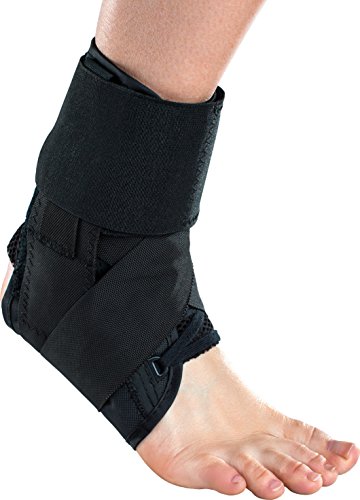
DonJoy built the Speed Pro for athletes who lace up, take off, and don’t have time to fuss with their gear. The 800D ballistic nylon, reinforced eyelets, lace-up front, and figure-8 strapping work together to lock the calcaneus (the heel bone) in position without the rigid plastic of the TayCo braces above. Hikers who chase pace on rocky terrain tend to gravitate toward this style because it stabilizes without fully freezing the joint.
The Speed Pro also lives well as a long-term training tool for hikers who roll their ankles regularly on technical descents, where a sleeve like the TechWare Pro just isn’t structured enough.
What Makes Sense
- Heavy-duty 800D ballistic nylon resists abrasion on rough trails
- Figure-8 strap pattern limits inversion (the ankle rolling outward) on uneven ground
- Speed-lace design gets you out of the parking lot faster on race mornings
- Velcro and lace combo lets you dial tension over the forefoot and ankle separately
Things To Consider
- Bulky under low-volume trail runners, so choose your footwear carefully
- Lace-up design takes longer to fit than a simple slip-on sleeve
- Cleaning between outings requires removing the lace panels fully
Feature Card
Built With In Mind
Active hikers and trail athletes who need stronger stabilization than a sleeve provides, but less bulk than a rigid brace.
Another Choice May Suit
You’re managing Grade III sprain recovery and want maximum rigidity, where the ZAMST A2-DX is engineered specifically for that severity.
The ZAMST A2-DX is the brace you reach for when recovery matters more than comfort, and the trail can wait until the ankle is genuinely stable. It uses side stabilizers on both sides of the joint plus an adjustable lace-up front, so the support is structured rather than compressive. Hikers coming back from Grade III sprains or dealing with chronic instability often land here because the design directly targets lateral roll.
Where the DonJoy above feels athletic, the ZAMST reads more clinical. It’s intentional: the rigid plastic wings are engineered to prevent the inversion that re-tears healing ligaments.
Noteworthy Benefits
- Dual side stabilizers control inversion during technical descents
- Adjustable lace-up lets you tune fit as swelling changes day to day
- Engineered specifically for Grade III sprains and chronic instability
- Durable shell holds up through rehab-to-trail transition periods
- Targeted peroneal tendon support (the tendons running along the outer ankle)
Honest Caveats
- Noticeably heavier than compression sleeves, so fatigue adds up on multi-day hikes
- Right-side-specific fit means you must verify orientation before ordering
- Stiff structure can feel restrictive during fast-paced hiking
Feature Card
Made For
Hikers rebuilding strength after serious sprains or managing chronic ankle instability who need structured side support during the rehab window.
Reach For A Different Pick When
Your ankle is generally healthy and you just want light compression on long hikes, where the Strassburg Sock offers a softer, sleeve-style alternative.
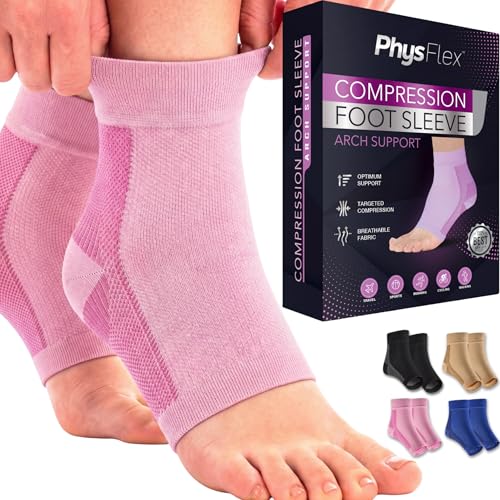
The PhysFlex socks lean into firm, uniform compression at a price that makes them easy to keep in your pack as a backup. The knit wraps the arch, ankle, and Achilles in a single sleeve, which works well for hikers who feel fatigue build across the whole foot rather than one specific ligament. Compared with the TechWare Pro sleeve above, the compression here reads as a touch more aggressive.
For budget-conscious hikers or anyone who wants a sleeve they won’t cry over if it gets trashed on a muddy trip, this lands in a sensible spot.
Notable Gains
- Strong, even compression supports the arch and ankle together
- Sock-style fit slips on quickly at the trailhead
- Budget-friendly replacement option for lost or worn sleeves
- Unisex sizing covers a wide range of hikers
Soft Spots
- No rigid structure means it won’t stabilize a real sprain on the trail
- Strong compression can feel restrictive on wider feet over long days
Feature Card
Whose Shelf It Belongs On
Cost-conscious hikers who want a backup sleeve for arch and ankle fatigue without committing to a higher-end brand.
Not Your Match When
You need rigid lateral support, where the ZAMST A2-DX offers side stabilizers that a sleeve simply cannot replicate.
The Strassburg Sock takes a different angle: it uses an adjustable strap to keep the foot in a slightly dorsiflexed position (toes pointed gently upward), which eases tension on the plantar fascia (the band of tissue running along the bottom of the foot) and Achilles during sleep and recovery. Hikers tackling multi-day routes often reach for this between days so the morning’s first steps hurt less.
It’s also useful as a daytime sleeve for ankle support on lighter trails, though it’s not designed to be a heavy-duty stabilizer like the ZAMST or DonJoy above.
Practical Pluses
- Adjustable strap lets you dial tension across the arch and ankle
- Targets plantar fascia, Achilles, and ankle in one sleeve
- Useful overnight for reducing first-step morning pain
- Slim profile fits under most hiking socks during the day
- Compresses heel, arch, and ankle without rigid hardware
Points To Keep In Mind
- Adjustable strap requires a bit of trial to find comfortable tension
- Sleeve design lacks the rigid support needed for unstable ankles
Feature Card
Perfect Match For
Multi-day hikers who battle plantar fasciitis flares and want a single sleeve that helps both on the trail and during recovery sleep.
Swap It Out When
You need true rigid lateral stabilization for an unstable ankle, where the DonJoy Stabilizing Speed Pro delivers the figure-8 control that a strap-based sleeve can’t.
What Matters Most Before Choosing Ankle Supports For Hiking
Compression Sleeves vs. Rigid Stabilizers
Compression sleeves like the TechWare Pro and PhysFlex squeeze the joint to manage swelling and fatigue but don’t physically stop the ankle from rolling. They’re a fit for healthy hikers, mild tendonitis, or plantar fasciitis. Rigid lace-ups and braces like the DonJoy, ZAMST, and TayCo add structural control on one or both sides of the joint, which is essential for unstable ankles or post-sprain return-to-trail work. Matching the brace type to the actual problem is the first decision worth making.
Footwear and Bulk Considerations
A brace that fits in your closet but not in your boot is a problem on day one. Thin sleeves generally slip under standard hiking footwear without changing the fit. Lace-ups and rigid braces add visible bulk, especially around the heel and ankle collar, and often require a half-size adjustment or a roomier boot. Always consider your existing footwear before committing to a structured brace.
Fit, Sizing, and Adjustability
Side-specific designs like the TayCo RecoverX and ZAMST A2-DX require you to order left or right correctly, so double-check before you click. Adjustable closures (lace, Velcro, or strap systems) help when swelling changes through a long hike or across rehab stages. Sleeves that run in standard sizes fit most people straight out of the package but may compress wider feet more than expected after several hours on the trail.
Intended Use: Prevention, Recovery, or Both
Light prevention favors compression sleeves because they support without restricting motion. Return-to-activity after a real sprain almost always needs rigid side stabilizers to prevent re-injury. Multi-day hikers dealing with plantar fascia pain often split the difference, using a strap-equipped sleeve like the Strassburg Sock for daytime hikes and overnight recovery wear.
Key Considerations Across These Picks
Pitfalls Shoppers Hit
The most common mistake is treating any sleeve as if it were a rigid brace: a compression sock can’t stabilize a freshly sprained ankle, no matter how firm it feels out of the package. Another frequent slip is ignoring left-versus-right orientation on side-specific braces, which leads to support that pushes the joint the wrong direction. Finally, plenty of shoppers forget to account for boot volume, so the brace ends up squeezing the foot in a way that causes new hot spots by mile six.
The Upgrade Payoff
Paying more for a brace like the ZAMST A2-DX typically buys engineered side stabilizers, better materials, and tighter quality control rather than extra comfort. For hikers with real instability, that upgrade can be the difference between a safe return to trails and a second injury. For generally healthy hikers, a budget sleeve does most of what a premium pick does, and the savings are better spent on boots or trekking poles.
Frequently Asked Questions
Do compression ankle sleeves actually help on the trail?
Compression sleeves support mild instability, reduce swelling, and ease fatigue on long hikes, though they won’t physically stop a serious ankle roll the way a rigid brace can.
How do I choose between a sleeve and a lace-up brace?
Choose a sleeve for prevention, mild tendonitis, or plantar fasciitis, and a lace-up or rigid brace for unstable ankles, recent sprains, or chronic instability.
Can I wear an ankle brace inside any hiking boot?
Thin compression sleeves fit in most boots, but rigid braces and lace-ups add bulk and often require a roomier boot or a half-size adjustment to stay comfortable.
Are these braces machine washable?
Most knit sleeves can be hand-washed and air-dried, while rigid braces with laces, Velcro, and plastic stabilizers generally need spot cleaning rather than machine cycles.
How long should I wear a hiking ankle brace per trip?
Light compression sleeves can be worn for full-day hikes, but rigid braces should start at shorter outings to confirm comfort before committing to multi-day routes.
Wrap Up
The best ankle brace for hiking is the one that matches your actual situation, whether that’s a thin sleeve for healthy joints, a lace-up for technical terrain, or a rigid stabilizer for genuine instability. Match the brace type to the problem, check the fit inside your boots, and start with shorter outings before trusting any new support on a long route. Your ankles do real work on the trail, and the right pick lets you focus on the view instead of the ground.