

A rolled ankle on the trail, a misstep off a curb, a bad landing in basketball, and suddenly the ankle joint you take for granted becomes the loudest thing in your body. The right brace can shorten recovery, steady you on uneven ground, and let you keep moving while the ligaments knit back together. This roundup covers six of the most useful ankle braces for sprain support available right now, ranging from light compression sleeves to rigid lace-up stabilizers for serious injuries.
A Closer Look At The Lineup

Modvel Foot & Ankle Brace Socks Compression Sleeve
MODVEL Slim Lace Up Ankle Brace Figure 8

Modvel Ankle Brace Socks with Adjustable Strap
KEKING Ankle Brace Compression Sleeve

ZAMST A2-DX Lace-Up Ankle Stabilizer (Large, Right)

Combat Sports Muay Thai & MMA Ankle Support Sleeves
Inside Each Recommended Option
Slip-on compression sleeves are the first thing most people reach for after a minor twist, and this Modvel option is a textbook everyday pick. It pulls on like a sock, hugs the arch and Achilles, and stays low-profile enough to disappear inside sneakers, work boots, or running shoes. For a fresh grade-I sprain or a foot that just feels “off” after a long hike, the gentle squeeze takes the edge off without locking the joint in place.
Compared with the lace-up picks further down the list, this one trades rigidity for breathability and simplicity, which suits people who want recovery support between light activities rather than during competitive sport. You slide it on in the morning, wear it through errands, and forget it’s there until you notice your ankle swelling less by dinner.
The Case For It
- Pull-on design fits most shoes without adjusting laces or straps
- Graduated compression supports the arch and Achilles for plantar fasciitis relief
- Knit fabric breathes well during long workdays or light jogs
- One-piece sleeve means no buckles or velcro to fiddle with on swollen ankles
Things To Consider
- Offers compression, not mechanical stability, so it is less reassuring on uneven terrain after a serious sprain
- Sizing runs snug; picking the right size matters because a too-tight sleeve can irritate the toes over long wear
Feature Snapshot
Right Fit For
Walkers, casual runners, and anyone working through a mild ankle sprain who wants all-day compression they can wear under everyday shoes.
Consider Something Else When
Step up to the ZAMST A2-DX Lace-Up Ankle Stabilizer (Large, Right) if you are dealing with a grade-II or grade-III sprain and need rigid side stabilizers instead of soft compression.
The figure-8 strapping pattern is the same wrap trainers have used for decades on basketball courts, and this Modvel brace tucks that idea into a slim, low-cut package. Soft pads sit behind the ankle bone so the laces cross over the joint without digging in, and the whole thing fits inside most athletic shoes once you loosen the eyelets a notch or two.
For someone progressing from the compression sleeve above toward more active rehab, this is the natural halfway point. You get directional support when you push off and land, but the brace still allows some ankle motion for strengthening the small stabilizer muscles. That balance matters in the weeks after a moderate sprain when you want protection but not total immobilization.
Where It Excels
- Figure-8 lace pattern controls inversion (rolling the ankle outward), the most common sprain direction
- Low-profile build fits inside basketball, tennis, and running shoes
- Adjustable lacing lets you tighten or loosen based on swelling through the day
- Reusable for multiple activities, from pickup games to gym workouts
Honest Caveats
- Takes a couple of minutes to lace correctly the first few times, so it is less grab-and-go than the Modvel Foot & Ankle Brace Socks Compression Sleeve
- Not built for heavy contact sports where a hard fall could overpower the soft padding
Made For
Recreational athletes returning from a moderate sprain who want lace-up confidence during cuts, jumps, and lateral movement on the court or field.
Look Elsewhere When
Pick the Combat Sports Muay Thai & MMA Ankle Support Sleeves if your main activity is barefoot-style grappling where exposed heel and toes matter more than lacing.
Swelling does not stay still. Mornings can feel tight, afternoons can feel puffy, and a brace that fits perfectly at 8 a.m. may cut into your skin by lunchtime. That is the gap this hybrid sleeve-plus-strap fills: the same knit base as a standard compression sock, plus a removable wrap-around strap you can cinch tighter when the joint needs a little extra hug or loosen off when you sit down.
For people managing post-injury swelling or a recurring chronic ankle issue, that adjustability is the headline feature. You wear the sleeve for baseline compression, then dial in the strap during long shifts, flights, or hikes when fluid tends to pool. The strap is also removable, so once the worst swelling passes you can convert it into a regular sleeve.
Why It Works Well
- Tunable strap lets you match compression to current swelling rather than guessing in advance
- Removable strap doubles the brace’s usable life as you progress through recovery
- Works for both sprained ankles and adjacent issues like plantar fasciitis and tendonitis
Worth Noting
- Adding the strap makes the brace thicker, so it crowds tighter shoes more than the strapless Modvel Foot & Ankle Brace Socks Compression Sleeve
- The strap needs occasional re-tightening during high-movement activities since fabric knit stretches over time
Quick Facts
Who Will Love This
Anyone whose ankle swelling fluctuates during the day, or who wants one brace to span early recovery and the return to light activity without buying two products.
Another Choice May Suit
Reach for the KEKING Ankle Brace Compression Sleeve if you want a simpler knit-only sleeve with a tighter price focus and similar baseline compression.
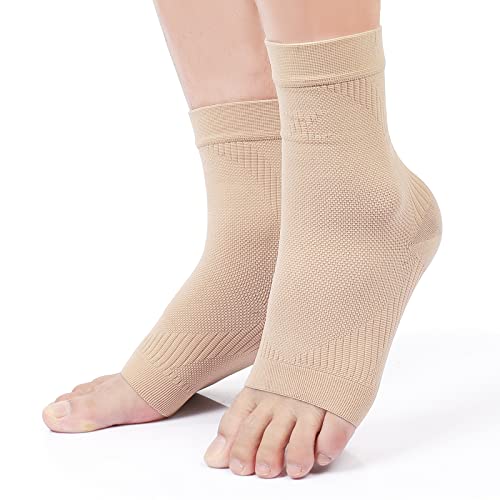
The KEKING sleeve is built for people who want compression therapy without paying for straps, buckles, or fancy packaging. The knit is firm enough to feel supportive around the arch and Achilles, and the cut stays put during walking, cycling, or standing on hard floors at work. There is no learning curve: pull it on, smooth out the fabric, and go.
Where it differs from the Modvel sock above is in focus. This sleeve targets plantar fasciitis pain and Achilles stiffness more explicitly, so if your main complaint is heel soreness on the first steps of the morning or tightness at the back of the ankle after runs, this knit design aims straight at that. It is a straightforward compression tool, not a stabilization system.
Useful Strengths
- Targeted knit zones around the arch and Achilles for plantar fasciitis relief
- Lightweight sleeve that fits under most casual and work shoes
- Useful for everyday foot fatigue even before any acute injury
Some Limits To Know
- Provides compression only, no structural support, so it does not replace a lace-up brace after a serious sprain
- Commonly reported fit quirks between sizes, so checking the size chart before ordering saves a return
Key Attributes
Best Suited To
People managing plantar fasciitis or Achilles soreness who want a budget-friendly compression sleeve for daily wear rather than acute injury support.
Swap It Out When
Switch to the MODVEL Slim Lace Up Ankle Brace Figure 8 once you need mechanical support to prevent rolling during sports, since compression alone will not stop a hard lateral movement.
This is the brace you graduate to when a sleeve or figure-8 wrap no longer inspires confidence. The ZAMST A2-DX layers rigid side stabilizers on both sides of the ankle with a fully adjustable lace-up closure, creating a semi-rigid shell that resists the twisting forces behind serious sprains. It is built for grade-III injuries and for people whose ankles simply give way on uneven ground.
Compared with the lighter options earlier in this list, the trade-off is bulk. You will want a roomy athletic or hiking shoe to fit over it, and it is overkill for everyday desk work. Where it earns its keep is during rehab, return-to-sport training, and any activity where one bad landing could mean another month on the couch.
Reasons It Performs
- Rigid side stabilizers protect against inversion and eversion (rolling in either direction)
- Adjustable laces let you customize tightness across swelling or recovery stages
- Built for heavy sprains and chronic instability rather than minor tweaks
Points To Note
- Bulky profile requires loosening or upsizing your everyday shoes to wear comfortably
- Available in specific left or right fits and a defined size range, so accurate measurement matters before ordering
Perfect Match For
Athletes and active adults working through a severe sprain or chronic ankle instability who need rigid mechanical support more than soft compression.
Reach For A Different Pick When
Choose the Modvel Ankle Brace Socks with Adjustable Strap for everyday swelling control, since this rigid stabilizer is too much brace for minor flare-ups.
Striking arts and grappling demand a different ankle brace than running or court sports. These Combat Sports sleeves leave the heel and toes fully exposed so you keep barefoot grip on the mat, while a polyester-blend knit wraps the ankle and Achilles for compression and warmth. The trade-off is intentional: support where you need it, traction where you cannot afford to slip.
For someone rolling or sparring several nights a week, this is a training-floor staple. The fabric blend holds up under repeated sweat cycles, and the open design prevents the slip-on hazard that a closed-toe sleeve can create when you pivot hard on a kick.
What Helps Most
- Open heel and toe design preserves barefoot grip for grappling and striking
- Targeted compression around the ankle and Achilles during explosive pivots
- Slip-on sleeve is quick to put on between rounds or before class
Practical Considerations
- Specialized for barefoot training, so it offers less overall coverage than the closed Modvel Foot & Ankle Brace Socks Compression Sleeve for general recovery
- Polyester-blend knit can trap odor after heavy sweat sessions, so washing after each use keeps them training-ready
Built With In Mind
Muay Thai, MMA, and grappling practitioners who need ankle support without sacrificing mat traction during pivots and takedowns.
Where A Sibling Pick Shines
Pick the ZAMST A2-DX Lace-Up Ankle Stabilizer (Large, Right) for rehab after a serious sprain, since this sleeve is designed for training rather than recovery protection.
What Matters Most Before Choosing Ankle Braces For Sprain
Compression Level And Material
Compression is the foundation of most ankle braces for sprain recovery, and the right amount depends on your situation. Graduated compression, meaning tighter at the foot and looser up the calf, helps push fluid back up the leg and reduce swelling. Light knit sleeves like the KEKING Ankle Brace Compression Sleeve work well for everyday aches, while firmer knits or sleeve-plus-strap designs give more control during active days. Breathable knit fabrics matter for anyone planning to wear a brace through an entire shift or long hike.
Stabilization: Sleeve, Strap, Or Rigid
Not every ankle brace for sprain support does the same job. Sleeves provide compression and warmth but little mechanical protection. Figure-8 lace-up braces add directional control during lateral movement, which is helpful when returning to court sports. Rigid lace-up braces with side stabilizers, like the ZAMST A2-DX, are designed for grade-II and grade-III sprains where the joint genuinely needs physical limits. Choosing the right category matters more than brand loyalty here.
Fit, Sizing, And Shoe Compatibility
A brace that does not fit inside your shoes is a brace you stop wearing. Low-profile sleeves disappear into sneakers and work boots, lace-up designs usually need a slightly looser shoe, and rigid stabilizers almost always demand an upsize. Measure your ankle according to the brand’s chart, and think honestly about whether you will wear the brace mostly barefoot at home, inside athletic shoes, or in boots. The right fit determines whether the brace becomes part of your routine or lives in a drawer.
Intended Activity And Injury Stage
Finally, match the brace to where you are in recovery. Early after injury, soft compression and adjustable straps tend to feel best because swelling changes daily. Mid-rehab, a figure-8 lace-up helps you rebuild confidence during sport-specific drills. Late-stage rehab or chronic instability calls for rigid support. Buying one brace to cover every stage is tempting, but layering a sleeve for daily wear with a stabilizer for training is often the smarter move.
Key Considerations Across These Picks
Pitfalls Shoppers Hit
A common mistake is buying the most rigid brace on the market for a mild sprain and then refusing to wear it because it feels like a cast. Equally common is choosing a soft sleeve for a grade-III injury and being disappointed when the ankle still rolls. The middle road is to match the brace to the stage of recovery, not to the worst-case scenario your mind imagines. Sizing errors are another frequent trap: guessing instead of measuring leaves you with a sleeve that either cuts off circulation or bunches up inside the shoe.
What The Higher Tier Buys
Spending more in this category usually buys two things: better mechanical hardware and more precise fit engineering. A premium rigid brace like the ZAMST A2-DX adds molded side stabilizers and an articulated lace path that cheaper knock-offs skip, which matters when the joint genuinely needs limits. Higher-priced sleeves often use more sophisticated knit zones that target the arch and Achilles separately rather than squeezing uniformly. The upgrade is worth it for chronic instability or repeated return-to-sport cycles, while a budget compression sleeve is plenty for a once-in-a-while mild twist.
Frequently Asked Questions
How tight should an ankle brace for sprain support feel?
A properly fitted brace should feel snug and supportive without causing numbness, tingling, or a change in skin color in your toes. You want firm pressure, not a tourniquet.
Can you sleep in an ankle brace for sprain recovery?
Most soft compression sleeves are fine for short periods of sleep, but rigid lace-up braces with side stabilizers are usually too bulky and structured for bed. Follow your clinician’s guidance for overnight wear after serious injuries.
How long should you wear an ankle brace for sprain recovery?
Wear time depends on injury grade and your rehab stage, ranging from a few days of intermittent use for minor sprains to several weeks of structured wear during activity for severe ones. The brace is a tool, not a permanent fixture, so taper use as strength returns.
Do ankle braces for sprain support weaken the ankle over time?
Used full-time, a very rigid brace can allow the small stabilizer muscles to slack off, which is why rehab exercises matter alongside bracing. Wearing a brace only during higher-risk activity or in early recovery stages helps keep those muscles engaged.
Can you wash ankle braces for sprain support in a washing machine?
Most knit sleeves can go in a gentle machine cycle inside a laundry bag, but rigid lace-up braces with side stabilizers usually need hand washing and air drying to protect their structure. Always check the care label before tossing any brace in with your gym clothes.
The Takeaway
The right ankle brace depends less on the severity you fear and more on the recovery stage and activity you actually live in. Compression sleeves handle daily swelling, lace-up figure-8 braces support a return to sport, and rigid stabilizers protect serious injuries and chronic instability. Match the brace to the moment you are in, and your ankle will thank you with steadier steps.