

Runners put their ankles through thousands of impact cycles per mile, and a single misstep on uneven pavement can sideline training for weeks. Whether you log daily miles, return from a recent sprain, or want a little extra confidence on technical trails, the right brace keeps the joint stable without slowing you down. The nine picks below cover a range of support levels, materials, and price points, so you can match a brace to your running style and injury history.
Your Options, Compared
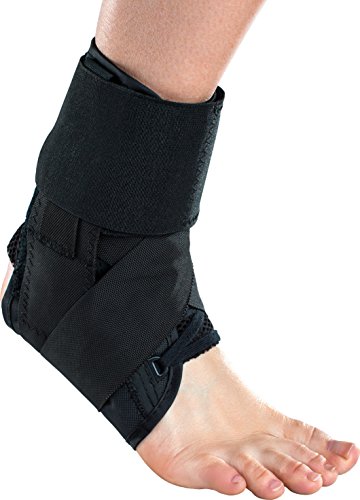
DonJoy Stabilizing Speed Pro Ankle Support Brace

ACE Deluxe Adjustable Ankle Brace (Pack of 2)

Sleeve Stars Ankle Brace Men & Women (M, Black)

Sleeve Stars Plantar Fasciitis Ankle Brace w/ Strap (Light Blue)

Sleeve Stars Ligament & Achilles Ankle Brace (Baby Pink)

Back on Track Physio 4-Way Stretch Ankle Brace

Med Spec ASO Ankle Stabilizer (Black, LG)
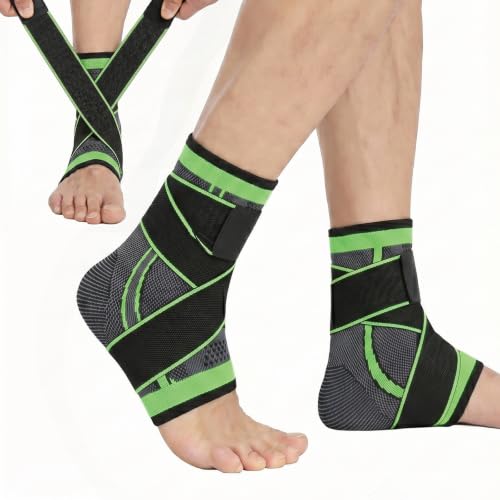
DQVTIC Strassburg-Style Compression Sock w/ Strap (Green, M)

Fitomo Quick Lace Up Ankle Brace w/ Removable Splints
What Each Pick Brings To The Table
The DonJoy Speed Pro is built for athletes who push the pace on uneven ground and want a locked-in feel without the bulk of a full medical brace. Its 800D ballistic nylon shell holds up to repeated wear on gritty trails, while the figure-8 strapping mimics a trainer’s athletic taping job to control inversion (the ankle rolling outward) on off-camber sections. Compared to the slip-on sleeves later in this list, this is a more structured option for runners returning to high-intensity work.
The low-cut profile fits inside most running shoes, and the speed lacing system with Velcro tabs lets you fine-tune tightness between mile one and mile ten. You trade convenience for stability, since lacing takes longer than pulling on a sleeve.
Practical Advantages
- 800D ballistic nylon resists abrasion on rough terrain
- Figure-8 strap pattern locks the talocrural joint (where the shin meets the foot) through lateral cuts
- Low-cut design slips into road and trail running shoes
- Adjustable Velcro tabs let you retighten mid-run without removing the shoe
Things To Consider
- Lacing takes longer to apply than a pull-on sleeve
- Heat builds up in summer; breathable socks help
- Structured feel may feel overbuilt for easy recovery jogs
Built With In Mind
Competitive and serious recreational runners who want athletic-tape-style security during fast workouts, hill repeats, or trail races where one rolled ankle ends a season.
Where Another Pick Suits Better
The Med Spec ASO Ankle Stabilizer covers a similar high-support role but ships in more size options for runners with harder-to-fit ankles.
ACE has long been the household name in wraparound supports, and this deluxe adjustable brace brings that familiarity to running. Reinforced side stabilizers sit along the medial and lateral malleoli (the bony bumps on each side of your ankle) to limit side-to-side roll, while the open-heel design keeps the fit breathable under a running sock. The pack of two means you can rotate braces, which helps them dry out between runs.
It slips over the foot and wraps with simple hook closures, so you can adjust tension on the fly. The trade-off is that it lacks the rigid figure-8 strapping of the DonJoy above, so very aggressive trail runners may want more.
What It Does Well
- Side stabilizers control lateral motion on uneven sidewalks
- Pack of two lets you rotate while one airs out
- Open-heel design stays cooler than closed sleeves
- Slips on quickly before a tempo run
Worth Noting
- Less rigid than lace-up braces for severe instability
- Hook closures can snag thin running socks
Right Fit For
Casual runners logging three to five miles a few times a week who want straightforward, breathable support after a minor tweak or during a return-to-running plan.
Consider Something Else When
The DonJoy Stabilizing Speed Pro offers firmer support for runners training on rocky or root-covered terrain.
Sleeve Stars built this compression sleeve for runners who have never worn a brace before and want the simplest possible introduction. It slides on like a sock and delivers even pressure around the joint, with an included adjustable strap for runners who want extra lockdown during a long run. The medium size fits ankles roughly ten to twelve inches around the heel-to-instep path.
The slim profile fits inside road shoes without crowding the toebox, and the stretch fabric moves naturally through your gait. It is lighter than the ACE wraparound brace but gives up some rigid side control.
Well-Handled Touches
- Slip-on sleeve requires zero adjustment technique
- Compression supports circulation on long easy runs
- Optional strap adds extra support when you need it
- Slim profile fits inside most road running shoes
Small Caveats
- Sizing is critical: outside the 10-12 inch range the fit slips
Who Should Grab It
New runners or returning joggers who want a low-commitment way to add ankle confidence on paved routes without learning to lace a structured brace.
Not Your Match When
The Sleeve Stars Ligament & Achilles Ankle Brace targets tendon pain more directly and suits runners whose main complaint is Achilles or ligament discomfort.
Heel pain changes how every mile feels, and this Sleeve Stars kit addresses both the ankle and the plantar fascia (the thick band of tissue running under the foot from heel to toes). The compression sleeve wraps the joint, while the included adjustable strap lets you dial in tension right where the heel meets the arch. The package also ships with heel protector cushions that wearers commonly place inside shoes to soften impact.
Compared to the simpler Sleeve Stars sleeve in the previous pick, this bundle adds a strap and the heel pads, making it more useful for runners who feel the first steps out of bed as much as the steps on the road.
A Favorable Mix
- Compression sleeve plus adjustable strap covers ankle and arch
- Heel protector cushions soften road impact during long runs
- Stretch fabric stays comfortable on runs over an hour
- Works for both morning pain and training discomfort
Honest Caveats
- More pieces to track than a single sleeve brace
- Heel cushions wear out faster than the sleeve itself
Made For
Runners dealing with plantar fasciitis or heel spurs who need ankle compression and arch support during the same workout without buying two separate products.
Skip It When
The DQVTIC Strassburg-Style Compression Sock focuses more on overnight plantar stretching for runners whose pain spikes after they get out of bed.
This Sleeve Stars brace focuses on the soft tissues runners worry about most: the lateral ligaments (the bands on the outside of the ankle that keep it from rolling) and the Achilles tendon. Compression wraps the joint while an adjustable strap targets the spot where the Achilles meets the calf, which matters for runners dealing with tendonitis or coming back from a sprain. It shares its core sleeve design with the other Sleeve Stars entries but narrows its purpose.
It pulls on like the brand’s simpler sleeve, so the learning curve is nearly zero, but it adds structured compression higher up the lower leg. For pure ligament damage, a lace-up like the Med Spec ASO gives firmer control.
Strong Points
- Compression targets both ankle ligaments and the Achilles tendon
- Adjustable strap lets you focus pressure where pain spikes
- Slip-on application requires no taping experience
- Lightweight enough for daily training runs
Points To Note
- Single piece means no backup brace during a wash cycle
- Compression warmth can feel heavy in humid summer runs
Best Suited To
Runners rehabilitating a grade-one ankle sprain or managing early Achilles tendonitis who want compression support during the return-to-running phase.
Look Elsewhere When
The DonJoy Stabilizing Speed Pro offers firmer figure-8 strapping for runners with documented lateral ankle instability during faster workouts.
Back on Track takes a different route than most braces on this list. The fabric uses Welltex technology, a textile treated to reflect the body’s own far-infrared energy back into the tissue, which the brand describes as creating therapeutic warmth that may boost local circulation. For runners with chronic ankle stiffness rather than acute injury, that warmth matters more than rigid strapping.
The four-way stretch knit moves easily through a normal gait and slips under a sock. It is not the brace to grab right after a fresh sprain, but it is a comfortable daily option for runners who feel the joint tightening during cold-weather training blocks.
What Makes Sense
- Welltex fabric adds gentle warmth for stiff, cold joints
- Four-way stretch knit follows natural foot motion
- Low-profile fit works under everyday running socks
- Useful during warm-up rather than high-impact running
Some Limits To Know
- Not a rigid stabilizer for acute injuries
- Hand-washing extends fabric life but adds care steps
Who It Suits Best
Distance runners training through winter who feel their ankles stiffen in the first mile and want a warming layer rather than hard mechanical support.
Swap It Out When
The Med Spec ASO Ankle Stabilizer is the better choice when structural ankle support matters more than warmth during the run itself.
The ASO is the brace athletic trainers reach for when a rolled ankle needs serious protection on the sideline or trail. Its lace-up body mimics the figure-8 taping pattern trainers use on the field, while elastic cuff closures at the top lock the upper end in place so the brace does not slide down during a hard run. It feels closer to wearing a piece of equipment than a sock.
Compared to the DonJoy Speed Pro, the ASO ships in more size variants and has a longer track record in collegiate and pro training rooms. You give up a touch of streamlined styling in exchange for widely trusted support.
Reasons It Performs
- Figure-8 lace pattern replicates athletic taping technique
- Elastic cuff keeps the brace seated through long runs
- Wide size range improves fit accuracy
- Trusted in pro and collegiate training rooms
Points To Keep In Mind
- Higher learning curve for the lacing process
- Adds noticeable bulk inside minimalist running shoes
Perfect Match For
Trail runners, soccer players, and basketball trainers who move in multi-directional cuts and need ankle support that has been validated in competitive settings.
A Better Fit Elsewhere
The ACE Deluxe Adjustable Ankle Brace is the easier everyday alternative for runners who want side stability without committing to full lacing.
Most braces focus on what happens during the run, but this compression sock targets recovery while you sleep. The toe-to-calf design holds the foot in a gentle dorsiflexed position (toes pulled upward toward the shin) so the plantar fascia stays slightly stretched overnight, which may reduce the sharp first-step pain many runners feel in the morning. The medium size fits a typical runner’s calf.
The adjustable strap lets you fine-tune stretch tension without making the sock itself uncomfortable. It is a recovery tool more than a running brace, so it does not replace the in-run support of the ASO or the DonJoy.
Good Reasons To Consider
- Holds the foot in a stretched position while you sleep
- Adjustable strap customizes the stretch angle
- Compression supports calf recovery after hard efforts
- Useful alongside in-run braces for full-day care
Room For Improvement
- Not designed for use during running itself
- Can feel warm under blankets in summer
Who Should Grab It
Runners whose plantar fasciitis pain spikes in the first minutes after waking and who want a passive stretching tool to wear between training sessions.
Reach For A Different Pick When
The Sleeve Stars Plantar Fasciitis Ankle Brace covers plantar pain during the run itself, not just overnight recovery.
Fitomo built this lace-up brace around adaptability, which makes it interesting for runners in transition between rehab and full training. Removable side splints let you step down support as your ankle rebuilds strength: wear both splints during early return-to-run walks, then pull one out for tempo work, and run with neither once you are back to baseline. The quick-lace system shortens the time between door and driveway.
Sizing runs from small to XL based on the heel-to-instep measurement, so a quick tape check before ordering pays off. The fit profile is closer to the ASO than to the slip-on sleeves, and the bulkier build works best in trail or training shoes with extra toebox room.
Positive Takeaways
- Removable splints let you scale support as recovery progresses
- Quick-lace setup saves time on busy training days
- Wide size range fits narrow to broad ankles
- Compatible with most trail and training shoes
Worth Bearing In Mind
- Bulky inside minimalist road racing flats
- More parts to track than a single-piece sleeve
Whose Shelf It Belongs On
Runners rebuilding ankle strength after a moderate sprain who want one brace that adapts from rehab walks through full pace work instead of buying new supports at each stage.
Another Choice May Suit
The ACE Deluxe Adjustable Ankle Brace is the simpler, lighter alternative for runners past the rehab window who just want everyday side stability.
What Matters Most Before Choosing Ankle Braces For Runners
Match Support Level To Your Injury History
Ankle braces fall into a few practical categories: compression sleeves for warmth and circulation, wraparound braces with side stabilizers for mild instability, and lace-up models that mimic athletic taping for chronic or recurring injuries. Runners coming back from a grade-one sprain usually do well in a wraparound or removable-splint design, while runners with a clean bill of health often prefer a sleeve for comfort on long runs. Choosing more brace than your ankle actually needs can restrict your gait and waste energy across a marathon.
Think About Shoe Compatibility
A brace that does not fit inside your running shoes is a brace you will leave in the drawer. Trail and training shoes with roomy toeboxes accept structured braces like the DonJoy Speed Pro, the Med Spec ASO, and the Fitomo lace-up. Sleeves like the Sleeve Stars and the Back on Track knit fit more easily into road racing flats. Match the brace to the shoe you actually wear most, not the shoe you wish you wore.
Decide Between Daytime And Overnight Use
Most braces on this list are designed to wear during the run. If your main complaint is morning heel pain, the Strassburg-style compression sock stretches the plantar fascia while you sleep, while an in-run sleeve like the Sleeve Stars model handles the daytime. Combining an overnight stretching tool with an in-run brace covers the full 24-hour cycle without doubling up during the workout.
Plan For Care And Replacement
Sleeves and wraparound braces need occasional hand-washing to keep sweat salts from breaking down the elastic. Lace-up braces last longer but eventually wear at the eyelets and strap anchors. Expect a year or more of regular use from most quality braces, and rotate between two braces so each one dries fully between runs.
Key Considerations Across These Picks
Mistakes Worth Dodging
The most common slip-up is choosing a brace based purely on stiffness. Many runners grab the most rigid option they can find, then discover it changes their gait enough to cause shin or knee soreness after a few weeks. The right brace matches the injury, not the fear of injury. Measure your ankle, read the sizing chart for each model, and start with the lightest support that addresses your specific complaint before stepping up.
What Separates Premium From Basic
Premium braces like the DonJoy Speed Pro and the Med Spec ASO use ballistic nylon shells, anatomically shaped stays, and refined lacing systems that hold up across hundreds of miles and many wash cycles. Entry-level braces use simpler hook-and-loop closures and thinner elastic that still works fine for casual mileage. The upgrade pays off when you run four or more times a week, train through harsh weather, or have a history of repeated sprains that justify the longer-lasting hardware.
Frequently Asked Questions
How tight should an ankle brace feel when running?
A properly fitted brace should feel snug enough that your socked ankle cannot shift inside it, but never so tight that your toes tingle or the circulation in your foot feels cut off after ten minutes. You should be able to slide one finger under the top edge of the brace.
Can you wear an ankle brace under a running sock?
Most compression sleeves and wraparound braces are designed to go directly against the skin, with the sock layered over the top. Lace-up braces with bulkier hardware may need a thin liner sock underneath to prevent abrasion at the eyelets.
Do ankle braces weaken the ankle over time?
For runners who only wear a brace during activity and not all day, there is no strong evidence that braces weaken the surrounding muscles. The risk only grows when a brace is worn around the clock for months, which is why rehab programs pair braces with strengthening work.
How do you wash an ankle brace without ruining it?
Hand-washing in cool water with mild soap and air-drying away from direct heat extends the life of every brace on this list. Machine washing and drying break down elastic, fray hook closures, and warp plastic side stays.
When should a runner see a clinician instead of buying a brace?
Any ankle that cannot bear weight, looks visibly deformed, or swells severely within the first hour needs professional evaluation before a brace goes on. Braces support recovery; they do not replace diagnosis or imaging for serious injuries.
Closing Thoughts
Runners have no shortage of brace options, and the best pick depends on what your ankle actually needs: warmth for stiffness, compression for tendon recovery, rigid strapping for chronic instability, or overnight stretching for plantar pain. Start with the lightest support that addresses your real complaint, then step up only if that level falls short. Your ankles carry every mile, so the right brace should feel like a quiet teammate, not a heavy hand on your stride.