

Overpronation pulls the ankle inward with every step, and the right brace can change how your foot meets the ground. Runners logging long distances, weekend basketball players, and anyone tired of that nagging inward roll know the struggle: flimsy sleeves that stretch out by lunch, or bulky stirrup braces that fight your shoe. The picks below address that middle ground, where structure meets everyday wearability, so you can keep moving without constantly retying or readjusting.
The Leading Options At A Glance
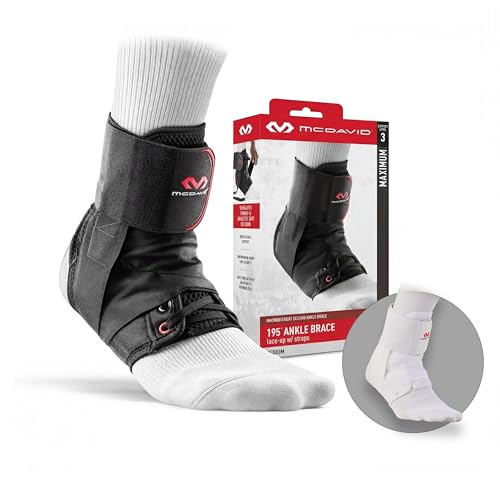
McDavid Lace-Up Ankle Brace Figure 8 Sprain Support

ProCare Stabilized Ankle Support Brace

DonJoy Stabilizing PRO Ankle Brace
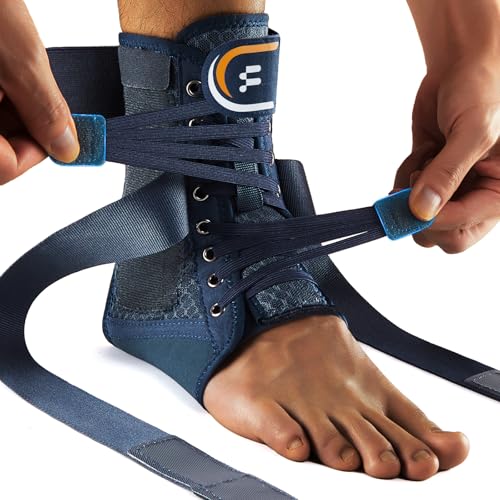
Fitomo Ankle Brace Removable Side Splints Figure 8
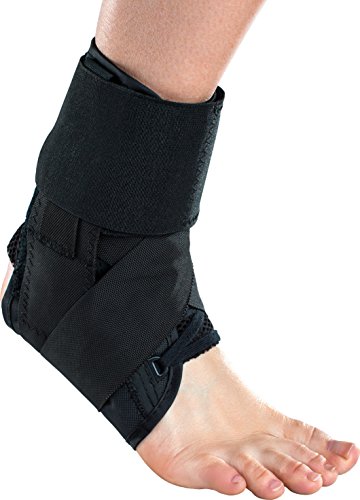
DonJoy Stabilizing Speed Pro Ankle Brace

Med Spec ASO Ankle Stabilizer Lace Up Brace

INDEEMAX Copper Infused Ankle Compression Sleeve

Fitomo 1.5mm Ultra Thin Ankle Brace Figure-8

Fitomo Quick Lace Up Ankle Brace Removable Splints
Inside Each Recommended Option
The McDavid lace-up lands at the top because it threads a careful needle between structure and weight. Side stabilizers keep the ankle from rolling inward, while a figure-8 strap (a wrap pattern that crosses over the front of the ankle and under the foot to lock the joint) pulls the heel into alignment during lateral cuts. For pickup basketball or Saturday morning soccer, that combination tends to hold up through hours of play.
You pull it on like a low-cut boot and tighten the laces from bottom to top, which gives you room to adjust compression over the forefoot versus the ankle. It runs a touch warm in summer leagues, and the lacing takes practice the first few wears, but the trade-off is a brace that actually anchors the joint instead of just squeezing it.
Well-Handled Touches
- Figure-8 strap and rigid side stays work together to limit inversion and overpronation during cuts.
- Lace-up fit lets you fine-tune compression across the foot and ankle in seconds.
- Low-cut profile fits inside most basketball and running shoes without crowding the toe box.
- Lightweight build keeps fatigue down during multi-hour practices or tournament days.
Things To Consider
- Lacing takes longer than slip-on sleeves, so quick pre-game changes require patience.
- Owners commonly report the nylon fabric running warm during hot-weather outdoor play.
Who It Suits Best
Multi-sport athletes who switch between basketball, volleyball, and soccer need one brace that handles directional movement without constant retying.
Consider Something Else When
Pick the INDEEMAX copper sleeve instead if you want a pull-on style for casual walks rather than court-level lateral support.
The ProCare Stabilized brace is the pick that whispers “clinic” rather than “gym bag.” Its 800D ballistic nylon shell (a dense, abrasion-resistant woven fabric originally developed for tactical gear) resists the fraying and hook-and-loop fatigue that eats through lighter braces after a season of wear. Articulated medial and lateral stays, meaning rigid plastic strips running along the inside and outside of the ankle, can be removed as swelling drops, which matters during the middle of a recovery cycle.
Unlike the McDavid above, this one trades some softness for structure. The circumferential elastic strap wraps the lower leg to deliver tibia and fibula compression (gentle squeeze along the two lower leg bones) that keeps the brace seated during long shifts on your feet. It’s a recovery-room tool that doesn’t mind going outside.
What Pays Off
- Removable medial and lateral stays adapt to different recovery phases.
- Full-circumference strap keeps the brace anchored without slipping during walking.
- Low-profile design fits inside standard athletic shoes.
- Hand-washable construction means you can rinse it after sweaty rehab sessions.
Honest Caveats
- Bulkier feel than the McDavid, so it crowds tighter-fitting casual shoes.
- Sizing runs slightly narrow, which can frustrate wider feet during initial wear.
- Less breathable than thin sleeve options during summer use.
Quick Facts
Made For
People in mid-stage ankle recovery who need rigid support that adapts as swelling changes week to week.
Look Elsewhere When
Choose the DonJoy Stabilizing PRO brace instead if you need even more aggressive structural support for chronic instability.
The DonJoy Stabilizing PRO is the heavyweight of the list, and it earns that label honestly. Built around the same 800D ballistic nylon platform as the ProCare above, it layers in a rigid shell design that physical therapists tend to reach for after severe sprains or chronic lateral instability. The reinforced eyelet area stops the laces from tearing through the fabric under hard pulling.
For runners returning from a grade II or III sprain, that rigidity is the point. The trade-off is bulk: you’ll size up your running shoes by a half-step to fit this comfortably, and short socks tend to disappear under the tall cuff. Hand washing keeps the hook-and-loop sharp, which owners commonly find makes a noticeable difference after month three.
Bright Spots
- Rigid medial and lateral stays provide strong resistance to overpronation and inversion.
- Reinforced eyelet area prevents lace tear-out during aggressive tightening.
- Trusted shell design used widely in physical therapy settings.
- Compatible with most athletic shoes once you allow for the added bulk.
Worth Noting
- Significantly bulkier than the McDavid, so casual shoes rarely fit over it.
- Lacing system requires two hands and a few extra minutes per wear.
Best Suited To
Shoppers managing chronic ankle instability or returning to running after a serious sprain who need maximum mechanical support.
Swap It Out When
Step down to the Med Spec ASO if you want similar stability in a slightly lower-cut package that fits inside standard sneakers more easily.
The Fitomo triple-lock system takes a modular approach that lands well for changing symptoms. Top strap compression, dual removable side stabilizers, and cross straps each do separate work, so you can strip the brace down from maximum support to a slimmer profile as your ankle improves. The figure-8 strap adjusts independently of the rest, which is handy when swelling shifts through the day.
Compared to the DonJoy above, this one feels lighter on foot but slightly more complex to fit. The learning curve is real, and first-time wearers may need a few tries before the straps land in the right tension zone.
What Earns Its Place
- Removable splints adapt to acute, mid-stage, and return-to-activity phases.
- Independent figure-8 strap fine-tunes compression without loosening the whole brace.
- Side stabilizers limit both inversion and the inward roll of overpronation.
- Works for both right and left ankles without reconfiguration.
Trade-Offs
- Multiple straps take longer to apply than single-strap sleeves.
- Adjustment learning curve is steeper than the McDavid lace-up design.
Right Fit For
Recovering sprain patients who want one brace that scales with them from week-one swelling through month-two return-to-sport.
A Better Fit Elsewhere
Choose the Fitomo Quick Lace Up brace if you want similar modularity with a faster, more beginner-friendly entry system.
The Speed Pro tackles the one thing traditional lace-up braces waste: time. DonJoy swapped out endless lace tying for a hook-and-loop closure that locks the fit in seconds, then layered in the same figure-8 strapping system found on its pro-level siblings. For athletes juggling warm-ups and substitutions, that time savings adds up across a season.
It still uses the 800D ballistic nylon foundation, so durability isn’t sacrificed for speed. Compared with the McDavid at the top, the Speed Pro feels slightly more rigid out of the box, which helps during fast lateral cuts but takes a session or two to soften into the foot.
Positive Points
- Hook-and-loop speed closure cuts application time dramatically.
- Figure-8 strapping locks the calcaneus (heel bone) for stable lateral cuts.
- Heavy-duty shell construction holds up across multi-season use.
- Low-profile enough for most basketball and volleyball shoes.
Minor Gripes
- Stiffer feel at first than the softer McDavid lace-up entry.
- Hook-and-loop picks up lint from the gym bag over time.
Perfect Match For
Court sport athletes who want near-pro level stability without the slow ritual of traditional lacing before every match.
Reach For A Different Pick When
Switch to the Fitomo Ultra Thin brace if your priority is disappearing into a snug fitting shoe rather than maxing out stability.
The Med Spec ASO has been a staple on athletic training tables for years, and for good reason. Its figure-8 strap system wraps securely around the ankle while a stabilizing strap cinches over the lace area, giving trainers two separate levers to control fit. You often see this brace on college and high school sidelines because it strikes a balance that coaches trust.
It runs lighter than the DonJoy Speed Pro above, and the cuff sits a touch lower, which helps when pairing it with mid-cut basketball shoes. The trade-off is that the elastic strap can loosen during long practices, so a quick mid-game retighten is sometimes necessary.
The Good Stuff
- Two-strap system (figure-8 plus stabilizing) gives trainers independent control points.
- Lower cuff fits comfortably inside mid-cut athletic shoes.
- Widely recommended by athletic trainers for sprain recovery and prevention.
- Available in multiple sizes for more accurate ankle circumference fit.
Things To Weigh
- Elastic strap may loosen during long sessions, requiring mid-use retightening.
- Less rigid than the DonJoy Stabilizing PRO for severe chronic instability.
Feature Snapshot
Who Should Grab It
High school and college athletes under trainer supervision who need a proven lace-up design for both prevention and post-sprain return.
Not Your Match When
Reach for the DonJoy Stabilizing PRO instead if you need heavier medial-lateral control for a recently reconstructed ankle.
The INDEEMAX sleeve breaks from the rigid shell designs above and leans into compression. Built from copper-infused nylon with spandex, it pulls on like a sock and stays put during walks, light jogs, and long days on your feet. The lower profile makes it the most sock-like option on the list, which matters if you hate the bulk of a lace-up brace.
You trade structural support for that comfort. There’s no rigid stay to stop a hard lateral roll, so this works better as a daily wear compression layer than as a return-to-sport tool after a serious sprain. For overpronation, owners commonly find it most useful as a gentle reminder to the joint rather than a hard mechanical block.
Positive Takeaways
- Pull-on sleeve design slips under a sock in seconds.
- Copper-infused knit resists odor through long workdays.
- Low profile fits inside dress shoes and casual sneakers.
- Compresses mildly for swelling control during desk-and-walking routines.
Room For Improvement
- No rigid stays, so it cannot stop hard inversion or acute overpronation events.
- Compression lessens after several months of daily wear and washing.
- Not suited as a stand-alone brace during lateral court sports.
Built With In Mind
Everyday walkers, retail and hospitality workers, and anyone wanting gentle compression during daily errands rather than athletic-grade rigidity.
Where A Sibling Pick Shines
Move up to the McDavid lace-up brace if you need actual mechanical correction for running or court sports instead of compression comfort.
The Fitomo ultra-thin brace solves a specific problem: tight-fitting shoes. At 1.5mm thick with a breathable microfiber shell and ventilation grid, it disappears into minimalist running shoes and fashion sneakers where bulkier braces simply won’t fit. The three-layer system, including an inner stabilizing pad, figure-8 straps, and flexible side supports, gives more structure than a pure sleeve without the footprint of a lace-up boot.
Compared to the INDEEMAX sleeve above, you get genuine figure-8 control for overpronation. You give up some of the sock-like softness, and the thinner fabric trades long-term durability for the slimmer profile. For most casual runners, that balance lands well.
Practical Advantages
- 1.5mm thickness fits inside minimalist and low-volume shoes.
- Ventilation grid keeps the ankle cooler than closed-shell designs.
- Figure-8 strap provides real pronation control, not just compression.
- Layered support system adapts to different movement intensities.
Points To Note
- Thinner fabric shows wear faster than ballistic nylon shell braces.
- Less structural rigidity than the DonJoy Speed Pro for hard lateral cuts.
Feature Card
Whose Shelf It Belongs On
Runners in minimalist or fashion-fit sneakers who need real figure-8 control without sacrificing their preferred footwear.
Skip It When
Pick the DonJoy Stabilizing PRO if you need maximum rigidity for high-impact court sports rather than a slim profile.
The Quick Lace Up earns its name through a three-level strapping system that’s easier to learn than traditional full lace-ups. Removable side stabilizers let you dial in support gradually, which is a relief if you’ve never worn a structured brace before. Sizing is based on ankle circumference from heel to instep, and the brand recommends going one size up between measurements, which helps avoid the common mistake of buying too tight.
Versus the Fitomo triple-lock brace earlier, this one feels friendlier out of the box. The trade-off is somewhat less aggressive structural support, so heavy court athletes may still want to step up to the McDavid or DonJoy options.
Advantages To Know
- Three-level strapping is easier to master than traditional full lace-ups.
- Removable splints let beginners scale support as confidence builds.
- Circumference-based sizing chart reduces the guesswork of online ordering.
- Works for both ankles without reconfiguration.
Some Limits To Know
- Less structural rigidity than the McDavid for hard lateral court sports.
- Multiple straps still take longer to apply than pull-on sleeves.
Who Will Love This
First-time brace users stepping into structured support who want a forgiving fit system and clear sizing guidance.
Where Another Pick Suits Better
Choose the Med Spec ASO if you’ve worn lace-up braces before and want a more established, trainer-trusted design for daily training.
What Matters Most Before Choosing Ankle Braces For Overpronation
Structure Versus Compression
The first fork in the road is between rigid stays and sleeve-style compression. A rigid stay, meaning a hard plastic or metal insert sewn into the side of the brace, physically blocks the ankle from rolling inward during each step, while a compression sleeve works more like a tight sock that improves circulation and proprioception (your subconscious awareness of where your joint is in space). For runners logging high mileage or anyone returning from a sprain, structure tends to win. For desk workers and casual walkers, compression often feels more livable.
Fit And Shoe Pairing
A brace that fights your shoe becomes a brace you stop wearing. Measure your ankle circumference from heel to instep and check the brand’s chart before ordering. Low-cut and ultra-thin designs slip into minimalist sneakers, while full lace-ups and rigid shells usually demand a half-size larger shoe. If your favorite pair can’t accept the brace, you won’t reach for either.
Activity Level And Recovery Phase
Acute injuries want maximum support with removable stays you can shed as swelling drops. Return-to-sport phases benefit from figure-8 straps that control directional movement without limiting flexibility. Daily wear and prevention lean toward thinner, breathable builds. Match the brace to where your ankle actually is, not where you hope it will be next month.
Key Considerations Across These Picks
Wrong Turns To Avoid
A common mistake is choosing a brace based on stiffness alone, then abandoning it because it crowds your favorite shoes. Brace thickness and shoe volume have to agree, or the brace ends up in a drawer. Another slip-up is ignoring sizing charts and ordering based on shoe size alone, which leads to a fit that’s either restrictive or sloppy. Measure the ankle, follow the chart, and size up only when you’re between sizes.
What Separates Premium From Basic
The jump from entry-level to premium braces usually comes down to two things: shell material and stay adjustability. Ballistic nylon shells outlast standard polyester through a season of heavy use, and removable articulated stays let you scale support as the ankle heals rather than buying a second brace. For most shoppers, those two upgrades earn their cost through longer working life and fewer replacements.