

A rolled ankle on a trail run. A long shift on hard floors. The slow ache of plantar fasciitis that greets you every morning. Most people reach for an ankle brace because something hurts, is healing, or needs protection before the next twist, jump, or mile. The right support makes daily movement easier, while the wrong one bunches up in your shoe and ends up in a drawer. This roundup compares six ankle brace supports across compression sleeves, lace-up stabilizers, and low-profile wraps, with notes on fit, feel, and the situations where each one actually earns its place.
Your Options, Compared

Bunga Ankle Sleeve (5″)
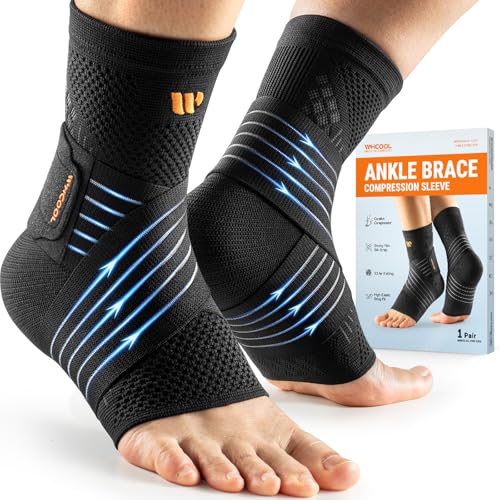
WHCOOL Low-Profile Ankle Compression Sleeve w/Wide Strap

WHCOOL Slim-Fit Lace-Up Ankle Brace with Auto-Shaped Pads (Black, M)

WHCOOL Slim-Fit Lace-Up Ankle Brace with Auto-Shaped Pads (White, M)

ZAMST A2-DX Ankle Brace (Right, Large, Black)

Modvel Foot & Ankle Compression Sock
The Details Behind The Selections
The Bunga Ankle Sleeve is not your average brace, and that is precisely the point. It is a 5-inch gel-style sleeve designed to cushion the ankle against the kind of pressure that comes from stiff skate boots, whether you are on hockey ice, figure ice, roller rinks, or inline trails. Rather than compressing the joint, it acts as a soft buffer between your skin and the boot, reducing friction and hot spots that quickly turn a two-hour practice into misery.
Most general ankle braces on this list target compression or stabilization. The Bunga serves a different purpose, more comfort accessory than rehab tool. Skaters who already tape their ankles often layer this over the tape or wear it solo to prevent the lace bite and blistering that punish beginners and veterans alike.
Strengths Worth Knowing
- 5-inch length covers the most common lace-bite and bone-pressure zones on a skate boot.
- Gel-style cushioning reduces chafing on longer sessions, which matters when you log hours on the ice.
- Simple pull-on design, no straps or laces to fuss with before stepping into a skate.
- Useful for hockey, figure, roller, and inline skating, so one sleeve covers multiple disciplines.
Things To Consider
- It is not a medical brace, so anyone with an active injury will need a compression or stabilizing option like the WHCOOL sleeve instead.
- Single-sleeve format means you may want two if you regularly skate on both feet.
Made For
Skaters across hockey, figure, roller, and inline who want to soften the bite of stiff boots during long practices.
Skip It When
You need real compression or stability, in which case the WHCOOL Low-Profile Ankle Compression Sleeve is a more purposeful fit.
The WHCOOL Low-Profile Ankle Compression Sleeve is built around a graduated knit (compression that is firmer at the ankle and looser higher up the leg, which helps move swelling upward) combined with a wide adjustable strap. That strap lets you dial in extra pressure right where you feel it, the Achilles, the heel, or the arch, without retying the whole brace. If the Bunga sleeve is about cushioning inside a skate, this is about real recovery support in everyday shoes.
For people bouncing back from mild sprains, plantar fasciitis flare-ups, or Achilles tendonitis, the customizable fit is the selling point. You can wear it under most sneakers or work shoes, and the wide strap stays put when you walk the dog or stand through a long shift.
Advantages To Know
- Graduated compression supports circulation, which can help calm swelling during daily wear.
- Wide strap lets you target the Achilles or arch without loosening the whole sleeve.
- Low-profile knit fits under most casual and athletic shoes, so it works with a normal wardrobe.
- Sold as a pair, useful when both ankles need attention at once.
Worth Noting
- Compression fabric tends to trap heat, so warm climates or sweaty workouts may feel stuffy.
- Not designed for hard lateral cuts, so athletes who need rigid stability should look at the ZAMST A2-DX instead.
Quick Facts
Who It Suits Best
Adults managing mild ankle sprains, plantar fasciitis, or Achilles tendonitis who want adjustable compression they can wear under work or casual shoes.
Reach For A Different Pick When
You are returning to cutting sports and need rigid side support, which is where the ZAMST A2-DX Ankle Brace fits the situation better.
If you have ever wrestled with a rigid brace that feels like a cast, the WHCOOL Slim-Fit Lace-Up Ankle Brace is the middle ground worth a look. It uses a quick lace-up closure with hook-and-loop overlays (the soft fastener commonly called Velcro) and two auto-shaped pads that mold to either side of the ankle bone. The result is structured side support without the bulky feel of a hard-shell stabilizer.
The air-fabric build breathes well enough for a 5K or a pickup basketball game, and the slim profile slips into most athletic shoes. Runners, volleyball players, and anyone returning from a light sprain will appreciate how fast it goes on compared to taping.
Features That Help
- Auto-shaped pads contour to the ankle bone, which spreads pressure instead of digging in.
- Air-knit fabric manages heat during longer workouts or summer runs.
- Lace-up design lets you fine-tune tightness across the foot and ankle.
- Slim profile fits inside most running and court shoes without forcing you to size up.
Trade Offs
- Hand-washing and air-drying extends the life of the knit, but it is an extra step compared to slip-on sleeves.
- Best for light sprains and preventative use, not heavy-duty ligament reconstruction recovery.
Best Suited To
Runners, court-sport players, and active adults managing light sprains who want structured side support in a breathable, low-bulk design.
Look Elsewhere When
You want everyday sock-level comfort for walking and errands, in which case the Modvel Foot & Ankle Compression Sock is the more relaxed option.
This is the same WHCOOL Slim-Fit Lace-Up Ankle Brace featured above, simply offered in white for people whose wardrobe or team kit calls for a lighter shade. Functionally, nothing changes: same auto-shaped pads, same lace-and-hook closure, same slim athletic fit. The color difference is the reason it earns its own place on the list.
It also matters if you live in white sneakers or play on a team where dark gear clashes with uniforms. White knit shows dirt faster, so owners commonly hand-wash it after a few sweaty sessions to keep it looking clean.
The Upside
- Identical support profile to the black version, so you do not sacrifice performance for color.
- White knit pairs naturally with light athletic shoes and uniforms.
- Auto-shaped pads keep pressure off the ankle bone during cuts and pivots.
- Quick lace-up saves time compared to tape jobs before practices.
Small Caveats
- White fabric shows sweat and dirt, so it needs more frequent cleaning to stay presentable.
- Light color may not appeal to anyone who wants the brace to disappear against dark socks.
Right Fit For
Active adults who want the structured support of the WHCOOL slim-fit lace-up design in a white colorway that matches lighter athletic shoes and team kits.
Consider Something Else When
You want the same brace in black for low-visibility wear, which is exactly what the WHCOOL Slim-Fit Lace-Up Ankle Brace (Black, M) provides.
When “support” means genuine lateral protection, the ZAMST A2-DX sits in a different category from the rest of this list. It targets heavy sprains and chronic ankle instability with rigid side stabilizers and an adjustable lace-up build, which is why athletes recovering from Grade III sprains (the most severe type, with a full ligament tear) and people dealing with peroneal tendonitis (irritation of the tendons running along the outer ankle) reach for it. Compared to the WHCOOL lace-up brace reviewed earlier, the A2-DX adds firmer plastic stays and a more locked-in feel.
This is the brace you pull on when you cannot afford another rollover, whether that means returning to basketball after surgery or just walking confidently on uneven pavement. It runs right-foot specific in the large size listed here, so be sure to match your injured side before checking out.
What Makes Sense
- Rigid side stabilizers guard against the lateral roll that causes repeat sprains.
- Adjustable lace-up and strap system customizes fit across the heel, midfoot, and ankle.
- Built for serious injuries, including chronic instability and peroneal tendonitis.
- Right-foot specific sizing helps ensure a snug, anatomy-aware fit.
Possible Compromises
- Bulkier than the WHCOOL slim-fit models, so plan on wearing it with roomier athletic shoes.
- Right-specific build means left-side injuries need the mirrored listing, not a flip of the brace.
Feature Card
Who Should Grab It
People recovering from heavy sprains or living with chronic ankle instability who want rigid, side-specific stabilization over a soft sleeve.
A Better Fit Elsewhere
Casual walkers and runners with only mild tweaks will find the WHCOOL Low-Profile Ankle Compression Sleeve a more comfortable, lower-bulk choice.
The Modvel Foot & Ankle Compression Sock earns its slot by being the easiest pick to live with. It is built like a sock with targeted compression zones (knit-in areas of firmer pressure aimed at specific muscles or tendons) that wrap the foot and ankle, and the low-profile fit slides into sneakers, work boots, and casual shoes without a fight. For people who want relief during a long shift or a daily walk rather than aggressive post-injury stabilization, it hits a sweet spot.
It is the most “wear and forget” option on the list, useful for plantar fasciitis, mild Achilles pain, tendonitis, and arthritis discomfort. You can pull it on in the morning, wear it under regular socks, and head out the door.
A Strong Showing
- Compression zones support the arch, Achilles, and ankle in one piece.
- Lightweight knit feels closer to a sock than a brace, so it works with everyday footwear.
- Useful across plantar fasciitis, tendonitis, and arthritis symptoms.
- Hand wash and air dry is straightforward, and the knit tends to hold its shape.
Points To Keep In Mind
- Compression is mild compared to the WHCOOL strap sleeve, so severe injuries may need a more structured option.
- Knit fabric can feel warm during summer workouts or hot shifts.
Feature Snapshot
Perfect Match For
Walkers, retail and healthcare workers, and anyone with mild plantar fasciitis or tendonitis who wants comfortable, all-day compression.
Where A Sibling Pick Shines
Heavier sprains and post-injury rehab call for the firmer side stabilization of the ZAMST A2-DX Ankle Brace instead.
What Matters Most Before Choosing Ankle Brace Supports
Ankle braces fall into roughly three families. Compression sleeves (like the Modvel sock and the WHCOOL strap sleeve) use knit fabric to support circulation and calm swelling. Lace-up stabilizers (such as the WHCOOL Slim-Fit and the ZAMST A2-DX) add side stays and straps to limit the lateral roll that causes repeat sprains. Specialty accessories (the Bunga sleeve) handle a narrower job, like softening the bite of stiff skate boots.
Match the brace to the problem first. A mild sprain or a flare-up of plantar fasciitis usually responds well to compression you can wear all day. A heavier sprain or chronic instability benefits more from rigid side stays that physically limit dangerous motion. If you are returning to running, basketball, or tennis, lace-up designs tend to hold up better under quick cuts.
Fit is the other big lever. Measure your ankle circumference and check the size chart, since a brace that is too loose migrates inside your shoe and one that is too tight cuts off circulation. Breathable knit materials (air fabric, mesh panels, nylon) help if you plan to wear the brace during work or warm-weather activity, while thicker neoprene-style builds trade breathability for warmth and compression.
Finally, think about your footwear. Slim-fit lace-ups fit inside most running shoes, while rigid braces like the ZAMST A2-DX usually need a half-size up in athletic shoes. If you mostly wear dress shoes or boots, prioritize low-profile sleeves that disappear under your normal socks.
Picking The Right Level Of Support
Where Shoppers Go Wrong
The most common slip-up is buying a brace that is either too soft or too stiff for the actual problem. A heavy sprain needs real lateral protection, while everyday arch pain does not, and matching those wrong means either constant discomfort or wasted money.
Other shoppers ignore sizing charts and end up with braces that roll down, pinch the heel, or simply do not provide support. A quick ankle measurement before you click can save a return.
What The Higher Tier Buys
Premium-tier ankle braces usually bring rigid side stabilizers, better strap systems, and more durable outer shells. For most casual users, that extra hardware is unnecessary, but for athletes returning from a Grade III sprain or anyone with chronic instability, the upgrade often means the difference between a confident return and a repeat injury.
Frequently Asked Questions
How tight should an ankle brace feel?
A properly fitted brace should feel snug and supportive without causing numbness, tingling, or a noticeable change in skin color. You should still be able to slide a finger under the edge of the brace.
Can I wear an ankle brace all day?
Most compression and lace-up braces are designed for daily wear during activity, though you should remove them during sleep unless a clinician has specifically advised continuous use. Skin underneath benefits from a break to air out.
Do ankle braces weaken the joint over time?
Used only during high-risk activity or recovery, braces do not appear to weaken ankle muscles, and they can actually protect you from repeat injuries during the vulnerable healing phase. Long-term, full-time wear without rehab exercises is a different conversation worth raising with a clinician.
Which brace works best for plantar fasciitis?
Low-profile compression sleeves that support the arch and heel, like the Modvel sock or the WHCOOL strap sleeve, are common starting points for plantar fasciitis. Rigid lace-ups are usually overkill for that specific issue.
Should I size up if I have swelling or a wider foot?
Yes, most manufacturers recommend sizing up when swelling is present or when your foot runs wider than average, since a too-tight brace can worsen circulation and slow recovery.
The Takeaway
A good ankle brace does not just cover the joint, it matches the injury, the activity, and the shoe. Skaters get the most from the Bunga sleeve’s cushioning, while runners and weekend athletes tend to live inside the WHCOOL slim-fit lace-up designs. Heavy injuries and chronic instability call for the firmer protection of the ZAMST A2-DX, and everyday comfort seekers usually end up happiest with the Modvel compression sock. Match the support level to the problem, and the rest takes care of itself.