
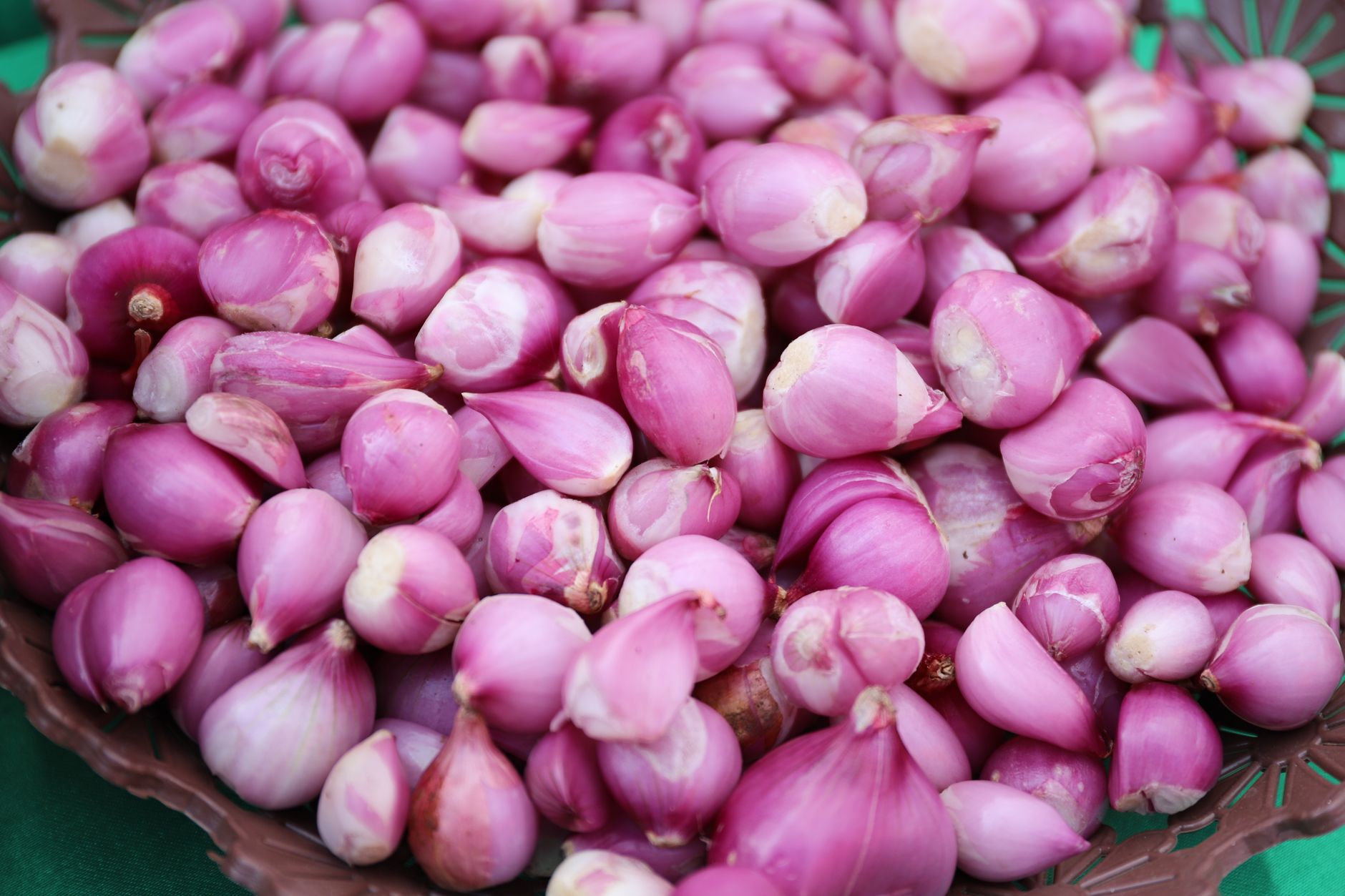

Tucked inside those small, copper-skinned allium bulbs sits a dense bundle of vitamin C, B6, manganese, potassium, quercetin, and protective organosulfur compounds. A 100-gram raw serving comes in around 72 calories and 17 grams of carbohydrate, with most of the carb coming from sugars and a smaller share of fiber. That balance makes shallots a low-calorie way to add flavor, antioxidants, and immune-supportive nutrients to everyday cooking.
This guide covers what sets shallots apart from their onion cousins, breaks down the nutrients in a typical serving, and walks through the health perks, possible sensitivities, and best kitchen uses along the way.
What Sets Shallots Apart in the Allium Family
Shallots (Allium cepa var. aggregatum) grow in clusters of 3 to 6 small, elongated cloves wrapped in one papery skin, unlike a yellow onion’s single fat bulb. Each clove carries a thinner skin and a denser, juicier interior than a storage onion, and that geometry shows up the moment you start peeling.
Flavor, Genetics, and Why Chefs Reach for Them
Genetically, shallots share most of their DNA with onions, with a touch of garlic admixture in certain Asian cultivars, which explains the layered flavor. They hold more sugar and water and less of the tear-inducing sulfur volatiles that sting the eyes when you slice a raw onion. The result is a gentler allium that softens into a sweet, almost jammy paste when cooked and stays bright when shaved thin for a raw dressing.
Restaurants reach for shallots when a recipe needs a quiet, building allium note rather than a bold one. A classic beurre blanc gets its silky backbone from a finely minced shallot simmered in wine and vinegar. A pan of butter-sautéed mushrooms is lifted by a tablespoon of shallot instead of a whole diced onion. That subtlety is the whole point.
Common Varieties and Where Each Shines
Three types show up most often in US markets. The French gray shallot, sometimes called the “true” shallot, is small and gray-skinned, prized for its concentrated flavor in raw applications. The banana shallot, larger and bronze-skinned, is the easiest to peel and the most forgiving under heat, which makes it a great everyday choice. Asian shallots, common in Indian, Thai, and Vietnamese cooking, run smaller and sharper, with a pink or red skin and a more pronounced garlic note.
| Variety | Skin Color | Best Use |
|---|---|---|
| French gray | Gray-tan, small clove | Raw vinaigrettes, classic French sauces |
| Banana shallot | Bronze, large clove | Everyday cooking, caramelizing, roasting |
| Asian shallot | Pink or red, small clove | Curries, stir-fries, deep frying for crispy shallots |
The Nutritional Profile Behind a Single Tablespoon
A 100-gram serving of raw shallots, roughly 3.5 ounces or about a half-cup chopped, comes in at around 72 calories and 17 grams of carbohydrate. That same portion delivers meaningful amounts of vitamin C, vitamin B6, manganese, and potassium, plus a quiet hit of iron and folate. The macronutrient load is light, which is why a shallot-heavy dish rarely throws off a meal’s calorie count.
Micronutrients and Antioxidant Compounds
The micronutrient story centers on vitamin C at about 8 mg per 100 g and vitamin B6 at roughly 0.3 to 0.4 mg per 100 g, both of which support immune function and energy metabolism. Manganese shows up at useful levels relative to a typical daily intake, and potassium around 330 mg per 100 g helps balance sodium in the diet.
The antioxidants are where shallots earn their real reputation. Quercetin and kaempferol, two flavonoids shared with onions and apples, show up in measurable amounts, and organosulfur compounds, including the alliinase enzyme-driven allicin precursors that form when you slice or crush the bulb, give shallots their antimicrobial and cardiovascular pedigree. USDA FoodData Central lists raw shallots as also carrying small but useful amounts of folate, iron, and dietary fiber.
How Shallots Stack Up Against Onions and Garlic
Per gram, shallots and yellow onions run close on most micronutrients, with shallots slightly ahead on certain flavonoids and a touch behind on vitamin C. Garlic, used in much smaller quantities because of its potency, delivers more allicin precursors per gram but contributes less overall volume to a dish. The practical takeaway: shallots are nutritionally a middle ground, gentle enough to use generously and potent enough to count.
That nutritional middle ground translates into measurable effects once shallots reach the bloodstream and tissues.
| Per 100 g, raw | Shallots | Yellow Onion | Garlic |
|---|---|---|---|
| Calories | ~72 | ~40 | ~149 |
| Carbohydrate | ~17 g | ~9 g | ~33 g |
| Vitamin C | ~8 mg | ~7 mg | ~31 mg |
| Quercetin | Moderate | Moderate | Trace |
| Allicin precursors | Moderate | Low | High |
Evidence-Based Health Benefits Worth Knowing
Shallots carry a meaningful share of the same bioactive compounds that link regular garlic and onion consumption to better cardiovascular and metabolic markers. The benefits come from eating them as food, consistently, not from treating them like a supplement. Four threads of evidence stand out within that framing.
Cardiovascular Support from Sulfur Compounds
Organosulfur compounds appear to support healthier blood pressure and lipid profiles when alliums are eaten regularly. Some studies have flagged modest reductions in LDL cholesterol and small improvements in blood pressure among adults who follow allium-rich diets, and shallots contribute to that pattern, especially when eaten several times a week as part of a balanced diet. The effect is real but incremental, not a substitute for medical treatment, and large reviews of allium intake back this up.
Blood Sugar Regulation
Adults who eat more alliums each week tend to show steadier blood sugar readings in observational studies, whether or not they have type 2 diabetes. Compounds in shallots may slow carbohydrate absorption and support insulin sensitivity, though the strongest evidence sits behind garlic and onions, with shallots sharing the same general compound families. Pairing shallots with high-carb meals like rice, pasta, or bread is a simple way to bring the potential benefit to the table without changing the rest of the dish.
Antimicrobial and Immune-Supporting Properties
Allicin and related thiosulfinates, formed when you cut or crush a shallot, show antimicrobial activity against certain bacteria and fungi in lab studies. Shallots also have a long history of shallots medicinal uses in traditional Indian and Southeast Asian medicine, where raw or lightly crushed shallot preparations have been used for minor respiratory and digestive complaints. The effect is supportive, not curative, so a few extra shallots a week are not a replacement for medical care when you actually need it.
Anti-Inflammatory and Antioxidant Contributions
Quercetin, kaempferol, and other flavonoids in shallots act as antioxidants that may help calm low-grade inflammation. Diets rich in allium flavonoids have been associated in some studies with lower markers of oxidative stress. The realistic takeaway: shallots used often contribute to a dietary pattern that supports long-term health, alongside fruits, leafy greens, whole grains, and fatty fish.
Side Effects, Sensitivities, and Who Should Limit Them
Most people tolerate shallots well, especially when cooked. A few groups, though, should keep portions modest or skip raw shallots entirely. Knowing where the friction sits helps you decide how much, and how raw, to go.
Digestive Upset, Gas, and Heartburn
Raw shallots contain fructans, a type of fermentable carbohydrate that can cause gas, bloating, and cramping in sensitive digestive systems. Cooked shallots are usually easier to tolerate because heat softens some of those fibers, so if you notice discomfort after a raw shallot-heavy dish, try the same shallot gently sweated in butter or oil and see whether the symptoms fade. Heartburn-prone eaters may also find that raw alliums trigger reflux, another reason to cook them first.
FODMAP Considerations
Shallots are high in fructans and rank as a higher-FODMAP food on the standard low-FODMAP diet used to manage IBS. Green onion tops (the green parts only) and garlic-infused oil are common low-FODMAP swaps. If you follow a low-FODMAP plan under the guidance of a registered dietitian, shallots usually come off the menu during the elimination phase, then get reintroduced in small portions to test your personal threshold.
Allergic Reactions and Cross-Reactivity
True shallot allergy is rare, but people allergic to onions or garlic may react to shallots because the proteins overlap. Symptoms can include oral itching, hives, or, in uncommon cases, more serious swelling. Stop eating them and consult an allergist if you notice a consistent reaction across multiple alliums, since a specialist can run targeted skin-prick or blood tests to confirm what’s driving the response.
Interactions With Blood-Thinning Medication
Large amounts of raw alliums can have a mild antiplatelet effect, which becomes relevant if you take warfarin, clopidogrel, or other blood thinners. A few shallots in a recipe is almost certainly fine, but very heavy daily consumption, especially raw, is worth flagging with your prescribing clinician. The same caution applies before any surgery, when surgeons typically ask you to stop high-allium supplements for a short window.
Once those cautions are clear, the everyday question becomes how to bring shallots into real cooking.
Shallots are a food, not a treatment. If you manage a chronic condition or take daily medication, loop in your doctor or a registered dietitian before leaning on shallots for any specific health outcome.
Cooking With Shallots: Techniques, Pairings, and Storage
Shallots reward a lighter touch than onions. They cook faster, sweeten sooner, and turn bitter if scorched, so a few core techniques cover almost every situation in a home kitchen, from a quick weeknight pan sauce to a slow weekend braise.
Raw Applications Where Their Sweetness Shines
Thinly sliced raw shallot is the backbone of a classic shallot vinaigrette: one minced shallot, a spoonful of Dijon, a splash of red wine vinegar, and three times that in good olive oil. Shallot-based condiments like the Indonesian bawang goreng or a French échalote confite use raw or lightly pickled shallots for a sharp, clean finish. The key is a sharp knife and a calm hand, because bruised shallot turns sour faster than neatly sliced shallot does.
Gentle Cooking: Sweating, Caramelizing, and Brief Sautéing
Sweating shallots in butter over low heat for 8 to 10 minutes coaxes out their natural sugars without browning, perfect for soups, risotto, and cream sauces. Caramelizing takes longer, 25 to 40 minutes over medium-low heat, and rewards patience with a deep, jam-like sweetness that anchors everything from tarts to steak sauces. Brief sautéing, 2 to 3 minutes in hot oil, is the move for stir-fries and pasta finishes, where you want the shallot soft but still bright. The nutrient cost of heat is real: vitamin C and some flavonoids degrade with prolonged cooking, so shorter times preserve more of the good stuff.
Flavor Pairings That Just Work
Butter, wine, and vinegar form the French foundation. Mushrooms, especially cremini and shiitake, pick up shallot’s earthiness without competing. Seafood, from seared scallops to pan-roasted fish, sits beautifully on a bed of soft shallots. In Asian cooking, shallots pair with soy, sesame oil, ginger, lemongrass, and chilies, which is why they show up in everything from Vietnamese dipping sauce to Sri Lankan sambol.
Selecting, Peeling, and Storing
Pick shallots that feel firm and heavy for their size, with tight, dry skin and no soft spots or green sprouts. To peel, slice off the root end and the top, then slip the skin off with your fingers; a brief soak in warm water helps with stubborn French gray varieties. Store whole, unpeeled shallots in a cool, dry, dark place, ideally between 40 and 50°F, in a mesh bag or open basket so air circulates. Properly stored shallots keep for 1 to 2 months, far longer than most onions, and stay usable as long as the cloves inside stay firm.
- Slice just before cooking to preserve the allicin-forming compounds released by the alliinase enzyme.
- Add shallots early when sweating or caramelizing, late when you want texture.
- Skip the microwave for raw prep, because a sharp knife gives cleaner flavor.
- Refrigerate peeled shallots in a sealed container and use within 5 to 7 days.
- Freeze chopped raw shallots on a tray, then bag them for up to 3 months.
Shallots vs Onions and Garlic: A Practical Comparison
Choosing between shallots, onions, and garlic is mostly a flavor decision, with nutrition and convenience as supporting factors. The three belong to the same genus, share most of the same antioxidants, and bring different intensities to the pan.
Flavor, Sugar, and Water Content
Shallots land in the middle: sweeter and more delicate than yellow onions, more nuanced and less pungent than garlic. They have higher sugar and water content than a typical storage onion, which is why they caramelize faster and brown more evenly. Garlic, used in much smaller amounts, contributes the most allicin and the sharpest sulfur bite per gram, so if a recipe needs a mild allium note, shallots win, and if it needs a backbone, reach for onion or garlic.
Nutritional Differences That Matter
Per 100 grams, shallots and yellow onions are nutritionally close, with shallots a touch ahead on certain flavonoids and onions slightly higher in vitamin C in some samples. Garlic concentrates more allicin and sulfur compounds per gram, but you rarely eat a full 100 grams of garlic in a sitting. Calorie load per typical portion is the real differentiator: a tablespoon of minced shallot is roughly 7 calories, similar to onion and far less than a heavy hand of garlic-infused oil or butter-based sauces that often travel with these alliums.
When to Substitute and When the Swap Will Flatten a Dish
A straightforward 1:1 volume swap works in most recipes that call for a gentle, sweet allium, lending the finished plate a slightly more refined character. The reverse substitution, onions for shallots, often works in cooked applications but flattens raw preparations like vinaigrettes, where shallot’s softness matters. Garlic can stand in for shallots in a pinch in cooked dishes, but you’ll lose the sweet, layered backbone and gain a sharper, more assertive flavor. Use the swap that matches the texture and aroma you actually want.
Cost, Availability, and Shelf Life
Shallots typically cost more per pound than yellow onions, often 2 to 3 times the price, because they yield less per acre and require more hand labor. They are widely available in US supermarkets, though the French gray variety still shows up mainly at farmers’ markets and specialty stores. The trade-off is real: shallots last longer in storage than most onions, so a small bag tucked in a cool pantry can carry you through weeks of cooking without spoilage.
| Factor | Shallots | Yellow Onion | Garlic |
|---|---|---|---|
| Flavor intensity | Mild, sweet, layered | Bold, sharp | Pungent, sulfurous |
| Sugar content | High | Moderate | Low |
| Allicin precursors | Moderate | Low | High |
| Typical price per lb | $$ | $ | $$ |
| Shelf life, stored properly | 1-2 months | 2-4 weeks | 3-6 months |
FAQ
What are the health benefits of shallots?
Shallots deliver vitamin C, vitamin B6, manganese, and potassium, plus flavonoids like quercetin and kaempferol. They also contain organosulfur compounds linked to cardiovascular and metabolic health, contributing meaningful antioxidants at a low calorie cost.
What is the nutritional value of shallots?
A 100-gram raw serving of shallots provides around 72 calories, 17 grams of carbohydrate, about 8 mg of vitamin C, 0.3 to 0.4 mg of vitamin B6, roughly 330 mg of potassium, and small amounts of folate, iron, manganese, and dietary fiber. Most of the carb is sugar, with a smaller share of fiber, which is why a shallot-heavy dish stays light on the calorie count.
Are there any side effects from eating shallots?
Raw shallots can cause gas, bloating, and heartburn in sensitive people, especially those following a low-FODMAP diet for IBS. Rarely, they trigger allergic reactions in people sensitive to onions or garlic, and very large raw intakes may interact with blood-thinning medication.
How do you cook with shallots?
Sweat them in butter over low heat for 8 to 10 minutes for soups and risotto, caramelize them for 25 to 40 minutes for a deep jam-like sweetness, or sauté them briefly for 2 to 3 minutes for stir-fries and pasta finishes. Raw minced shallot shines in vinaigrettes and condiments, while a sharp knife and a calm hand keep the flavor clean.
What’s the difference between shallots and onions?
Shallots grow in clusters of small cloves rather than as a single bulb, taste sweeter and more delicate, and contain slightly more sugar and water than yellow onions. They caramelize faster and bring a gentler allium note to raw preparations like vinaigrettes.
Can you eat shallots raw?
Raw shallots are perfectly safe to eat and frequently show up finely minced in vinaigrettes, salsas, and sharp condiments. Sensitive stomachs may react to the fructans, so start with a small amount and consider cooked shallots if raw portions cause gas or heartburn.