
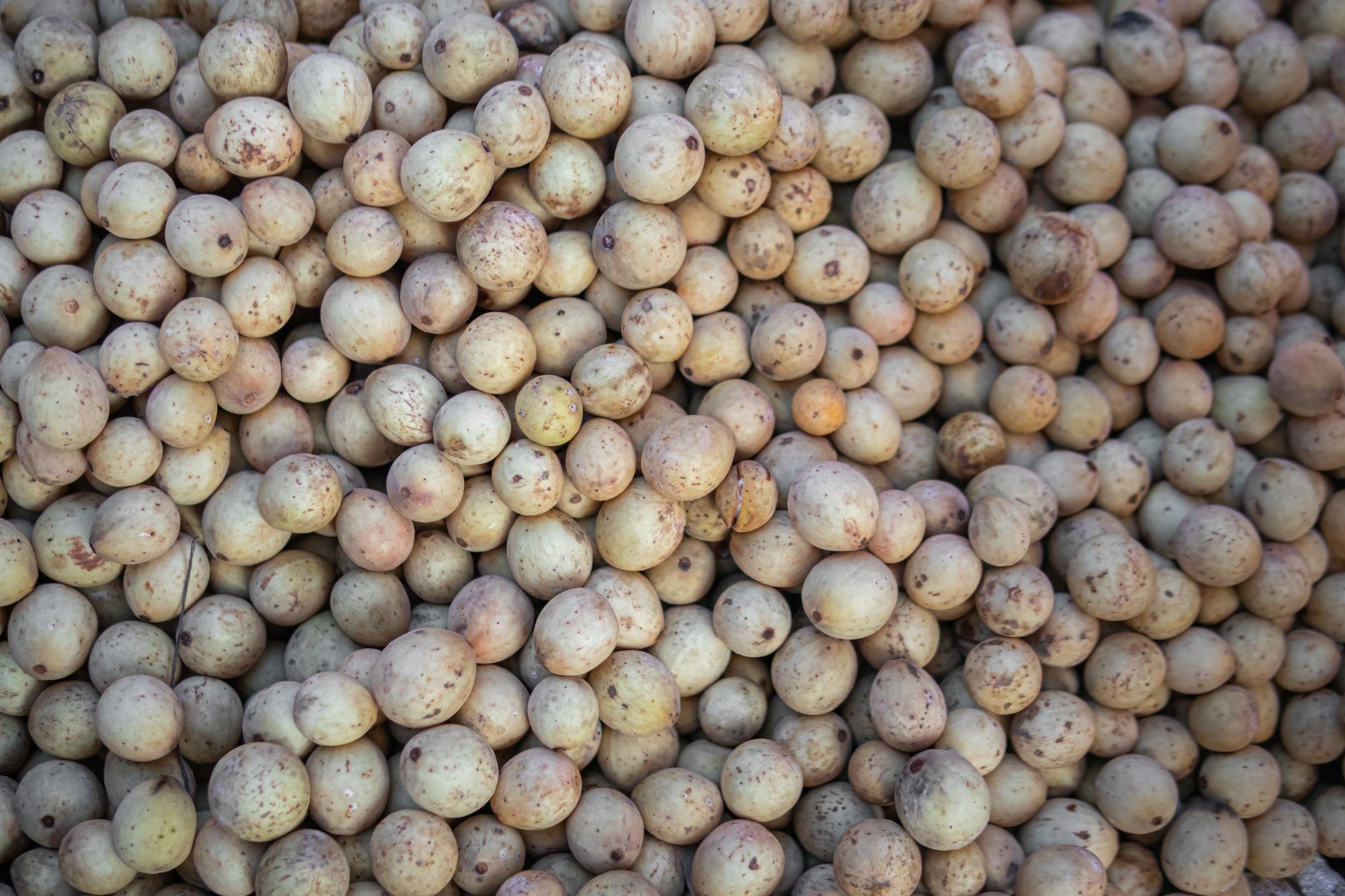

Native to Southeast Asia, this tropical fruit delivers a sweet-sour bite alongside roughly 2 to 3 grams of dietary fiber and a solid 15 to 25 milligrams of vitamin C per 100 grams of pulp. You may also see it called cotton fruit, kechapi, or sentul, and the trees thrive across the Philippines, Cambodia, Thailand, Vietnam, Malaysia, and Indonesia.
The sections below break down santol’s nutrition, the evidence behind its traditional uses, the parts you should never eat, and how to pick, store, and cook it once you bring one home.
What Santol Is and Where It Comes From
Behind the dusty golden exterior sits a fruit that behaves more like a handful of garlic than a typical apple. The thick rind splits open to reveal five white, cottony segments, each wrapped around a large inedible seed, and the entire pulp has a soft, fibrous texture that dissolves on the tongue.
Botanical Identity and Common Names
Sandoricum koetjape belongs to the Meliaceae family, the same plant family that gives you mahogany and neem. English speakers call it santol, cotton fruit, or sentul, while Filipinos know it as santol, Cambodians call it krong, and Thai markets label it sathon or krathon. That name cloud matters because the same fruit can show up at three different stalls under three different labels, and a quick search for “cotton fruit” or “kechapi” often leads right back to santol.
Native Range and Growing Conditions
The tree thrives in hot, humid lowlands below about 1,000 meters elevation, with the Philippines, Cambodia, southern Thailand, Vietnam, Malaysia, and Indonesia forming its primary growing belt. Trees can reach 50 meters tall in old-growth plantings, though cultivated specimens stay closer to 15 to 25 meters and start bearing fruit within five to seven years. In the Philippines the peak harvest runs from June to September, while in Thailand it stretches from May through August.
Yellow Versus Red Varieties
Two main types dominate markets, and they cook very differently. The yellow santol (sometimes called Manila santol) has paler flesh, a sweeter profile, and thinner rind, making it the variety you reach for when eating fresh. The red or purple santol, prized in parts of Cambodia and Thailand, has deeper-colored pulp, a tarter edge, and a thicker rind that holds its shape when simmered, which is why cooks reach for it when making jam or chutney. Phytochemical surveys suggest the red variety carries higher levels of certain anthocyanins, the same pigment family that gives blueberries their color.
The Nutritional Profile Behind Santol’s Reputation
Santol earns its reputation less from one blockbuster nutrient and more from a balanced package. You get a meaningful hit of vitamin C, a respectable fiber load, and a calorie count low enough to fit into most daily targets without much planning.
Macronutrients in a 100-Gram Serving
Per 100 grams of fresh pulp, santol delivers roughly 75 to 90 calories, around 18 to 20 grams of carbohydrate, 2 to 3 grams of dietary fiber, and less than half a gram of fat. Natural sugars make up most of the carbohydrate load, with glucose and fructose leading the way. That profile lands santol in the same general calorie neighborhood as ripe mango and a touch below jackfruit.
Key Vitamins and Minerals
The standout micronutrient is vitamin C: a 100-gram serving typically provides 15 to 25 milligrams, which covers roughly 20 to 30 percent of the daily target for an adult. Santol also contributes B-complex vitamins including thiamine, riboflavin, and niacin in small amounts, plus minerals like iron, calcium, phosphorus, and potassium. Iron levels are modest but meaningful when you’re building a plant-forward diet, and potassium supports healthy blood pressure when the fruit replaces a salty snack.
Fiber and Antioxidant Compounds
The fiber in santol splits between soluble and insoluble forms, which is why the fruit feels both filling and gently regulating. Laboratory analyses of the pulp and peel have identified phenolic acids, flavonoids, and carotenoids, with the red variety showing higher total phenolic content than the yellow. The practical takeaway: eating the fruit with the skin removed (as is standard) still gives you a useful antioxidant load, and the peel itself has been studied for added compounds, though it is usually too bitter and astringent to eat raw.
Those same anthocyanins and antioxidants do more than color the flesh; they shape the health claims that have built santol its reputation.
| Nutrient (per 100 g fresh pulp) | Approximate amount | Why it matters |
|---|---|---|
| Calories | 75 to 90 kcal | Fits easily into a low-calorie snack plan |
| Carbohydrate | 18 to 20 g | Main energy source from natural sugars |
| Dietary fiber | 2 to 3 g | Supports digestion and satiety |
| Vitamin C | 15 to 25 mg | Immune function and collagen production |
| Iron | 0.5 to 1.5 mg | Useful for plant-based diets |
| Potassium | 150 to 200 mg | Helps regulate blood pressure |
Health Benefits Supported by Santol’s Nutrients
The benefits you can reasonably expect come from the nutrients santol actually contains, not from folklore alone. Here’s where the evidence stands, claim by claim.
Immune Function and Antioxidant Support
Vitamin C plays a well-documented role in immune cell function, and the 15 to 25 milligrams in a 100-gram serving give a real, if modest, contribution to your day’s total. The phenolic and flavonoid compounds detected in pulp and peel samples point toward antioxidant activity in lab studies, which translates to reduced oxidative stress at the cellular level. None of this means santol prevents illness on its own, but pairing it with other vitamin C sources builds a stronger daily foundation than relying on a single “superfood.”
Digestive Regularity and Blood Sugar Moderation
With 2 to 3 grams of fiber per 100 grams, a single medium fruit (about 200 to 300 grams of pulp) can deliver 4 to 9 grams of fiber in one sitting, enough to support bowel regularity. The fiber also slows sugar absorption, which helps blunt post-meal glucose spikes. In Filipino and Thai kitchens, the unripe fruit is sometimes used to firm loose stools, a traditional use that aligns with the astringent tannins present in green santol.
Weight Management and Satiety
At roughly 80 calories per 100 grams, santol sits well below calorie-dense tropical sweets like ripe banana or durian. The fiber and water content add bulk without calories, so a medium fruit can stand in for a less nourishing snack. That swap matters more than any single “fat-burning” compound, because the win comes from replacing, not adding.
Traditional Medicinal Claims, Graded
Traditional medicine uses santol bark, leaves, and roots for fever reduction, diarrhea, and blood sugar control. Phytochemical studies on the bark and leaves have identified compounds with antipyretic and antidiarrheal activity in animal models, which counts as plausible. A few small human and animal studies suggest antidiabetic potential, but the evidence is preliminary, and no major clinical trial has confirmed a clinical effect in people. Treat those traditional uses as supportive folk practice, not as a replacement for medical care.
Where the evidence falls short, the cautions tend to follow.
Side Effects, Risks, and Who Should Be Cautious
Santol is safe for most people when eaten the way locals eat it, but a few parts of the fruit and tree carry real risk. Knowing which parts to skip matters more than memorizing the nutrient list.
Seed Toxicity from Saponins and Tannins
The large brown seeds inside each segment contain saponins and condensed tannins, both of which can irritate your digestive tract and, in larger amounts, trigger nausea, vomiting, or abdominal pain. Traditional practice in the Philippines treats santol seeds as inedible, and you should discard them along with the rind. If a child or pet accidentally chews a seed, watch for drooling, stomach upset, or refusal to eat, and contact a qualified healthcare professional if symptoms develop.
Astringency and Stomach Irritation from Unripe Fruit
Green santol carries higher tannin levels, which is why it tastes sharply astringent and can leave your mouth feeling dry. Eating large amounts of unripe fruit on an empty stomach sometimes causes stomach cramps or constipation in sensitive individuals. If you have a history of ulcers, gastritis, or irritable bowel syndrome, start with a small portion of fully ripe pulp and see how your body responds.
Allergic Reactions and Drug Interactions
Allergic reactions to santol are rare but documented, especially in people sensitive to other Meliaceae fruits or to tropical fruits in general. Symptoms can include itching, swelling, or hives, and anaphylaxis, while unusual, has been reported. No well-documented drug interactions exist, but if you take blood thinners or blood pressure medication, the potassium and bioactive compounds in large servings warrant a quick check with your prescribing clinician.
Those same drug interactions make practical guidance on portions and pairing worth walking through before any kitchen experiments.
Skip the seeds and the rind, eat only fully ripe pulp, and you’ll avoid nearly all the well-documented downsides of this fruit.
How to Eat Santol and Where It Fits in the Kitchen
The fastest way to enjoy santol is to split it open and eat the pulp cold, but the fruit plays a wider role across Southeast Asian kitchens than fresh snacking alone.
Fresh Preparation Step by Step
- Wash the fruit. Rinse the fuzzy skin under cool running water to remove dust and any residual sap from the rind.
- Press and twist to open. Squeeze the fruit gently until the thick rind cracks, then pull it apart with your hands. A paring knife helps if the rind resists.
- Separate the segments. You’ll see five white, cottony wedges, each wrapped around a single large seed.
- Pop out the seeds. Use your thumb to dislodge each seed; discard them rather than biting through.
- Season to taste. Eat the pulp plain, dust it with a pinch of salt, or dip segments in chili-salt-vinegar mix for a sweet-sour-spicy bite.
Traditional Preparations Worth Trying
Filipino cooks turn santol into a thick, bittersweet jam that pairs well with toast or fried fish, while the unripe green fruit gets pickled with vinegar, sugar, and garlic into a condiment called burong santol. In Thai and Cambodian kitchens, the fruit shows up in savory chutneys alongside dried shrimp and tamarind, and the rind gets candied in some regional sweets. Yellow santol holds up best when eaten raw; red santol keeps its structure better when simmered, which is why jam and chutney recipes often specify it.
Flavor Pairings That Match the Fruit’s Balance
Santol’s sweet-sour profile takes well to a short list of bold partners: fresh lime juice brightens the pulp, chili flakes amplify the sweet edge, fish sauce or shrimp paste adds umami depth, and fresh herbs like mint or cilantro cool the heat. A splash of palm vinegar pulls the whole plate together. Avoid heavy dairy, which tends to mute the fruit’s sharper notes.
Buying, Storing, and Finding Santol Outside Southeast Asia
Because santol is a seasonal tree fruit with a short shelf life once ripe, a little planning goes a long way toward getting good fruit at the right moment.
Choosing a Ripe Fruit at the Market
A ripe santol feels heavy for its size, gives slightly when pressed at the equator, and shows a uniform yellow to golden-brown skin with a slight blush. Green or mostly green fruit will ripen on the counter over three to seven days; pale yellow fruit is ready to eat the same day. Skip specimens with deep bruises, soft spots, or cracked rinds, since those spots invite mold within hours.
Storage Timelines That Actually Work
Whole, unripe santol keeps on the counter for up to a week at room temperature, away from direct sunlight. Once ripe, refrigerate the whole fruit for another three to five days, or peel and segment it, then store the pulp in an airtight container for two to three days. For longer keeping, freeze the seedless pulp in zip-top bags for up to three months; it loses some texture but works fine in smoothies and cooked jam.
Sourcing Outside Southeast Asia
Outside the Philippines, Thailand, and Cambodia, the most reliable sources are Asian grocery stores in cities with large Filipino, Thai, or Cambodian communities, especially in California, Hawaii, New York, and parts of Texas. Specialty importers occasionally ship santol via online fruit suppliers, though availability peaks from June through October to match the Northern Hemisphere harvest. When santol is genuinely out of reach, mangosteen, lychee, and langsat make reasonable substitutes: mangosteen for the sweet-sour balance, lychee for the floral sweetness, and langsat for the closest flavor and texture match.
Quick-Reference Summary
- Eat: Fully ripe pulp, fresh or cooked, in moderate portions.
- Skip: The seeds, the rind, and any unripe or heavily astringent fruit.
- Store: Counter for unripe, fridge for ripe, freezer for seedless pulp.
- Source: Asian grocers in Filipino, Thai, or Cambodian neighborhoods; online importers during peak season.
Bottom Line
Santol fits comfortably into a balanced diet as a vitamin C and fiber source with a calorie count that won’t blow your day. The evidence for traditional medicinal claims ranges from plausible to preliminary, so treat them as supportive background, not as substitutes for medical care. Skip the seeds and the rind, start with a small portion if you have a sensitive stomach, and you’ll have a versatile tropical fruit that earns its place at your table.
FAQ
What are the health benefits of eating santol?
Santol contributes vitamin C, dietary fiber, potassium, and small amounts of iron to your diet, which together support immune function, digestion, and blood pressure regulation. The pulp and peel also contain phenolic and flavonoid antioxidants that may help reduce oxidative stress. These are real, modest benefits tied to specific nutrients, not dramatic cures.
Is santol safe to eat every day?
For most healthy adults, eating a small portion of ripe pulp daily is fine, provided you remove the seeds and rind. Watch portion size if you have diabetes, since the natural sugar content adds up quickly. Anyone with a history of fruit allergies, ulcer disease, or who takes blood thinners should check with a qualified healthcare professional before making it a daily habit.
How many calories are in one santol fruit?
A medium fruit weighing 200 to 300 grams of edible pulp typically carries about 160 to 270 calories, though variety and ripeness can shift that range. The exact count varies because the seed-to-pulp ratio differs from fruit to fruit. A 100-gram reference portion of pulp is the most reliable way to fit the fruit into your calorie target.
Can santol help lower blood sugar?
Slowing sugar absorption thanks to its fiber content, this fruit can take the edge off post-meal blood sugar spikes when it replaces higher-sugar snacks. Some animal and lab studies on santol leaf and bark extracts show antidiabetic activity, but no major clinical trial has confirmed a blood-sugar-lowering effect in people eating the whole fruit. Manage diabetes with the plan your healthcare team has set, not with fruit alone.
What vitamins and minerals does santol contain?
Vitamin C, B-complex vitamins such as thiamine, riboflavin, and niacin, plus minerals like iron, calcium, phosphorus, and potassium all show up in notable amounts. Vitamin C and potassium are the most concentrated, with smaller but useful amounts of the others. The exact levels vary by variety, ripeness, and growing conditions.
What are the side effects of eating too much santol?
Overeating santol, especially unripe fruit, can cause stomach cramps, nausea, or constipation because of the high tannin content. Accidentally chewing the seeds adds saponin and tannin exposure, which can trigger vomiting or abdominal pain. Stick to fully ripe pulp in moderate portions and discard the seeds to keep side effects out of the picture.