

Long days on concrete floors, mile markers on a training plan, that dull ache in the arch after the standing-desk shift ends. Medial support insoles earn their spot in the rotation when the inside of the foot needs real structure instead of soft foam. I pulled six options worth comparing, each built around a different pain point and foot profile, so you can match the geometry of the insole to the geometry of your problem.
The Choices Worth Comparing

TECRUN Plantar Fasciitis Insole Arch Support Inserts
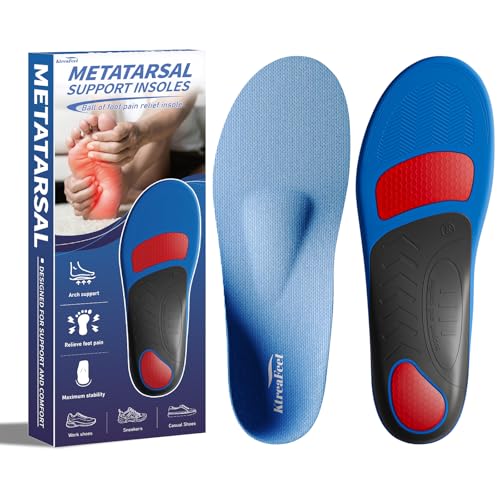
KtreaFeet Metatarsal Insoles with Built-in Pad

PowerStep ProTech Control Orthotic Insoles

Pure Stride Professional 3/4 Length Orthotics

ORHILYA 240lbs+ Plantar Fasciitis Insole
ORHILYA 220lbs+ Metatarsal Insole Arch Support
A Breakdown Of The Leading Choices
Most insoles assume one arch shape and one shoe volume, which is exactly where daily users get frustrated. The TECRUN insert covers four arch heights and ten sizes without forcing a scissor session at the kitchen table, so the fit problem disappears before it starts.
That broad fit range matters for anyone whose arches sit between standard categories, or for households sharing insoles across work boots and sneakers. Built for plantar fasciitis, heel spurs, and the chain of knee, hip, and lower-back pain that tends to follow flat feet, it covers a lot of complaint territory in one shape.
Features That Help
- Four arch profiles in one design cover high, normal, low, and flat feet without swapping inserts.
- Ten size steps remove the trimming step that usually sends people back to the drawing board.
- Targets plantar fascia strain along with heel, knee, hip, and back discomfort for chain-reaction relief.
- Fits most casual, work, and athletic shoe types, so a single insert handles the whole week.
Points To Keep In Mind
- Generic arch fit often trades precision for coverage, so severe pronators may want firmer control.
- Break-in commonly takes several wears as the foam molds to the foot.
Who It Suits Best
Walkers, retail workers, and casual runners whose foot pain spans the arch and heel and who want one insert that slips between sneakers and work shoes without modification.
Look Elsewhere When
Over-pronators needing firm corrective posting should look at the PowerStep ProTech Control Orthotic Insoles, which deliver a stiffer arch and a deeper heel cradle.
When the burn lives under the ball of the foot rather than the heel, generic arch inserts miss the target entirely. The KtreaFeet insole is built around a metatarsal pad that lifts and spreads the forefoot bones, easing the pinched-nerve sensation that defines Morton’s neuroma and general metatarsalgia.
Compared to the broader TECRUN design reviewed above, this one targets a narrower zone of the foot. It still carries an arch component for general alignment, but the pad is the headline feature, sized across men’s and women’s ranges from 250mm to 262mm to keep the geometry close to the anatomy.
The Value In It
- Built-in metatarsal pad addresses the specific forefoot pressure that arch-only inserts leave behind.
- Combined arch and metatarsal support helps realign the whole foot rather than patching one zone.
- Two size ranges spanning men’s 5 to women’s 8.5 keep the pad positioned where it works.
Trade Offs
- Pad placement feels unusual for the first few days and may require a gradual break-in.
- Limited size coverage stops at women’s 8.5, leaving larger feet without a listed option.
Right Fit For
Anyone dealing with forefoot burning, ball-of-foot tingling, or a Morton’s neuroma diagnosis who has tried arch inserts without relief.
Consider Something Else When
Heel-pain-dominant cases should consider the Pure Stride Professional 3/4 Length Orthotics, which puts its support behind the met pad and shines for shoe profiles where a full-length insert will not fit.
Some foot pain needs more than cushion, it needs correction. The PowerStep ProTech Control is the firmer sibling to the everyday options above, built around a 2-degree heel wedge and a standard, semi-rigid arch that pushes the foot back toward neutral alignment.
Where the KtreaFeet insert zones in on the forefoot, this one takes the long view from heel to toe. The PORON heel cushion softens what the rigid post controls, so the user gets structure where it counts and shock absorption where it hurts most during long shifts or training runs.
The Good Stuff
- Firmer arch shell actively reduces over-pronation instead of just cushioning under it.
- 2-degree heel wedge shifts load off the plantar fascia during heel strike.
- PORON heel cushion absorbs impact where runners and standing workers feel it most.
- Full-length, total-contact design keeps the geometry consistent under the whole foot.
Honest Caveats
- Rigidity feels aggressive under flat, flexible casual shoes and performs best in structured footwear.
- Heavier than foam-only inserts, so it noticeably changes the feel of lightweight sneakers.
- Arch height is standard, not adjustable, which can frustrate very high or very low arch profiles.
Key Attributes
Made For
Runners, over-pronators, and anyone with persistent plantar fasciitis who wants a corrective insole rather than a soft pad.
Skip It When
Casual slip-on wearers should look at the Pure Stride Professional 3/4 Length Orthotics, which fits shoes with non-removable liners and tight toe boxes.
Dress shoes and loafers rarely have removable insoles, which is why a 3/4-length orthotic earns its keep. Pure Stride designed this one to extend from the heel to just behind the ball of the foot, leaving the toe box untouched and the fit slim.
Stacked in four layers for cushioning and built around an odor-free, breathable top cover, it addresses comfort where full-length inserts physically cannot go. The arch handles high arches and flat feet, and the metatarsal support targets the forefoot pressure that often flares up in heels.
Key Advantages
- 3/4-length profile slips into dress shoes and slip-ons with non-removable liners.
- Four-layer construction stacks cushion and support without bulk under the toes.
- Odor-free breathable cover keeps feet cooler through long office days.
- Supports high arches and flat feet while adding metatarsal relief for the forefoot.
Points To Note
- 3/4 length leaves the toe area unsupported, so plantar pain under the toes may persist.
- Requires shoe styles with at least some depth to seat the layered build.
Best Suited To
Office workers, formal-event attendees, and anyone whose primary shoe rotation is dress shoes or loafers with shallow, non-removable footbeds.
A Better Fit Elsewhere
For gym shoes and work boots where full-length support is welcome, the PowerStep ProTech Control Orthotic Insoles deliver broader corrective geometry.
Insoles designed for average weight tend to flatten under heavier loads, which is where the pain travels back to the arch. ORHILYA built this insert around a 36mm arch height, calibrated for bodies over 240 pounds where standard foam compresses too quickly.
The taller arch distributes pressure more evenly across the foot, which is genuinely useful on long warehouse shifts, daily walks, or any routine that combines standing and movement. It accepts low, neutral, and high arches, so it does not lock users into a single foot profile.
Strong Points
- 36mm arch height resists compression under heavier body weight.
- Accepts low, neutral, and high arches without requiring trim work.
- Even pressure distribution reduces the hot spots that lead to fatigue during long shifts.
- Targeted support for plantar fasciitis and heel spurs common in heavier frames.
Things To Consider
- Taller arch profile can feel intrusive in low-volume casual shoes.
- Stiffer build means a longer break-in than foam-forward competitors.
Feature Snapshot
Whose Shelf It Belongs On
Heavier shoppers, warehouse and healthcare workers, and anyone whose standard insoles have collapsed under their weight after only a few months.
Another Choice May Suit
Lighter shoppers with forefoot pain may prefer the KtreaFeet Metatarsal Insoles, which targets a different pain zone without the heavier-duty arch.
The sibling to the 240-pound pick above, this ORHILYA insole drops the weight threshold to 220 pounds while adding a metatarsal pad to the arch structure. The result is a two-zone support layout that handles both arch fatigue and forefoot pressure in one shape.
The 35mm arch sits a hair lower than the heavier-rated sibling, which makes it more forgiving in casual footwear. For shoppers who want forefoot relief without paying for full medical-grade orthotics, this combination hits a useful middle ground.
Advantages To Know
- 35mm arch supports low, neutral, and high arches in a single insert.
- Built-in metatarsal pad addresses forefoot pressure alongside arch fatigue.
- Calibrated for shoppers over 220 pounds where standard foam flattens early.
- Slightly lower profile fits a wider range of casual shoe styles.
Less Ideal Details
- Dual-zone structure adds bulk that may crowd shallow dress shoes.
- Combined arch and pad placement takes adjustment during the first week of wear.
Who Should Grab It
Heavier walkers and standing workers who feel pain under the ball of the foot as well as the arch and want both addressed in a single affordable insert.
Reach For A Different Pick When
Anyone wanting corrective rigidity for over-pronation should reach for the PowerStep ProTech Control Orthotic Insoles instead.
What To Weigh Before Choosing Medial Support Insoles
Arch Profile And Foot Geometry
The first filter is your arch, because the wrong shape either feels like nothing or feels like a stone. High arches need a contoured support that fills the gap under the midfoot, while flat feet usually need firmer posting that prevents the arch from collapsing further. Most of the picks above cover multiple arch types in one insert, which helps shoppers whose feet do not fit a clean category.
Pain Location And Support Zone
Heel pain, arch pain, and forefoot pain respond to different features. Heel-focused conditions benefit from heel cushions and wedges, while metatarsal issues need a pad behind the ball of the foot. Picking the insole to match the pain zone usually beats buying the most expensive option.
Shoe Compatibility And Daily Use
A stiff corrective insert that fits a hiking boot will not fit a loafer. Consider the shoes you actually wear most days, because the best insert in the wrong volume simply sits in a drawer. Short profiles and lower arches handle tight footwear, while full-length designs need room under the tongue.
Weight Rating And Long-Term Compression
Insoles are foam and plastic, and they wear out faster under heavier loads. Weight-rated designs like the heavier-duty ORHILYA options keep their shape longer for shoppers over 220 or 240 pounds, while standard inserts may need replacing every few months under the same conditions.
Key Considerations Across These Picks
Wrong Turns To Avoid
Shoppers often pick an insole based on the pain location alone and ignore the arch profile, which leaves a wedge of empty space or a pressure point that builds new problems. The other common slip is choosing a corrective, semi-rigid insert for a shoe that cannot accommodate its thickness, then blaming the insole when the shoe becomes unwearable. Match the geometry of the foot, the location of the pain, and the volume of the shoe before anything else.
Why Top Tier Costs More
Higher-tier insoles like the PowerStep ProTech Control use medical-grade foams, semi-rigid shells, and engineered heel wedges that cost more to source and assemble, and that hold their shape far longer than basic foam. The extra cost is worth it for over-pronators, heavier users, and anyone replacing budget insoles every few months, but casual walkers with mild arch fatigue rarely need that level of correction.