Watching a dog limp around after a cruciate ligament tear is rough, especially when surgery isn’t an immediate option or recovery is dragging on. The right brace or support sling won’t replace veterinary care, but it can steady a wobbly hind leg, ease daily movement, and give an aging dog a little more confidence on slick floors. The picks below cover both compression braces that hug the joint and lifting harnesses that help you carry your dog’s weight during the toughest weeks.
How The Shortlist Stacks Up

BaoGuai Dog Knee Brace for ACL/CCL Hind Leg (Large)

Noorace Dog Knee Brace for ACL CCL Hind Leg Mobility

ALYBIT Adjustable Soft Dog ACL Brace for Hind Leg

Lafoty 2-in-1 Male Dog Lift Harness (Large)
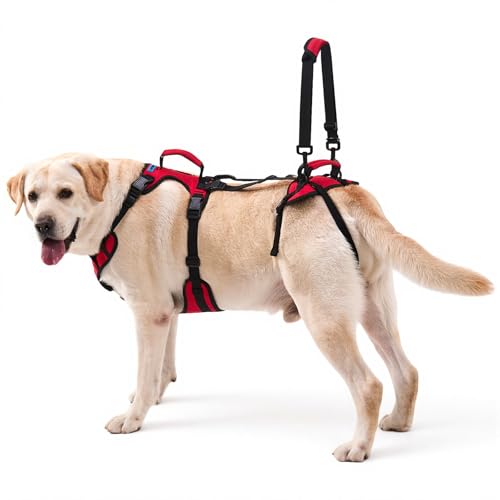
Lafoty XL Dog Lift Harness with Dual Handles (Red)
Inside Each Recommended Option
The BaoGuai brace stands out for one specific design choice that matters a lot in real recovery: a pair of metal springs running along each side of the knee. Where most neoprene sleeves flex with the leg, those springs resist sideways wobble, so the joint tracks more cleanly when a dog plants the foot and shifts weight.
You size it by thigh circumference rather than weight alone, which is the right call because leg shape varies wildly even between dogs of similar mass. The opening stays accessible for bathroom breaks, so you won’t wrestle the brace on and off three times a day.
Benefits That Matter
- Dual metal side springs block lateral knee motion, the kind of wobble that sets recovery back
- Sized by thigh measurement for a no-slip fit, much more accurate than weight charts
- Available for both left and right hind legs, mirroring how ACL injuries affect a specific side
- Breathable neoprene keeps the joint warm to relax stiff muscles during longer wear sessions
- Light enough for walks and play without dragging a recovering dog down
Points To Keep In Mind
- Metal stays add a touch of bulk under the fur, so expect a short break-in period for sensitive dogs
- Requires careful measuring; an off-size brace slides or rubs, defeating its purpose
Key Attributes
Right Fit For
Owners of medium-to-large dogs healing from a confirmed ACL/CCL tear who want structured support, not just a soft wrap.
Swap It Out When
Your dog needs bilateral coverage or hip support too; the ALYBIT brace handles both hind legs at once.
Noorace takes a simpler approach, one focused on adjustable compression rather than rigid hardware. That makes it a sensible entry-level choice when you’re not sure how a dog will tolerate wearing a brace in the first place, or when post-op movement is improving and you just need a steadying hug around the joint.
Flexible straps and multiple sizes give you room to dial in the fit during the first week as swelling changes. The brace is built to fit either hind leg, which simplifies reordering or swapping legs if the second knee eventually needs help.
Advantages To Know
- Adjustable straps let you fine-tune pressure as swelling goes up or down
- Works on either left or right hind leg, cutting decision fatigue at checkout
- Lower bulk than spring-reinforced braces, easier for small or short-coated breeds
Honest Caveats
- Lacks rigid side stays, so it offers less resistance to severe wobble in very active dogs
- Sizing still depends on careful measurement; loose braces slip and chafe
Made For
Owners easing into brace use during early recovery or managing mild joint instability without a heavy-duty frame.
Skip It When
Your dog’s knee collapses noticeably during walks; the BaoGuai brace’s metal springs will hold that leg more reliably.
Where the BaoGuai and Noorace braces focus on one leg, the ALYBIT covers both hinds through a connected vest-style harness. That bilateral approach matters because dogs with one sore knee often overload the other, and a second tear on the opposite side is common within a year.
Four internal steel strips give the brace enough structure to reduce unwanted motion, while soft neoprene and an anti-chafing lining keep the fabric from digging into the groin or behind the knees. The vest secures with heavy-duty Velcro that holds up to repeated on-and-off cycles.
Standout Benefits
- Supports both hind legs simultaneously, easing strain on the uninjured knee
- Four steel strips provide stabilizing pressure for ACL, patella, and arthritis issues
- Vest-style fit stays in place during walks and play far better than single-leg sleeves
- Soft neoprene lining helps prevent the hot spots single-leg braces often cause
Worth Noting
- More fabric means more warmth, so hot climates may need monitored wear time
- Bigger profile than single-leg options, which small or low-riding dogs may resist
Who Should Grab It
Owners whose dog has already torn one cruciate ligament and needs to protect the other, or any pup with generalized rear-end weakness.
Look Elsewhere When
Your dog’s injury is isolated to a single leg and you want a lighter, less restrictive brace like the Noorace.
A knee brace keeps the joint aligned, but sometimes a dog needs you to share the load. That’s where a lift harness earns its place, and Lafoty’s 2-in-1 model solves a problem most competitors ignore: male anatomy. The lift handles and rear straps are routed to clear the groin, so a large male can relieve himself without soiling the harness or his own belly.
The rear leg sling detaches, leaving a standard support harness for daily walks. Most owners find that modularity useful when the dog graduates from needing full lifts to just steady support on stairs.
A Few Highlights
- Lift geometry avoids the male urogenital area, eliminating the biggest male-harness complaint
- Detachable rear sling converts to a regular harness as recovery progresses
- Reduces owner back strain during the early post-op weeks when most lifting is needed
Trade Offs
- Built specifically for large males, sizing and strap placement won’t suit females or small breeds
- Not a brace replacement; it carries weight rather than stabilizing the joint itself
Best Suited To
Large male dogs needing mobility help during the first weeks after surgery or during senior arthritis flare-ups.
Consider Something Else When
Your dog is female, extra-large, or a giant breed; the Lafoty XL dual-handle harness fits those frames better.
Big dogs need big handles. The Lafoty XL harness puts two lift points along the spine so a single person can shift a Great Dane or Mastiff’s hind weight without straining a wrist or twisting the dog’s back. One handle sits over the shoulders, the other near the hips, giving you options depending on whether you’re helping the dog up stairs or just steadying a wobbly rear.
The reinforced build handles the heavy end of the breed spectrum, and the red color makes it easy to spot in a crowded vet waiting room or at the dog park.
The Helpful Details
- Dual handles allow balanced lifting for dogs over 80 pounds without owner back strain
- Reinforced construction handles breeds that smaller harnesses can’t support
- Useful for short carries, vet visits, and stairs, not just long walks
Less Ideal Details
- Too large and stiff for small or medium breeds, sizing won’t translate down
- More harness than needed for dogs that only need light steadying
Perfect Match For
Giant-breed owners whose dogs need physical lift assistance after surgery or during advanced arthritis.
Reach For A Different Pick When
Your dog is a large male who needs anatomical clearance; the Lafoty 2-in-1 male harness is engineered for that specifically.
Choosing the Right Knee Support for Your Dog
The first decision is brace versus harness. A compression brace wraps the joint itself and limits the knee’s ability to wobble sideways, which is most useful during active recovery or for dogs still walking on their own. A lift harness shares weight between you and the dog, which matters more right after surgery, during the first week of post-op restriction, or for very heavy dogs whose hind end simply gives out. Many households end up needing both at different stages.
Sizing matters more than brand. Measure the thigh circumference at the widest point, usually just above the knee, and compare against the manufacturer’s chart rather than trusting weight alone. Two Labs of identical weight can have completely different leg shapes, and an ill-fitting brace either slides down or rubs a raw spot within days.
Watch for bilateral weakness. Dogs recovering from one cruciate tear often tear the opposite knee within twelve months, so a vest-style brace like the ALYBIT can protect both legs at once. Single-leg braces are fine when the second knee is healthy, but you may find yourself reordering the opposite-leg version later.
Material and climate go together. Neoprene warms the joint, which helps stiff older dogs, yet traps heat in summer. In warm homes or for thick-coated breeds, rotate wear time and check under the brace daily for moisture buildup or rash.
Shopping Smarter and Spending Wisely
Pitfalls Shoppers Hit
Skipping measurement and trusting breed-only size charts is the single biggest mistake. Order arrives, doesn’t fit, and the return eats a week of recovery time. Measure thigh circumference first, then check the chart.
Another common slip is buying the wrong leg orientation. Cruciate injuries typically affect one specific leg, and a left-leg brace on a right-leg injury puts the support struts on the wrong side, defeating the whole purpose.
Where The Extra Money Goes
Higher prices usually buy stiffer side stays, more durable Velcro, and stronger fabrics that survive repeated laundering. Spring-reinforced braces cost more because the metal hardware is harder to manufacture, but for active dogs or severe tears, that extra structure pays for itself in steadier walking.
Frequently Asked Questions
How tight should a dog knee brace fit?
Snug enough that you can slide two fingers under the strap, but no looser. A brace that shifts during walking will rub and won’t stabilize the joint properly.
Can a dog wear a knee brace all day?
Most dogs tolerate eight to ten hours of wear before needing a break, though you should remove it overnight to let the skin breathe and check for irritation.
Do braces actually help with ACL injuries?
They limit harmful sideways motion and can speed recovery for partial tears or post-surgical rehab, though a full rupture usually still needs veterinary evaluation or surgery.
When should I use a lift harness instead of a brace?
Use a harness in the first days after surgery, during strict crate rest, or whenever your dog’s hind legs buckle under their own weight.
How do I clean a dog knee brace?
Hand-wash in mild soap, rinse thoroughly, and air-dry away from direct heat. Machine drying can warp the metal stays in spring-reinforced models.
The Takeaway
A cruciate ligament injury asks a lot of both dog and owner, but the right support piece makes daily life easier while the joint rebuilds itself. Match the design to the stage you’re in, measure twice, and watch the skin under any brace for the first week.