

A torn triangular fibrocartilage complex (TFCC) sidelines you in the smallest moments: turning a doorknob, lifting a kettlebell, even bracing yourself when you trip. The right wrist brace quiets that sharp ulnar-side ache so you can sleep through the night, type without wincing, and ease back into the gym instead of guarding every movement.
A Snapshot Of The Selections

FEATOL Carpal Tunnel Wrist Brace Night Support (Left Hand)

OrthoMD Carpal Tunnel Wrist Brace (Right, Medium)

Fitomo Carpal Tunnel Wrist Brace with Soft Thumb Opening

HiRui Wrist Brace Compression Strap (2 Pack, Black, L)

Fitomo Soft-Touch Fabric Wrist Brace

HiRui Wrist Brace (2 Pack, Black)
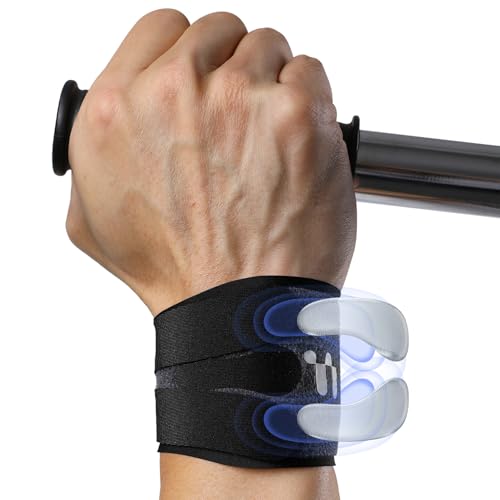
Fitomo Ultra Thin TFCC Wrist Brace
More On The Choices That Made The List
The FEATOL night brace earns its spot because wrist recovery happens mostly while you sleep, and this one locks the joint in place without demanding attention. It pairs a removable aluminum palm splint (the rigid strip that runs along the inside of your wrist) with two fixed plastic stays along the sides, which together keep your hand from curling into the bent position that aggravates a TFCC tear overnight.
Where earlier night braces sometimes felt like a cast, this one uses a breathable foam wrap with adjustable hook-and-loop straps. Most wearers can tighten it enough to feel held, then loosen the top strap when their hand swells during the night. For desk workers and side sleepers who wake up with that dull, throbbing ache on the pinky side of the wrist, this brace is a sensible first line of defense.
Useful Strengths
- Removable aluminum splint lets you adjust the rigidity as swelling decreases over weeks of recovery.
- Three adjustable straps dial in compression without over-tightening the ulnar (pinky-side) wrist.
Things To Consider
- Designed for the left hand only, so right-side TFCC wearers should look elsewhere.
- The foam can trap heat under blankets, which some owners find uncomfortable in warmer seasons.
- Bulky enough that it may interfere with light household tasks like carrying dishes.
Who It Suits Best
Left-handed sleepers recovering from a fresh TFCC injury who need firm overnight immobilization without the cost of a custom splint.
Consider Something Else When
Right-wrist wearers should reach for the Fitomo Ultra Thin TFCC Wrist Brace, which fits either side and targets the ulnar region more directly.
The OrthoMD brace stands out because it was designed by an orthopedic hand surgeon who treats these injuries daily, which shows in how rigidly it holds the wrist. Unlike the softer Fitomo brace above, this one commits to a hard-shell stabilizer that prevents any bending or twisting motion at all, keeping the TFCC in a neutral position so the ligament can scar down properly.
For TFCC tears specifically, the locked neutral wrist is what most clinicians push for in the first few weeks. The trade-off is bulk: this brace is noticeably heavier and stiffer than the soft-touch options lower in this list, so it works best when you are resting, sleeping, or doing desk work where you don’t need fine finger control.
What Helps Most
- Rigid stabilizer prevents the unconscious wrist flexion that aggravates ulnar-side injuries.
- Surgeon-informed design translates clinical thinking into everyday support.
- Beefy hook-and-loop straps stay put even when hand swelling fluctuates.
Worth Noting
- Marketed for the right wrist in this size, so left-wrist users need to source the alternate listing.
- Too bulky for typing, lifting, or any task that needs finger dexterity.
Key Product Details
Made For
Right-wrist users in early TFCC recovery who want a clinically grounded rigid hold for sleep and sedentary daytime use.
Look Elsewhere When
Active folks who need to keep moving will find the Fitomo Soft-Touch Fabric Wrist Brace far easier to wear during daily tasks.
The Fitomo Soft Thumb Opening model takes a different approach than the rigid OrthoMD above: instead of locking you down, it gives moderate support with thumb mobility preserved. The open-thumb design keeps your thumb free to grip a mouse, hold a phone, or steer a bike, while tension straps wrap around the wrist to limit the twisting that pulls at the TFCC.
It fits wrist circumferences from 5.5 to 8 inches, which covers most adults, and the soft construction makes it wearable for long stretches at a desk. Note that this is for wrist pain only, not for thumb-specific conditions, which is worth flagging if your main complaint is at the thumb joint rather than the pinky side.
The Helpful Details
- Open-thumb cutout preserves grip strength for typing, mouse work, and steering.
- Tension straps let you tune compression as the day progresses and swelling shifts.
- FSA and HSA eligible, helpful for shoppers using health spending accounts.
- Wide size range (5.5 to 8 inches) suits most adult wrists.
Points To Keep In Mind
- Provides moderate, not rigid, support, so it is less effective in early TFCC recovery.
- Not designed for thumb injuries, which limits its usefulness if your thumb joint is also irritated.
Best Suited To
Office workers and remote professionals who want continuous wrist support during typing without losing thumb mobility.
A Better Fit Elsewhere
For serious lifting sessions, the HiRui Compression Strap gives a tighter, sport-ready hold around the wrist joint.
The HiRui compression strap is what you reach for when you do not want a brace at all, just a wrap that nudges the wrist toward better mechanics. Built from a nylon, spandex, and latex-wire blend, it slides on, wraps once, and stays put through kettlebell swings, push-ups, and pull-ups. For TFCC recovery, the gentle compression reminds you not to over-rotate the wrist under load.
It comes as a two-pack, so you have a backup while one is in the wash. The trade-off, as with most compression wraps, is that it cannot immobilize the joint the way the FEATOL or OrthoMD braces can, so it is a return-to-training tool, not an early-recovery splint.
Useful Touches
- Flexible cuff design slips on quickly between warm-up sets.
- Two-pack value keeps one wrap in rotation while the other is washed.
- Light compression supports the joint without restricting blood flow during longer workouts.
Honest Caveats
- No rigid splint, so this cannot replace a brace during the early immobilization phase.
- Latex content may bother wearers with sensitivities to rubber-based materials.
- Compression loosens with repeated sweaty sessions, so expect to rewrap mid-workout.
Who Should Grab It
Lifters, CrossFit athletes, and tennis players easing back from a TFCC injury who need wrist reinforcement during training.
Skip It When
Early-recovery shoppers need the FEATOL Night Support, which actually immobilizes the joint while sleeping.
Heat and sweat are the usual deal-breakers for wrist braces, which is exactly where the Fitomo Soft-Touch earns its place. The soft-touch airflow fabric is engineered to vent heat away from the skin, so the brace stays comfortable through eight-hour typing shifts or long drives without that damp, sticky feeling you get from foam wraps.
It trades rigid support for breathability, which makes it a companion piece to a stiffer brace rather than a replacement. If you live in a warm climate or work in a hot kitchen, this is the brace you will actually keep wearing into the afternoon.
A Favorable Mix
- Breathable airflow fabric reduces heat buildup during long wear.
- Soft construction avoids the bulkiness that triggers wrist fatigue.
- Easy to slide on for quick breaks between tasks.
Soft Spots
- No rigid splint, so it offers minimal support for serious TFCC injuries.
- Not designed for thumb-specific conditions.
Feature Snapshot
Perfect Match For
Hot-climate shoppers, kitchen staff, and anyone who finds foam wraps too warm for sustained daily wear.
Swap It Out When
Recovery demands real immobilization, in which case the OrthoMD Carpal Tunnel Wrist Brace is the better clinical-grade option.
Where the HiRui Compression Strap above is a single-style wrap, this two-pack covers both hands with an adjustable design that lets you tailor the fit on the fly. If you type all day at work and lift in the evening, having a brace for each wrist means you are never caught without one. The adjustable compression works for daily routines as comfortably as it does for sports.
For TFCC injuries specifically, it delivers steady, even pressure that nudges the joint toward neutral without locking it down. The two-pack format also makes it easy to lend or share if your household has more than one person dealing with wrist issues.
Why It Works Well
- Two-pack coverage ensures you always have a brace ready for each hand.
- Adjustable compression adapts to different activity levels.
- Slim profile fits under most jacket cuffs for outdoor use.
Trade Offs
- Lacks a rigid splint, so it is not suited for early TFCC immobilization.
Quick Facts
Right Fit For
Multi-wrist households and athletes who want a brace for each hand without buying two separate products.
Reach For A Different Pick When
Targeted TFCC support matters more than convenience, in which case the Fitomo Ultra Thin TFCC Wrist Brace addresses the ulnar side directly.
The Fitomo Ultra Thin TFCC Wrist Brace is the only pick on this list built specifically for the ligament you are actually trying to protect. The 3D compression pad sits exactly where the TFCC lives, on the ulnar (pinky) side of the wrist, applying focused pressure where general braces spread it too thin. The ultra-thin profile keeps the brace low-profile under clothing, which matters when you need to wear it for a full workday.
It fits wrist circumferences from 6 to 9 inches and works on either hand, which removes the sizing guesswork that plagues left-only or right-only designs. For most users, it sits in the middle ground between the rigid OrthoMD and the soft Fitomo brace above: more targeted than compression wraps, less bulky than a hard shell.
A Strong Showing
- 3D compression pad targets the TFCC area specifically rather than the whole wrist.
- Ultra-thin design fits comfortably under sleeves and cuffs.
- Universal fit (6 to 9 inches) works on either hand, simplifying sizing.
- Suitable for lifting training as well as everyday movement.
- More focused TFCC support than the general wrist braces above.
Less Ideal Details
- Lacks a rigid splint, so severe cases may still need a stiffer brace for nighttime.
- Compression pad positioning takes a few wears to dial in correctly.
Spec Overview
Who Will Love This
Anyone whose TFCC pain is well-localized to the pinky side of the wrist and who wants targeted support without a clunky splint.
Where A Sibling Pick Shines
For nighttime immobilization, the FEATOL Night Support does more to stop unconscious wrist bending during sleep.
What Matters Most Before Choosing Braces For Tfcc Tear
Rigid Stabilization Versus Soft Compression
TFCC braces fall into two camps: rigid immobilizers (the FEATOL and OrthoMD above) and soft compression wraps (the Fitomo Soft-Touch and HiRui options). Rigid designs include a splint that physically blocks wrist bending, which is what most clinicians want during the first few weeks of recovery. Soft braces deliver warmth and gentle pressure that remind you not to over-rotate, but they cannot lock the joint down. Pick a rigid brace for sleep and early healing, then transition to a soft brace as you return to activity.
Support For The Ulnar Side
The TFCC sits on the pinky side of the wrist, so a brace needs to put pressure there, not on the thumb side. Most general wrist braces spread compression evenly across the joint, which means only part of the force lands on the injured area. The Fitomo Ultra Thin TFCC model solves this with a 3D pad positioned over the ulnar region. If your pain is sharply localized to the pinky edge when you twist a jar lid, targeted padding matters more than overall stiffness.
Fit, Breathability, And Daily Wear
A brace you cannot tolerate in your sleep is a brace you will not wear. Foam wraps can trap heat under blankets; airflow fabrics (Fitomo Soft-Touch) breathe better but offer less immobilization. Sizing matters too: too tight and you cut off circulation, too loose and the brace shifts during sleep. Measure your wrist circumference and check each brand’s size chart before settling on one.
Choosing By Activity And Recovery Stage
Match the brace to your current phase. New injuries benefit from rigid night braces, return-to-work weeks call for open-thumb designs that keep your fingers free, and return-to-training phases work best with compression straps that stabilize without restricting motion. Buying more than one brace to cover different phases is a common approach.
Mistakes Worth Dodging and Where The Extra Money Goes
Common Shopping Slip Ups
Most shoppers reach for the cheapest brace they can find, which usually means a generic compression sleeve that does nothing for the ulnar side. The real cost of a wrong fit is weeks of stalled recovery and wasted money. Measure your wrist, confirm whether the brace is left-only, right-only, or universal, and double-check that the design actually targets the pinky-side TFCC rather than the thumb-side carpal tunnel area.
What The Higher Tier Buys
Premium braces in this category earn their higher cost with better splint materials, more breathable fabrics, and design choices informed by orthopedic practice. The OrthoMD model, for instance, comes from a working hand surgeon and uses a rigid shell that budget braces cannot match. For most mild TFCC cases, a mid-range brace handles recovery well, but chronic injuries and demanding work environments often justify the upgrade for the improved fit and durability.
Frequently Asked Questions
How long should I wear a brace for a TFCC tear?
Most clinicians recommend wearing a rigid brace during sleep for four to six weeks, then transitioning to a soft compression brace during the day as pain decreases. Your own timeline depends on the severity of the tear and your activity level.
Can I keep lifting weights while wearing a TFCC brace?
Light, pain-free lifting is often fine with a compression strap like the HiRui model. Heavy overhead lifts and any movement that causes a sharp ulnar-side twinge should be paused until the brace no longer feels necessary.
Do I need a left-hand or right-hand specific brace?
It depends on which wrist is injured, and several models on this list are left-only or right-only. The Fitomo Ultra Thin TFCC Wrist Brace is universal, which removes the guesswork if you have any doubt.
Will a brace cure my TFCC tear on its own?
A brace supports the joint and prevents motions that aggravate the injury, but it does not replace clinical treatment. Severe or persistent TFCC tears often need a clinician’s evaluation, imaging, and sometimes further intervention.
How tight should a TFCC brace feel?
Snug enough that you feel supported but loose enough that your fingers do not tingle or change color. If your hand feels numb or cold, loosen the straps and rewrap.
The Takeaway
The best brace for a TFCC tear is the one you actually wear consistently through the right recovery phase. Match rigidity to your healing stage, target the ulnar side specifically, and prioritize comfort for the hours you need it most.