

An aching Achilles can hijack a morning run, a long shift on your feet, or a casual hike before it really begins. Bracing gives the tendon a break, limits painful motion, and helps you keep moving while inflammation settles. The picks below cover everyday sleeves, structured lace-up stabilizers, and night-style wraps so you can match the brace to the moment you actually need it.
The Choices Worth Comparing

Benmarck Achilles Tendon Support Brace, Plantar Fasciitis Sock
KEKING Ankle Brace Compression Sleeve

ZAMST A2-DX Ankle Brace for Heavy Sprains

Modvel Foot & Ankle Brace Socks

Strassburg Sock Plantar Fasciitis Socks
More On The Choices That Made The List
The Benmarck sleeve lands as a sock-style brace, which means it slips on like a tall athletic sock and hugs the foot, heel, and lower calf in one piece. It is the kind of pick you throw on before a long walk or a standing shift and forget you are wearing, as long as the compression level matches your tolerance.
Runners and people with flat feet who want gentle, all-day support will likely appreciate the low profile. Compared to the rigid ZAMST A2-DX later in this list, this is a softer option without side stabilizers or lace-up hardware, which trades serious restriction for breathability and comfort.
Everyday Perks
- Slip-on sock design slips under most sneakers without extra bulk.
- Wraps the heel and Achilles in one continuous knit, so there is no strap to readjust mid-run.
- Comfortable enough for long workdays on hard floors where rigid braces feel clunky.
- Works for both plantar fasciitis and Achilles flare-ups, so you are not swapping gear between injuries.
Things To Consider
- Knit sleeves can lose their snugness over months of daily wear, so plan on replacing them more often than structured braces.
- Without side stabilizers, this is not the right tool for a freshly sprained ankle or a Grade III sprain scenario.
- Hot summer days can make the fabric feel warmer than open-strap designs.
Who It Suits Best
Active walkers, casual runners, and anyone managing mild Achilles or plantar discomfort who wants an easy slip-on for daily wear.
Look Elsewhere When
You need rigid mechanical support after a serious sprain, in which case the ZAMST A2-DX is the more appropriate brace on this list.
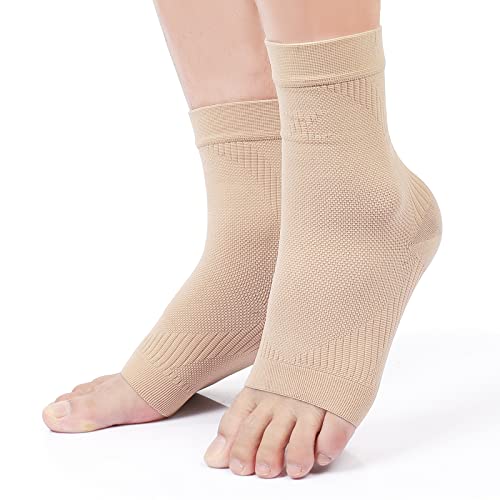
The KEKING sleeve is built around graduated compression, which simply means the fabric presses more firmly at the ankle and eases as it moves up the leg, encouraging fluid to move rather than pool. That makes it a thoughtful pick for mornings when swelling has settled into the joint overnight.
If the Benmarck sleeve felt too soft, you may find this one offers firmer squeeze and a more performance-oriented feel. It is still a knit, so it cannot match the ZAMST brace for structural protection, but for tendon stiffness and arch fatigue the compression profile is the headline feature.
Good Reasons To Consider
- Graduated 20-30mmHg compression supports circulation in swollen ankles.
- Targeted knit zones stabilize the arch and heel during long walks.
- Lightweight enough to wear under a dress sock at the office.
Worth Noting
- Firmer compression can feel restrictive if you are new to sleeves, so a short wear-in period helps.
- Heat retention in the knit may bother you in warm climates.
Feature Snapshot
Made For
Office workers and commuters who notice swelling by mid-afternoon and want steady compression without strapping into a rigid brace.
Swap It Out When
You need targeted overnight stretching of the plantar fascia, where the Strassburg Sock in this roundup offers a more specialized solution.
The ZAMST A2-DX is the outlier here. Rather than a soft sock, it is a lace-up stabilizer with rigid side panels, the kind of brace a clinician might suggest after a Grade III sprain or during rehab for chronic ankle instability. It feels more like sports equipment than a recovery sleeve.
Side stabilizers resist rolling, while the lace-up front lets you fine-tune how much the ankle can flex. Compared to the KEKING sleeve, this trade-off is real: you give up the airy, sock-like comfort for genuine mechanical support that holds the joint in place.
Positive Takeaways
- Rigid side stabilizers control inversion, which protects the peroneal tendons during recovery.
- Lace-up front adjusts compression precisely across the forefoot, midfoot, and ankle.
- Built for chronic instability, so it works when softer braces feel inadequate.
- Available in dedicated right-foot sizing, including a Large option for broader ankles.
Trade Offs
- Bulky under casual sneakers, so it pairs better with athletic shoes or boots.
- Lace-up fitting takes practice, especially first thing in the morning when fingers feel stiff.
Best Suited To
People returning to activity after a serious sprain or those living with chronic ankle instability who need firm mechanical guidance during each step.
Consider Something Else When
You are managing mild, everyday Achilles stiffness with no instability history, in which case the Benmarck sleeve keeps the day simpler.
The Modvel sock takes the knit-sleeve idea and pushes it toward a flexible, low-profile feel. It stretches easily over the foot, then settles into a supportive layer that does not fight your shoe. If you have ever pulled a regular compression sock off halfway through the day, the difference here is the calibrated compression through the ankle.
It is a friendly companion to the Benmarck option, with a similar shape but a slightly different knit feel. You would not pick this over the ZAMST brace for structural protection, but for daily errands, gym sessions, or arthritic stiffness, the lighter weight is welcome.
Real Benefits
- Nylon knit feels flexible and breathable during long sessions on your feet.
- Slim profile fits comfortably under standard athletic socks.
- Supports torn ligaments, tendonitis, and arthritic joints in a single sleeve.
Room For Improvement
- Compression is moderate, so it may feel underwhelming during acute flare-ups.
- Durability depends on wash cycles, with hand washing generally extending the lifespan.
Perfect Match For
Fitness-focused folks who want a sleeve that disappears into their running shoes without adding bulk.
A Better Fit Elsewhere
Runners who prefer a more structured fit may find the KEKING sleeve a smarter match thanks to its graduated compression zones.
The Strassburg-style sock is built for quiet hours. An adjustable strap lets you set light tension along the bottom of the foot, which keeps the plantar fascia and Achilles from shortening while you sleep. It is a different mindset from a daytime sleeve.
Wear it after long days on hard surfaces when the first step out of bed tends to hurt. Compared to the ZAMST brace, this is far less restrictive, so you trade structural rigidity for sustained, gentle stretching through the night.
Benefits That Matter
- Adjustable strap lets you tune tension as soreness eases or flares.
- Targets arch, heel, and Achilles with steady, low-load pressure.
- Useful for both plantar fasciitis and Achilles tendonitis pain patterns.
Honest Caveats
- Not designed for walking around the house, so it works best in bed or while seated.
- Bulky under most shoes, limiting daytime use to recovery periods.
The Right Fit
People whose worst pain shows up first thing in the morning and want a passive way to stretch the plantar fascia and Achilles overnight.
Reach For A Different Pick When
You need compression during long workdays, which is where the Modvel sock or the KEKING sleeve fits the daily routine better.
Choosing Between Compression Sleeves And Rigid Braces
The first fork in the road is deciding between a knit sleeve and a rigid, lace-up brace. Knit sleeves like the Benmarck, KEKING, and Modvel options work through graduated compression, a steady squeeze that supports the tendon while letting you move naturally. Rigid braces like the ZAMST A2-DX add side stabilizers and lace-up fronts to physically limit motion, which helps during recovery from a serious sprain but feels bulky during everyday wear.
Next, think about when your pain actually peaks. Morning stiffness points toward overnight options like the Strassburg-style sock, since keeping the fascia gently stretched while you sleep softens those first steps. Pain during workouts or long shifts, on the other hand, usually calls for daytime compression you can forget you are wearing.
Fit matters as much as style. A sleeve that bunches behind the heel will rub within a mile, and a brace that gaps at the arch delivers almost no support. Measure your ankle circumference and check sizing charts, since knit sleeves especially tend to fit tighter than regular athletic socks. Material also affects comfort: nylon blends run cooler and lighter, while thicker knits can feel warm in summer.
Finally, match the brace to your activity. Light gym sessions and walking handle knit sleeves well. Court sports, trail running on uneven ground, or return-to-play after injury usually justify the structure of a lace-up brace. Choosing the right level of support for the moment you actually live in is what separates a brace that sits in a drawer from one you reach for every morning.
Key Considerations Across These Picks
Mistakes Worth Dodging
Many shoppers grab the stiffest brace on the shelf, assuming stronger support equals faster healing, when in reality a heavy-duty stabilizer can keep the tendon from loading naturally during mild cases. Conversely, picking a thin sock for a freshly sprained ankle leaves the joint unsupported, which can prolong swelling. Match the brace to the injury stage rather than the worst-case scenario.
Where The Extra Money Goes
Higher-priced picks like the ZAMST A2-DX charge more for rigid side stabilizers, dedicated left or right foot shaping, and lacing systems that hold their tune through hours of wear. That extra structure earns its place during rehab, chronic instability, or return-to-sport phases. For mild, everyday Achilles soreness, a mid-priced knit sleeve usually covers the same need without the bulk.
Frequently Asked Questions
How long should I wear an Achilles brace each day?
Start with one to two hours and build toward longer sessions as your tendon adapts, removing the brace at night unless you are using an overnight stretching sock like the Strassburg-style option.
Can I wear an Achilles brace inside a regular sneaker?
Slim knit sleeves such as the Benmarck or Modvel designs fit inside most athletic shoes, while rigid lace-up braces like the ZAMST A2-DX need a roomier sneaker or boot.
Do compression sleeves help with Achilles tendonitis?
Compression sleeves improve circulation and reduce swelling, which can ease Achilles discomfort during activity, though they do not replace targeted stretching or professional guidance.
How do I clean an ankle brace without damaging it?
Hand wash knit sleeves in cool water with mild soap and air dry them flat, since machine drying breaks down elastic fibers faster than wear alone.
When should I move from a soft sleeve to a rigid brace?
Move toward a rigid brace when the ankle rolls easily, when a clinician has flagged chronic instability, or when returning to sport after a Grade III sprain.
Wrap Up
The right brace depends on where your Achilles is in the healing arc and what your day actually looks like. Knit sleeves handle daily wear and light activity with ease, rigid lace-ups cover the rehab and return-to-sport phase, and overnight socks tackle that brutal first step out of bed. Match the tool to the moment, and your tendon gets the support it needs without overstaying its welcome in your shoe.