

An AC joint separation can turn simple tasks into a careful negotiation. Reaching for a coffee mug, buckling a seatbelt, or sleeping on your side all demand attention when the acromioclavicular ligaments (the tough bands connecting your collarbone to your shoulder blade) are stretched or torn. The right brace limits painful motion at the top of the shoulder, reminds you not to overreach, and lets the joint rest while inflammation settles. Whether you’re a few days out from a fall, returning to overhead work, or rebuilding strength after a Type II separation (a mild sprain of the ligaments without a visible bump), these eight supports each solve a different piece of that puzzle.
A Snapshot Of The Selections

Bula Bear Rotator Cuff Shoulder Brace with Copper Fiber

Shock Doctor Shoulder Brace for Men

NatraCure Hot/Cold Therapy Shoulder Ice Pack Wrap

COMFORCE Shoulder Brace for Men with Gel Pack

supregear Universal Adjustable Arm Sling
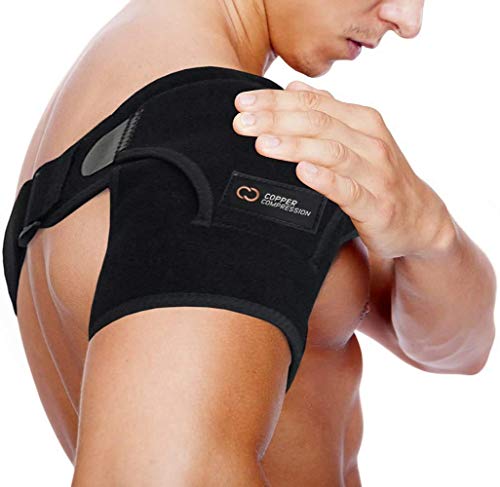
Copper Compression Recovery Shoulder Brace

FIGHTECH Rotator Cuff Shoulder Brace

EVS SPORTS SB03 Shoulder Brace
The Picks, Examined More Closely
The Bula Bear pick leans into the long-hours comfort problem. Copper fibers are woven directly into a high-density stretch knit, so the fabric pulls moisture away from your skin while it gently hugs the shoulder. That combination matters when you’re wearing a brace through a full desk day or a long shift standing at a counter.
For most people recovering from a mild AC separation, this is the kind of brace you forget you have on. It slips under a hoodie or a loose button-up without bunching. Compared to bulkier immobilizers later in this list, it trades firm mechanical support for breathable wearability.
The Upside
- Copper integrated into the knit rather than surface-coated, which helps the antimicrobial and odor-resistant properties survive repeat wash cycles.
- Moisture-wicking fabric keeps the shoulder dry during long daytime wear.
- Stretch knit conforms to your shoulder shape, reducing pressure points under the arm.
- Lightweight profile fits comfortably under most clothing for office or commute use.
- Unisex design works for a wide range of body types without separate fittings.
Things To Consider
- It delivers compression rather than rigid immobilization, so severe separations may need more structure.
- Hand washing and air drying helps preserve the copper infusion over time.
Key Specs
Who It Suits Best
Working adults and casual athletes in the early weeks of an AC joint recovery who need something comfortable enough for all-day wear.
Look Elsewhere When
Climbers and motocross riders returning to high-impact sport will find more aggressive stabilization in the EVS SPORTS SB03 Shoulder Brace.
Shock Doctor built its reputation around protective sports gear, and the shoulder brace keeps that focus front and center. It targets AC sprains (small tears in the ligaments at the top of the shoulder) and moderate separations specifically, not generic shoulder pain.
The fit runs snug by design, so it presses the humerus (the long bone of your upper arm) and clavicle (your collarbone) into a guarded position during play. Recreational athletes recovering from a Type II separation often appreciate the trade-off between restriction and confidence.
A Few Strong Suits
- Engineered for AC sprains and moderate separations rather than general compression.
- Adjustable strapping lets you tune support across practice and game intensity.
- Trusted in contact and overhead sports where re-injury is the bigger risk.
- Durable fabric panels hold up to frequent washing between training sessions.
Honest Caveats
- Sizing leans toward men’s cuts, so smaller frames may need to size down carefully.
- The snug fit runs warm in summer outdoor play.
- Putting it on over a sweaty jersey after halftime takes some practice.
Made For
Athletes in active rehab who want to keep competing while protecting an AC joint that’s still healing.
Consider Something Else When
Someone seeking a discreet under-clothes brace for office days should check the Copper Compression Recovery Shoulder Brace instead.
The NatraCure wrap plays a different role than the rest of the list. It combines compression with a reusable gel pack that you can freeze or microwave, so the same brace handles cold therapy in the first 48 hours and gentle heat later in the rehab cycle.
For most users, the appeal is convenience. You don’t need a separate ice pack, a hot water bottle, and a wrap on the couch. The whole recovery step lives in one piece of gear that fits either shoulder.
Well-Handled Touches
- Dual hot and cold therapy in a single wrap covers both acute and recovery phases.
- Universal design fits the left or right shoulder, useful for households with more than one injury.
- Compression strap holds the gel firmly against the joint without constant readjusting.
- Reusable gel pack avoids the melting mess of disposable ice bags.
Points To Note
- The gel warms up faster than a dedicated cold pack during long icing sessions.
- It works best during rest periods, not while moving around a worksite.
Feature Snapshot
Best Suited To
Anyone in the first two weeks after a separation who wants temperature therapy and compression in a single easy-to-use wrap.
Swap It Out When
You want something more rigid for returning to overhead lifting. The Shock Doctor Shoulder Brace handles active sport better.
The COMFORCE brace is the hybrid of this list. You get double-compression strapping for everyday support plus a removable gel pack that slips into a built-in pocket. That combination makes it useful through every stage of recovery, from the painful early swelling to the stiffness that lingers weeks later.
It targets a wide range of shoulder complaints, so you don’t have to wonder whether your specific injury fits the brace’s intended use. For shoppers who want one item to carry through several recovery phases, the versatility is the selling point.
Everyday Advantages
- Double-compression design adds structure beyond what a simple sleeve provides.
- Removable gel pack handles hot and cold therapy without buying a separate wrap.
- Adjustable fit works for both shoulders and a range of chest sizes.
Potential Drawbacks
- The added bulk shows under thinner shirts.
- Strap readjustments take a little longer than a simple sleeve.
- Owners commonly report the gel pack migrating slightly during active movement.
Whose Shelf It Belongs On
Shoppers managing rotator cuff (the group of muscles and tendons that stabilize your shoulder), bursitis (inflammation of the fluid-filled sacs that cushion the joint), or post-surgery stiffness who want one brace for the long haul.
Reach For A Different Pick When
Pure immobilization matters more than versatility. The supregear Universal Adjustable Arm Sling handles the first days of strict rest more simply.
Sometimes the right answer is the simplest one. The supregear sling is a fabric pouch that holds your forearm against your torso, with a long adjustable strap that runs over the opposite shoulder. It doesn’t pretend to be anything more sophisticated, and that’s the point.
Right after a fresh AC separation, your priority is preventing the arm from swinging. This sling does exactly that without straps digging into your neck. For most people in the first week of an injury, it’s a practical low-fuss solution.
Where It Helps
- Full-arm immobilization limits shoulder motion when motion hurts most.
- Extra-long strap can be trimmed to fit a wide range of body sizes.
- Poly-cotton fabric feels soft against the skin during extended wear.
Factors To Consider
- It holds the arm but doesn’t compress the AC joint itself.
- The thin strap can dig into the opposite shoulder over long days.
- Sizing is one-size, so larger frames may find the fit less secure.
Technical Reference
Right Fit For
Someone in the earliest days of a separation who needs full immobilization without spending much on gear.
Skip It When
You’re past the acute phase and want to return to light training. The Bula Bear Rotator Cuff Shoulder Brace with Copper Fiber supports that transition better.
The Copper Compression brace sits in the middle of this list for good reason. Its four-way stretch fabric wraps the shoulder like a second skin, applying even pressure that limits motion without locking the joint completely. You can wear it through desk work, light chores, or a slow walk without feeling pinned.
It targets AC joint pain directly, alongside rotator cuff strains and post-dislocation recovery. For a typical separation in the first few weeks, the balanced compression hits a sweet spot between comfort and restraint.
What Pays Off
- Four-way stretch construction moves with your body rather than fighting it.
- Adjustable sizing accommodates men and women without separate SKUs.
- Supports a long list of shoulder complaints from separations to dislocations.
- Keeps the shoulder stable while still allowing light functional movement.
- Slim profile fits under most jackets and button-ups.
Trade-Offs
- Sizing runs small, so measuring your chest and bicep matters before ordering.
- It’s a compression garment, not a rigid stabilizer, so contact sport use is limited.
Who Should Grab It
Adults juggling work and home life during recovery who need discreet support they can wear from morning to evening.
A Better Fit Elsewhere
Action-sport users wanting strap-down stability will prefer the EVS SPORTS SB03 Shoulder Brace.
FIGHTECH addresses the sizing problem that frustrates shoppers with bigger biceps. The brace comes in four sizes, with the Large fitting bicep measurements from 12 to 17 inches. That range matters when generic one-size sleeves cut into your arm or slide down after ten minutes.
Beyond sizing, the design applies steady compression across the shoulder joint. It works for frozen shoulder, sprains, and post-surgery stiffness, so it covers the typical separation recovery arc from early rest to light activity.
Useful Touches
- Four sizes improve fit for people whose measurements fall outside standard ranges.
- Constant compression reminds you not to overextend the joint during daily tasks.
- Adjustable strap lets you tune pressure through different parts of the day.
- Works across frozen shoulder, sprains, and post-surgery rehabilitation.
Worth Bearing In Mind
- The fabric breathes reasonably well but warms up under heavy layers.
- You need a measuring tape to pick the right size confidently.
Feature Card
Built With In Mind
Adults with broader shoulders or larger biceps who have struggled to find compression braces that fit properly.
Another Choice May Suit
Anyone wanting hot/cold therapy built into the brace will find more value in the COMFORCE Shoulder Brace for Men with Gel Pack.
The EVS SB03 is the heavy-duty option in this lineup. Its signature feature is the X-Strap system, an extra strap that wraps over the brace to anchor it firmly against the shoulder during hard riding, motocross, or aggressive gym work.
Air mesh construction keeps the fabric breathable, while TPR gripper pull-tabs (textured rubber tabs that give you a secure hold) make it easier to put on and pull off between runs. For most action-sport users with a history of shoulder injuries, this brace holds its position when others ride up.
Where It Excels
- X-Strap stabilizer system keeps the brace locked in place during aggressive movement.
- Air mesh fabric channels heat away from the shoulder.
- Universal design works on both shoulders without reordering.
- TPR gripper pull-tabs speed up on-and-off transitions.
Practical Considerations
- The X-Strap adds setup time before each ride or session.
- It’s bulkier than compression sleeves and shows under fitted clothing.
- Best suited to athletic use rather than all-day office wear.
Perfect Match For
Returning motocross, BMX, or snow sport athletes who need a brace that won’t shift when the terrain gets rough.
Where Another Pick Suits Better
Anyone focused on gentle rehab rather than sport should consider the Bula Bear Rotator Cuff Shoulder Brace with Copper Fiber for everyday comfort.
Choosing The Right Braces For Ac Joint Separation: What Matters Most
Match the Brace to Your Injury Phase
The first decision is timing. Acute injuries (within the first week or two) usually need immobilization. A simple sling or a rigid brace keeps the arm still so swelling drops and the ligaments begin healing. Mid-phase recovery calls for compression that allows limited motion to prevent stiffness. Late-phase rehab benefits from support you can wear during activity without constant adjustment. Picking the wrong phase usually means ending up with a brace you stop wearing after three days.
Compression vs. Immobilization
Compression braces squeeze the joint to limit motion and reduce swelling. They feel like a tight sleeve and work well for mild separations, rotator cuff strains, and return-to-activity stages. Immobilizers (slings, rigid wraps) keep the shoulder from moving at all. They’re the right tool for the first days after a significant separation or post-surgery. Most people eventually use both, starting with one and graduating to the other.
Sizing and Adjustability
Bicep and chest measurements matter more than height or weight. A brace that fits loosely slides down your arm and ends up bunched at the elbow. A brace that’s too tight restricts circulation and turns a recovery tool into a source of new discomfort. Multiple size options or generous adjustability solve this for most body types.
Fabric and Breathability
A brace you’ll wear for six hours a day needs to breathe. Moisture-wicking knits, air mesh panels, and copper-infused fibers all help manage heat and odor. Heavier neoprene (a thick, flexible synthetic rubber) builds trap warmth, which can be useful during winter sports but uncomfortable during desk work. Match the climate and your activity level to the fabric choice.
Key Considerations Across These Picks
Common Buying Mistakes
The biggest slip-up is buying a heavy immobilizer when your injury only needs compression. People also skip measuring their chest and bicep, which leads to the wrong size landing in the mailbox. Watch out for choosing a brace based on price alone, since the cheapest option often sacrifices the adjustability that makes a brace wearable past day three.
When the Upgrade Is Worth It
Higher-tier braces typically earn their keep with better materials, more size options, and integrated therapy features like gel packs. The upgrade is worth it when you expect to wear the brace daily for several weeks or want one piece to carry through multiple recovery phases. For a one-week use case, a basic sling handles the job without extra spend.
Frequently Asked Questions
How long should I wear an AC joint brace each day?
Most users start with all-day wear during the acute phase and gradually reduce hours as pain decreases. Your clinician’s guidance matters most here, since separation severity changes the timeline.
Can I sleep in a shoulder brace?
Sleeping in a sling is common during the first week. Compression braces are usually comfortable enough for sleep, while heavier sport braces are not designed for overnight wear.
Will a brace fix a Type III separation on its own?
Higher-grade separations often need medical evaluation beyond bracing alone. A brace supports recovery but doesn’t replace imaging or treatment recommendations from your provider.
Are these braces machine washable?
Most fabric braces tolerate gentle hand washing and air drying. Heat and harsh detergent can break down elastic fibers and gel packs, so check the care label before tossing anything in the machine.
When should I move from a sling to a compression brace?
The transition typically happens once you can move the arm without sharp pain and your provider clears light activity. Many people move from one to the other within one to three weeks.
The Takeaway
The right brace for an AC joint injury depends on where you are in recovery and what your daily life demands. Acute injuries call for immobilization, mid-phase rehab rewards balanced compression, and return-to-sport needs strap-down stability. Match the brace to your phase, measure before you order, and prioritize comfort over features you’ll never use. Your shoulder will tell you quickly whether the choice was right.