

Posterior tibial tendonitis (PTT) flares up when the tendon running along the inside of your ankle and arch gets overloaded, often after long days on your feet, a sudden jump in walking volume, or wearing shoes that don’t lift the arch. The right insole can take pressure off that tendon, slow the collapse of the medial arch, and make standing and walking tolerable again. I pulled together seven orthotic inserts that address the arch height, heel stability, and cushioning that PTT sufferers actually need, so you can match your foot type and activity level to the right pick.
How The Shortlist Stacks Up

PowerStep Pinnacle Pink Orthotics for Women, Arch Support Inserts (Made in USA)

Spenco Rx Orthotic Arch Support 3/4 Length Shoe Insoles
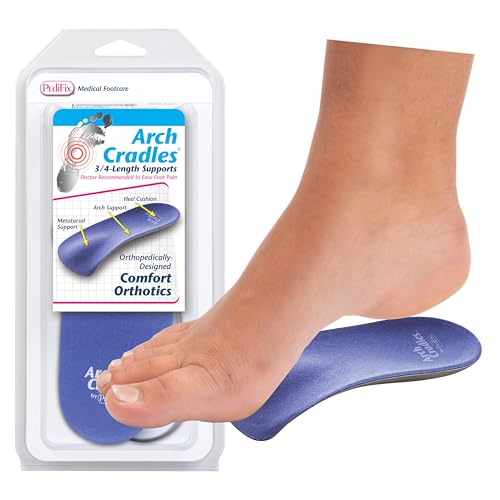
PediFix Arch Cradles 3/4-Length Orthopedic Arch Support (Medium)

VALSOLE 250+ lbs Plantar Fasciitis High Arch Support Insole
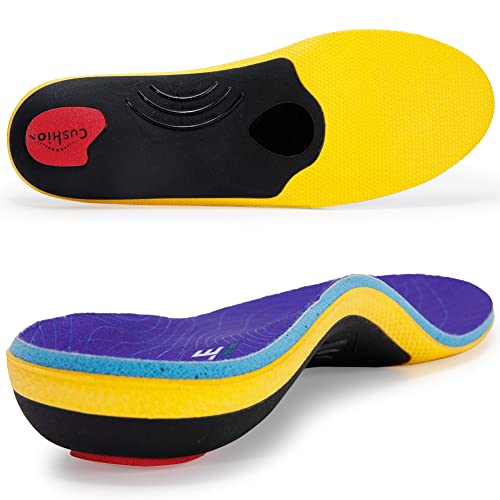
VALSOLE Heavy Duty Support Pain Relief Orthotics (220+ lbs)

WalkHero 220+lbs Pain Relief Insoles, High Arch Support

Professional Heavy Duty Support Pain Relief Orthotics (230+ lbs)
A Closer Look At Each Pick
The PowerStep Pinnacle Pink is a full-length orthotic (an insert designed to correct foot alignment and support the arch from heel to toe) aimed at neutral-arch wearers who pronate, meaning their ankles roll slightly inward with each step. Its deep heel cup (a raised rim around the heel that holds the rearfoot stable) cradles the calcaneus and keeps the rearfoot from rolling inward, which matters because pronation is one of the main mechanical drivers of posterior tibial tendon overload.
Made in the USA with a polyester top layer, this insert slips into sneakers, casual lace-ups, and most walking shoes where the factory insole can be pulled out. Compared with the Spenco Rx Orthotic reviewed next, the Pinnacle is firmer under the arch, so it tends to feel more corrective right out of the box.
The Helpful Details
- Deep heel cup holds the rearfoot centered, easing strain on the posterior tibial tendon
- Neutral arch geometry suits flat-to-medium arch profiles better than very high arches
- Polyester top cover wipes clean easily after long workdays
- Full-length platform delivers support under the ball of the foot, useful for long walks
- Trim-to-fit sizing covers both women’s and men’s ranges
Worth Noting
- Firmer feel can read as uncomfortable during the first few wears; expect a brief break-in
- Not ideal for tight dress shoes given its full-length footprint
Feature Snapshot
Right Fit For
Adults with neutral arches and mild pronation who log a lot of walking in standard sneakers and want a corrective, made-in-USA insert.
Look Elsewhere When
Shoppers who need an aggressive high-arch lift for a clearly collapsed medial arch will get more lift from the VALSOLE 250+ lbs Plantar Fasciitis High Arch Support Insole covered in pick 4.
The Spenco Rx Orthotic has been on the market long enough to feel familiar, and it leans on a nitrogen-foam-style cushion called Spencore to soften impact (a closed-cell foam that absorbs shock on heel strike). The 3/4-length footprint ends just behind the ball of the foot, so it slips into flats, loafers, and dress shoes where a full-length insert would cramp the toe box.
It uses a nylon top cover and a customizable arch and heel plate that adapts a little to the wearer’s foot. Where the PowerStep Pinnacle above pushes a firmer corrective feel, the Spenco Rx is gentler on day one and easier to wear in softer shoes right out of the package.
Where It Excels
- Spencore foam softens heel strike, which reduces jarring load on the posterior tibial tendon
- 3/4-length profile fits comfortably in narrow and dress shoes
- Adaptable heel and arch plate offers mild customization for different foot shapes
- Lightweight build keeps feet from feeling weighted down during long commutes
Some Limits To Know
- Cushion-first design delivers less aggressive arch correction than the firmer PowerStep
- 3/4 length leaves the forefoot on the original shoe insole, which can feel uneven in very flat shoes
Made For
Office workers and commuters in dress shoes and casual flats who need arch support without bulk and prefer a cushioned ride.
Swap It Out When
Wearers who stand on concrete for eight-hour shifts will get more shock absorption from the WalkHero 220+lbs Pain Relief Insoles in pick 6.
PediFix Arch Cradles take a different approach: a 3/4-length orthopedic cradle that lifts the arch directly under the painful area, with extra padding at the heel and behind the ball of the foot. The Medium size lands in the women’s 9 to 10 and men’s 7 to 8 range, which makes it a smart solution when standard sizes run narrow.
Compared to the Spenco Rx in pick 2, the Arch Cradles put more emphasis on lifting a fallen arch (a flat arch that has lost its natural curve) and less on cushioning across the whole foot. That focus matters when PTT pain is concentrated along the inside of the arch rather than at the heel.
Good Reasons To Consider
- Targeted arch cradle design supports flat and weak arches more directly than a generic insert
- Metatarsal padding (a cushion placed just behind the ball of the foot) reduces ball-of-foot fatigue on long walks
- Heel cushioning softens impact without adding bulk to the shoe
- Compact 3/4 profile fits inside casual slip-ons and Mary Janes
Points To Keep In Mind
- Lacks full-length cushion, so the front of the foot rests on the shoe’s stock insole
- Not engineered for very heavy wearers; the cradle compresses faster than thicker inserts in picks 4 and 5
Best Suited To
People with visibly flat arches who feel pain concentrated at the inside of the midfoot and need a low-profile insert for tighter shoes.
A Better Fit Elsewhere
Adults over 220 pounds looking for a sturdier cradle will find the VALSOLE 250+ lbs Plantar Fasciitis High Arch Support Insole in pick 4 better matched to their body weight.
The VALSOLE 250+ lbs High Arch Support Insole is built for a specific profile: heavier wearers who need a stiffer shell to keep the arch from collapsing under load. The high arch contour pushes the medial arch upward, offloading the posterior tibial tendon and the plantar fascia (the thick band of tissue running along the bottom of the foot) at the same time.
Its layered foam construction absorbs shock from each step, which matters when foot pain drives up the chain into the knees and lower back. Stack this against the PowerStep Pinnacle in pick 1, and the VALSOLE delivers a noticeably taller arch bump and a thicker base, but it can feel bulky in casual sneakers.
The Good Stuff
- Reinforced arch shell resists compression under heavier body weights
- Strong high-arch contour addresses both PTT and plantar fascia strain at once
- Shock-absorbing base reduces fatigue on long warehouse or retail shifts
- Suitable for work boots, hiking shoes, and sturdy casual footwear
Practical Considerations
- High arch bump can feel aggressive for wearers with neutral arches
- Bulky profile requires roomy shoes with removable factory insoles
- Wider forefoot may crowd narrow dress shoes
Feature Snapshot
Whose Shelf It Belongs On
Adults over 220 pounds who stand on hard floors for long shifts and need a high-arch lift that won’t flatten out in a few weeks.
Skip It When
Lighter wearers with neutral arches will be more comfortable in the PowerStep Pinnacle Pink Orthotics in pick 1.
The 220+ lbs VALSOLE is the slightly lighter cousin of the 250+ lbs version in pick 4, built on the same heavy-duty platform but with a slightly lower weight threshold. It carries a high arch contour and the same shock-absorbing base, which makes it a natural fit for work boots and standing-all-day roles.
Where it differs from pick 4 is in the fit range and the slightly trimmed arch height, which gives it a touch more versatility across shoe types. For wearers between roughly 220 and 250 pounds, this often reads as the most comfortable match in the VALSOLE line.
What Pays Off
- Stiffer arch shell supports wearers over 220 pounds without flattening quickly
- Shock-absorbing foam base reduces heel and forefoot fatigue
- High arch contour takes tension off the posterior tibial tendon during long shifts
- Slides into lace-up work boots and casual shoes with removable insoles
Where It Is Less Suited
- Still bulky for narrow or low-volume shoes
- Stiff feel requires a brief break-in period for first-time orthotic users
Feature Snapshot
Built With In Mind
Warehouse, construction, and healthcare workers above 220 pounds who log full shifts in laced boots and want firmer arch support than casual insoles offer.
Reach For A Different Pick When
Wearers under 200 pounds who want a softer, everyday-walking feel will likely prefer the WalkHero 220+lbs Pain Relief Insoles covered next in pick 6.
WalkHero’s 220+ lbs insole targets the same heavy-wearer pain points as the VALSOLE pair, but the brand tunes the ride a bit softer. The layered foam stack cushions impact, while the high arch plate aims to keep the medial arch from rolling downward.
Where the VALSOLE 250+ in pick 4 feels noticeably firm, the WalkHero reads as more cushioned on first wear. For shoppers who want heavy-duty arch support without the brick-like feel of a stiff shell, that softer character is the main appeal.
Real Benefits
- Higher arch contour supports the posterior tibial tendon during long walks
- Multi-layer foam softens impact better than thin EVA inserts
- Full-length footprint replaces the stock insole cleanly
- Trim-to-fit design covers both men’s and women’s size ranges
Honest Caveats
- Foam stack compresses faster than the firmer VALSOLE shells in picks 4 and 5
- Not a match for very narrow dress shoes given its full-length profile
Perfect Match For
Daily walkers and casual wearers above 220 pounds who want cushioned arch support for sneakers and casual shoes.
Consider Something Else When
Shoppers who need maximum correction for a clearly collapsed arch will get a sturdier lift from the VALSOLE Heavy Duty Support Pain Relief Orthotics in pick 5.
The Psveb-branded Professional Heavy Duty insole uses a double layer of PORON cushioning, a high-performance urethane foam often found in premium safety footwear, to soak up repeated impact. Its 230+ lbs weight rating puts it between the two VALSOLE picks, and its high arch contour addresses both PTT and plantar fascia strain.
Compared to the WalkHero in pick 6, the PORON layer is the key differentiator: it tends to bounce back from compression longer than standard EVA foam (a common lightweight cushioning material), which matters for wearers who don’t want to replace insoles every few months.
Standout Benefits
- PORON dual-layer cushioning absorbs shock across the full footbed
- High arch lift reduces tension on the posterior tibial tendon
- Engineered shell holds its shape under heavier body loads
- Suited to work boots, hiking shoes, and standing-all-day roles
Factors To Consider
- Aggressive arch height can overcorrect wearers with neutral arches
- Thick base means it won’t fit slim dress shoes or tight flats
Who Should Grab It
Adults above 230 pounds who stand or walk for hours and want a durable, shock-absorbing insole that won’t pack out within a season.
Not Your Match When
Shoppers who need a softer everyday feel for sneakers will be more comfortable in the WalkHero 220+lbs Pain Relief Insoles in pick 6.
What To Look For In Arch Supports For PTT
Arch Height And Shape
The right arch height is the single biggest factor in easing posterior tibial tendonitis. A low arch collapses inward and loads the tendon, while an arch that’s too high can irritate a normal foot. Match the insert’s arch height to your foot type. Flat feet and pronators usually need a medium-to-high arch contour, while neutral arches do better with moderate lifts like the PowerStep Pinnacle.
Heel Cup Stability
A deep, structured heel cup keeps the rearfoot centered and prevents the ankle from rolling inward. PTT pain often flares because the heel collapses laterally, so a cup-shaped base (not a flat platform) tends to help more than a thin foam pad.
Cushioning Material And Density
Foam density and material affect how long an insole lasts and how much impact it absorbs. EVA foam feels soft but compresses faster. PORON and Spencore bounce back longer. For heavy wearers or long shifts, denser materials hold up better.
Length And Shoe Fit
Full-length inserts work in sneakers and boots with removable factory insoles. 3/4-length inserts fit dress shoes, loafers, and tighter casual shoes. Picking the wrong length is one of the most common slip-ups, and it leaves the foot unsupported where it needs it most.
Key Considerations Across These Picks
Pitfalls Shoppers Hit
The biggest mistake I see is grabbing an off-the-rack “one arch fits all” insert and expecting it to correct a clearly collapsed foot. Generic foam insoles often flatten within weeks, leaving the tendon just as overloaded as before. Another common trap is sizing by shoe size alone; weight and arch height matter more than the number on the box for heavy-duty orthotics.
When Paying More Pays Off
Higher-tier inserts earn their keep through firmer shells, PORON cushioning, and deeper heel cups that don’t pack out as quickly. For heavy wearers or anyone logging eight-hour shifts, the upgrade pays for itself in longer lifespan and steadier arch support. Lighter users with neutral arches can usually do just fine with mid-priced options and save the premium tier for later if symptoms progress.
Frequently Asked Questions
How long does it take for an arch support to ease posterior tibial tendonitis pain?
Most wearers notice less end-of-day arch fatigue within one to three weeks of daily use, though full tendon recovery usually takes longer and benefits from combining the insole with rest and targeted exercises.
Should I use a 3/4-length or full-length insert for PTT?
Full-length inserts give more consistent support across the foot and work well in sneakers and boots, while 3/4-length options fit tighter shoes but leave the forefoot on the original insole.
Can an arch support fix posterior tibial tendonitis on its own?
Insoles offload the tendon and slow further arch collapse, but they work best alongside rest, calf strengthening, and any rehab exercises a clinician recommends for the specific case.
Do heavier wearers really need a special insole?
Standard foam insoles compress quickly under higher body weights, so a reinforced shell with a higher arch contour and denser cushioning tends to last longer and support the foot more reliably.
Is a break-in period normal with orthotic inserts?
Yes, firmer shells like the PowerStep Pinnacle or the VALSOLE 250+ can feel stiff at first, and most feet adapt within a few days of progressive wear.