A long day on hard floors leaves a mark, and the right insert can change how those hours feel. Servers, warehouse workers, teachers, and parents chasing toddlers all share one quiet complaint: heels that ache by evening. The picks below cover full-length cushioning, trimmable orthotic shells, and targeted heel lifts, so the right fit is less guesswork and more relief. Each option was chosen for a distinct foot type and use case, because no single insert solves every arch.
The Picks In Brief

2 Pairs 4D Cloud Insoles for Men & Women
Arch Support Insert for Plantar Fasciitis

ARIAT Men’s ATS Round Toe Insole
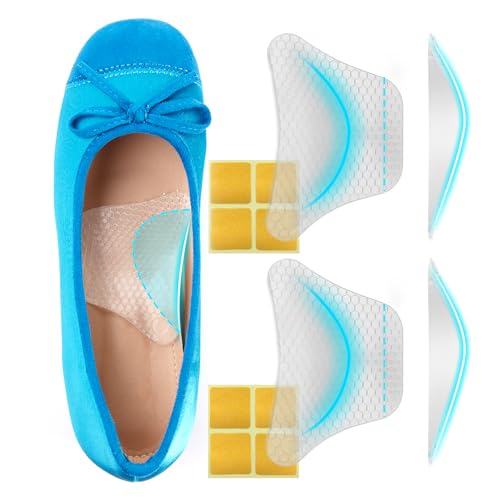
Non-Slip Gel Arch Pad for High Arch

Welnove 220+ lbs Heavy Duty Insoles

Welnove Semi-Rigid 3/4-Length Inserts

Welnove 1/2″ Heel Lift Pads
Meet The Standout Selections
The FLYSTORY 4D Cloud pair ships as a two-pack, which quietly solves the replacement cycle problem most shoppers forget about: insoles wear out, and buying singles twice over gets old fast. The construction uses PU memory foam (a slow-recovery polyurethane cushion that softens with body heat) shaped into an ergonomic arch, so the surface feels plush on first step but firms up under load.
For cashiers, line cooks, and anyone logging five-plus hours on tile, that foam layer eats impact before it reaches the heel. Compared with the ARIAT gel footbed reviewed later, this is a softer, full-length ride rather than a structured orthotic shell.
Where It Excels
- Two-pack value means a spare stays ready when the first pair compresses.
- Memory foam cradles the arch and reduces the sharp heel impact that builds over long shifts.
- Full-length shape suits lace-ups, sneakers, and most casual work shoes without trimming.
- Available XL sizing covers broader feet that often get squeezed by standard inserts.
Worth Noting
- Memory foam compresses faster than rigid shells, so heavy users may notice flattening within a few months.
- Best suited to roomy shoes; tight oxfords or snug heels will feel cramped after insertion.
Key Specs
Built For
Retail and hospitality workers logging long standing hours on hard floors who want plush cushion over rigid correction.
Look Elsewhere When
You need structured arch correction for plantar fasciitis rather than cushion; the PLERE Arch Support Insert is a better shell-based fit.
PLERE’s offering stands out by skipping the one-arch-fits-all gamble. It ships in three distinct arch heights (low, medium, high) and five trimmable sizes, so the same product can match flat feet, neutral arches, and high arches alike. That flexibility matters for households where one shopper has bunions and another has a collapsed arch, since you can dial each pair to the right foot.
The orthotic shell (a firm molded plate that supports the arch rather than just cushioning it) makes this a corrective pick rather than a soft pad. Anyone easing into orthotics for the first time should expect a break-in period of a few days before the foot settles into the new shape.
The Case For It
- Three arch heights remove the usual guesswork for shoppers with mixed foot profiles.
- Trimmable sizing lets you tune length to sneakers, work boots, or dress shoes.
- Shell-based structure actively supports the arch instead of simply cushioning it.
- Suits both plantar fasciitis relief and general posture correction in one insert.
Honest Caveats
- Break-in discomfort is common during the first week as the foot adapts to the new arch height.
- Ordering the wrong arch height before trimming is a known frustration, so measure carefully.
Best Suited To
Shoppers with specific arch profiles (flat, neutral, high) who want a corrective shell and are willing to spend an evening trimming and adjusting.
Skip It When
You want a slip-in cushion with zero adjustment; the FLYSTORY 4D Cloud pair delivers that softer, no-fuss experience instead.
ARIAT built its reputation on western and work boots, and this replacement insole is designed to slot into that footprint. The gel cushion footbed (a layered silicone-based pad that absorbs shock and rebounds slowly) targets the heel and ball of foot, the two zones that take the most abuse during long ranch or warehouse days.
Unlike the foam-heavy FLYSTORY pair, this is a denser, more structured footbed. For shoppers already invested in ARIAT footwear, it preserves the brand’s intended ride; for everyone else, it’s a premium gel option worth comparing to the Welnove work boot pick further down.
Strong Points
- Gel cushioning rebounds through repeated heel strikes without bottoming out quickly.
- Round-toe footprint matches ARIAT boot shapes without bunching under the forefoot.
- Higher-end materials justify a step up for riders, ranchers, and work boot loyalists.
Soft Spots
- Less versatile outside western and work boot silhouettes; fashion sneakers may not benefit from the same shape.
- Gel can feel cool and firm on first wear before warming to body temperature.
Whose Shelf It Belongs On
Existing ARIAT boot owners who want a factory-style gel upgrade without swapping brands.
Swap It Out When
You wear a rotation of sneakers or casual shoes; the Welnove Semi-Rigid 3/4-Length Inserts adapt more flexibly across footwear types.
PLERE’s gel arch pad solves a problem full-length inserts ignore: shoes with no room to spare. Flats, loafers, and dress heels often reject a bulky insole, so a smaller pad that hugs the arch directly is the realistic option. The textured upper face plus included double-sided tape keeps the pad from sliding forward during a commute.
It comes in three arch heights, including a high-arch option that flat-footed shoppers would skip. For anyone whose pain sits squarely under the arch rather than the heel ball, this targeted approach feels more useful than a cushy full-length insert.
Points In Its Favor
- Compact footprint fits into flats, heels, and slip-ons where full inserts won’t go.
- Included sticky tape locks the pad in place through walking and light running.
- Three arch-height options cover flat feet and high arches without a one-size compromise.
- Gel surface rebounds through repeated steps without flattening quickly.
Possible Compromises
- Won’t cushion the heel or ball the way full-length inserts do, so pain outside the arch remains.
- Adhesive residue can build up on shoe interiors and may need periodic cleaning.
Made For
Commuters in flats, loafers, or low-profile heels who need arch-specific support without changing shoe fit.
Not Your Match When
You want heel-cup relief alongside arch support; the Welnove 1/2″ Heel Lift Pads address the heel directly in the same low-profile spirit.
Welnove designed this insert for shoppers over 220 pounds, a category most inserts quietly ignore. The build uses firmer arch support and denser cushioning because standard foam compresses too quickly for higher body weights. The result is an insole that resists bottoming out through long shifts.
It’s also marketed toward plantar fasciitis relief, so the shell includes a deep heel cup (a raised rim around the heel that cradles and stabilizes it on impact). Compare that to the FLYSTORY memory foam pair, which feels softer but would compress far faster under heavier loads.
The Good Stuff
- Firmer arch and heel cup support stands up to heavier body weights without flattening quickly.
- Targets plantar fasciitis relief specifically, not just general cushioning.
- Reinforced construction extends usable life compared to standard foam inserts.
Factors To Consider
- Firmer feel may feel intrusive to shoppers used to plush foam, so a break-in window is normal.
- Takes up notable volume inside the shoe; snug-fitting footwear may reject the shape.
Feature Snapshot
The Right Fit
Larger-framed shoppers or anyone wanting firmer orthotic correction beyond what foam inserts offer.
Consider Something Else When
You prefer a softer cushion over rigid correction; the FLYSTORY 4D Cloud pair is the gentler alternative in this lineup.
The 3/4-length design (covering arch and heel but stopping short of the toes) makes this insert unusually shoe-friendly. Roomy work boots, hiking shoes, and lace-up sneakers all have the volume for it, while fashion-forward shoes do not. A semi-rigid shell strikes a middle ground between the soft FLYSTORY foam and the firm Welnove heavy-duty build.
Welnove includes a candid break-in note: new users should start at three to five hours daily and build up. That honesty is useful, because semi-rigid shells genuinely need an adjustment period before they feel natural.
Positive Takeaways
- Semi-rigid shell supports the arch without the hard-plate feel of full orthotics.
- 3/4-length shape clears toe room, fitting work boots and hikers that reject full-length inserts.
- Targeted heel relief for flat-footed shoppers who want arch lift without forefoot bulk.
A Few Limitations
- Won’t fit tight shoes like dress oxfords; volume is the limiting factor.
- Break-in discomfort during week one is widely reported, so don’t judge the fit on day one.
Who Should Grab It
Trades workers, hikers, and anyone in roomy lace-up footwear who wants structured arch support without full-orthotic rigidity.
A Better Fit Elsewhere
You wear slim-fitting casual shoes; the PLERE Non-Slip Gel Arch Pad offers a slimmer profile alternative.
Sometimes the heel is the only problem, and full-length inserts oversell the fix. Welnove’s 1/2-inch heel lift pads stack soft PU foam over a Poron shock-absorbing layer (a high-density urethane foam used in athletic padding) directly under the heel, leaving the forefoot untouched. The half-inch elevation also helps shoppers with leg-length differences who need subtle lift.
Compared to the PLERE gel arch pad, this targets a different zone entirely: heel pain rather than arch collapse. Both products share a low-profile philosophy, but the use cases barely overlap.
Everyday Perks
- Half-inch lift eases strain linked to mild leg-length differences and Achilles discomfort.
- Poron underlayer absorbs heel-strike shock that lighter foam lets through.
- Compact pad slips into dress shoes and casual sneakers alike without crowding the toe box.
Where It Is Less Suited
- Doesn’t address arch pain, so flat-footed shoppers with arch collapse should pair it with a separate arch pad.
- Stack height adds bulk that very tight slip-ons may not tolerate.
Perfect Match For
Shoppers whose heel pain is the primary complaint, especially those needing a subtle lift for leg-length imbalance.
Reach For A Different Pick When
You need arch correction rather than heel cushioning; the PLERE Arch Support Insert covers that need with a structured shell.
What Matters When Picking Arch Support Inserts
Choosing between these inserts comes down to three honest questions: where does it hurt, how much room does the shoe have, and how firm does the support need to feel. Arch pain under the midfoot calls for a structured shell, like the PLERE three-height model. Heel pain that flares after hours of standing responds better to a targeted lift or deep heel cup, like the Welnove heavy-duty or 1/2-inch pad. Plush cushion without correction makes sense for shoppers who simply want softer floors underfoot.
Shoe volume is the silent dealbreaker. Full-length inserts need toe-box room; if your shoes run narrow or low-cut, a 3/4-length or pad-only design will actually stay where you put it. Breaking in a new orthotic shell takes patience: start with a few hours daily and build up over a week. Foam-only inserts need no break-in, but they also flatten faster, so rotation between pairs extends usable life.
The weight-to-firmness link matters more than shoppers expect. Inserts designed for higher body weights use denser foam that resists compression, while standard foam feels wonderful for a month and disappointing by month three. For shoppers over 220 pounds, a heavy-duty calibrated insert pays for itself in longevity.
Key Considerations Across These Picks
Common Slip Ups
The most frequent mistake is choosing by cushion alone, then wondering why arch pain persists. Cushion absorbs impact; correction lifts the arch. Shoppers with plantar fasciitis need correction first, cushion second. Another trap is ignoring shoe volume: a full-length insert jammed into a tight dress shoe slides, bunches, and ends up in a drawer. Measure your toe-box height before committing. Skipping the break-in window is the third pitfall; orthotic shells feel awkward for the first few days, and abandoning them too soon means returning to flat feet.
Where The Extra Money Goes
Premium picks like the ARIAT gel footbed use higher-rebound materials that keep their shape through months of daily wear, where economy foam compresses permanently after weeks. Calibrated heavy-duty inserts add structural reinforcement tuned for higher weights, an engineering choice that costs more to prototype and produce. Targeted gel pads with adhesive systems command a modest premium for staying power inside the shoe. You pay for materials that don’t quit, not for branding on the box.
Frequently Asked Questions
Do arch support inserts actually help heel pain?
Yes, when the arch support is paired with a deep heel cup or heel lift. The arch support redistributes pressure away from the heel, while the heel cup stabilizes impact.
How long does it take to adjust to orthotic inserts?
Most structured inserts need three to seven days of gradual wear before feeling natural. Start with a few hours daily and add time as your foot adapts.
Can I use arch inserts in dress shoes or heels?
Pad-only designs like gel arch pads or heel lifts work best in low-volume shoes. Full-length orthotics usually need a roomier toe box to sit flat.
How often should I replace arch support inserts?
Foam inserts typically last six months to a year with daily wear. Gel and semi-rigid designs often outlast foam, but replace them once they stop springing back.
Are heavy-duty insoles worth it for lighter shoppers?
Lightweight shoppers usually get more benefit from cushioned foam than dense orthotic shells, since the firm build is calibrated for higher body weights and can feel intrusive otherwise.
Wrap Up
The right insert depends on where it hurts, what shoes you wear, and how much firmness your foot tolerates. Cushion lovers will appreciate the FLYSTORY foam pair, while arch correction seekers should gravitate toward the PLERE shell or Welnove semi-rigid designs. Shoppers with heel-specific pain will find the Welnove 1/2-inch lift pads surprisingly effective for such a simple shape. Match the insert to the problem, give it a fair break-in window, and your heels will thank you by evening.