Pronation shows up quietly at first, a dull ache after long shifts, sore arches on the morning commute, that nagging sense your shoes are working against you. The right insole can change how your feet, knees, and lower back feel by day’s end. These nine picks cover everyday dress shoes, heavy-duty motion control, rigid carbon plates for stubborn toe issues, and even pediatric tiptoe walking, so you can match the tool to the job.
A Quick View Of The Lineup

SoleAid Insoles Sii, 3/4 Length Foot Support (Women 10-11.5 / Men 8-9.5)

Dr. Scholl’s Custom Fit Orthotics 3/4 Length Arch Support Shoe Inserts

Vasyli Custom Full Length Insoles, Arch Support Shoe Inserts (Red, L)

PowerStep ProTech Full Length Orthotic Insoles

TEGA Toe Separators & Spacers (Large)

Morton’s Extension Orthotic, Carbon Fiber Rigid Insole (W10/M9)
Carbon Fiber Insole with Arch Support, Memory Foam & Deep Heel Cup
TEGA Carbon Fiber Insole for Turf Toe, Fractures, Hallux Limitus
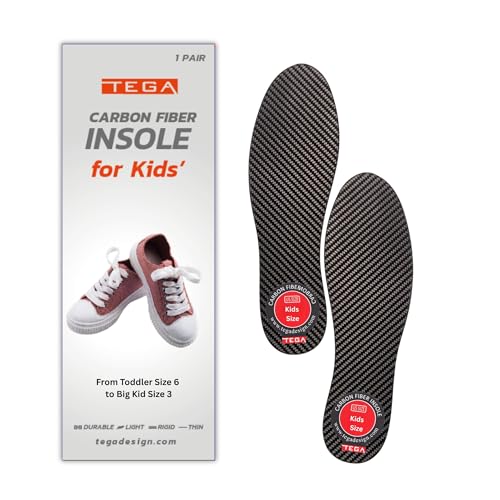
TEGA Kids’ Carbon Fiber Insoles for Idiopathic Toe Walking (Big Kid 3)
A Deeper Look At The Lineup
Slip-on loafers, fitted oxfords, ballet flats that pinch at the toe box. These are the shoes where most off-the-shelf insoles fail before noon, because a bulky full-length insert eats the toe room you paid for. The SoleAid Sii sidesteps that problem by stopping short of the toes, leaving your forefoot space untouched while still giving the arch the lift it needs.
It uses a semi-rigid neutral arch plate, which means you won’t get a custom-molded feel, but you also won’t get the mushy “support for ten minutes, then nothing” sensation that softer foam inserts tend to produce. The trade-off shows up when you push past a standard workday: heavier walkers or those with pronounced flat feet may want more contour than this slim design delivers.
A Few Highlights
- 3/4-length silhouette fits inside dress shoes, loafers, and tight sneakers without crowding the toes.
- Semi-rigid plate offers a stable lifting feel under the arch rather than a soft compression.
- Neutral arch profile suits shoppers who don’t know their exact arch height and don’t want a steep curve.
- Sized for men and women in clear ranges, which makes selecting a starting size straightforward.
Things To Consider
- No heel cup to lock the rearfoot, so control during heavy lateral movement may feel limited.
- Owners with very flat arches sometimes report needing a brief break-in before the plate feels natural.
Key Product Details
Who Will Love This
Office commuters and anyone whose workhorse shoes have shallow toe boxes will appreciate the slim footprint most.
Reach For A Different Pick When
Runners needing full-length cushion should look at the PowerStep ProTech instead, since it covers heel to toe with structured support.
The Custom Fit concept here leans on a fitting process that maps your arch height, body weight, and shoe size to a specific insert variant. That’s the whole reason it ships as the CF220, a model tailored to a particular combination rather than a one-shape-fits-all foam pad. For people who’ve bounced between generic insoles wondering why nothing feels quite right, that matching approach is the selling point.
You still get a 3/4-length profile, so it slots into casual sneakers and work shoes without forcing you to size up. The platform is tuned for lower-body pain, including the heel, knee, and lower back chain that pronation tends to drag along with it. Assuming you take the time to complete the fitting steps properly, the in-store experience translates into a more dialed-in feel than most off-the-shelf alternatives.
The Practical Payoff
- Profile-matched design that adjusts support based on arch height and weight, not guesswork.
- 3/4-length format preserves toe room in casual and work shoes.
- Targets the heel, knee, and lower-back discomfort that pronation tends to compound.
- Brand recognition means replacement variants are easy to reorder if your weight or shoe size changes.
Honest Caveats
- You commit to the fitting process first; skip it and you lose the main advantage.
- Less cushioning than full-length foam designs, which may disappoint shoppers chasing plush comfort.
Feature Snapshot
Right Fit For
People new to orthotics who want guidance built into the buying process will get the most out of this design.
Consider Something Else When
Shoppers who already know they want a heat-moldable, full-length plate should consider the Vasyli Custom Full Length Insoles for a more clinical fit.
The Vasyli sits in a different category than the first two picks. It’s a heat-moldable, full-length orthotic in firm red density, the kind of insert that podiatrists and athletic trainers have used for years to address pronounced pronation. You warm the plate, step into it, and it shapes itself to your arch contour rather than asking your foot to adapt to a fixed curve.
Coverage runs the full length of the foot, which means heel, arch, and forefoot all share the same platform. That spreads pressure evenly during long shifts or hard training blocks, and the red firmness level leans toward active control rather than soft cushioning. In tight dress shoes, the depth can feel intrusive, but in sneakers and boots it disappears into the shoe.
What Earns Its Place
- Heat-moldable construction lets the insole adapt to your arch rather than forcing a one-shape-fits-all curve.
- Full-length platform balances pressure across heel, arch, and forefoot during long days.
- Firm red density favors motion control for active or heavy-use scenarios.
- Targets heel, knee, and lower-back chain pain through structured support.
Points To Keep In Mind
- Heat-molding requires access to an oven and a few minutes of hands-on setup.
- Depth can crowd shallow shoes like loafers or fashion sneakers.
Whose Shelf It Belongs On
Retail workers, runners, and anyone logging heavy daily mileage on harder floors will benefit from the firm, moldable design.
A Better Fit Elsewhere
Office workers in tight dress shoes will likely prefer the slimmer SoleAid Sii, since it preserves the toe box the Vasyli sacrifices.
PowerStep built the ProTech as a medical-grade orthotic shell, the kind of insert that crosses over from casual comfort into clinical support. It carries a full-length design with a deep heel cup and structured arch, the combination that’s commonly recommended for mild to moderate pronation, plantar fasciitis, and heel spurs.
Compared to the Vasyli, the ProTech trades heat-molding for a pre-shaped, factory-tuned arch profile. That means no oven required, which simplifies ownership. The shell is firm enough to control motion through long shifts, but the top layer softens the feel under the heel and forefoot. In running shoes or roomy sneakers, the platform sits flat and predictable.
The Upside
- Medical-grade shell with total-contact support from heel to toe.
- Targets a wide symptom set including plantar fasciitis, arch pain, heel spurs, and shin splints.
- Pre-shaped profile removes the setup step entirely, no heating needed.
- Deep heel cup helps stabilize the rearfoot during long hours of standing or walking.
Trade-Offs To Consider
- Bulkier than a 3/4-length insert, so it can crowd slim shoes.
- Mass-produced arch shape won’t match a heat-molded fit for very pronounced arches.
Spec Overview
Best Suited To
Nurses, warehouse workers, and anyone whose day involves standing on hard surfaces for eight-plus hours will get the most mileage from this shell.
Look Elsewhere When
Tiptoe-walking kids need the specialized pediatric design of the TEGA Kids’ Carbon Fiber Insoles rather than a heavy-duty adult orthotic.
This pick leaves the insole category entirely. The TEGA Toe Separators are soft silicone spacers that slide between your toes, a different approach to foot pain that targets bunions, hammertoes, and forefoot crowding rather than arch collapse. Worn barefoot around the house or slipped into wide shoes, they gently encourage toes back toward their natural spacing.
For pronation specifically, the value is indirect: a wider, more naturally aligned forefoot gives the foot a better foundation to push off from, which can support the arch’s job rather than fight it. Most users wear them for short stretches while reading or watching TV rather than during actual activity.
A Favorable Mix
- Soft silicone construction feels forgiving compared to rigid gel or foam pads.
- Reusable and easy to rinse clean after a wearing session.
- Targets overlapping toes and big-toe tension that tight shoes tend to amplify.
- Light enough to wear while relaxing, no shoe removal gymnastics required.
A Few Limitations
- Won’t address arch collapse directly, so it’s an add-on rather than a replacement for pronation insoles.
- Walking long distances in them is awkward; they’re really a stationary-use tool.
Perfect Match For
People dealing with bunion pain or forefoot crowding who want a passive stretching tool to complement their insoles.
Swap It Out When
Active pronators needing real motion control should pair this with the PowerStep ProTech rather than rely on the separators alone.
When the issue isn’t general pronation but a specific joint problem, like hallux rigidus or a Morton’s toe that throws the front of your foot into chaos, foam insoles won’t cut it. The Morton’s Extension is a thin carbon fiber plate that extends beneath the big toe, locking its bending motion to almost zero. That sounds extreme, but for the right condition it’s the practical answer.
It’s sold as a pair, so you get matched left and right plates, and the rigid construction means there’s no cushion to compress. That trade-off is the whole point: you give up softness to gain biomechanical control of the forefoot. In athletic shoes with removable insoles, the plate drops in and disappears under your foot.
Advantages To Know
- Carbon fiber rigidity prevents big-toe flexion during gait, which offloads painful joints.
- Thin profile slips under existing shoe insoles without changing fit.
- Targets named conditions like hallux limitus, turf toe, and Morton’s toe directly.
- Pair packaging ensures both feet get matched support.
Worth Bearing In Mind
- No cushion or shock absorption, so it pairs best inside a shoe that already has padding.
- Specialized use case: overkill for general pronation without a specific forefoot diagnosis.
Built With In Mind
People with diagnosed hallux rigidus or post-surgical forefoot recovery will find this plate addresses a problem foam inserts can’t touch.
Not Your Match When
General pronators without forefoot joint issues should start with the Dr. Scholl’s Custom Fit Orthotics for a more accessible entry point.
Unlike the bare carbon plates elsewhere on this list, this insole pairs a rigid shell with memory foam on top and a gel pad under the heel. That combination makes it more forgiving than the pure-plated options while still controlling pronation. The deep heel cup works to lock the rearfoot, while the foam top layer softens each step.
For overpronation in running shoes, gym trainers, and casual sneakers, this hybrid build offers a middle ground. The breathable fabric top helps manage sweat during longer sessions. It still asks for some shoe volume to fit the layered construction, so flat dress shoes won’t be its friend.
Strengths Worth Knowing
- Carbon fiber arch plate provides motion control without the bare-plate feel.
- Memory foam top layer cushions the foot during impact-heavy activities.
- Gel heel pad absorbs shock where it matters most during heel strike.
- Deep heel cup stabilizes the rearfoot to reduce inward rolling.
Practical Considerations
- Layered depth crowds slim dress shoes and loafers.
- Memory foam compresses over time, which may gradually reduce the cushioned feel.
Quick Facts
The Right Fit
Recreational runners and gym-goers who want motion control plus cushion will find this hybrid hits the mark.
Skip It When
Shoppers wanting a slimmer, more discreet feel for office shoes should consider the SoleAid Sii instead.
TEGA’s standalone carbon fiber plate is the recovery-focused cousin of the Morton’s Extension. Same rigid construction, but pitched at athletes coming back from turf toe, stress fractures, or hallux limitus, conditions where every bend of the big toe sends a sharp signal up the kinetic line.
It works in hiking boots, basketball shoes, trail runners, and trekking footwear, anywhere you need a stiff platform under the forefoot but still want to log miles. There’s no foam or cushioning built in, so it relies on the shoe’s existing insole for comfort. Owners commonly slip it under the factory insole for a hidden fit.
A Few Strong Suits
- Rigid carbon fiber construction removes big-toe flexion during recovery phases.
- Compatible with hiking, basketball, trail, and running shoes.
- Thin profile tucks under existing insoles without changing shoe fit.
- Sold as a pair for matched left and right support.
Less-Strong Areas
- No built-in cushioning means it depends entirely on the host shoe for comfort.
- Highly specialized, so it’s wasted on general pronation without a specific injury context.
Made For
Athletes returning from forefoot injuries who need to keep training while protecting healing joints.
Where A Sibling Pick Shines
For Morton’s toe specifically, the Morton’s Extension Orthotic is the more targeted choice for that named condition.
Pediatric orthotics live in their own world, and tiptoe walking is one of the hardest gait patterns to redirect. TEGA’s kids’ carbon fiber insoles drop into a child’s existing shoes and create a stiff platform that makes heel-toe walking mechanically easier than tiptoeing. Parents commonly place them under the original insole for immediate support.
Big Kid 3 sizing targets older children, so this isn’t the right call for toddlers who haven’t yet outgrown smaller kid sizing. The construction is rigid by design, with no foam layer, which is intentional: the plate does the work of breaking the toe-walking habit. As with any pediatric gait tool, pairing it with professional guidance is the smart move.
Useful Touches
- Targeted design for idiopathic toe walking, a specific gait challenge.
- Drops into existing shoes under the original insole, no shoe swap required.
- Sized specifically for older kids (Big Kid range).
- Sold as a pair for symmetrical support.
Potential Sticking Points
- Rigid construction offers no cushion, so shoe choice matters for comfort.
- Best results typically require pairing with professional gait guidance rather than solo use.
Who Should Grab It
Parents of older kids who habitually walk on their toes and need a mechanical tool to encourage heel-first contact.
Look Elsewhere When
Adult pronators with no specific gait disorder should start with general options like the Dr. Scholl’s Custom Fit Orthotics for everyday use.
Choosing The Right Arch Support For Your Pronation Pattern
Pronation describes how your foot rolls inward as you walk or run. A small amount is normal, but excessive pronation, the kind that leaves your shoes wearing down on the inner edge, often shows up as arch fatigue, knee ache, or lower back tightness by the end of the day. The right insole won’t fix every structural issue, but it can change how forces travel from your foot upward.
Match The Insert To Your Footwear
The single biggest decision is shoe fit. A full-length orthotic like the PowerStep ProTech needs room inside the toe box, while a 3/4-length design like the SoleAid Sii leaves space for tight dress shoes. If you rotate between dress shoes, sneakers, and boots, plan on owning different inserts for each category rather than expecting one to do everything.
Decide Between Cushion And Control
Soft foam inserts feel great for the first hour and then bottom out under load. Firm plates and rigid shells control motion all day long, but trade away plushness. Memory foam hybrids sit in between, offering a cushioned top over a structured core. Match the firmness to your main complaint: tired arches lean toward cushion, pronounced overpronation leans toward control.
Consider Specific Diagnoses Separately
General pronation is one category; named conditions like hallux rigidus, Morton’s toe, and turf toe are another. For those, a rigid carbon fiber plate that locks big-toe motion is often the practical answer, not a cushioned insole. Choosing the wrong category is the most common reason an insert “doesn’t work.”
Slip-Ups And Spending Up In Arch Supports
Where Shoppers Go Wrong
The most common mistake is sizing by shoe size alone. Most orthotic brands tune inserts to body weight or arch height as much as length, and a size mismatch can leave the arch sitting in the wrong spot. Another frequent error is expecting an insole to fix a problem it wasn’t designed for, like using a soft cushioned insert for rigid hallux limitus. Read the use-case list on the listing carefully before committing.
When Paying More Pays Off
Premium-tier insoles earn their keep with medical-grade shells, heat-moldable customization, and named-condition targeting. If you’ve already cycled through two or three cheap inserts without relief, the upgrade to a rigid plate or a moldable orthotic often marks the point where real change shows up. For general everyday comfort, mid-tier designs still deliver most of the value at lower cost.
Frequently Asked Questions
How long does it take to feel a difference from arch supports?
Most people notice a shift in how their feet feel within the first week of consistent wear. Full adaptation to a rigid shell can take two to three weeks as your foot adjusts to the new alignment.
Can I move arch supports between different pairs of shoes?
Yes, you can transfer most inserts as long as you remove and reinsert them carefully to avoid tearing the top fabric. Insoles that have molded to one shoe’s shape will gradually conform over time.
Will arch supports fix overpronation permanently?
Insoles manage pronation during wear, but they don’t permanently change foot structure. Consistent use during weight-bearing activity is what delivers ongoing relief.
What’s the difference between 3/4-length and full-length inserts?
A 3/4-length insert stops short of the toes to preserve room in tight shoes. Full-length inserts cover the entire footbed and provide more complete heel-to-toe support.
Are rigid carbon fiber plates uncomfortable to walk on?
They feel firm rather than plush, which is by design. Most people place them under the shoe’s existing insole, where the cushion layer softens the surface while the plate handles motion control.
Final Verdict
Start with the shoe you’ll wear most, and pick an insert designed for that exact use case. For tight dress shoes, go slim. For standing days or athletic use, go structured. For named conditions like hallux rigidus or pediatric toe walking, follow the specialized picks above. The right match is the one that meets your foot where it actually lives.