

Your ankles absorb a surprising amount of stress every day, whether you’re commuting across city pavement, logging steps on a long shift, or just chasing a stroller around the neighborhood. The right ankle support turns tender joints into steady ones, and the wrong one bunches in your shoe or feels like a cast by noon. This roundup pulls together seven options that balance compression, breathability, and real-world fit so you can walk longer with less complaint.
Your Options, Compared

Prestige Medical Heartbeat EKG on Purple Nurse Ankle Socks

Sleeve Stars Ankle Brace Men & Women Support

Sleeve Stars Ankle Brace for Plantar Fasciitis Relief

Sleeve Stars Ankle Support for Ligament Damage & Sprained Ankle

ZAMST A2-DX Ankle Brace for Heavy Sprains & Chronic Instability
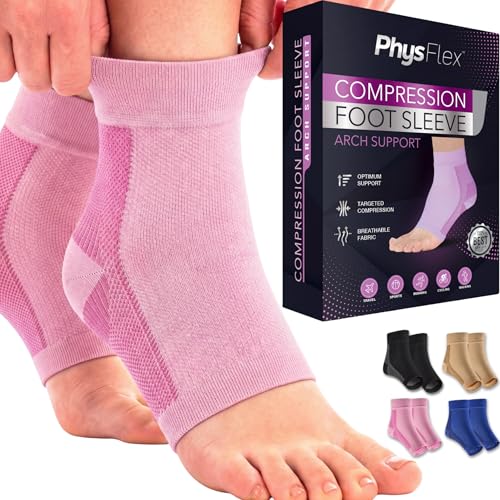
PhysFlex Ankle Compression Sleeve

Strassburg Sock Plantar Fasciitis Socks for Sprained Ankle Support
Meet The Standout Selections
Ankle socks aren’t really braces, but for someone whose ankles are merely tired rather than injured, a soft cotton crew often does more good than a stiff sleeve. These Prestige Medical pairs sit low on the ankle, wick a bit of moisture, and slide into any nursing shoe or sneaker without a fight. If you’ve just started a job that keeps you on your feet for ten hours straight, this is the gentlest place to begin.
The EKG graphic on a purple background leans into a nurse or healthcare worker aesthetic, so the sock doubles as a small personality statement on the ward. Compared to the Sleeve Stars entries coming up, this pick offers almost no joint compression, which is precisely the point for everyday comfort wear.
Positive Points
- 80% cotton construction keeps skin cool during back-to-back shifts and reduces the clammy feeling that pure synthetics often cause.
- The 5% Lycra spandex blend holds the cuff up without squeezing circulation at the top of the sock.
- One-size-fits-most sizing simplifies ordering for gift-giving or shared break-room spares.
- Low-cut profile fits inside clogs, running shoes, and slip-on work shoes without bulging over the collar.
Things To Consider
- No real compression means this is comfort wear, not a recovery tool for an actively sprained ankle.
- Imported cotton knits can shrink a touch on the first hot wash, so a gentle cycle is the safer move.
- Limited size range leaves anyone outside women’s 5-9 / men’s 4-8 without a tailored fit.
Built With In Mind
Healthcare workers, hospitality staff, and retail walkers who want a cushioned, breathable sock rather than a structured brace.
Look Elsewhere When
Someone rehabbing an acute sprain will get more out of the Sleeve Stars Ankle Brace Men & Women Support, which adds genuine joint stabilization.
Sleeve Stars built this brace around a sleeve-plus-strap setup, which means you get the snug compression of a knit sock and the tunable tightness of a wrap in one piece. For a fresh Grade I or II sprain, that combo lets you dial pressure down for a desk hour and crank it back up before a walk. The medium size targets roughly a 10-12 inch ankle circumference, so a quick tape measure saves you from the slow creep of a too-loose brace.
Where Prestige Medical’s cotton socks read as comfort only, this pick steps firmly into support territory without crossing into the rigid brace world of ZAMST. It’s a middle-ground choice for someone who needs daily relief but still wants a shoe that fits.
Everyday Perks
- Customized compression can be adjusted on the fly as swelling rises and falls through the day.
- The sleeve design slips over the foot like a sock, so there’s no fiddling with laces or Velcro panels at the door.
- Works for both men and women, removing one decision point from your cart.
- Light enough to layer under an athletic sock for runners who want a second layer of support.
Trade Offs
- Knit sleeves can trap heat, so humid climates may feel the squeeze more than dry ones.
- Without rigid stays, this won’t stabilize a severe or chronic-instability ankle the way the ZAMST A2-DX does.
- Sizing is approximate, and users between medium and large often need to choose based on whether they prefer tighter compression or easier on-and-off.
Quick Facts
Right Fit For
Active adults bouncing back from a mild ankle sprain who still want to log daily walks without a clunky medical boot.
Swap It Out When
Pick the ZAMST A2-DX instead, since severe sprains and chronic instability need the rigid stays that this sleeve doesn’t carry.
This Sleeve Stars entry is the heel-obsessed sibling of the black brace above. The light-blue color signals its primary target: the plantar fascia, which is the thick band of tissue running along the bottom of your foot. The included strap and heel protector shift pressure away from the arch, so the first steps out of bed hurt less. Plantar fasciitis pain tends to spike in the morning, and a brace that supports the heel through walking can shorten the misery window.
Notice how this differs from the everyday Sleeve Stars pick: same family, but the focus moves from generalized compression to specific heel and arch support. Anyone whose ankle is fine but whose heel screams every morning will read the difference clearly.
Points In Its Favor
- Built-in heel padding cushions the tender spot that often drives the worst plantar fasciitis pain.
- Adjustable strap lets you increase lift under the arch without buying a separate insert.
- Light-blue fabric shows less dust and lint than black, which matters for clinical or office settings.
- Targets both ankle and foot, so a single brace covers the most common walking-pain hotspots.
Worth Noting
- Wearing the brace inside a tighter shoe can crowd the toe box, so plan to size up your footwear by half a step during flare-ups.
- Heel padding flattens over months of daily wear and may need replacement sooner than the sleeve itself.
- The light color shows sweat marks more readily than darker braces, so frequent washing is the practical reality.
Who It Suits Best
Walkers and runners whose pain centers under the heel or arch rather than around the joint itself.
Consider Something Else When
Choose the PhysFlex Ankle Compression Sleeve for whole-day standing work where you want stronger graduated compression across the entire lower leg.
Baby pink signals this brace is aimed at ligament-specific recovery, where the goal isn’t just compression but also reminding the joint which way not to roll. The compression sleeve wraps the ankle while the strap adds directional pressure on the outside of the foot, the spot most ankle sprains first give way. For chronic rollers whose ankles have started feeling unreliable on uneven sidewalks, this is the level up from a plain sleeve.
Compared to the all-purpose Sleeve Stars pick, this one carries more ligament-recovery language in its design intent. The ZAMST A2-DX still wins on raw rigidity, but most daily walkers don’t need a hockey-pad-style brace to feel safe.
Features That Help
- Compression strap targets the lateral ligaments, which absorb most inversion sprains during walking.
- Slip-on sleeve keeps the brace positioned during long days, reducing the need to re-adjust.
- Lightweight fabric supports all-day wear without the sweat-soak feeling some neoprene braces produce.
- Works as a preventative layer for athletes returning to pivoting sports after a previous sprain.
Honest Caveats
- Soft construction still allows more motion than the rigid ZAMST A2-DX, so severe injuries may feel under-supported.
- The baby pink color won’t suit every wardrobe, though the fabric can be hidden under trousers.
- Compression strength drops after several months of daily wear as the elastic fibers relax.
Best Suited To
Recreational athletes and frequent walkers who deal with repeated mild sprains rather than one catastrophic injury.
Where Another Pick Suits Better
Pick the ZAMST A2-DX if you’ve been diagnosed with chronic ankle instability and need a brace that physically restricts dangerous motion.
The ZAMST A2-DX is the only entry here that feels like a piece of athletic equipment rather than a sock. Its lace-up closure and rigid side stabilizers are built for Grade III sprains and ankles that have been unstable long enough that a sleeve simply can’t reassure them. If you’ve rolled the same ankle three times this year and your doctor mentioned peroneal tendonitis, this is the kind of brace they’re picturing.
Walking in the A2-DX isn’t effortless: the rigidity demands a slightly wider shoe and a minute or two of lace adjustment. That trade-off is the whole point. None of the softer sleeve options can stop the joint from rolling, but this one can.
Where It Excels
- Rigid side stabilizers physically prevent the inversion motion that drives most ankle sprains.
- Lace-up closure allows a far more precise fit than pull-on sleeves, which is critical when swelling fluctuates.
- Available in multiple right-foot sizes, so users with asymmetrical ankle issues can fit each side accurately.
- Built for return-to-sport protocols, meaning it handles the cutting and pivoting motion that lighter braces can’t.
Practical Considerations
- Rigidity adds noticeable bulk, so dress shoes and slim sneakers often won’t fit over the brace.
- Lacing takes longer than sliding on a sleeve, which can be a deal-breaker on rushed mornings.
- The brace runs warm in summer, and the rigid panels can press against the opposite ankle during side sleeping.
- Right-foot only in this size listing means left-ankle wearers need to check sizing before ordering.
Spec Overview
Whose Shelf It Belongs On
Walkers returning from a serious sprain or anyone with a clinical diagnosis of chronic ankle instability.
Skip It When
Choose the Sleeve Stars Ankle Brace Men & Women Support for everyday walking comfort, since the A2-DX’s rigidity is overkill for mild concerns.
PhysFlex leans into the medical-grade side of compression, advertising 20-30mmHg, which is the same range used in many vascular support stockings. The fabric is breathable and moisture-wicking, and the sleeve extends from the mid-foot up past the ankle bone for broader coverage than the short-cut options. Standing all day on a hard floor feels noticeably different with consistent graduated compression wrapping the whole joint.
Unlike the strap-equipped Sleeve Stars braces, this one relies entirely on the knit to do the work. That’s a quieter profile under pants, but it also means there’s no second pass to tighten as the day wears on.
Good Reasons To Consider
- 20-30mmHg graduated compression supports circulation for walkers who deal with daily swelling.
- Moisture-wicking fabric stays drier than neoprene, which matters during long commutes in warm weather.
- Unisex sizing removes the guesswork that often frustrates shoppers in the brace category.
- Sleeve construction slips on cleanly, so it pairs well with the morning routine of someone rushing out the door.
Points To Note
- Strong compression can feel restrictive at first, and people new to support sleeves should ease into full-day wear.
- Without a strap, you can’t dial in extra support for a specific tender spot on a bad day.
- The fabric’s stretch relaxes with frequent machine washing, so air drying extends usable life.
Made For
Office workers, teachers, and retail employees who walk and stand for hours and want set-and-forget compression they can wear all day.
Reach For A Different Pick When
Pick the Sleeve Stars Ankle Brace for Plantar Fasciitis Relief instead, since it adds heel and arch padding this sleeve lacks.
The Strassburg Sock closes the roundup with a brace aimed squarely at the foot, not just the ankle joint. Its adjustable strap lets you tune compression across the arch and heel, and the ergonomic knit is designed to hold its shape through hours of wear. For people who feel their walking pain most clearly in the heel first thing in the morning, this is a focused tool rather than a generalist option.
The blue color and visible strap mark it as more medical-looking than the cotton Prestige socks at the top of the list. That’s a fair trade if your priority is targeted compression under the arch rather than all-day casual comfort.
A Favorable Mix
- Adjustable strap supports the arch during walking and standing, two activities that aggravate plantar fascia pain.
- Ergonomic knit keeps the brace from sagging through the day, so compression stays consistent.
- Targets heel, arch, and ankle in a single garment, which simplifies morning routines.
- The blue color hides sweat marks better than the lighter Sleeve Stars option.
Where It Is Less Suited
- The visible strap can look bulky under slim dress pants, making this a weekend or athletic-wear choice for some shoppers.
- Strong arch pressure feels unusual at first and may require a one-hour break-in period for sensitive feet.
- Available sizing skews toward the L range, so smaller-footed users may find the fit loose at the heel.
At A Glance
Perfect Match For
Walkers whose pain centers on the plantar fascia and who want an adjustable compression layer without buying two separate products.
Not Your Match When
Pick the PhysFlex Ankle Compression Sleeve instead, since pure ankle swelling benefits more from graduated full-leg compression than this targeted strap design.
What To Weigh Before Choosing Ankle Supports For Walking
Compression level matters more than most shoppers realize. Light 15-20mmHg sleeves handle mild fatigue, while firmer 20-30mmHg designs like the PhysFlex option tackle genuine swelling. Anything heavier belongs in a clinical conversation rather than a retail cart.
Fit is the silent deal-breaker. An ankle brace that bunches behind the heel or cuts off circulation at the cuff turns from relief into a new source of pain. Measure your ankle circumference at the narrowest point above the bone, then compare against the sizing chart rather than guessing by shoe size.
Material drives comfort on long days. Cotton-heavy knits breathe well but stretch out faster, while synthetic blends with moisture-wicking finishes keep skin drier through sweaty commutes. Neoprene is supportive but traps heat, which is why it’s rare in this category.
Activity matching matters too. Daily walking wants a low-profile sleeve, return-to-sport needs the rigid lace-up stability of the ZAMST A2-DX, and post-injury rehab sits between the two. Match the brace to the activity, not the other way around.
Key Considerations Across These Picks
Common Shopping Slip Ups
Buying a brace sized for your shoe rather than your ankle is the most common pitfall. Shoe size and ankle circumference barely correlate, and a brace that’s tight in one spot and loose in another won’t stabilize anything. Tape measure first, then order.
Another trap is reaching for the rigidest brace on the shelf because it sounds safest. Heavy-duty stabilization in a soft-tissue injury often slows recovery by limiting the motion the joint needs to heal. Match severity to rigidity.
Where The Extra Money Goes
Premium ankle supports usually invest in panel placement, breathable knits, and medical-grade compression ratings. You’re paying for consistency: the brace that compresses the same on day one and day ninety. Budget options stretch out faster and lose their therapeutic value, which is why the upcharge often pays for itself across months of daily wear.
Frequently Asked Questions
How tight should an ankle support feel when walking?
It should feel snug but not numb, with pressure evenly distributed around the joint. If your toes tingle or the skin blanches white, the brace is too tight and circulation is being restricted.
Can you wear an ankle brace all day without removing it?
Most soft sleeves handle all-day wear, but rigid braces like the ZAMST A2-DX usually feel better after a midday break. Skin checks every few hours prevent the hot spots that turn into blisters.
Do ankle braces help with plantar fasciitis or just ankle sprains?
Several picks here, including the Sleeve Stars Plantar Fasciitis model and the Strassburg Sock, target heel and arch pain specifically. Plantar fasciitis responds well to compression that lifts the arch, which a standard ankle-only sleeve can’t deliver.
How long does an ankle sleeve typically last?
With daily wear and regular washing, a quality knit sleeve holds its compression for roughly four to six months. Braces with rigid stays last longer, but the fabric panels still need replacement as elastic relaxes.
Should you sleep in an ankle brace?
Most soft braces are safe for overnight wear during the first days after an injury, when swelling tends to peak. Rigid braces generally shouldn’t be worn in bed because they can pressure the opposite leg and disrupt sleep position.
The Takeaway
Your ankle, your walking, your call. Soft cotton socks handle tired feet, compression sleeves manage swelling, and rigid braces protect a joint that’s been seriously hurt. Pick the option that matches your real day, and replace it when the fabric stops hugging back.