

Weak ankles have a way of showing up at the worst moments, whether you’re stepping off a curb, cutting across a basketball court, or rolling out of bed onto a tender joint. The right support can steady that wobble, ease daily aches, and give you the confidence to keep moving. After comparing styles, materials, and stabilization methods, these seven picks cover everything from light compression sleeves to rigid figure-8 lace-ups built for real athletic demand.
The Essentials At A Glance
McDavid Lace-Up Ankle Brace for Men & Women

ACE Deluxe Adjustable Ankle Brace (Pack of 2)

Modvel Foot & Ankle Brace Socks Compression Sleeve
KEKING Ankle Brace Compression Sleeve

Med Spec ASO Ankle Stabilizer Lace Up Brace

INDEEMAX Copper-Infused Ankle Compression Sleeve

Fitomo Quick Lace Up Ankle Brace with Splints
Meet The Standout Selections
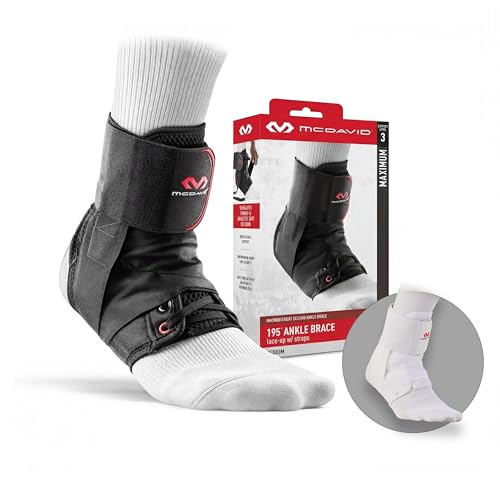
The McDavid Lace-Up Ankle Brace is built around a figure-8 strapping pattern that wraps the foot and ankle in a way most compression sleeves can’t match. Rigid side stabilizers sit on either side of the joint to resist lateral rolling, which is the most common way weak ankles give out during side cuts or sudden pivots. The lacing system lets you dial in exactly how snug the fit feels, so you can loosen it for a long hike and tighten it before a pickup game. Compared to the soft Modvel sleeve covered later, this is a much more structured, athletic-minded design.
For anyone stepping back onto the court after a mild sprain or years of feeling unstable on lateral moves, the combination of figure-8 tension and rigid stays delivers a confidence boost that simple compression can’t. The trade-off is bulk: it takes up more room in the shoe than a sleeve, so wide footwear helps. Care is straightforward, and the materials tend to hold up well to repeated washing when air-dried.
A Few Highlights
- Figure-8 strap pattern actively resists the inversion (outward rolling) motion that causes most re-injuries.
- Rigid side stabilizers provide a sturdy mechanical barrier against sudden sideways ankle turns.
- Adjustable lacing accommodates swelling fluctuations throughout a long day or workout.
- Low-profile construction fits inside most athletic shoes without forcing you up a full size.
- Unisex sizing works across a broad range of foot shapes, useful for shared recovery kits.
Things To Consider
- Takes longer to put on than a slip-on sleeve, which can be awkward in a busy locker room.
- Bulkier feel may bother runners who want a barely-there compression layer.
Who It Suits Best
Recreational athletes returning to basketball, volleyball, soccer, or similar cutting sports who need serious lateral support.
Look Elsewhere When
If you want something you can pull on in five seconds flat for all-day desk wear, the Modvel Foot & Ankle Brace Socks are a more practical everyday fit.
The ACE Deluxe Adjustable Ankle Brace is the kind of straightforward, no-frills support that has earned ACE a household-name reputation. Reinforced side stabilizers are built into the design to limit lateral motion, while the adjustable closure lets you control how much compression wraps around the joint. It slips on easily, fits a wide variety of footwear, and comes in a two-pack that keeps a spare on hand for households managing recovery on both feet or across family members.
Where the McDavid pick leans athletic and rigid, this one feels more like a daily-wear workhorse. It is a smart pick for someone dealing with chronic mild instability rather than a serious acute sprain, and the two-pack means you rotate one while the other is in the wash. The trade-off is that the fabric tends to stretch over many months of daily wear, so plan on replacing it more often than premium options.
Useful Strengths
- Built-in side stabilizers limit sideways motion without the bulk of a lace-up brace.
- Two-pack pricing gives you a rotation pair, useful for daily wearers.
- Slip-on design saves time compared to lacing up structured braces.
- Fits inside most casual and work shoes without forcing a size-up.
Worth Noting
- Elastic and fabric components tend to lose firmness after many months of daily rotation.
- Less structured than the Med Spec ASO, so it’s not ideal for high-impact return-to-sport use.
Made For
Anyone needing reliable moderate stabilization for workdays, errands, or light walks rather than competitive sports.
Consider Something Else When
High-impact athletes and post-sprain rehab should reach for the Med Spec ASO Ankle Stabilizer for a more locked-in feel.
The Modvel Foot & Ankle Brace Socks trade structure for simplicity. Pulled on like a thick athletic sock, the sleeve delivers calibrated compression that supports the arch, heel, and ankle in one piece. There are no rigid stays, no laces, and no learning curve, which makes it an easy choice for anyone who dreads strapping into a structured brace at 7 a.m. Compared to the KEKING sleeve covered next, this one has a slightly thicker knit that feels more sock-like than bandage-like.
Runners and walkers dealing with tendonitis, plantar fasciitis, or general achiness often appreciate the way the sleeve stays put without sliding down into the shoe. The downside is that compression alone cannot fully prevent a serious lateral roll, so it works best as a comfort and circulation layer rather than a return-to-sport guard. Care is easy: toss it in a gentle wash and air dry to keep the elastic lively.
Where It Delivers
- Slip-on sock design removes the friction of wrapping straps or tightening straps mid-day.
- Compression supports arch and Achilles at once, easing tendonitis-related stiffness.
- Stays in place well during walking, gym sessions, and light runs.
Trade Offs
- Lacks rigid stabilizers, so it can’t fully prevent a sharp inversion on uneven ground.
- Thicker knit may run warm in hot summer shoes.
Right Fit For
Walkers, casual runners, and on-your-feet workers who want light, all-day compression over hard mechanical bracing.
Not Your Match When
Post-sprain recovery that calls for firm lateral protection points to the McDavid Lace-Up Ankle Brace instead.
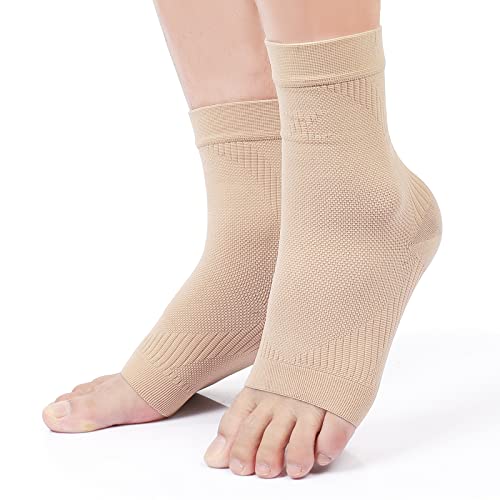
The KEKING Ankle Brace Compression Sleeve brings graduated compression to the table, meaning the knit is tighter at the ankle and looser as it moves up the calf. That gradient, measured at 20-30mmHg, helps push fluid back up the leg, which is exactly what swollen, achy joints need after long days on hard floors. The supportive knit wraps the arch and heel to ease plantar fasciitis pain and Achilles stiffness, making it a versatile pick for conditions beyond simple weakness.
Where the Modvel sleeve feels more like a cushioned sock, KEKING leans clinical. You may notice a slightly firmer squeeze during the first wears, especially if you are not used to graduated compression. It slips easily into most sneakers and works well for runners who want circulation support on the back half of a long run.
Practical Pluses
- 20-30mmHg graduated compression aids circulation and reduces swelling in the lower ankle.
- Targeted knit supports both arch and Achilles for combined plantar fasciitis and tendonitis relief.
- Slim profile fits inside running shoes without forcing a size-up.
Minor Gripes
- Firmer compression can feel restrictive during the first few wears for sensitive users.
- Hand-washing extends elastic life, which adds a small maintenance step.
Who Will Love This
Runners, healthcare workers, and anyone with plantar fasciitis or Achilles stiffness who wants clinical-grade compression.
A Better Fit Elsewhere
For pure cushioned comfort without a clinical squeeze, the Modvel Foot & Ankle Brace Socks are a softer alternative.
The Med Spec ASO Ankle Stabilizer has been a sideline staple for years, and the reason is straightforward: it locks the ankle down. Built for sprain recovery, rolled ankles, and chronic instability, it combines a lace-up body with stabilizing straps that mimic the taping patterns athletic trainers use on the field. Unlike the McDavid pick’s figure-8 emphasis, the ASO spreads tension across a broader contact area, which many rehab specialists prefer during the middle stages of recovery.
This is the brace you reach for when compression alone no longer feels like enough. The trade-off is comfort during long wear: it runs warm, takes longer to apply than a sleeve, and the lacing can loosen mid-session if you are not careful. Sizing runs from small through extra-large, and going by the heel-to-instep measurement helps avoid the common mistake of choosing a brace that bunches at the heel.
Standout Benefits
- Trusted in athletic training rooms for sprain recovery and chronic instability.
- Stabilizing straps create a wide contact area that limits motion in multiple directions.
- Lace-up body lets you adjust tension across different zones of the foot and ankle.
- Available in multiple sizes for a more dialed-in fit than one-size designs.
Points To Note
- Runs warmer than breathable sleeves during long summer sessions.
- Application takes longer than slip-on options, especially over swollen feet.
Best Suited To
Athletes and post-injury rehab patients who want firm, trainer-style stabilization rather than gentle compression.
Skip It When
Daily wearers who just want light compression should grab the INDEEMAX Copper-Infused Sleeve for a breathable, low-profile fit.
The INDEEMAX Copper-Infused Ankle Compression Sleeve blends nylon with copper-ion fibers at a stated 5000PPM concentration, plus a small percentage of spandex for stretch. The copper infusion is marketed to help manage odor and moisture, which matters a lot if you plan to wear the sleeve during long work shifts or sweaty training sessions. Compared to the KEKING sleeve’s clinical compression profile, INDEEMAX leans toward everyday comfort with a softer knit feel.
The sleeve slips on easily and stays put during moderate activity, making it a reasonable pick for runners and walkers with mild Achilles tendonitis or general soreness. The honest read is that copper-infused fabric is not a medical treatment for arthritis or tendonitis, so consider this more of a comfortable compression layer than a corrective device. Care is simple: a cold gentle wash and air-drying keep the elastic lively through repeated rotations.
Why It Works Well
- Copper-ion fibers help manage odor and moisture during long wearing sessions.
- Nylon-spandex blend offers good stretch with enough structure to feel supportive.
- Slip-on design makes daily wear friction-free.
Honest Caveats
- Provides compression rather than rigid stabilization, so it won’t fully prevent lateral rolls.
- Size runs based on letter sizing (M here), so checking measurements matters for fit.
Perfect Match For
People with sweaty or long-shift routines who want a breathable, low-fuss sleeve that stays comfortable under socks.
Another Choice May Suit
If you want stronger lateral control rather than breathable comfort, the Fitomo Quick Lace Up Ankle Brace offers removable splints you can dial in.
The Fitomo Quick Lace Up Ankle Brace earns its name through a quick-pull lacing system that closes faster than traditional lace-ups. Removable side stabilizers and a three-level strapping setup let you tune the brace from light compression to firm lockdown depending on where you are in recovery. The sizing chart ranges from small (9.5″-10.5″) to extra-large (14″-15″) measured around the heel-to-instep circumference, which is a more accurate fit guide than guessing by shoe size.
This is the most adjustable pick on the list, which makes it appealing for households managing different stages of injury. Pull the splints out for early rehab when you want gentle compression, slide them back in for the return-to-sport phase. The trade-off is that the quick lacing system is not as customizable as the Med Spec ASO’s traditional lace body, so people who like micro-adjusting tension may want to explore that option instead.
Noteworthy Benefits
- Removable side stabilizers let you adjust support level as recovery progresses.
- Quick-pull lacing saves time compared to traditional lace-up braces.
- Multi-stage strapping supports both early rehab and return-to-activity phases.
- Clear sizing chart based on heel-to-instep measurement reduces guesswork.
A Few Limitations
- Quick lacing system is less fine-tunable than traditional lace-up designs.
- Bulkier than pure sleeves, so it pairs best with athletic shoes rather than dress shoes.
Who Should Grab It
Anyone progressing through rehab stages who wants one brace that adapts instead of swapping between models.
Reach For A Different Pick When
If you don’t need removable splints and prefer a classic lace-up feel, the Med Spec ASO Ankle Stabilizer offers more long-term adjustability.
What To Weigh Before Picking Ankle Supports For Weak Ankles
Support Type And Stability Level
Weak ankles fall on a spectrum. Mild instability from years of small sprains often responds well to compression sleeves like the KEKING or INDEEMAX picks, where the goal is steady circulation and gentle proprioceptive feedback. More serious lateral weakness, especially after a grade-two or grade-three sprain, usually demands a structured brace with rigid side stabilizers, such as the McDavid or Med Spec ASO models. The honest read is that picking the most rigid option “just in case” often backfires: bulky braces change your gait, which can create new aches in the knee or hip.
Fit, Footwear, And Daily Habits
How and when you plan to wear the brace matters as much as the brace itself. Sleeves slip under socks and into most sneakers, which suits office workers, walkers, and casual runners. Lace-up braces occupy more volume and pair best with athletic shoes that have a roomy toe box and removable insoles. Sizing charts vary: the Fitomo brace uses a heel-to-instep circumference, while the Med Spec ASO uses letter sizing, so a quick measurement before ordering saves the hassle of returns.
Material, Breathability, And Care
Knit sleeves with nylon and spandex breathe well and wash easily, but they stretch out over time. Lace-up braces with rigid stays last longer mechanically but trap more heat and need hand-washing or gentle cycles to preserve the elastic panels. For sweaty work shifts or hot climates, the INDEEMAX copper-infused knit tends to manage moisture better than fully padded braces. Either way, air-drying extends the life of any elastic component.
Activity Level And Recovery Phase
Athletes returning to cutting sports should plan on a structured lace-up for at least the first few months back, then transition to lighter compression as confidence returns. Daily wearers with chronic weakness usually do better starting with a sleeve they will actually put on every morning, rather than a brace that ends up sitting in a drawer because it feels like too much hassle.
Key Considerations Across These Picks
Where Shoppers Go Wrong
The most common slip-up is choosing a brace based on the most serious-sounding condition listed on the box, rather than the level of stability you actually need day to day. A sleeve marketed for Achilles tendonitis will not protect a freshly sprained ankle, and a rigid lace-up will quickly annoy a casual walker. Measure your ankle before ordering, and match the brace type to your most frequent activity rather than your worst-case scenario. Ignoring size charts is the other frequent trap, especially with lace-up designs where a too-loose fit cancels out the support entirely.
Where The Extra Money Goes
Higher-tier braces earn their cost through better materials, longer-lasting elastic, and more refined stabilization hardware. The Med Spec ASO and McDavid lace-ups use stiffer side stays and more durable strap materials than budget alternatives, which matters when a brace is worn daily for months. Copper-infused knits and graduated compression sleeves cost a bit more because of the fiber engineering. For casual wearers, mid-tier options deliver most of the benefit. For serious athletes or anyone in active rehab, the upgrade pays off in longer service life and steadier support.
Frequently Asked Questions
How tight should an ankle support feel?
A properly fitted ankle support should feel snug without cutting off circulation. You want firm contact that limits excessive sideways motion but still lets you wiggle your toes and feel a normal pulse around the ankle bone.
Can you wear an ankle brace all day?
Most compression sleeves are designed for all-day wear, while structured lace-up braces are usually best worn during activity and removed for rest. Listen to your skin: if you see red marks or numbness, loosen the fit or take a break.
Do ankle supports help prevent future sprains?
Stabilizing braces with rigid side stays reduce the risk of another inversion sprain during high-risk activity, while compression sleeves mainly support circulation and proprioception. Neither replaces a proper rehab program focused on balance and strengthening.
How do I choose between a sleeve and a lace-up brace?
Pick a sleeve for daily comfort, mild instability, and conditions like plantar fasciitis or Achilles tendonitis. Pick a lace-up brace for serious lateral weakness, post-sprain recovery, or any activity involving sudden direction changes.
Are these braces machine washable?
Most knit sleeves can go in a gentle machine cycle, but lace-up braces with rigid stays usually need hand-washing to protect the elastic and structural components. Air-drying is the safest choice for either style.
Closing Remarks
The right ankle support comes down to matching structure to your actual day: sleeves for steady comfort and circulation, lace-ups for serious lateral protection, and adjustable hybrids for rehab stages that change over time. Try a brace on with the shoes you wear most often, give yourself a week to adapt, and you’ll quickly feel which design earns a permanent spot in your routine.