

A broken ankle ends in a cast or boot, but the months that follow matter just as much. Tendons stay weak, ligaments feel wobbly, and a wrong step on uneven ground can set progress back. The right ankle support helps you walk, work, and rebuild strength without that constant fear of rolling the joint. This list rounds up seven solid options, from light sleeves for casual wear to heavy-duty stabilizers for tougher rehab phases, so you can match a brace to where you actually are in recovery.
A Snapshot Of The Selections

Sleeve Stars Ankle Brace Men & Women Support

Sleeve Stars Ankle Brace for Plantar Fasciitis Relief

Sleeve Stars Ankle Support for Ligament Damage

ZAMST A2-DX Ankle Brace for Heavy Sprains

Med Spec ASO Ankle Stabilizer Lace Up
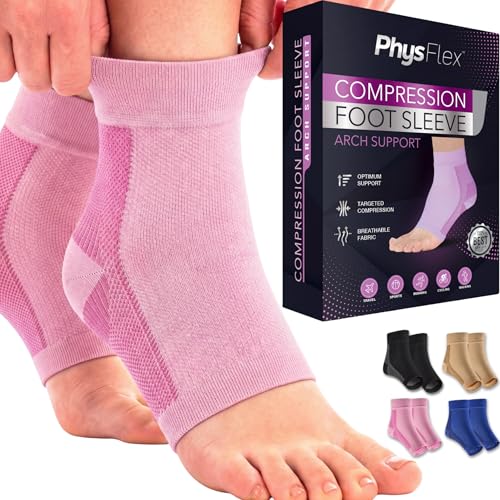
PhysFlex Ankle Compression Sleeve

Fitomo Quick Lace Up Ankle Brace with Splints
Inside Each Recommended Option
The Sleeve Stars sleeve is the kind of brace you forget you’re wearing, which matters when recovery drags on for months. It slips on like a sock and pairs with an adjustable strap that wraps around the joint for a tighter hold when you need it. After the cast comes off, that combination often feels right: light enough for desk work, sturdy enough for a walk around the block.
Compared to the rigid options below, this one trades serious stabilization for comfort and convenience. You won’t want to run a basketball game in it, but for daily errands and gradual rehab, it covers the basics.
Useful Highlights
- Slip-on design makes it easy to put on with one hand when bending is tricky
- Adjustable strap lets you dial compression up during long days on your feet
- Breathable knit helps reduce the sweaty, sticky feeling under pants
- Low-profile fit works under most shoes without forcing you to size up
Things To Consider
- Hand washing and air drying tends to extend the life of the knit fabric
- Sizing is based on ankle circumference, so measuring before ordering matters
Built With In Mind
Office workers and casual walkers in the middle stages of recovery who want something easy to live with day to day.
Look Elsewhere When
The ZAMST A2-DX serves better when a clinician has flagged true ligament instability rather than general post-break weakness.
This second Sleeve Stars pick bundles the compression sleeve with cushioned heel pads, which is a small detail that makes a real difference first thing in the morning. After a break, the heel and arch often stay tender long after the joint itself feels stable. The pads sit under the foot to soften impact on hard floors and stairs.
It uses the same wrap-around strap concept as the first entry, so the experience is familiar. Think of it as the same sleeve upgraded for people whose feet hurt from the bottom up.
What Helps Most
- Included heel cushions absorb shock during that painful first step out of bed
- Compression knit supports the arch and Achilles at the same time
- Light blue fabric hides everyday wear better than plain white versions
- Stretchy material accommodates mild swelling that flares after long walks
Honest Caveats
- The heel pads shift if you wear very low socks, so taller socks help keep them in place
- Less rigid than lace-up braces, so it won’t suit late-stage instability
Quick Facts
Right Fit For
People whose post-break pain lingers in the heel or arch, especially those who stand on tile or concrete floors at work.
Reach For A Different Pick When
You need serious lateral stability; the Med Spec ASO offers that with a more structured lace-up build.
The third Sleeve Stars option leans into compression rather than rigid hardware, with an open-heel design that keeps the back of the foot cooler during long days. For ligament and tendon recovery, sustained gentle pressure often helps more than a bulky brace that traps heat. The strap tightens across the front of the ankle where most post-break soreness shows up.
It feels less medical than the lace-up picks and more like activewear. That makes it approachable for people who don’t want their brace to announce itself at the gym or the office.
A Strong Showing
- Open-heel cut reduces rubbing at the Achilles, a common complaint after immobilization
- Compression strap adjusts without re-lacing, helpful when hands are stiff in the morning
- Light fabric holds up under repeated machine washing better than thicker braces
- Slim profile fits inside sneakers and casual shoes without crowding the toe box
- Soft enough for stationary bike sessions during later rehab phases
Possible Compromises
- The baby pink colorway may not appeal to every shopper, so check options before committing
- Compression loses snap over months of daily wear and eventually needs replacing
Who Should Grab It
Active rehab participants cycling through light cardio and resistance work who want compression without bulk.
Swap It Out When
You plan to return to cutting sports; the Fitomo Quick Lace Up Ankle Brace offers removable splints for higher-impact use.
The ZAMST A2-DX is the brace you reach for when “a little support” stops being enough. It uses a lace-up front combined with rigid side stabilizers, often called side stays, that physically block the ankle from rolling inward or outward. The right-foot, large size makes it specific, so careful measurement matters before ordering.
After a serious break or recurring instability, this is the level of structure many therapists recommend. It’s not subtle, and you won’t forget it’s on, but that visibility is the point.
The Case For It
- Side stabilizers limit harmful lateral motion that re-injures weakened ligaments
- Adjustable lacing lets you tighten for activity and loosen for rest
- Rigid build holds its shape through months of daily wear without sagging
- Common sight on basketball courts and training rooms for good reason
Trade-Offs
- Bulky profile needs roomy shoes, often a half size up from normal
- Right-foot only in this listing, so left-foot users must look elsewhere
- Lacing takes longer than a slip-on sleeve, less convenient for quick trips
Feature Snapshot
Made For
People cleared for higher activity but still dealing with chronic instability or a history of severe sprains.
Skip It When
You’re in the first weeks after the cast comes off; the Sleeve Stars sleeve is gentler for that sensitive window.
The Med Spec ASO has been a fixture in training rooms for years, and it earns that reputation through dependable lace-up stabilization. The figure-8 strap pattern mimics athletic taping, wrapping under the heel and across the top of the foot to lock the joint in place. For a returning athlete or a serious walker, that familiar feel is reassuring.
It looks closer to a traditional medical brace than the soft Sleeve Stars options. In black and large size, it slips into most athletic shoes without fuss, and the lacing system allows quick loosening between sets or activities.
What Earns Its Place
- Figure-8 strap design mirrors athletic taping used by trainers
- Trusted by athletic trainers and physical therapists across multiple sports
- Bilateral design works on either foot, helpful for households sharing braces
- Stabilizing stays prevent the ankle from folding on uneven terrain
Practical Considerations
- Lacing takes practice to apply evenly, especially with one hand
- Fits snug at first and may need a short break-in period before long wear
At A Glance
Who It Suits Best
Returning athletes, referees, and active walkers moving past early rehab into sport-specific training.
A Better Fit Elsewhere
The PhysFlex compression sleeve is a smarter choice when you only need light support under dress shoes for a desk day.
The PhysFlex sleeve skips straps and buckles entirely, offering firm graduated compression in a stretchy knit. At 20-30 mmHg, the pressure is meaningful, which is why the brand flags that fact clearly. For swollen, stiff ankles in the weeks after a break, that sustained squeeze can feel like a warm, supportive hug.
It’s the closest thing here to wearing a thick sock. Under jeans or slacks, it disappears, and you may forget you have it on until you notice the lack of swelling at the end of the day.
Notable Upsides
- 20-30 mmHg compression is the kind of pressure commonly used in medical compression wear
- Slip-on design means no straps to lose or readjust during the day
- Fabric feels breathable enough for extended wear under closed shoes
- Works for both arches and ankles in one piece, simplifying the routine
Some Limits To Know
- Strong compression can feel too tight right out of the package for first-time users
- Limited structural support means it won’t prevent rolling on truly uneven ground
Best Suited To
Office professionals and travelers who want noticeable compression without a visible brace under work clothes.
Where Another Pick Suits Better
The Med Spec ASO serves better when you need firm mechanical support, not just compression.
The Fitomo brace rounds out the list with a hybrid approach: a quick lace-up body plus removable side splints you can insert or pull out as recovery progresses. That adjustability matters because ankle needs change a lot over six months, and a brace that adapts with you tends to outlast one that doesn’t. Size runs from small through XL, with a sizing chart based on ankle circumference.
It’s a sensible last pick for shoppers who want one brace that can transition from guarded walking to light jogging without buying a second model.
The Practical Payoff
- Removable splints let you step down support as the ankle strengthens
- Quick-pull lacing saves time over traditional lace-up braces
- Wide size range covers most ankle measurements with clear sizing guidance
- Side stays add lateral protection for uneven sidewalks and trails
- Adaptable across rehab stages, which reduces the need to repurchase
Points To Weigh
- Measuring the ankle carefully matters since the size range stops at XL
- Heavier than compression sleeves, so it feels bulky under slim dress shoes
- Removing the splints for washing requires keeping track of small parts
Perfect Match For
Recovering walkers and joggers who want one brace that adapts across the full arc of post-break rehab.
Not Your Match When
The PhysFlex sleeve is the better pick for users wanting barely-there compression under business attire.
What Matters Most Before Choosing Ankle Supports After Broken Ankle
Rehabilitation is not a single stage, so the brace you need in week three rarely matches the one you need in month six. Compression sleeves, like the PhysFlex option, shine when swelling and stiffness dominate the picture. They apply consistent pressure that helps blood move through the joint, and they slip under almost any shoe. The honest read is that they feel great for desk days but won’t stop a sideways roll on a wet floor.
Rigid lace-up braces earn their place when the joint itself is unstable. The Med Spec ASO and the ZAMST A2-DX both use side stabilizers, sometimes called side stays, which are vertical supports sewn into the brace pocket that physically prevent the ankle from tipping. For late-stage rehab and any return to running or court sports, this mechanical support is hard to replace. Strap-based designs sit in the middle, giving adjustable compression without locking the joint entirely.
Sizing is where many shoppers slip up. Ankle braces measure by circumference, not shoe size, and a brace that’s off by even a centimeter either slides around or cuts off circulation. Measure the bony prominence around the ankle joint before ordering, and check the brand’s specific chart. Materials matter too, especially for daily wear: breathable knits handle heat better, while neoprene-style builds offer more compression but can feel swampy in summer.
Key Things Worth Knowing Before You Buy
Pitfalls Shoppers Hit
The biggest mistake is buying the heaviest brace too early. After weeks in a cast, the surrounding muscles are weak, and an over-built brace can actually mask the instability you need to feel to retrain properly. A medium compression sleeve is often the right starting point, with a structured brace added once walking feels reliable again.
Sizing errors run close behind. Ordering a brace based on shoe size usually leads to returns, because ankle circumference varies more than foot length. Measure twice, follow the brand’s chart, and prioritize fit over brand recognition.
Where The Extra Money Goes
Premium braces charge more for stiffer stays, more durable fabrics, and cleaner stitching that holds up under daily use. The ZAMST A2-DX and the Med Spec ASO both fall into this tier, with engineered strap patterns that mimic professional taping. That engineering pays off when you actually need the support, but for desk work and short walks, a basic compression sleeve covers the same ground at a fraction of the cost.
Frequently Asked Questions
How soon after the cast comes off can I wear an ankle support?
Most compression sleeves can go on once the incision or skin has fully closed, though a doctor’s clearance always comes first. Lace-up braces with rigid stays usually enter the picture a few weeks later, once the joint is ready for firmer mechanical support.
Should I wear a brace all day during recovery?
It depends on the stage and the brace type. Light compression sleeves often work for full days, while rigid lace-up braces tend to feel better with breaks, especially during rest and sleep, to avoid skin irritation.
Can an ankle support replace physical therapy?
No brace replaces guided rehab, and using one as a crutch can mask weakness that therapy would otherwise address. A support works best as a complement, not a substitute, for the exercises your physical therapist prescribes.
Will a brace fit in regular shoes?
Compression sleeves usually do, but rigid lace-up braces often require a half-size larger shoe. Plan footwear accordingly, especially if you need the brace for work commutes.
How long does a typical ankle support last?
Compression knits tend to lose snap after six to twelve months of daily use. Rigid braces with metal or plastic stays last longer, but the straps and stitching still wear out, so replacement parts and routine inspection help extend service life.
Closing Remarks
The right ankle support is the one that matches where you actually are in recovery, not the one with the most features on the box. Start with what your daily life demands, then upgrade as the joint grows stronger. With the picks above, you can move from cast-off wobble to confident walking one step at a time.