

Cuts, sprains, and rolled ankles don’t care how seasoned you are. Anyone logging real court time, from weekend pickup games to travel-ball circuits, eventually learns that the right ankle support can mean the difference between finishing the season strong and sitting out in a brace.
A Quick View Of The Lineup
A Quick View Of The Lineup

KitNSox Mid Calf Cushion Team Sports Number Socks

Shock Doctor Ice Recovery Compression Ankle Wrap

Z ATHLETICS Lace Up Adjustable Ankle Brace
Z ATHLETICS Reinforced Lace Up Ankle Brace

Z ATHLETICS Reinforced Lace Up Ankle Brace
KEKING Ankle Brace Compression Sleeve
The Picks, Examined More Closely
These KitNSox socks step into a different lane than the wraps and braces on the rest of this list. Built as mid-calf team sports socks with printed numbers, they pull double duty on a roster that needs visible identifiers and cushioning underfoot.
The cushioned mid-calf cut adds padding around the ankle collar, which can soften the impact of quick cuts and stop-and-go drills during practice. If you’re coaching a youth or recreational team, the numbering removes the scramble for pinnies.
Standout Benefits
- Printed numbers cut down on gear hauling for coaches and captains.
- Mid-calf height offers extra coverage over the ankle bone during play.
- Cushioned sole softens the blow on hard indoor courts.
- Gold and black colorway works for many team uniforms.
Things To Consider
- Compression and stabilization are minimal compared to the other picks here.
- Number sizing accuracy varies across batches, so double-check before league orders.
Best Suited To
Recreational league coaches and youth team managers outfitting a roster who want built-in jersey numbers and basic foot cushioning.
Skip It When
You need real joint stabilization, in which case the Z ATHLETICS lace-up braces later on this list serve you much better.
The Shock Doctor wrap earns its spot by handling the side of basketball care most players ignore until something goes wrong. It pairs a compression sleeve with a built-in ice pouch for post-injury or post-game cool-downs.
After a hard practice or a rolled ankle, wrapping the joint while applying cold therapy keeps swelling in check without forcing you to hold a bag of ice against your skin. The compression layer also helps the gel pack stay pressed to the affected area as you rest.
Useful Strengths
- Combined cold therapy and compression in one wrap.
- Available in Large/X-Large sizing for broader ankle builds.
- Reusable design cuts down on disposable ice bags.
- Adjustable hook-and-loop closure for personalized pressure.
Points To Note
- Not designed for in-game wear, so it complements rather than replaces an active brace.
- Gel packs lose chill relatively quickly, so plan re-freezing time between sessions.
Feature Snapshot
Made For
Athletes who already own a play brace and want a reliable cold-and-compression tool for the training room or the couch after games.
A Better Fit Elsewhere
Anyone looking for in-game ankle support should reach for the Z ATHLETICS lace-up brace reviewed below instead.
Z ATHLETICS leans into its namesake by building the adjustable lace-up system with rigid side stabilizers, the plastic or metal struts that sit on either side of the ankle to limit sideways roll. This is the brace you reach for when you want the structure of a taped ankle without paying a trainer every game.
After a grade-one sprain, you can lace this over a sock, dial in the compression, and step into your basketball shoes. The side stays reduce inversion, the ankle rolling outward, on hard cuts while leaving enough flex for normal forward motion.
A Few Highlights
- Side stabilizers offer structured protection against rolled ankles.
- Lace-up closure lets you fine-tune compression on each side.
- Works across basketball, volleyball, and running recovery.
- Fits both men’s and women’s sizing profiles.
Honest Caveats
- Bulkier than a sleeve, so it may not fit every low-cut shoe.
- Side stabilizers can press against sensitive areas if laced too tightly.
- Takes a few wears to find the right tension for your foot shape.
Who Should Grab It
Players returning from a recent ankle sprain who want added structural support during the comeback stretch.
Look Elsewhere When
You prefer a barely-there feel, in which case the KEKING compression sleeve further down the list fits the bill.
The earlier Z ATHLETICS brace focused on side stabilizers, while this reinforced lace-up version trims the profile for shoes that don’t have room to spare. It targets the common complaint that a brace shouldn’t force you to size up your basketball sneakers.
The reinforced lacing pattern hugs the heel and locks the ankle without the bulk of a full stirrup wrap. If your priority is wearing the brace inside a snug low-top, this is the Z ATHLETICS model most likely to cooperate.
Bright Spots
- Slim construction fits inside standard basketball shoes.
- Reinforced lacing distributes pressure evenly across the foot.
- Unisex sizing covers most adult foot shapes.
- Works for both recovery wear and preventative support.
Trade-Offs
- Lacks the rigid side stabilizers of its sibling brace above.
- Lace pattern requires occasional re-tightening during long sessions.
Quick Facts
The Right Fit
Players who want lace-up support without forcing a shoe size change and who mostly need compression rather than rigid bracing.
Swap It Out When
You need visible rigid protection post-sprain, in which case the Z ATHLETICS Adjustable brace earlier on this list is the stronger pick.
Where the previous reinforced brace uses a fairly straightforward lace-up, this Z ATHLETICS sibling brings a figure-8 lacing pattern to the table. The figure-8, a wrapping technique that crosses the laces in an X across the front of the ankle, anchors the heel more aggressively.
That extra wrap pays off during directional changes, since the brace is less likely to shift inside your shoe. It still slips into most basketball sneakers without forcing you to upsize, though you’ll spend a bit more time tying it before tip-off.
Where It Excels
- Figure-8 lacing pattern stabilizes the heel more effectively.
- Slim profile fits inside most basketball and volleyball shoes.
- Compression stays put longer than typical hook-and-loop wraps.
- Useful across basketball, work boots, and women’s sneakers.
Some Limits To Know
- Figure-8 lacing takes practice to tie consistently under time pressure.
- Provides less rigid side protection than the adjustable Z ATHLETICS brace.
Built With In Mind
Competitive basketball players who repeatedly change direction and want a brace that stays locked through a full game.
Reach For A Different Pick When
You want the simplest possible application, in which case the KEKING sleeve later on this list is easier to slide on and go.
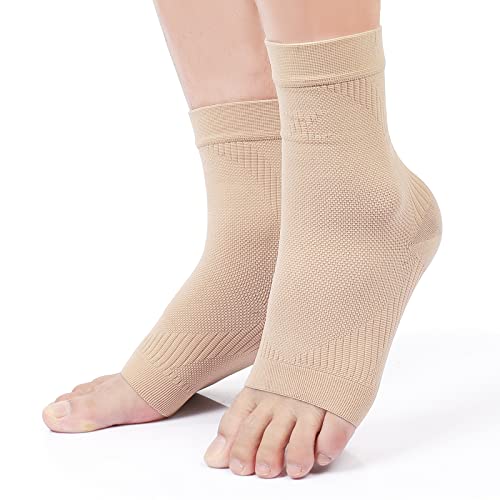
The KEKING sleeve closes out the list as the lightest option in the roundup. Pulled on like a sock, the knit sleeve targets the Achilles and arch with graduated compression, meaning the fabric is tighter at the foot and loosens slightly as it moves up the leg.
Rather than bracing a freshly injured joint, the sleeve suits daily wear, light practices, or warm-up routines where you want circulation support and a bit of proprioceptive feedback. That’s the heightened sense of joint position that helps you feel your foot landing correctly.
Points In Its Favor
- Slip-on knit design fits easily under any sneaker.
- Graduated compression aids circulation during long days on your feet.
- Useful for Achilles, plantar, and arch discomfort beyond basketball.
- Low profile makes it easy to wear on either ankle.
Potential Drawbacks
- Knit fabric stretches over time with heavy weekly use.
- Not a substitute for stabilization after a fresh sprain.
Whose Shelf It Belongs On
Casual players, runners, and anyone managing mild Achilles or arch soreness who wants comfortable compression under normal sneakers.
Where Another Pick Suits Better
Players returning from a real sprain should lean toward the Z ATHLETICS side-stabilizer brace earlier in this roundup instead.
What Matters Most Before Choosing Ankle Support Braces For Basketball
Match The Brace To The Moment
Active play, fresh injury, and recovery each call for different tools. A sleeve handles daily comfort and warm-ups, a lace-up brace with side stabilizers handles the comeback trail, and an ice-compression wrap handles the post-game cooldown.
Trying to make one brace do every job usually means compromising on each. Stocking two items for different phases tends to work better than chasing one perfect piece.
Check The Shoe Fit Before The Brace
An ankle brace that needs a half-size up in sneakers can throw off your footwork on the court. Low-profile sleeves and slim lace-ups are easiest to fit inside standard basketball shoes, while rigid stirrup braces usually demand extra room.
For most players, lace-up designs land in the sweet spot between stability and packability.
Think About Your Injury History
Players with repeated inversion sprains benefit more from side stabilizers and figure-8 lacing. Players managing tendinitis, plantar fasciitis, or general soreness often get more mileage from graduated compression.
Pickers who have never had a major ankle issue sometimes over-brace and lose range of motion, so going lighter may be the smarter play.
Common Shopping Slip Ups
Buying For The Worst-Case Scenario
Going straight to the most rigid brace on the shelf feels safe, but if your ankle is healthy, that extra hardware just weighs you down. Many players end up with a brace they never wear because it’s overkill for their actual situation.
Ignoring The Wash Routine
Sleeves and wraps absorb sweat fast, and skipping regular washing shortens the lifespan of the knit fabric. Plan to hand-wash or use a garment bag if you go machine, and rotate between two braces if you train often.
Frequently Asked Questions
Do ankle braces weaken your ankles over time?
Wearing a rigid brace for every casual activity can reduce the natural stabilizing work of your muscles. Save the structured support for games and higher-risk sessions, and let your ankle move freely on rest days.
Should I wear an ankle brace on both ankles or just the injured one?
Bracing only the previously injured side is the common starting point, since matching braces on healthy ankles can feel restrictive. Once your rehab progresses, you can experiment with bilateral wear if you feel more confident that way.
Can I put an ankle brace inside a low-top basketball shoe?
Slim lace-up braces and knit sleeves usually fit inside low-tops without forcing a size change. Rigid stirrup designs with side stabilizers often need a mid-top or a half-size up to feel comfortable.
How long does a recovery wrap like the Shock Doctor stay cold?
Gel packs typically hold useful chill for roughly twenty minutes before needing a re-freeze. Pre-chill multiple packs if you want longer sessions.
Is a sleeve enough for someone with chronic ankle weakness?
Graduated compression helps with circulation and proprioception, but it doesn’t physically limit sideways motion. Players with true chronic instability usually want a lace-up brace with side stabilizers layered over the sleeve.
Closing Remarks
The right pick depends less on the brace and more on where your ankles are right now. Match the support level to your stage of play, keep your shoe fit in mind, and treat the brace as part of your routine rather than a magic fix.