

A weak ankle changes how you move, whether you’re cutting across a basketball court, walking the dog on uneven sidewalks, or just trying to sleep without that nagging roll-out feeling. The right brace adds confidence back, but only when it matches your situation. This roundup sorts eight popular options by what they actually do on your foot, so you can stop guessing and pick the one that fits your day.
Your Options, Compared

Procare Ankle Support Stabilizer Medium – Model 79-81355
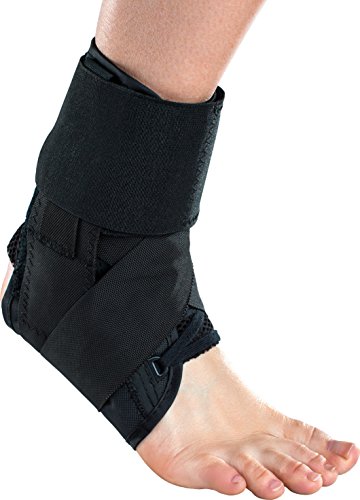
DonJoy Stabilizing Speed Pro Ankle Support Brace

ACE Deluxe Adjustable Ankle Brace (Pack of 2)

Back on Track Physio 4-Way Stretch Foot and Ankle Brace

Med Spec ASO Ankle Stabilizer Lace Up (Black, LG)

INDEEMAX Copper-Infused Ankle Compression Sleeve (M)

Combat Sports Muay Thai & MMA Ankle Support Sleeves

Fitomo Quick Lace Up Ankle Brace with Removable Splints
More Details On Our Top Picks
Slip-on sleeves like this Procare model live in that middle ground between a soft wrap and a rigid stirrup. You pull it over your foot like a sock and the knit fabric does the holding, which matters if you’re tired of fumbling with straps before work. For most desk-to-sidewalk days, that low-fuss approach feels like the right call.
The Medium sizing here targets average ankle widths, so anyone with a particularly narrow heel may find a touch of bunching inside the shoe. Compared to the figure-8 DonJoy you’ll see later, this Procare trades maximum rigidity for genuine all-day wearability.
Advantages To Know
- Slip-on construction skips the strapping routine entirely.
- Knit compression adds proprioceptive feedback during everyday walking.
- Slim profile fits inside most casual sneakers without a size jump.
Worth Noting
- Less rigid than laced stabilizers, so it may feel under-supported during sharp lateral cuts.
- Hand-washing extends fabric life, which is a small but real ownership task.
Built With In Mind
Office workers, dog walkers, and anyone healing from a mild sprain who needs gentle compression through the workday.
Skip It When
You’d be better served by the Med Spec ASO if you’re returning to basketball after a real inversion injury and need strap-driven lateral control.
The DonJoy Speed Pro is the brace trainers reach for when “supportive” isn’t enough. Built from 800D ballistic nylon (a dense, abrasion-resistant weave originally developed for body armor), it handles the kind of abuse that shreds lighter sleeves. The figure-8 strap locks the heel into a stable position, which is the main biomechanical move behind ankle bracing.
You lace it up like a shoe, then cinch the straps on top, which takes a bit longer than the Procare above. For volleyball, basketball, or soccer players cutting hard across a court, that extra minute pays off in rollover protection.
What Works In Its Favor
- Reinforced eyelets survive repeated tightenings without tearing.
- Figure-8 strapping replicates athletic-tape taping patterns.
- Durable outer shell resists abrasion from grass and court surfaces.
Trade Offs
- Bulky under low-cut athletic shoes, so cleat fit may tighten noticeably.
- Heat buildup during long summer practices is a common wearer complaint.
Technical Highlights
Who Should Grab It
Court and field athletes returning to play after a moderate sprain who need trainer-level lateral control.
Look Elsewhere When
The Combat Sports sleeve is a smarter fit for barefoot grappling, where lace-up bulk interferes with foot feel.
The ACE brand is the household name most people recognize, and this deluxe adjustable model adds rigid side stabilizers to the familiar wrap-around format. The two-pack listing makes sense if you’re protecting both ankles or just want a fresh one waiting when the first wears out. That’s a small thing that changes how the brace fits into your routine.
Reinforced side panels limit lateral roll without forcing you into a shoe that doesn’t fit. Unlike the DonJoy above, this one uses a hook-and-loop closure you adjust by feel, so swapping between sitting and standing is fast.
Features That Help
- Side stabilizer inserts block the sideways roll that causes most sprains.
- Adjustable wrap accommodates swelling fluctuations through the day.
- Familiar slip-on design fits most footwear without bulk issues.
Points To Note
- Hook fasteners lose grip after many wash cycles, so owners commonly replace these annually.
Made For
Anyone managing bilateral ankle weakness or chronic instability who wants a brace on hand without reordering constantly.
Consider Something Else When
The Fitomo Quick Lace Up is the better call during active rehab, where removable splints let you step down support as you heal.
Back on Track takes a different angle. The Welltex ceramic-infused fabric reflects body heat back as far-infrared warmth, which the brand ties to improved circulation and reduced swelling. The 4-way stretch knit moves with your foot instead of fighting it, which makes overnight or desk wear realistic.
This is a recovery tool more than a sports brace. Compared to the DonJoy Speed Pro, you’ll get far less rigid protection but noticeably more comfort during long sedentary stretches.
Noteworthy Benefits
- Therapeutic warmth may ease stiffness in arthritic or post-injury joints.
- 4-way stretch knit conforms to swelling without pressure points.
- Comfortable enough for sleep or desk use.
Honest Caveats
- Not designed for athletic lateral protection, so don’t rely on it during sports.
- Heat therapy claims are not clinically evaluated for every listed benefit, so manage expectations.
Feature Card
Best Suited To
Recovery-focused wearers managing chronic swelling or returning from injury who value comfort over rigid bracing.
Reach For A Different Pick When
The Med Spec ASO is the better call if you need actual lateral protection during sport, not just warmth.
The ASO (Ankle Stabilizing Orthosis) is the lace-up brace athletic trainers stock by the case. It uses figure-8 elastic straps over a ballistic nylon shell, and the combination has been refined over decades of sideline use. For inversion injuries specifically, this is the design most clinicians reach for first.
You lace the front like a shoe, then wrap the figure-8 straps to lock the heel. Compared to the DonJoy Speed Pro above, the ASO feels slightly more flexible through the forefoot, which some players prefer.
Benefits That Matter
- Figure-8 strap pattern mimics professional taping techniques.
- Cuff-style tongue simplifies entry compared to slip-on sleeves.
- Widely used in college and pro training rooms, so replacement parts are familiar to clinicians.
A Few Limitations
- Requires a few minutes to lace properly, which is rough for quick transitions.
- Not ideal for barefoot activities, since the heel cup interferes with mat grip.
Quick Facts
The Right Fit
Basketball, volleyball, and soccer players rebuilding confidence after a Grade I or II inversion sprain.
A Better Fit Elsewhere
Pick the INDEEMAX sleeve instead if you want a low-profile option you can wear under dress shoes at the office.
INDEEMAX takes the copper-infusion route, weaving copper ions into a nylon-spandex blend. The sleeve slips on like a tall sock and provides uniform compression around the joint. For chronic Achilles or plantar fascia discomfort, that even pressure often feels more useful than rigid side stays.
The Medium sizing runs true for most average-width feet, though wider ankles may need to size up. It’s a different category than the ASO above, prioritizing mild compression over mechanical locking.
What Stands Out
- Low profile fits inside sneakers, work boots, and even some dress shoes.
- Copper infusion adds moisture-wicking properties to the fabric.
- Even compression supports the Achilles tendon and arch simultaneously.
Worth Bearing In Mind
- No rigid elements, so it won’t stop a hard lateral roll.
- Compression may feel too warm in hot climates.
Whose Shelf It Belongs On
Runners, walkers, and office workers managing tendon pain or mild instability who need something discreet.
Swap It Out When
The Fitomo Quick Lace Up is the right move if you want to step up rigidity during specific activities while keeping the sleeve for everyday wear.
Combat Sports built these for barefoot athletes, and the design reflects that. The anatomical sleeve leaves the heel and toes exposed so you keep full floor grip during kicks and sprawls. That matters more in striking arts than in any other category on this list.
The polyester blend compresses the ankle joint without locking it down, which is the right tradeoff when you need to pivot quickly. Compared to the DonJoy Speed Pro, you lose all rigid protection but gain real agility.
Everyday Wins
- Exposed heel and toes preserve barefoot grip on mats.
- Slip-on design transitions fast between rounds.
- Polyester blend handles repeated sweat cycles without odor retention.
Less Ideal Details
- Compression-only design offers no protection against hard lateral rolls.
- Sizing runs slightly tight in the arch.
Perfect Match For
Muay Thai, MMA, and wrestling practitioners who need ankle support without sacrificing mat feel.
Not Your Match When
You’d be better served by the Med Spec ASO if you’re a basketball player needing lateral roll protection during cuts.
Fitomo’s hook is modularity. The side splints slide out, so you can dial rigidity up in the early weeks of an injury and dial it back as you recover. The quick-lace system uses three strap levels rather than figure-8 wrapping, which speeds up entry when your fingers aren’t working at full strength.
The sizing chart runs from Small through XL, and Fitomo recommends measuring from the heel base to the instep. That kind of fit guidance matters more here than on simpler sleeves, so take the measurement before ordering.
What Helps Most
- Removable splints let you adjust support through different recovery phases.
- Three-level strap system simplifies the lacing process.
- Detailed sizing chart helps narrow the fit before purchase.
Where It Is Less Suited
- Bulky under narrow dress shoes, so office wear is awkward.
- More adjustment steps than a simple slip-on, which may frustrate some wearers.
Right Fit For
People in phased injury recovery who want one brace that adapts from early healing back to full activity.
A Better Fit Elsewhere
The ACE deluxe adjustable is a smoother everyday option if you don’t need removable rigidity and want something that disappears under pants.
What Matters Most Before Choosing Ankle Braces For Stability
Matching Brace Type To Your Activity
The biggest fork in the road is lace-up versus sleeve. Lace-up braces like the DonJoy Speed Pro and Med Spec ASO use figure-8 straps to physically block the heel from rolling inward, which is the motion that causes most sprains. Sleeves like the INDEEMAX or Combat Sports rely on uniform compression and proprioception (your body’s sense of joint position) rather than mechanical locking. For cutting sports, lace-up wins. For chronic tendon pain or low-impact wear, a sleeve usually feels better.
Severity Of The Injury Drives The Decision
A fresh Grade II sprain benefits from rigid support during the first weeks, then a phased step-down approach. Removable-splint designs like the Fitomo handle that timeline in one purchase. Mild chronic instability, on the other hand, often responds well to a simpler sleeve that you wear whenever symptoms flare.
Fit, Footwear, And Daily Reality
Measure your ankle circumference and check the size chart, especially for laced braces where a wrong size compromises the strap geometry. If you plan to wear the brace inside dress shoes, low-cut sneakers, or cleats, the bulk profile of the brace matters as much as its support level. Most wearers underestimate how much rigid braces affect shoe fit until they try them on.
Key Considerations Across These Picks
Pitfalls Shoppers Hit
A common mistake is buying the most rigid brace on the list and then never wearing it because it feels bulky or hot. Another is skipping the size chart, especially on lace-up designs where figure-8 straps only work when the shell sits in the right place. Many shoppers also ignore the difference between compression support and mechanical support; the first feels snug, the second restricts motion, and confusing the two leads to over- or under-buying.
When Paying More Pays Off
The premium tier in this category tends to buy more durable shell materials (higher-denier nylons, reinforced eyelets), better strap engineering, and brand-backed consistency. For a brace you’ll wear daily through a multi-month recovery, those upgrades show up as fewer replacements and better strap grip over time. For occasional use during light activity, mid-tier options usually deliver the same functional result at a friendlier entry point.
Frequently Asked Questions
How tight should an ankle brace feel?
A properly fitted brace feels snug enough that your heel doesn’t shift inside your shoe, but not so tight that your toes go numb or your foot tingles. Some pressure during the first few minutes is normal, but sharp pain means you need to loosen the straps or check the size.
Can I wear an ankle brace all day?
Yes, as long as the brace fits correctly and your skin stays dry underneath. Remove it for sleep if you have circulatory issues, and check for redness or irritation after long wear periods. Sleeves handle all-day use better than rigid lace-ups.
Do ankle braces weaken ankles over time?
Used full-time, a brace can reduce some of the stabilizing work your muscles do, which is why rehab exercises matter during recovery. Wearing a brace only during high-risk activities, rather than 24/7, helps your ankle keep its natural strength while still protecting vulnerable moments.
Should I size up if I’m between sizes?
Most brands, including Fitomo, recommend sizing up when you’re between sizes because compression fabrics mold to your foot with use. A brace that’s too small restricts circulation and bunches painfully inside your shoe.
Are sleeve braces enough for basketball?
For minor instability, a well-designed sleeve can reduce rollover risk. For a recent sprain or high-level play, lace-up braces with figure-8 straps remain the standard. Many players use both, switching based on practice intensity.
Bottom Line
The ankle braces on this list solve different problems, and the right one depends on whether you need mechanical locking, gentle compression, therapeutic warmth, or mat-friendly flexibility. Match the brace design to your activity and recovery phase rather than chasing the most rigid option. Your ankle will tell you pretty quickly if the choice fits.