A rolled ankle on a wet trail, a twisted landing on the basketball court, or a slow-rolling ache that flares up on your morning walk: these are the everyday moments that send people searching for proper ankle support. The right brace limits harmful motion, eases swelling, and lets you keep moving while tissues recover. This lineup focuses on what genuinely matters for a sprained ankle: compression that fits, structure where you need it, and comfort you can actually wear for hours.
A Quick View Of The Lineup

Procare Ankle Support Stabilizer Medium – Model 79-81355

Modvel Foot & Ankle Brace Compression Socks
MODVEL Slim Lace Up Ankle Brace

Modvel Foot & Ankle Brace Socks with Adjustable Strap
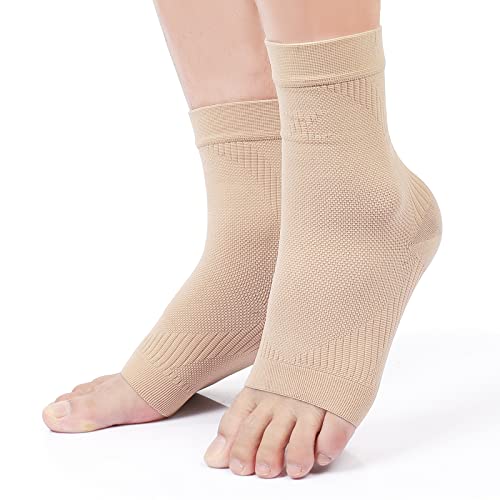
KEKING Ankle Brace Compression Sleeve

ZAMST A2-DX Ankle Brace (Right, Large, Black)
More On The Choices That Made The List
The Procare Stabilizer sits at the top because it does the simple job that matters most: hold a freshly sprained ankle steady without turning it into a clunky boot. The medium sizing in the 79-81355 line is built around everyday wear, sliding over a sock and under casual sneakers for desk days, dog walks, and light rehab sessions.
People recovering from mild inversion sprains tend to gravitate toward this style because the wraparound construction gives even compression across the malleoli (the bony knobs on either side of your ankle) and the heel. The trade-off is bulk: it is not the most discreet pick in the lineup, so if you want something that disappears under slim dress shoes, the Modvel sleeves further down will suit you better.
Strong Points
- Wraparound design delivers broad, even compression across the entire ankle joint.
- Medium sizing suits a wide range of average-width feet for daily recovery use.
- Sturdy enough to wear during light activity, not just rest at home.
- Trusted by clinicians and athletic trainers for post-injury stabilization.
- Pairs easily with a tall sock and standard sneaker for rehab walking.
Things To Consider
- Noticeably bulkier than the sleeve options below, so slim-fitting shoes may not close comfortably.
- Owners commonly report that the lacing or hook-and-loop can loosen mid-day with heavy walking.
- Hand-washing and air-drying tend to extend the life of the hook materials.
Quick Facts
Who It Suits Best
Anyone recovering from a mild to moderate inversion sprain who wants a dependable, clinician-style stabilizer for daily wear.
Where Another Pick Suits Better
Runners and athletes who need to keep wearing performance shoes should consider the MODVEL Slim Lace Up Ankle Brace instead, since its slim profile fits more easily inside running footwear.
The Modvel sleeve trades the bulk of a stabilizer for something that feels closer to a compression sock. Pulled on over the foot, it wraps the ankle in a consistent hug that works well for people who want support but do not want to fuss with straps. Compared with the Procare wrap at the top of the list, this is a fundamentally lighter category of brace.
It makes a strong match for runners, walkers, and people returning to the gym after a minor sprain. Because there are no rigid stays or laces to adjust, you can wear it during long shifts on your feet or on a flight without it digging into the top of your foot. It is less suited to a fresh Grade II or III injury where you genuinely need to restrict inversion, which is where the ZAMST at the end of the list steps in.
Well-Handled Touches
- Sock-style fit slips on quickly, with no lacing or strapping to manage mid-day.
- Stretch-knit fabric breathes better than neoprene wraps during long wear.
- Worn comfortably under most sneakers, trail shoes, and even some casual loafers.
- Useful for tendonitis and arthritis alongside sprain recovery.
Worth Noting
- Without rigid stays, it cannot fully prevent a bad inversion on uneven terrain.
- Sizing is critical: too small restricts circulation, too large slides down the ankle.
- Knit fabric tends to lose compression over many wash cycles if machine-dried on high heat.
Made For
Active people managing minor sprains, chronic tendonitis, or recurring swelling who prefer a sleeve they can forget they are wearing.
Not Your Match When
You need locked-down lateral support for a more serious injury, in which case the ZAMST A2-DX Ankle Brace offers the rigid stabilization this sleeve cannot match.
The MODVEL Slim Lace Up Ankle Brace takes the figure-8 strapping pattern that athletic trainers use on the sideline and packages it in a low-profile sleeve you can wear under a shoe. Where the Procare at the top of the list wraps broadly, this one targets the lateral ligaments more directly, pulling the foot back into a stable position.
It is the most athletic-feeling option in the lineup and a smart pick for basketball, volleyball, and trail running where quick direction changes stress the ankle. The slim build is a real advantage over bulkier lace-up braces: most people can wear it inside a normal athletic shoe without re-tying or removing it. Trade-off: the lace and figure-8 strap take a minute to learn, so first-time users often need a few attempts to find the right tension.
A Few Strong Suits
- Figure-8 strapping pattern specifically supports the lateral ligaments most often injured in sprains.
- Soft pads behind the ankle bone reduce chafing during long training sessions.
- Slim construction fits inside most basketball, running, and casual sneakers.
- Adjustable lace lets you tighten or loosen based on swelling through the day.
Trade Offs
- Lace tension takes practice, and overtightening can cause numbness across the top of the foot.
- Not ambidextrous on all listings, so left and right feet may need separate purchases.
- Laces and small loops can wear out with frequent machine washing.
Feature Snapshot
Best Suited To
Court and field athletes returning from a lateral sprain who want strap-down support that still fits inside a normal sneaker.
Look Elsewhere When
You mostly want gentle compression for arthritis or all-day wear, where the Modvel sleeve above feels more natural than a lace-up brace.
The Modvel Socks with Adjustable Strap pair a compression sleeve with an external wrap strap you can cinch over the top. It is a hybrid design: the sock handles the even compression that reduces swelling, while the strap layers targeted compression over the joint when inflammation spikes. People who deal with ankle swelling that fluctuates through the day tend to find this combination more useful than either a plain sleeve or a rigid brace.
Compared with the standard Modvel sleeve earlier in this list, this version trades a little simplicity for a lot of adjustability. You can loosen the strap at rest and tighten it before a walk, which matters more than you might expect during the first two weeks of recovery. The honest read is that the strap adds bulk at the top of the foot, so very slim shoes can feel tight.
Practical Advantages
- Adjustable strap adds targeted compression you can loosen or tighten on demand.
- Sock base keeps the fit smooth and sock-friendly for everyday wear.
- Useful across sprains, plantar fasciitis, and Achilles irritation.
- Strap is removable, so the sleeve works on its own when you want lighter support.
Honest Caveats
- Extra strap layer adds bulk that can interfere with tight-fitting shoes.
- Strap placement takes a couple of wears to get right for even pressure.
- Owners commonly mention hand-washing to preserve the strap’s hook material.
Whose Shelf It Belongs On
People with variable swelling, recurring flare-ups, or rehab needs that shift between rest and activity through the day.
Swap It Out When
You want the lightest possible option for running or long shifts, where the strapless Modvel sleeve above feels less intrusive.
The KEKING sleeve is built around graduated compression, meaning the knit is tighter at the foot and looser as it moves up the ankle. That graduated profile helps push fluid upward, which is exactly what you want when swelling is the main complaint. It earns its spot here because it works as well for plantar fasciitis and Achilles stiffness as it does for a sprain.
Where the Modvel sleeve above feels like a flexible sock, the KEKING reads as a more structured knit with arch support built into the weave. You feel a clearer lift under the arch and a steadier wrap around the heel. The catch is that this firmer knit can run warm in summer, and people with very narrow heels sometimes find the fabric bunches slightly inside the back of a shoe.
Standout Benefits
- Graduated compression profile helps move swelling up and away from the joint.
- Knit construction supports the arch, which matters for plantar fascia and Achilles recovery.
- Slips on without lacing or strapping, making it easy to use on stiff mornings.
- Versatile enough for sprains, tendonitis, and general ankle fatigue after long days on your feet.
Points To Note
- Firmer knit can feel warm during hot-weather wear or extended workouts.
- Compression is fixed, so you cannot loosen it mid-day the way you can with the Modvel strap option.
- Tall fit reaches higher on the leg, which may not suit shorter socks or low-cut shoes.
Spec Overview
The Right Fit
People who deal with swelling, plantar fasciitis, or Achilles pain alongside a sprain and want one sleeve that addresses all three.
Reach For A Different Pick When
You want adjustable compression through the day, in which case the Modvel Socks with Adjustable Strap gives you more control over tightness.
The ZAMST A2-DX is the heavyweight of the group. It is built for Grade III sprains and chronic ankle instability, the situations where a soft sleeve simply does not provide enough mechanical support. The rigid side stabilizers on either side of the ankle do the work that compression alone cannot: they physically limit the inversion motion that re-tears healing ligaments.
Compared with the MODVEL Slim Lace Up Brace earlier, the A2-DX trades discretion for protection. You will not forget you are wearing it, and you may need to size up your shoe to fit over it, but the trade-off is meaningful if your ankle actually buckles under load. Right-foot only is standard, so left-foot wearers must order the left-side version.
What It Does Well
- Rigid side stabilizers physically block harmful inversion and rolling motion.
- Adjustable lace and strap system lets you fine-tune tightness across zones.
- Targeted at heavy sprains, chronic instability, and peroneal tendonitis recovery.
- Structured build inspires more confidence returning to sport than a soft sleeve.
A Few Limitations
- Bulky profile requires larger or wider athletic shoes for comfortable wear.
- Right- and left-foot versions are sold separately, so check orientation before ordering.
- Higher stiffness can feel restrictive during casual walking compared with sleeve options.
Who Should Grab It
Athletes and active adults returning from a serious sprain or living with chronic ankle instability who need rigid mechanical protection.
Consider Something Else When
Your injury is mild or you want all-day office comfort, where the Procare Ankle Support Stabilizer is a more proportionate level of support.
What Matters Most Before Choosing Ankle Braces For Sprained Ankle
Severity And Phase Of Recovery
Sprain severity drives nearly every other choice. A Grade I stretch or minor tear usually responds well to a compression sleeve like the Modvel sock or KEKING knit. A Grade II with real swelling and tenderness benefits from the wraparound support of the Procare Stabilizer or the lace-up structure of the MODVEL Slim. A Grade III, where the ligament is fully torn, or chronic instability that gives way without warning is where a rigid brace like the ZAMST A2-DX earns its place. Picking by severity keeps you from over-bracing a minor injury or under-bracing a serious one.
Support Type: Sleeve, Wrap, Or Rigid
Sleeves deliver compression with minimal bulk, useful for swelling control and comfort. Wraps and lace-ups add structure, limiting side-to-side motion while still allowing forward flex. Rigid braces with side stabilizers physically block inversion, the right tool after surgery, severe sprains, or repeat rolling. Matching the support type to the injury phase prevents the common mistake of buying a heavy brace for a bruise-level sprain and then abandoning it because it is unbearable.
Fit, Sizing, And Shoe Compatibility
A brace that fights your shoe gets left in a drawer. Slim sleeves fit inside most sneakers, while wraparound and rigid braces often demand a half-size larger shoe or a wide-fit pair. Measure your ankle circumference against the brand’s sizing chart, and if you sit between sizes, the adjustable Modvel strap option gives you room to fine-tune. For swelling that changes through the day, adjustable systems outperform fixed-knit compression.
Activity Level And Duration Of Wear
Daily wear calls for breathable knit sleeves you can keep on for hours. Return-to-sport calls for lace-ups and rigid braces that handle direction changes and uneven ground. Long shifts on your feet favor graduated compression to fight fatigue. The honest read is that the best brace is the one you will actually wear, so comfort over a full day matters as much as peak protection during a single workout.
Key Considerations Across These Picks
Mistakes Worth Dodging
A common misstep is choosing a brace by visual bulk alone and assuming more structure always means better healing. In the early days of a mild sprain, a heavy rigid brace can actually restrict healthy motion, slow circulation, and discourage you from wearing it. The other trap is ignoring shoe fit: braces that need wide or oversized shoes often get abandoned after a week because they simply do not fit into the sneakers you own. Measure your ankle, check the sizing chart, and picture the shoe you will wear most before you commit.
What The Higher Tier Buys
The jump from a compression sleeve to a rigid brace like the ZAMST A2-DX pays for mechanical components, not just thicker fabric. Side stabilizers, articulated hinges, and reinforced strapping work together to physically stop the ankle from rolling, which compression alone cannot do. For serious sprains or chronic instability, that extra protection reduces the risk of re-injury during the vulnerable return-to-sport window. If your ankle gives way on uneven ground, that upgrade tends to pay for itself in avoided setbacks.
Frequently Asked Questions
How long should I wear an ankle brace after a sprain?
Wearable time depends on your doctor’s guidance and the severity of the injury, with most people tapering off once normal strength returns. Light support during high-risk activity often continues for several weeks after pain fades.
Can I sleep in an ankle brace?
Sleeping in a brace is generally not recommended unless your provider specifically tells you to, since the joint benefits from gentle movement overnight. A loose compression sleeve is usually fine if swelling is bothersome.
Do ankle braces weaken the ankle over time?
Used long-term without rehab exercises, any external support can reduce the work the muscles around the ankle do. Pairing brace use with balance and strengthening exercises keeps the joint conditioned.
Should I choose a sleeve or a lace-up brace?
Sleeves favor swelling control and all-day comfort, while lace-ups favor lateral stability during activity. Pick the sleeve for daily wear and the lace-up for sport or uneven terrain.
How do I clean my ankle brace?
Most fabric braces do best with hand-washing in cool water and air-drying flat, since machine dryers degrade elastic and hook materials. Check the care label, because rigid components like stays or hinges may need spot-cleaning only.
Wrap Up
The right ankle brace matches the injury you actually have, not the worst-case scenario you are worried about. For mild swelling and everyday comfort, a sleeve from Modvel or KEKING covers most needs. For a clear sprain with real tenderness, the Procare wrap or MODVEL lace-up adds structure you can feel. For severe injuries and chronic instability, the ZAMST A2-DX provides the rigid protection that justifies its bulk. Start with the level of support your injury calls for, and your brace becomes a tool you reach for instead of one you leave in the drawer.