

A bad landing, a rolled ankle in traffic, and the next practice is suddenly in doubt. Plenty of basketball players push through on a freshly sprained ankle because they cannot afford time off, and that is where the right brace changes the math. The picks below lean toward support you can lace up and trust, with options for cold-therapy compression, low-profile sleeves, and rigid stabilizers for heavier sprains. Each one earns its place for a different reason.
A Snapshot Of The Selections

Shock Doctor Ice Recovery Compression Ankle Wrap

ACE Deluxe Adjustable Moderate-Stabilizing Ankle Brace

Sleeve Stars Ankle Brace Men & Women Support

Sleeve Stars Ankle Brace with Adjustable Strap

Sleeve Stars Ankle Support for Ligament Damage
KEKING Ankle Brace Compression Sleeve

ZAMST A2-DX Ankle Brace for Heavy Sprains

Med Spec ASO Ankle Stabilizer Lace Up

Fitomo Quick Lace Up Ankle Brace with Removable Splints
The Picks, Examined More Closely
The Shock Doctor Ice Recovery wrap blends cold therapy with compression in a single sleeve, which is what you want during the first 48 to 72 hours after a basketball sprain. It is sized for Large/X-Large and uses an airtight design that holds a cold pack or ice bag against the swollen joint. Think of it as the bridge between bag-of-peas rest and your first steps back into light movement.
For a player who sprains mid-season and has a game within a week, this wrap shortens the ice-and-elevate routine. The neoprene-style shell stays put during walking, so you can keep the wrap on while you grab food, sit at a desk, or ride home from practice. Compared with the ACE stabilizer later in this list, the Shock Doctor leans toward swelling control rather than structural side support.
Where It Excels
- Combines icing and compression into one step, cutting your pre-recovery prep time after a practice injury.
- The airtight seal keeps a cold pack pressed against the joint, so swelling drops faster than loose ice on the skin.
- Stays in place during casual walking around the house or apartment.
- Large/X-Large sizing covers most adult men without extra adjusting.
Things To Consider
- Not a stabilizer for cutting on the court; treat it as recovery gear rather than playing gear.
- Owners commonly note the wrap can feel bulky inside a basketball sneaker during early wear.
- The cold-pack chamber requires you to supply your own ice packs, which adds a small recurring step.
Right Fit For
Players in the acute swelling phase who want one piece of gear that handles icing and compression together.
A Better Fit Elsewhere
Anyone who needs actual on-court protection should look at the ZAMST A2-DX instead, since it offers rigid side stabilizers for higher-grade sprains.
The ACE Deluxe stabilizer is the familiar drugstore-style wrap, sold here as a two-pack, which makes it easy to keep one in the gym bag and one at home. Reinforced side stabilizers limit lateral motion, the same direction most basketball sprains go. Slip-on construction means you do not have to re-tie before every drill.
For a player dealing with minor recurring rolls, this brace delivers dependable stabilization without the bulk of a rigid lace-up. The breathable knit panel keeps it from getting swampy under a sock during longer sessions. Compared with the Shock Doctor wrap above, the ACE is more about daily prevention and mild-sprain maintenance than cold therapy.
Strengths Worth Knowing
- Two-pack format stretches value across the season for a team or family with multiple athletes.
- Adjustable wrap design fits a wider range of ankle widths than fixed-size sleeves.
- Slip-on wear saves time in a busy gym rotation.
- Light enough to wear under most basketball socks once broken in.
Honest Caveats
- The knit loses snugness after many machine cycles, so hand-washing extends its usable life.
- Not enough rigidity for grade II or III sprains during early rehab.
Who It Suits Best
Recreational players and youth athletes who want an affordable, easy-to-fit stabilizer for light support.
Consider Something Else When
Anyone returning from a heavier sprain will get more mileage from the Med Spec ASO, which pairs lacing with figure-8 strapping for stronger lateral control.
The Sleeve Stars compression sleeve is a thin, sock-like option in Medium sizing that pulls on without any straps or buckles. It targets blood flow around the joint, the kind of mild support that helps during warm-ups or rest days between heavier braces. Players who hate the bulk of a rigid stabilizer often gravitate here first.
For a guard returning from a mild inversion sprain, this sleeve slides under a basketball sock and stays out of the way. The knit breathes better than neoprene wraps, so a sweaty pickup game is more tolerable. Where the ACE stabilizer above focuses on sidewall rigidity, the Sleeve Stars focuses on uniform compression around the whole joint.
Why It Works Well
- Pullover design means no fiddling with straps when you are late for tip-off.
- Light compression is comfortable for all-day wear between training sessions.
- Slim profile fits inside most sneakers without pressure on the ankle bone.
- Breathable knit reduces moisture buildup during long practices.
Points To Note
- Single-unit packaging means a backup costs extra if you want one for gym and home.
- No rigid element, so severe sprains need a heavier stabilizer alongside it.
- Compression drops after repeated washes, depending on care.
Made For
Players with mild chronic instability who want unobtrusive compression during normal training weeks.
Look Elsewhere When
A player returning from a fresh lateral sprain needs the structural help of the ZAMST A2-DX, not a soft sleeve alone.
This Sleeve Stars model adds a heel-cradling wrap and an adjustable strap to the standard sleeve format, which is useful when a basketball player is dealing with both ankle instability and heel pain. The light-blue colorway is purely cosmetic, but the open-heel layout lets air move across the back of the foot. You pull it on, then dial in compression through the strap.
For a forward who lands hard and feels it in the heel as much as the ankle, this brace spreads the support down into the arch. It pairs well with a recovery routine that includes stretching and ice. Compared with the all-sleeve Sleeve Stars above, this one is more about customizable pressure than a uniform pull.
Where It Helps
- Adjustable strap lets you fine-tune compression as swelling goes up or down.
- Heel and arch coverage helps players who land hard from rebounds and drives.
- Pullover sleeve with strap combines ease of use with stronger stabilization.
- Open-heel design improves airflow during longer wear windows.
Possible Compromises
- More fabric around the heel can bunch inside low-cut basketball shoes.
- Strap requires periodic re-tightening during long sessions.
Best Suited To
Players with combined ankle and heel discomfort who want one brace to handle both complaints.
Another Choice May Suit
If heel pain is the dominant issue and ankle stability is secondary, the KEKING sleeve in this list offers a thinner alternative with steady compression.
The third Sleeve Stars entry on this list shifts emphasis toward ligament recovery and Achilles tendon support, with a compression strap that wraps around the joint for targeted pressure. Sold as a single unit in baby pink, it covers the same compression philosophy as the brand’s other models but leans harder on stabilization in the figure-8 strap zone.
For a player nursing a stretched ATFL (anterior talofibular ligament), the wrap style reduces inversion risk during light drills. It also pulls double duty for Achilles awareness, since the strap sits just above the heel. Relative to the heel-focused Sleeve Stars earlier, this pick is more about the joint itself than the bottom of the foot.
Useful Touches
- Compression strap adds structural help that pure sleeves cannot provide.
- Targets both lateral ligaments and Achilles area in one wrap.
- Adjustable tension lets you back off as the joint heals.
- Slides under a sock without heavy lacing or buckle pressure.
Details To Watch
- Color is fixed, which is purely cosmetic but worth knowing.
- Not a substitute for rigid bracing on grade II or III sprains.
Who Should Grab It
Players working through mild ligament recovery who want adjustable compression without committing to a full lace-up.
Swap It Out When
Anyone returning to contact play should move up to the Med Spec ASO for true lace-up support during games.
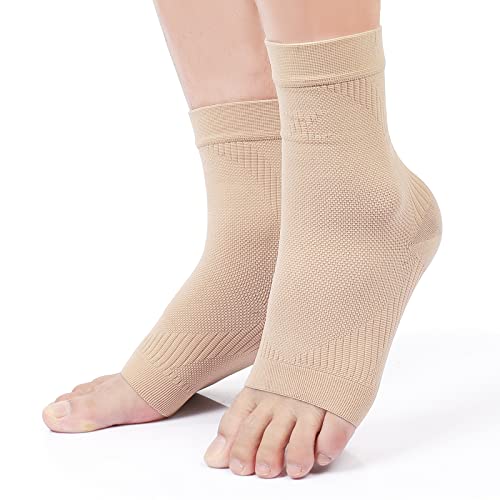
The KEKING sleeve uses graduated compression rated in the 20 to 30 mmHg range, which is a level commonly associated with athletic recovery socks. Graduated means the pressure is firmer at the foot and lighter as it rises up the ankle, encouraging circulation upward rather than pooling in the joint.
For a basketball player who logs long warm-ups and travel days in tight shoes, that circulation benefit matters. The knit stabilizes the arch and heel while staying thin enough for everyday wear. Compared with the lighter Sleeve Stars sleeve earlier, KEKING offers a denser compression profile for more serious recovery needs.
Everyday Advantages
- Graduated 20 to 30 mmHg compression supports circulation during travel and rest days.
- Thin knit fits inside most athletic shoes without crowding the toe box.
- Arch and heel knit helps players who deal with plantar discomfort on top of ankle issues.
- Single sleeve is easy to swap between left and right feet depending on the day.
Points To Keep In Mind
- Compression this firm may feel tight for first-time wearers during the initial 10 minutes.
- Hand-washing preserves the knit longer than machine cycles, which adds a small step.
- Limited structural reinforcement for high-impact lateral cuts.
Who Will Love This
Athletes who treat ankle care as part of a broader recovery routine, including travel and post-practice cooldown.
Reach For A Different Pick When
Players returning from a fresh sprain need the ZAMST A2-DX for the structural side protection that a thin sleeve cannot match.
Feature Snapshot
The ZAMST A2-DX is built for the worst of the bunch: grade III sprains and chronic instability, the situations where a soft sleeve simply will not cut it. It combines a lace-up front closure with rigid side stabilizers on each side of the ankle, plus adjustable straps for fine-tuning the level of support. The right-foot, Large, Black sizing shown here is common for adult men.
For a player working back from a high ankle sprain or peroneal tendonitis, this brace replaces the tape job an athletic trainer might apply. The rigid wings limit inversion, which is the direction most basketball injuries go. The trade-off is bulk; you will want a high-top or wider sneaker to fit it comfortably, and it is heavier than anything else in this list.
What Makes Sense
- Rigid side stabilizers control inversion, the most common mechanism for basketball sprains.
- Lace-up front closure lets you customize fit from heel to tongue.
- Adjustable straps add or remove support without re-lacing the whole brace.
- Designed specifically for grade III and chronic instability cases.
Trade-Offs To Consider
- Bulky under low-cut sneakers, so footwear choice may need to change.
- Lacing and strapping take longer than a pullover sleeve.
- Single-foot orientation means you must pick the correct side and size carefully.
- Higher up-front cost than basic sleeves, which is fair given the protection level.
Whose Shelf It Belongs On
Players with a serious lateral sprain history or anyone cleared by a professional for return-to-play after a heavy injury.
Where A Sibling Pick Shines
Players who want similar lace-up control with a slightly lighter feel should consider the Med Spec ASO, covered later in this list.
The Med Spec ASO is a long-standing basketball staple, and the reason is its figure-8 strap pattern that mimics the wrap a trainer applies pre-game. Lacing closes the front, then the straps cross over the front of the ankle to lock the heel into position. The black, Large sizing suits most adult men.
For a point guard returning from a grade I or II sprain, the ASO gives enough control to feel safe on a drive without the rigid bulk of the ZAMST. Athletic trainers and team doctors commonly reach for this style, which is part of why it has staying power. Compared with the ZAMST, the ASO is lighter and easier to live with for daily training.
Real Benefits
- Figure-8 strap mimics the wrap an athletic trainer applies on the bench.
- Lace-up front closure gives a customizable fit across the foot.
- Lighter than fully rigid braces, so it works in most mid-top basketball shoes.
- Trusted by trainers for sprain recovery and chronic instability.
Points To Weigh
- Straps require occasional re-tightening during long sessions.
- Not as protective as the ZAMST for grade III injuries.
- Lacing adds setup time compared with a sleeve.
Built With In Mind
Players mid-rehab from a moderate sprain who want professional-grade support without committing to the heaviest brace on the market.
A Better Fit Elsewhere
Anyone with chronic instability that needs daily, year-round protection should look at the ZAMST A2-DX for more rigid side control.
Technical Highlights
The Fitomo Quick Lace Up wraps a three-level strap system around a quick-pull lace closure, with side splints that pull out when you want a lighter feel. That modularity is the selling point: heavy today, lighter tomorrow as the sprain heals. The brand provides a tape-measure sizing chart from Small through XL based on ankle circumference.
For a basketball player who wants one brace for the whole rehab arc, this fits the bill. Start with the splints in during the early return-to-drill phase, then remove them as confidence builds. Compared with the ZAMST, the Fitomo trades pure rigidity for adaptable day-to-day use.
The Upside
- Removable side splints let you step down support as recovery progresses.
- Three-level strap system adjusts compression across the ankle, midfoot, and heel.
- Quick-pull lace closure speeds up setup between drills.
- Detailed size chart based on ankle circumference reduces guesswork at ordering.
Less-Strong Areas
- More pieces to track when the splints come out during a session.
- Not as compact as a basic sleeve for everyday casual wear.
The Right Fit
Players who want a single brace that adapts from early rehab through return to full contact.
Not Your Match When
Anyone seeking the lightest possible sleeve for daily wear should pick the Sleeve Stars compression sleeve from earlier in this list.
Feature Rundown
Choosing the Right Support After a Basketball Sprain
Brace Type Sets the Baseline
Three families show up in this category: compression sleeves for circulation and mild support, semi-rigid lace-ups with figure-8 straps, and rigid stabilizers with side wings. Pick the family based on sprain grade. Grade I sprains and chronic instability often do well in lace-ups like the Med Spec ASO. Grade III or heavy recovery calls for rigid protection such as the ZAMST A2-DX. Sleeves like the Sleeve Stars or KEKING fit best as daily background support between heavier training sessions.
Fit Drives Everything Else
A brace that shifts in the shoe wastes energy and irritates the skin. Lace-ups and wrap designs let you dial tension in real time, which matters when swelling fluctuates. Sleeves need accurate circumference measurements, since the knit cannot adjust. For the lace-up options in this list, mid-top basketball shoes give the brace room to sit properly without crowding the ankle bone.
Matching Footwear and Use Case
The shoe on your foot matters as much as the brace on your ankle. Rigid braces rarely fit inside low-cut sneakers, while thin sleeves disappear under almost any sock. Think about the longest session you plan to wear it, whether that is a 90-minute practice or a flight to an away game. Breathable knits help for long, sweaty sessions, and heavier wraps help when stability is the priority.
Considering Long-Term Ownership
A brace you will use across a full season should be washable by hand and quick to dry. Knit sleeves lose compression after many machine cycles, so budget for a replacement every season or two if you train daily. Lace-ups last longer if you re-tension carefully and air-dry the straps after sweaty sessions.
Key Considerations Across These Picks
Common Slip-Ups Shoppers Make
Choosing by looks alone is the fastest path to a brace that sits in a drawer. Pick based on the grade of your sprain, then think about footwear. The second slip-up is sizing by shoe size instead of ankle circumference, which is how sleeves end up too tight or too loose.
Where the Extra Money Goes
Premium braces add rigid side stabilizers, layered strap systems, or modular splints. The ZAMST and Med Spec charge more because the materials handle inversion forces that a basic sleeve simply cannot. For a player who sprains the same ankle every season, that upgrade often pays for itself in fewer missed practices.