

Side sleepers carry a quiet burden most flat pillows just can’t solve. The gap between your ear and the mattress yawns wider than a standard fill can bridge, and your neck pays for it by morning. The right cervical pillow cradles that gap, keeps your spine level, and turns a tense night into a forgettable one. Here’s what to look for and which models actually deliver.
The Picks In Brief

CloudNook Ergonomic Cervical Pillow Grey 60×36×13cm

fgofoc Cloud Support Pillow Memory Ergonomic 3 Sleep Zones

ANYNEST Cervical Neck Pillow 3-Hole Design Gray
DONAMA Cervical Pillow Ergonomic Memory Foam Contour

Missleep Cervical Neck Pillow 2 Heights Ice Silk Cover White
Taking A Closer Look At The Options
The CloudNook pillow earns the top slot because it solves the central problem side sleepers face with quiet precision. Its hollow-center contour cradles the head while a raised side panel fills the gap between ear and mattress, keeping the cervical spine (the seven vertebrae running from skull base to upper back) in a neutral line. The 60×36×13 cm footprint suits most standard pillowcases without awkward bunching.
Two distinct loft heights let you flip the pillow based on shoulder width and mattress firmness, which is more useful than it sounds. Side sleepers on softer beds tend to sink deeper and need the higher side; back-and-side combination sleepers often prefer the lower contour. The grey cover reads neutral in most bedroom palettes.
Practical Advantages
- Hollow center takes pressure off the occipital bone (the bony bump at the skull’s base), easing morning headaches for many users.
- Dual-height design adapts to broader shoulders without forcing a second pillow purchase.
- Contoured side rails keep the head from rolling off during restless nights.
- Standard sizing means your existing pillowcases fit without buying specialty linens.
Things To Consider
- Memory foam can hold warmth, so hot sleepers may want a breathable pillowcase layered on top.
- Off-gassing (a faint chemical smell from new foam) typically fades after a few nights of airing out.
Key Specs
Who It Suits Best
Dedicated side sleepers with average-to-broad shoulders and recurring neck stiffness will feel the difference within the first week.
Consider Something Else When
Stomach sleepers or those who run hot at night should look at the Missleep option, which pairs a cooling cover with a flippable contour.
The fgofoc Cloud Support Pillow stands out for restless sleepers who refuse to stay in one position all night. Its three-zone construction (distinct regions with different firmness and shape for the head, neck, and shoulders) lets you migrate from side to back to stomach without re-pillowing each time. Unlike the CloudNook’s rigid contour, this pillow uses slow-rebound foam that cradles rather than props.
A breathable pillowcase comes standard, addressing the heat-trap problem common to dense memory foam. Two neck support styles on either side give you a softer or firmer feel depending on how your shoulders land.
Reasons It Performs
- Three distinct sleep zones accommodate position-switchers without losing support.
- Slow-rebound foam conforms gradually, which feels easier for fidgety sleepers.
- Included breathable case reduces trapped heat overnight.
- Versatility across back, side, and stomach positions makes it a shared-bed option.
Trade Offs
- The softer feel may not satisfy side sleepers who need a firm prop between ear and mattress.
- Spot-cleaning is the practical reality since the dense foam core doesn’t love machine washing.
Made For
Combination sleepers sharing a bed with a partner who sleeps differently, and anyone whose neck acts up only some nights.
Not Your Match When
Pure side sleepers wanting firm, structured support should consider the DONAMA pillow, which uses a firmer butterfly contour.
ANYNEST’s three-hole design is the most distinctive shape in this roundup, and the geometry is purposeful rather than decorative. Each opening targets a different pressure zone around the head, ears, and facial area, redistributing weight instead of letting it pool on a single contact point. Side sleepers who wake with ear soreness or temple pressure often find this configuration kinder than flat or single-contour designs.
Memory foam fills the core, and the gray cover keeps the look understated. Compared to the CloudNook’s wider single hollow, this approach feels more sculpted and intentional.
Key Advantages
- Three pressure-distributing openings reduce hot spots on ears and temples.
- Sculpted shape holds its form through repeated position changes.
- Memory foam core balances softness with structural support.
Honest Caveats
- Distinctive shape takes a few nights to adapt to, especially for those used to flat pillows.
- Standard pillowcases may not stretch over the contoured profile as smoothly.
- Higher loft can feel too tall for petite frames under five-foot-four.
Quick Facts
Best Suited To
Side sleepers with sensitive ears, jaw tension, or recurring temple pressure who want a pillow built around their specific pain points.
Look Elsewhere When
Petite sleepers or anyone wanting a pillow that tucks neatly into a standard case should consider the Missleep’s more traditional flippable form.
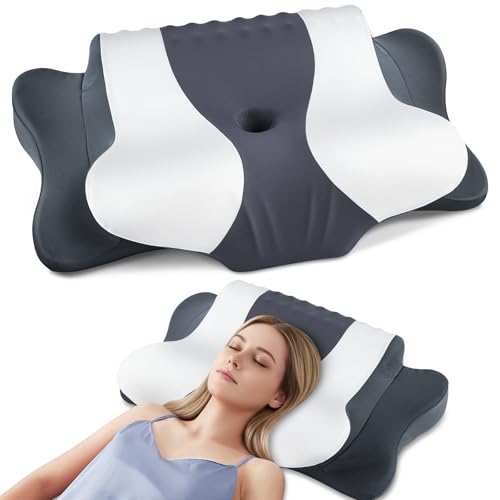
DONAMA earns its place through sheer adaptability. The butterfly contour shape supports the head from multiple angles, letting you roll from side to side without losing the cervical alignment that prevents morning stiffness. Unlike the ANYNEST’s specialized geometry, this pillow reads as a more traditional orthopedic option with subtle ergonomic touches.
Memory foam forms the core, and the design stretches from neck through shoulders for fuller spinal support. Most sleepers find the learning curve shorter here than with more sculptural competitors.
Benefits That Matter
- Butterfly shape supports head, neck, and shoulders in one continuous surface.
- Memory foam holds alignment through position changes.
- Familiar pillow footprint eases the transition from a standard fill.
- Works across multiple sleeping positions for households with mixed preferences.
Room For Improvement
- Firmness may feel intense for sleepers accustomed to plush down fills.
- Dense foam benefits from occasional airing to prevent moisture buildup.
Who Will Love This
Anyone new to cervical pillows who wants an approachable, well-balanced design that doesn’t feel alien under the head.
Skip It When
Hot sleepers wanting active cooling should look at the Missleep option, which uses an ice-silk cover for noticeable temperature control.
The Missleep pillow solves the most common complaint about memory foam: heat. An ice-silk cover (a smooth, high-conductivity fabric that pulls warmth away from the skin) wraps the contour, creating a noticeably cooler surface than standard cases. Side sleepers who wake up flipping their pillow to find a cool spot will appreciate the difference immediately.
Two heights on either side let you match loft to shoulder width, much like the CloudNook. The patented ergonomic foam core holds its shape night after night, and the white cover keeps the look clean and minimal.
What Pays Off
- Ice-silk cover actively manages surface temperature through the night.
- Flippable design offers a higher and lower contour for different body types.
- Patented memory foam maintains structural integrity over months of use.
- Crisp white finish suits modern, bright bedroom aesthetics.
Some Limits To Know
- The specialized ice-silk cover requires gentler washing cycles to preserve its cooling properties.
- Cooling effect diminishes slightly if you layer a heavy cotton pillowcase on top.
Feature Snapshot
Perfect Match For
Hot sleepers and side sleepers in warmer climates who refuse to sacrifice cervical support for temperature comfort.
Another Choice May Suit
Side sleepers who prioritize maximum structural firmness over cooling should explore the CloudNook’s denser contour and dual-height approach.
What To Weigh Before Picking A Cervical Pillow
The right loft is the single biggest factor for side sleepers. Measure the distance from your ear’s base to the mattress’s surface while lying down, then match that gap with the pillow’s taller side. Too low and your neck tilts down; too high and it cranks upward. Both directions undo the alignment the pillow is meant to provide.
Material matters more than most shoppers realize. Memory foam holds contour and supports heavier heads well but traps warmth. Polyester fills breathe better but compress quickly. Latex blends offer a middle ground, though they’re less common in this category. Pick based on whether you sleep hot or cold, not on marketing claims.
Shape should match how you actually sleep, not how you wish you slept. Combination sleepers need a forgiving contour that works across positions, while dedicated side sleepers benefit from taller, firmer side panels. Stomach sleepers should avoid thick cervical pillows entirely, as the angle can hyperextend the neck.
Cover fabric affects nightly comfort more than you might think. Breathable cotton runs warm in summer; ice-silk and bamboo-derived fabrics pull heat away. If you wash your pillow frequently, factor in how the cover handles the dryer too.
Key Considerations Across These Picks
Pitfalls Shoppers Hit
A common mistake is choosing loft based on how the pillow looks on the shelf rather than how it performs under your head. Another frequent error is ignoring shoulder width, which determines whether the pillow fills the side-sleeping gap or leaves your neck floating unsupported. Buyers also tend to underestimate the break-in period; memory foam pillows often feel firm for the first week before settling into their working feel.
Why Top Tier Costs More
Premium cervical pillows invest in patented foam formulations that rebound more slowly and last longer than budget fills. Higher-end models also use engineered covers with active cooling fibers and reinforced stitching at stress points. For side sleepers using the pillow nightly for years, the durability gap justifies the upgrade. Casual users who want temporary relief may find mid-tier options entirely adequate.
Frequently Asked Questions
How Long Does It Take To Adjust To A Cervical Pillow?
Most sleepers need one to two weeks to fully adapt, and mild neck soreness during the transition is normal as muscles recalibrate to better alignment.
Can A Cervical Pillow Help With Morning Headaches?
Pillows that properly cradle the occipital region often reduce tension headaches caused by overnight neck strain, though results vary by individual anatomy.
Are These Pillows Safe For Stomach Sleepers?
Most cervical pillows in this category are too thick for stomach sleeping and can overextend the neck; stomach sleepers typically need a much flatter profile.
How Do I Clean A Memory Foam Cervical Pillow?
Spot-clean the foam core with mild detergent and air-dry completely, while the removable cover usually goes in a gentle machine cycle.
Will The Pillow Lose Its Shape Over Time?
Quality memory foam holds contour for two to three years of nightly use before noticeable softening, depending on body weight and sleep habits.
The Takeaway
Side sleepers don’t need a miracle; they need a pillow that respects the geometry their body already chooses. Match loft to your shoulder width, pick a cover that handles your sleep temperature, and give the foam a week to break in. Any of the five options here will treat your neck better than a flat fill ever did, so choose based on your specific sleep habits rather than a single feature on paper.