

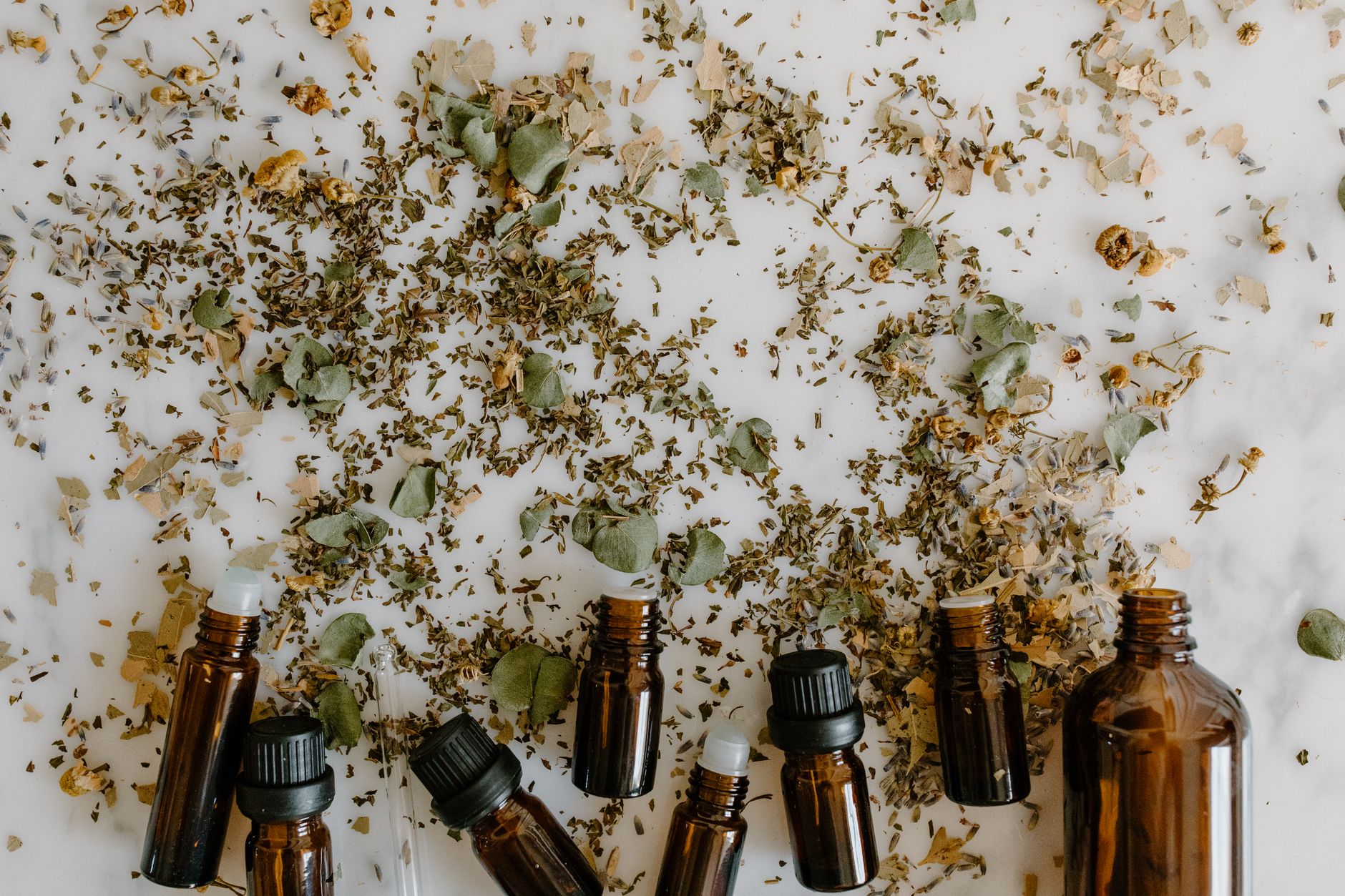

Tea tree oil is a steam-distilled essential oil pressed from the leaves of Melaleuca alternifolia, a small paperbark tree native to the wetlands of New South Wales, Australia. It contains over 100 volatile compounds, and terpinen-4-ol makes up 30–48% of the oil, driving the antimicrobial activity studied in lab work. It is not a food, provides no macronutrients, and is intended only for topical or aromatic use, which is why nearly every safety question turns on proper dilution.
This guide breaks down tea tree oil’s botanical roots, evidence-backed uses, safe dilution ratios, and the allergic reactions that prompt people to patch-test before every new application.
The Botanical Origins and Chemical Identity of Tea Tree Oil
Australian Aboriginal communities used crushed Melaleuca alternifolia leaves for skin and respiratory complaints long before commercial distillation began in the 1920s. The oil is pulled from the leaves with steam, a method that preserves the fragile volatile compounds without charring the plant material.
What’s Inside the Bottle
More than 100 individual chemicals have been identified in the oil, and terpinen-4-ol is the dominant constituent most tied to antibacterial and antifungal action in laboratory studies. Cineole, a secondary component, gives the oil its sharp, medicinal scent but also acts as a skin irritant at higher concentrations.
Think of the oil as a tiny chemistry kit: terpinen-4-ol does the heavy lifting, while cineole sets the irritation ceiling.
Why ISO 4730 Matters
The international standard ISO 4730 sets a minimum terpinen-4-ol content of 30% and caps cineole at 15%, with 5% or lower preferred for skin-friendly products. When a bottle of tea tree oil meets that benchmark, the chemistry behind published research lines up with what is actually in the dropper.
Look for two markers on a serious product: the Latin binomial Melaleuca alternifolia and the country of origin. Australian-sourced oil typically meets ISO 4730 benchmarks because the Australian Tea Tree Industry Association has enforced quality standards for decades.
With sourcing standards established, the next question is whether the clinical evidence actually justifies the oil’s reputation.
What the Research Actually Shows About Tea Tree Oil Benefits
The strongest evidence sits in three lanes: acne lesions, fungal skin infections, and dandruff. Each lane has a concentration attached, so the dose in your product decides whether the effect shows up.
Acne and Inflammatory Lesions
Applied twice daily at a 5% concentration, a topical formulation reduced inflammatory acne lesions in randomized trials, performing comparably to 2.5% benzoyl peroxide with fewer reports of dryness. The trade-off is speed: tea tree oil works, just a bit more slowly than the drug-store staple.
Fungal Skin and Scalp Conditions
Laboratory testing has shown antifungal action against the dermatophytes responsible for athlete’s foot, nail fungus, and seborrheic dermatitis. Shampoos containing roughly 5% it have measurably reduced dandruff severity and scalp itch in controlled studies, offering a credible option for anyone who wants to avoid zinc pyrithione.
| Use Case | Effective Concentration | What Studies Showed |
|---|---|---|
| Facial acne | 5% in gel or carrier | Reduced lesion count vs. placebo, comparable to 2.5% benzoyl peroxide |
| Dandruff / scalp itch | ~5% in shampoo | Lowered severity scores and itch over 4 weeks |
| Nail fungus | 100% topical, twice daily | Improved appearance in mild cases; slower than prescription antifungals |
| Athlete’s foot | 10% topical cream | Symptom relief comparable to tolnaftate in small trials |
Where the Evidence Thins Out
Lab work suggests antibacterial and anti-inflammatory activity beyond the skin, but human evidence for uses like cold sores, sinus support, or lice removal remains limited. Claims about immune support or detoxification sit outside the published research, so treat them as marketing rather than medicine.
Tea Tree Oil Uses: Dilution Ratios and Application Methods
Undiluted tea tree oil on facial skin is a common route to a weekend of redness. The bottle is potent precisely because the chemistry is concentrated, so the right carrier turns that strength into something useful.
Facial Blemishes
For acne, blend 1–2 drops into a teaspoon of a neutral carrier such as jojoba or fractionated coconut oil. Apply with a cotton swab only to individual blemishes rather than swiping across the whole face, where the cumulative exposure is harder to predict.
Scalp and Dandruff
Adding a 5% dilution into an unscented shampoo base and leaving it on the scalp for two to three minutes before rinsing mirrors the protocol in the dandruff studies. Going heavier rarely improves results and increases the odds of irritation along the hairline.
Nail Fungus
Direct application of undiluted oil to the affected nail is common, but the surrounding skin should always be protected with a thin layer of carrier oil first. The nail plate tolerates the strength, the cuticle does not.
General Antiseptic Use
For minor cuts, scrapes, and insect bites, a 0.5–1% dilution in water or aloe gel is enough. A standard 1% dilution equals roughly 6 drops of tea tree oil per fluid ounce of carrier, a formula that removes the guesswork from most home recipes.
Those ratios are simple on paper, yet applying them carelessly is what triggers most adverse reactions.
Tea Tree Oil Side Effects, Allergic Reactions, and Patch Testing
Most reactions show up as contact dermatitis: redness, itching, and a burning sensation, especially when undiluted oil contacts sensitive facial skin. The risk is dose-dependent, which is why dilution sits at the center of every safe-use conversation.
Running a Patch Test
Dabbing a small amount on the inner forearm and waiting 24 hours is the single most reliable way to screen for sensitization before broader use. Dab a diluted drop onto a small area, cover with a bandage, and wait. Any itching, swelling, or spreading redness during that window means your skin has spoken.
Allergic reactions can develop even after months of uneventful use, so each new bottle or brand warrants a repeat test. Reformulations, different crops, and varying terpinen-4-ol percentages can shift the irritation profile without warning.
Red-Flag Symptom Checklist
- Timing: Symptoms appearing within minutes suggest true allergy, not simple irritation.
- Location: A rash spreading beyond the application site points toward a systemic response.
- Swelling: Any facial, lip, or throat swelling requires immediate medical attention.
- Blistering: Fluid-filled bumps signal a chemical burn rather than mild sensitivity.
- Duration: Symptoms persisting past 48 hours should be evaluated by a dermatologist.
Discontinue use the moment a reaction appears. A small flare is not a sign to push through the adjustment period.
Who Should Avoid Tea Tree Oil Entirely
Some groups face risks that go beyond skin irritation, and the safety data for them is thin or alarming.
Oral Ingestion
Swallowing it is dangerous and has been linked in case reports to confusion, loss of coordination, and even coma. The Food and Drug Administration lists it among essential oils that should never be ingested, and any accidental swallowing warrants a call to poison control.
Pregnancy, Breastfeeding, and Children
Pregnant and breastfeeding individuals lack sufficient safety data and are generally advised to avoid topical application on large body areas. Children under six should not use it at all, and older children require reduced dilutions under adult supervision because their skin-to-body-weight ratio amplifies absorption.
Pets
Cats and dogs are highly susceptible, with cats facing liver-specific toxicity from even airborne diffusion in enclosed rooms. Dogs tolerate small, diluted topical applications better, but undiffused bottles and active diffusers in pet areas are a known hazard flagged by veterinary toxicology resources.
Skin Conditions and Sensitivities
Anyone with a known history of essential oil allergies or compromised skin barriers such as eczema should perform extra caution or skip it entirely. Broken skin absorbs more of the oil, and the irritation ceiling drops sharply.
Some people, however, should never reach that comparative stage because the baseline risk is already too high.
How Tea Tree Oil Compares to Other Essential Oils
it sits inside a crowded field, and knowing the neighbors keeps the comparisons honest.
Versus Lavender Oil
For skin calming, lavender oil is gentler and more suitable for daily facial use, while it trades that comfort for stronger antimicrobial punch. Lavender is the better bedtime choice; tea tree is the better blemish choice.
Versus Oregano Oil
Carvacrol, the dominant phenol in oregano oil, shows stronger in-vitro antifungal power but carries far higher irritation potential. Reach for oregano only when diluted carefully, and reserve it for short-term protocols.
Versus Carrier Oils
Fractionated coconut oil absorbs faster, while jojoba oil more closely matches facial sebum and feels lighter under makeup. Both are neutral, but jojoba wins for acne-prone skin because it does not feed the bacteria that drive breakouts.
| Comparison | Tea Tree Oil | Alternative |
|---|---|---|
| Skin calming | More antimicrobial, more irritating | Lavender: gentler, less potent |
| Antifungal power | Moderate, well-tolerated | Oregano: stronger, harsher |
| Carrier base | Jojoba or fractionated coconut | Sweet almond for body, jojoba for face |
| Mild fungal infections | Slower, fewer side effects | Clotrimazole: faster, drug-store strength |
Versus Conventional Treatments
For early-stage fungal infections, it shows slower results than clotrimazole but fewer side effects. That’s a fair trade for some, less so for others, and the right answer depends on how aggressive the infection looks and how patient you are willing to be.
Tea Tree Oil for Skin and Hair: Selecting a Quality Product and Reading the Label
The label tells most of the story once you know what to look for. A serious product leads with the Latin name, the country of origin, and ideally a batch-specific GC/MS report.
What to Look For
- Latin name and origin: Melaleuca alternifolia from Australia signals ISO 4730 alignment.
- Terpinen-4-ol level: 30% or higher, with cineole at 5% or lower for skin-friendly formulations.
- Dark glass bottle: Amber or cobalt glass with a dropper insert, since light and heat degrade the active compounds.
- Batch reporting: Reputable brands publish GC/MS reports, the closest a consumer can get to verifying that the bottle matches the research.
Marketing Language to Ignore
Terms like “therapeutic grade” and “doctor recommended” carry no regulatory meaning under current US labeling rules. The Food and Drug Administration does not certify essential oil grades, so treat those phrases as decoration rather than evidence.
Price is a weak signal too. A fair benchmark is roughly $10–25 for a 1-ounce bottle of Australian oil that meets ISO 4730, but anything dramatically cheaper usually reflects diluted or non-pharmaceutical-grade stock.
The Bottom Line
it works where the research has measured it, mostly acne, dandruff, and mild fungal skin issues, and fails where marketing outruns evidence. The single most useful habit is dilution: a 1% mix for general antiseptic use, 5% for scalp and acne work, and a patch test before every new bottle. Treat undiluted contact as the exception rather than the rule, keep the bottle away from children and pets, and let a dermatologist handle anything that spreads, blisters, or lingers.
FAQ
What is tea tree oil and how is it made?
it is a steam-distilled essential oil from the leaves of Melaleuca alternifolia, a paperbark tree native to New South Wales, Australia. Steam distillation preserves the volatile compounds, including terpinen-4-ol, which makes up 30–48% of the finished oil.
Does tea tree oil have any nutritional value?
No. it is not a food and provides no macronutrients, vitamins, or minerals. It is intended only for topical or aromatic use, and ingestion is considered toxic.
What are the proven benefits of tea tree oil?
Randomized trials support 5% formulations for inflammatory acne and scalp dandruff, 10% creams for athlete’s foot, and 100% topical application for mild nail fungus. Benefits beyond the skin and scalp sit outside the human evidence base.
Is tea tree oil safe to apply directly to skin?
Undiluted it can irritate facial skin, so most applications call for a 1–5% dilution in a carrier oil. A 24-hour patch test on the inner forearm is the safest way to check your tolerance before broader use.
What are the side effects of using tea tree oil?
Contact dermatitis is the most common reaction, with redness, itching, and a burning sensation on sensitive skin. Allergic responses can include swelling, blistering, or a spreading rash, and any of those warrant stopping use and consulting a dermatologist.
Can tea tree oil help with acne or fungal infections?
Yes. A 5% formulation has reduced inflammatory acne lesions in randomized trials, performing comparably to 2.5% benzoyl peroxide. For fungal infections, 10% creams have relieved athlete’s foot symptoms, and 100% topical application has improved mild nail fungus.