
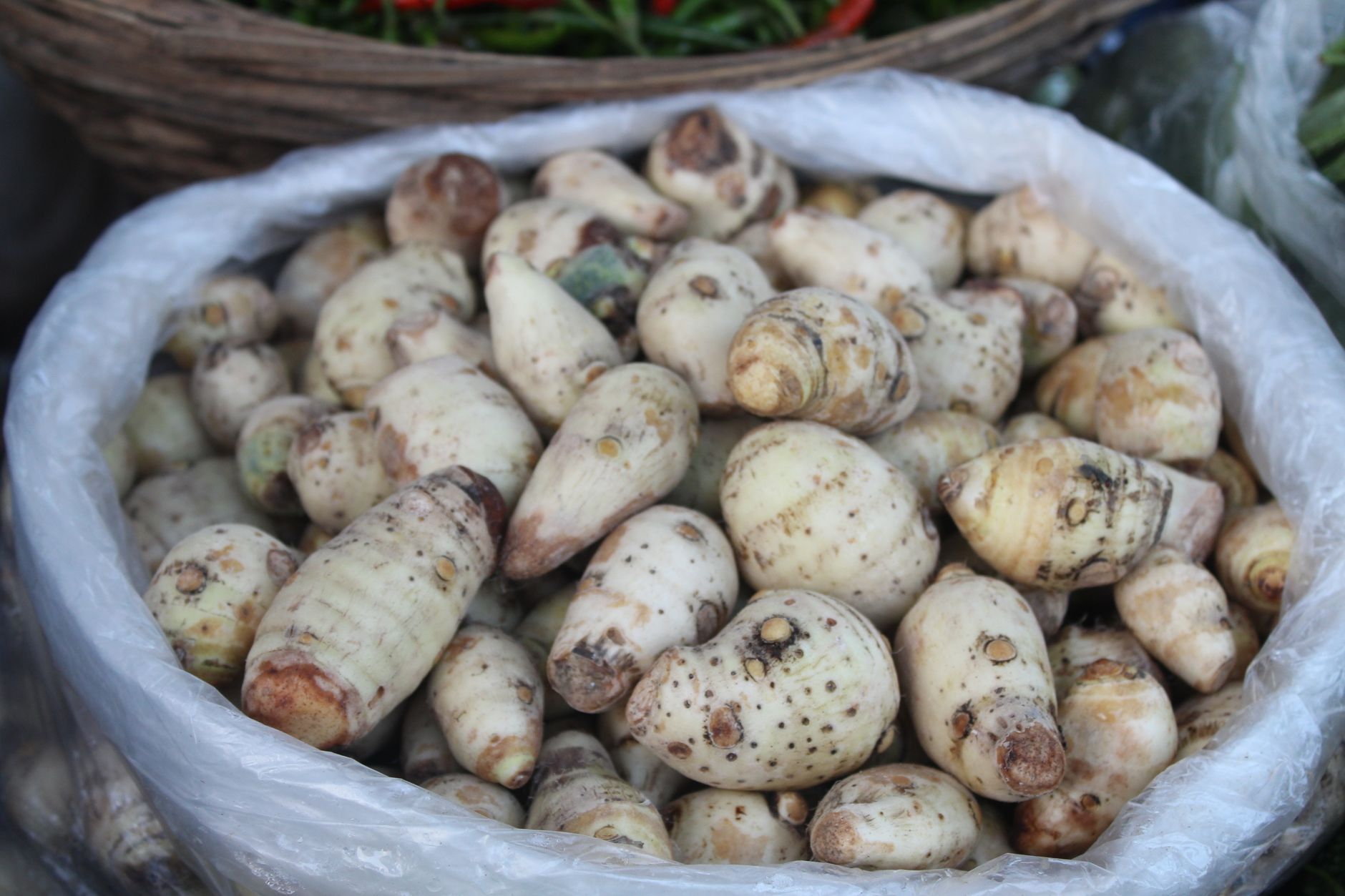

A single cooked cup of this starchy tropical corm delivers complex carbohydrates, dietary fiber, potassium, magnesium, manganese, and vitamins E and C in every bite. The corm is the underground stem of Colocasia esculenta, a plant cultivated for more than 7,000 years across Africa, Asia, the Pacific, and the Caribbean. Markets sell it whole with brown, fibrous skin or already peeled and frozen. The corm must always be cooked before eating.
Below, a registered dietitian unpacks taro root’s complete nutritional profile, evidence-based health perks, potential risks, and safe prep methods for anyone curious about swapping it into their meals.
Taro Root as a Global Staple and Cultural Ingredient
Taro fed entire civilizations long before it appeared in modern café menus. Archaeologists trace its cultivation in New Guinea back more than 7,000 years, and voyagers carried it westward to Africa and eastward across Polynesia. In Hawaii, pounded and fermented taro becomes poi, a soft, slightly tangy paste still served at luaus and family tables.
The corm belongs to a wider family of tropical tubers that often get confused at the grocery store. Eddoe, dasheen, and malanga are close relatives, and names shift by region. They share an earthy flavor, yet taro tends to be the largest and starchiest of the group, with pale white or violet-flecked flesh once cooked.
The plant grows best in wet, warm soil, and the edible portion sits just below the surface like a rough potato with hair-like roots. That unusual look, paired with the strict “cook it first” rule, is why many home cooks hesitate the first time they bring one home.
Nutritional Profile of Cooked Taro Root
One cup of boiled, sliced taro contains roughly 187 calories, 45 grams of carbohydrates, and close to 5 grams of dietary fiber, according to USDA FoodData Central. Protein sits near 1 gram per cup, and fat is minimal, so the corm behaves as a starch side rather than a main protein source.
What separates the macronutrient mix is the type of carbohydrate. A meaningful share arrives as resistant starch, a form that skips digestion in the small intestine and reaches the colon, where it feeds beneficial gut bacteria. Taro also has a lower glycemic index than white potatoes, so it nudges blood sugar up more slowly after a meal.
The mineral and vitamin lineup is another quiet strength. Each cooked cup delivers potassium for blood pressure balance, magnesium for muscle and nerve function, manganese for bone health, plus vitamin E, vitamin C, and smaller amounts of vitamin B6 and folate. Because the carbohydrate base is naturally gluten-free, taro fits a celiac or grain-free eating pattern when prepared on surfaces free of cross-contamination.
| Nutrient (1 cup, boiled, sliced) | Approximate Amount | Why It Matters |
|---|---|---|
| Calories | 187 | Energy density similar to other cooked tubers |
| Carbohydrates | 45 g | Primary fuel source, much of it resistant starch |
| Fiber | 5 g | Supports digestion and satiety |
| Potassium | 615 mg | Helps regulate blood pressure |
| Magnesium | 45 mg | Supports muscle, nerve, and heart function |
| Vitamin E | 2.5 mg | Antioxidant that protects cell membranes |
| Vitamin C | 5 mg | Immune support and collagen production |
| Calcium | 20 mg | Small but useful contribution to bone health |
Evidence-Based Health Benefits of Eating Taro
The benefits of taro root grow out of the same fiber, resistant starch, and micronutrients that shape its nutrition profile. Research into resistant starch and high-fiber tubers points to several overlapping effects.
Digestive and Gut Health Support
Soluble and insoluble fiber adds bulk to stool and shortens transit time, which can ease constipation when intake rises gradually. Resistant starch feeds Bifidobacteria and other beneficial microbes, supporting a more diverse gut microbiome over time.
If your gut is sensitive to fermentable carbs, jump in slowly. A small serving at first lets the bacteria adjust without the bloating that sometimes hits people who suddenly double their fiber load.
Blood Sugar and Heart Health
Because taro digests more slowly than instant rice or mashed potato, the post-meal glucose curve stays flatter. That effect, paired with potassium and magnesium, may help support healthy blood pressure and steady heart rhythm as part of a balanced diet.
Swap white rice for taro in a curry, and you keep the comfort factor while lowering the glycemic load. Replace fried potatoes with roasted taro, and the same principle holds at dinner.
Antioxidant and Immune Contribution
Vitamin C, vitamin E, and a range of polyphenol compounds contribute to antioxidant defenses that counter oxidative stress. These nutrients are not cure-alls, yet they play supporting roles in immune function and long-term cellular health, which is why a varied starch rotation matters more than any single food.
Side Effects, Risks, and Who Should Be Cautious
Most of the trouble with taro comes down to two things: skipping the cook, and ignoring portions. Raw taro is not safe, and even cooked taro can upset a digestion that is not ready for it.
Calcium Oxalate and the Raw Taro Problem
Needle-shaped calcium oxalate crystals pack the flesh of uncooked taro, the same irritating compounds found in dieffenbachia and rhubarb leaves. Bite into a raw slice and your mouth, throat, and tongue can start itching or burning within seconds. The crystals also irritate skin, which is why cooks who peel taro bare-handed often end up with itchy fingers.
Heat breaks these crystals down. A thorough boil, steam, roast, or pressure-cook neutralizes the irritation, which is why every taro recipe starts with cooking first. Treat raw taro the way you would treat a hot pepper: respect the plant, and never taste it uncooked.
Digestive Discomfort and Oxalate Sensitivity
Cooked taro is gentler, but the fiber and resistant starch can still cause gas, bloating, and cramping if you eat a lot of it at once. Build up to larger portions over a week or two, and drink water alongside the meal.
Taro is also a moderately high-oxalate food. People who form calcium oxalate kidney stones may want to limit intake and pair taro with calcium-rich foods at the same meal, since calcium binds oxalate in the gut before it reaches the kidneys. Talk to a qualified healthcare professional if you have a history of stones.
Leaves, Allergies, and Skin Reactions
Taro leaves are a nutritious green used in Caribbean, Filipino, and Indian cooking, but they contain even more calcium oxalate than the corm. They need a long boil, often 30 to 45 minutes with at least one water change, before they belong in stews or sautés.
Rare allergic reactions, including skin rashes, hives, or swelling of the lips and face, have surfaced after eating taro. Stop eating it and seek medical attention if those symptoms appear, especially if you have a history of food allergies or latex sensitivity.
Safety snapshot: Cook taro thoroughly, peel with oil-coated or gloved hands, and start with a small portion to gauge your digestion.
How to Select, Store, and Prepare Taro Safely
Good taro starts at the store. A few minutes of attention there saves an hour of frustration in the kitchen, because the corm keeps for weeks when handled right and spoils quickly when it is not.
Choosing the Right Corm
Look for firm, heavy tubers with smooth, taut skin and no soft spots, mold, or sprouting eyes. Small hair-like roots on the surface are normal and signal freshness rather than damage. Avoid any corm that feels light, spongy, or smells sour, because those cues usually mean rot has set in.
At Asian markets, taro sometimes arrives already peeled and cut into chunks packed in water. That works for quick cooking, but check the use-by date and rinse the pieces before boiling.
Storage and Peeling Precautions
Whole, unpeeled taro keeps for two to three weeks in a cool, dry, well-ventilated spot, similar to a potato. Once peeled, store the corm in an airtight container in the fridge and use it within two to three days, or freeze cooked portions for up to three months.
Before you start peeling, coat your hands with cooking oil or slip on food-safe gloves. The oil keeps the calcium oxalate from reaching your skin, and a quick wash afterward removes any residue. If the sap touches your skin anyway, rinse with cool water and avoid touching your eyes.
Cooking Methods That Fully Soften the Flesh
Boil chunks of taro in salted water for 20 to 30 minutes, until a fork slides in with no resistance. Steam works just as well and keeps more flavor in the flesh. Pressure-cooking at high pressure for 8 to 12 minutes is the fastest route, and roasting halved corms at 400°F for about 45 minutes concentrates the natural sweetness.
Save frying, mashing, and pureeing for after the taro is fully cooked. Taro chips start with a quick parboil, a pat-dry, and a shallow fry until golden. Taro milk tea blends cooked taro with milk and sugar for the pastel purple drink you see in café menus.
Culinary Uses and How Taro Compares to Similar Roots
Once the corm is tender, taro becomes one of the most versatile starches in any kitchen. Its mild, nutty sweetness takes to savory curries as comfortably as it does to sweet desserts.
Savory and Sweet Applications
Simmered taro thickens soups and curries in West African, Caribbean, and South Asian cooking. Mashed taro can stand in for potato under a roast, or anchor a coconut milk stew with fish or chicken. Poi, the Hawaiian fermented paste, is taro in its simplest traditional form, often served alongside salty meats.
On the sweet side, taro appears in taro pudding, taro cake, and taro milk tea. Taro chips and taro fries give a sturdier bite than potato, with a flavor that lands closer to roasted chestnut than to a classic fry. Taro flour and taro starch work as a gluten-free thickener in sauces and batters, similar to how boba tapioca pearls are made from cassava starch.
Taro vs. Potato, Yam, and Cassava
Taro and potato look similar on a plate, but their nutrition diverges in useful ways. Taro tends to have more fiber per cooked cup, a lower glycemic index, and a slightly nuttier flavor, while potato delivers more vitamin C and is more familiar in Western kitchens.
Compared with yams and sweet potatoes, taro is starchier and less sweet, with higher resistant starch that gives a drier mouthfeel. Against cassava, taro has the upper hand in convenience because it does not require soaking or fermenting to be safe, although both still need full cooking to neutralize their respective toxins.
| Root (1 cup, cooked) | Calories | Fiber | Glycemic Index | Flavor Profile |
|---|---|---|---|---|
| Taro | 187 | 5 g | Moderate | Mild, nutty, slightly sweet |
| White potato | 160 | 3 g | High | Neutral, starchy |
| Sweet potato | 180 | 4 g | Moderate to high | Sweet, earthy |
| Cassava | 220 | 4 g | High | Neutral, slightly nutty |
Practical Takeaways for Adding Taro to Your Diet
Taro fits best as a rotation starch rather than a daily staple. Start small, cook it thoroughly, and pair it with protein and vegetables to build a balanced plate.
- Begin with a modest portion. Try half a cup of cooked taro the first time, then build to a full cup over a few meals as your digestion adapts.
- Pair it with protein and fat. Combine taro with fish, chicken, tofu, or coconut milk to slow the glucose response and round out the meal.
- Swap, don’t stack. Use taro in place of white rice or potato in a familiar recipe rather than adding it on top of an already starchy plate.
- Buy from trusted sources. Choose firm corms from high-turnover markets, and inspect frozen or pre-cut taro for ice crystals that signal poor storage.
- Cook until soft all the way through. A fork should slide in with no resistance before you mash, fry, or blend the flesh.
- Store leftovers promptly. Refrigerate cooked taro within two hours in a sealed container, and use it within three days.
If you have a history of kidney stones, food allergies, or digestive conditions such as IBS, talk with a qualified healthcare professional before making taro a regular part of your routine.
Bottom Line
Taro is a nutrient-dense, gluten-free starch that delivers slow-digesting carbs, fiber, potassium, and antioxidants in a single cooked cup. The keys to enjoying it safely are simple: cook it thoroughly to neutralize calcium oxalate, peel it with protected hands, and introduce it gradually so fiber and resistant starch do not overwhelm your digestion. Treat taro as a smart rotation starch alongside rice, potato, and sweet potato, and it earns its place at the table.
FAQ
What are the health benefits of eating taro root?
A generous dose of fiber and resistant starch keeps digestion on track, while a lower glycemic index than potatoes helps steady blood sugar after meals. It is also naturally gluten-free, which makes it a versatile starch for people managing celiac disease or grain-free diets.
Is taro root good for people watching blood sugar?
Cooked taro has a lower glycemic index than white potatoes and instant rice, so it produces a slower, steadier rise in blood sugar. Pair it with protein, healthy fats, and non-starchy vegetables, and monitor your own response with a glucometer or under the guidance of a qualified healthcare professional.
Can you eat taro root raw?
No. Raw taro contains calcium oxalate crystals that cause intense itching, burning, and swelling in the mouth and throat, and they irritate skin on contact. Thorough cooking, whether by boiling, steaming, roasting, or pressure-cooking, breaks these crystals down and makes the corm safe to eat.
How much fiber is in taro root?
A one-cup serving of cooked, sliced taro provides about 5 grams of dietary fiber, along with a meaningful amount of resistant starch that reaches the colon and feeds beneficial gut bacteria. Increase your portion gradually to avoid bloating or gas.
What are the side effects of taro root?
Eating raw taro can cause mouth and throat irritation due to calcium oxalate crystals. Eating very large cooked portions may trigger bloating or gas from the fiber and resistant starch. People prone to calcium oxalate kidney stones may need to limit intake, and rare allergic reactions such as rashes or swelling warrant medical attention.
How does taro root compare to potato nutritionally?
Per cooked cup, taro has slightly more calories than white potato but also more fiber, more potassium, and a lower glycemic index. Potato delivers more vitamin C, while taro offers a nuttier flavor and more resistant starch, making it a useful alternative rather than a direct replacement.