
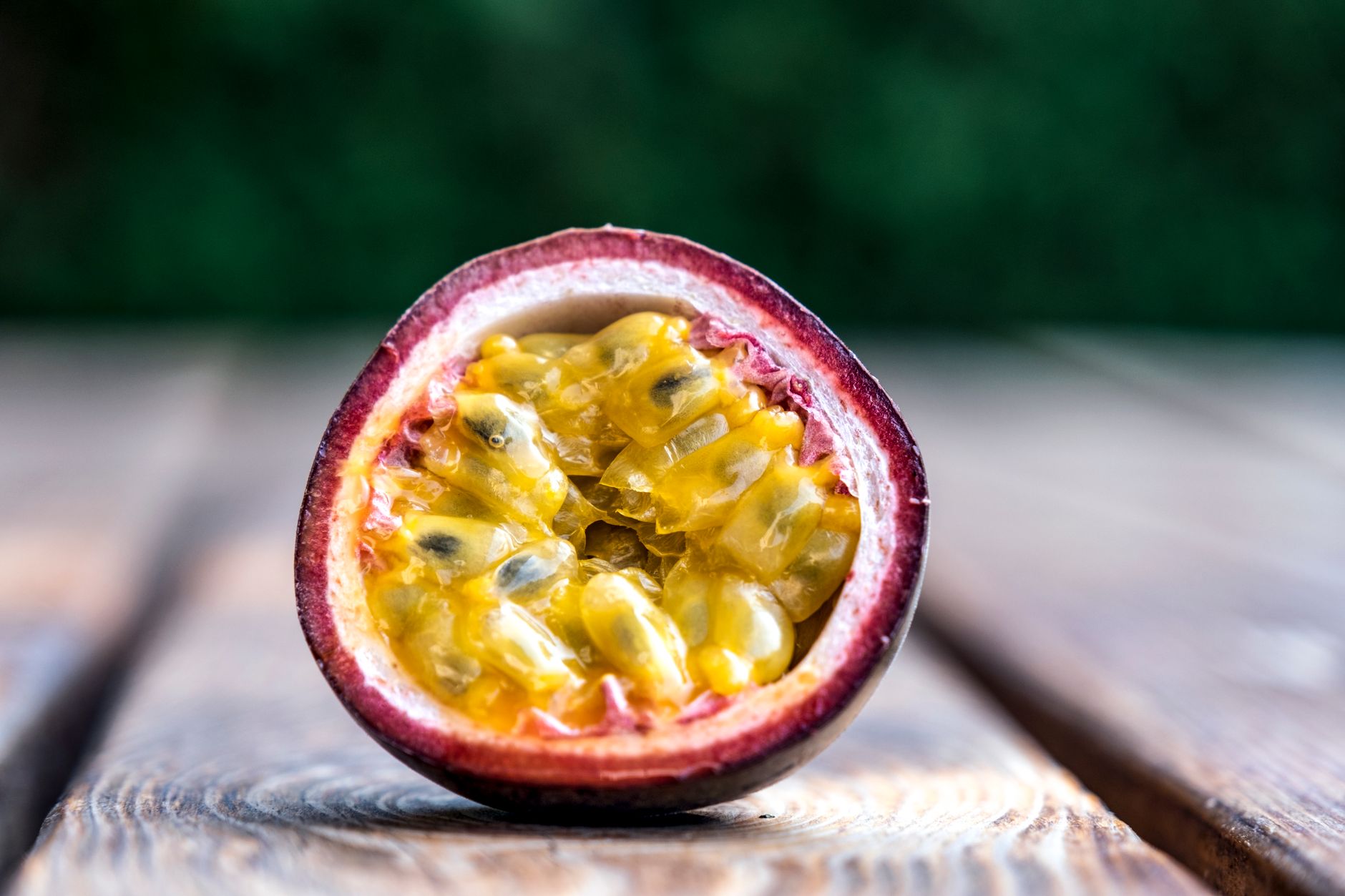

Native to South America, the purple Passiflora edulis packs more than 30 mg of vitamin C into a single fruit along with a generous dose of fiber and polyphenols. One whole fruit runs roughly 17 calories while supplying about 30 percent of your daily vitamin C and nearly 2 grams of fiber, a ratio that separates it from typical sweet snacks. That balance of low calories, high fiber, and strong antioxidant content is what gives passion fruit its reputation as a standout among tropical fruits.
This article breaks down what passion fruit actually delivers nutritionally, which of its health claims hold up under scrutiny, and where the purple and yellow varieties meaningfully differ.
Passion Fruit at a Glance: Origin, Varieties, and Why It Matters
Passion fruit is native to South America, and commercial vines now thrive in tropical and subtropical regions from Southeast Asia to East Africa. Brazil leads global production, followed by Ecuador, Colombia, and Peru, where the fruit is called maracuyá and used in juices, mousses, and dessert sauces. The plant grows as a vigorous climbing vine that flowers and fruits in a single season, which is why warm-climate yields stay consistent year after year.
Two Main Commercial Types
Two distinct forms dominate grocery shelves worldwide. The purple variety (Passiflora edulis f. edulis) is smaller, more aromatic, and more tart, with slightly higher polyphenol density per gram. The yellow variety (Passiflora edulis f. flavicarpa) is larger, sweeter, and more acidic, and typically offers more potassium and beta-carotene. Both share the same wrinkly rind and seedy pulp at peak ripeness, and both qualify as passion fruit on a nutrition label.
Your variety choice shapes flavor, texture, and nutrient expectations before you even cut the fruit open. Purple delivers sharper intensity that works well in smoothies and salad dressings, where tartness cuts through richer ingredients. Yellow gives a milder, juice-friendly profile suited to desserts, beverages, and recipes where sweetness carries the dish. Buying decisions start here, and they cascade through the rest of the article.
That culinary flexibility only matters, though, if what you’re eating actually delivers on its nutritional promise.
One Fruit, One Honest Nutritional Snapshot
A single fresh passion fruit weighs about 36 grams whole, though the edible portion of pulp and seeds lands near 18 grams. That edible portion delivers roughly 17 calories, less than a single cracker, while concentrating most of the fruit’s vitamin C and fiber. USDA FoodData Central remains the most reliable reference for precise values, because numbers vary by source, variety, and ripeness.
What You Get in One Whole Fruit
Each passion fruit supplies about 30 percent of the daily value for vitamin C, 2 grams of natural sugar, and nearly 2 grams of dietary fiber. Small but meaningful amounts of potassium, magnesium, and iron ride along with the pulp. The seeds contribute trace unsaturated fat and add to satiety without meaningfully increasing the calorie load.
How It Compares to Common Tropical Fruits
Per calorie, passion fruit outperforms several popular tropical fruits on fiber and vitamin C density. Mango, pineapple, and banana all carry more sugar per gram of fiber, which is why passion fruit punches above its weight in nutrient-density rankings across the tropical-fruit category.
| Nutrient (per 100 g edible) | Passion Fruit | Mango | Pineapple | Banana |
|---|---|---|---|---|
| Calories | ~97 | ~60 | ~50 | ~89 |
| Vitamin C (% DV) | ~30% | ~44% | ~47% | ~11% |
| Dietary Fiber (g) | ~10.4 | ~1.6 | ~1.4 | ~2.6 |
| Sugar (g) | ~11.2 | ~14 | ~13.7 | ~12.2 |
| Potassium (mg) | ~348 | ~168 | ~109 | ~358 |
The fiber-to-sugar ratio is the standout metric in this comparison. Most sweet fruits lean toward higher sugar with modest fiber, and passion fruit inverts that balance, which is exactly why the glycemic index matters for the next section.
Evidence-Graded Health Benefits Worth Knowing
Strong evidence supports passion fruit benefits for immune function and oxidative-stress reduction, thanks to its vitamin C and polyphenol content. A single fruit covers about a third of your daily vitamin C requirement, and that nutrient is well studied for its role in immune support and collagen synthesis. Polyphenols add a second layer of antioxidant activity that helps neutralize free radicals in the body. The immune and antioxidant claims are robust because the active compounds, vitamin C and polyphenols, have decades of human research behind them.
Where the Evidence Is Strong
Immune and antioxidant benefits rank as strong, backed by decades of vitamin C research. Digestive benefits from the fiber are similarly well established. The pulp contains both soluble and insoluble fiber, and the seeds add bulk that supports regular bowel movements without the harshness of fiber supplements. For most healthy adults, one to two fruits per day is a reasonable serving.
Where the Evidence Is Preliminary
Blood pressure and cholesterol claims often come from small human studies or animal models, so they remain preliminary. Some research links passion fruit peel and pulp extracts to modest reductions in blood pressure and LDL cholesterol, but the doses used in those studies exceed what you’d get from eating one or two whole fruits. Treat these benefits as plausible, not proven.
Where the Evidence Is Animal-Study Only
Claims about passion fruit peel tea for insomnia and anxiety show interesting signals in rodent studies, but human trials remain limited. The traditional use of Passiflora extracts as a mild sedative is real, and it aligns with broader calming-herb research. If sleep support is your goal, talk with a qualified clinician before relying on fruit alone.
Blood Sugar and Glycemic Index
The fruit’s glycemic index generally falls between 40 and 60, which is low to moderate. Natural sugars release slowly when paired with the fiber and seed content, making it a reasonable choice for blood-sugar-conscious eaters. This is the data that most directly addresses the “sweet but healthy” concern, and it holds up under scrutiny.
Use the glycemic index as a rough guide, not a verdict. Your individual response will vary based on what you eat alongside the fruit and your own metabolism.
Purple Versus Yellow: A Practical Comparison
Purple passion fruit is smaller, tangier, and slightly richer in vitamin C and polyphenols per gram. Yellow passion fruit is larger, sweeter, and more acidic, and typically delivers more potassium and beta-carotene. Both are nutritious, but the sensory and cooking profiles differ enough to matter when you plan a recipe.
| Attribute | Purple (P. edulis f. edulis) | Yellow (P. edulis f. flavicarpa) |
|---|---|---|
| Size | Smaller (~5 cm diameter) | Larger (~8 cm diameter) |
| Flavor | Tart, aromatic, intense | Sweeter, milder, more acidic |
| Vitamin C density | Higher per gram | Lower per gram |
| Beta-carotene | Minimal | Noticeable |
| Best uses | Smoothies, dressings, intense sauces | Juicing, desserts, beverage bases |
| Glycemic impact | Slightly lower (less sugar) | Modestly higher (more sugar) |
Reach for purple when you want antioxidant density and a flavor punch. Choose yellow for juicing or dessert applications where a milder, sweeter profile works better. The form you buy, whether fresh, frozen pulp, juice concentrate, or dried, changes calorie and sugar density more dramatically than the variety itself. Always check the label on processed forms, because sweetened nectars can contain added sugar that erases the fresh-fruit advantage.
Side Effects, Allergies, and Drug Interactions Worth Respecting
Most people tolerate passion fruit side effects are rare, but a few reactions deserve attention. Passion fruit belongs to the Passifloraceae family, and anyone with a known latex allergy may cross-react to it. Symptoms can include itching, swelling, or hives around the mouth and throat. If you’ve reacted to papaya, kiwi, or latex in the past, approach passion fruit cautiously the first time.
Digestive Upset in Excess
Eating many fruits in one sitting can cause bloating, gas, or mild cramping because the fiber load arrives quickly. Start with one fruit and see how your gut responds before scaling up. The seeds are edible, but in large quantities they can feel gritty and may irritate sensitive stomachs.
Medication and Supplement Interactions
Passion fruit may interact with certain medications and supplements. Compounds in the fruit can amplify the effects of blood pressure medications, sedatives, and some antidepressants, including MAOIs. If you’re on any of these, talk with your prescribing clinician before making passion fruit a daily habit. Pregnant and breastfeeding people should also consult a qualified healthcare provider, since safety data in those populations is limited.
When to Seek Professional Guidance
Stop eating passion fruit and consult a qualified clinician if you notice rash, swelling, difficulty breathing, or persistent digestive pain after consumption. These are signs of an allergic or intolerant response that needs professional assessment. Guidance from major medical centers advises anyone with a history of plant-food allergies to introduce new tropical fruits under medical supervision.
Cutting, Eating, and Fitting Passion Fruit Into Your Week
Cut the fruit crosswise with a sharp knife, then scoop the pulp and seeds with a spoon and eat them together. The seeds are fully edible, and tossing them wastes the fiber they carry. A ripe fruit will have a slightly wrinkled skin and feel heavy for its size. If the rind is smooth and dark green, the fruit needs a few more days at room temperature.
How to Store and Ripen
Keep unripe fruit at room temperature until the skin wrinkles slightly, then refrigerate for up to a week. The wrinkling signals peak ripeness, and refrigeration slows further sugar conversion. Frozen pulp keeps for three to six months in a sealed container, which is the most practical way to buy in bulk.
Simple Weekly Rhythm
A practical approach avoids overload and delivers consistent nutrition:
- Morning bowl: Slice one fruit over yogurt or oatmeal for a fiber and vitamin C boost.
- Midday smoothie: Blend one fruit’s pulp with banana, spinach, and a protein source for an athletic-recovery drink.
- Evening snack: Spoon pulp over cottage cheese or use it as a topping for whole-grain toast with nut butter.
Common Mistakes to Avoid
Tossing the seeds, juicing and discarding the pulp, and buying sweetened nectar while counting it as a whole-fruit serving are the three most common errors. The pulp, not the juice, carries most of the fiber. Sweetened nectars can contain 20-plus grams of added sugar per serving, which changes the entire nutritional picture.
Peel as a Bonus Ingredient
The peel holds the highest concentration of polyphenols, so skip the compost bin if you can. Steep a small piece as tea, blend it sparingly into smoothies, or candy it for a zero-waste treat. Start with small amounts, because the peel is more concentrated and more bitter than the pulp.
One fruit a day delivers real nutrition without overdoing sugar. Two is fine for most people, but three or more adds up fast and may upset sensitive stomachs.
FAQ
What are the side effects of eating passion fruit?
Most people tolerate passion fruit well, but excess consumption can cause bloating, gas, or cramping. People with latex allergies may experience cross-reactive symptoms such as itching or swelling. The fruit can also amplify the effects of blood pressure medications, sedatives, and certain antidepressants.
Is passion fruit good for you?
A single 18 g passion fruit supplies about 30% of the daily vitamin C target while adding under 20 calories to the plate. Its low-to-moderate glycemic index makes it a smart choice for most balanced diets. Whole fruit is far more nutritious than sweetened juice or nectar.
How many calories are in passion fruit?
Weighing only 18 grams on average, one whole fresh passion fruit delivers roughly 17 calories once the rind is discarded. Per 100 grams, the edible portion runs about 97 calories. The exact number depends on the variety and ripeness, but the fruit is consistently low in calories relative to its nutrient density.
Does passion fruit help you sleep?
Some animal studies and traditional use suggest calming effects, but human trial data is limited. Passion fruit extracts (not whole fruit) have shown mild sedative properties in preliminary research. For sleep support, consult a qualified clinician rather than relying on fruit alone.
Who should not eat passion fruit?
People with latex allergies should approach passion fruit cautiously because of cross-reactivity risks. Anyone on blood pressure medications, sedatives, or MAOIs should talk with their prescribing clinician before eating it regularly. Pregnant and breastfeeding individuals should also seek professional guidance, since safety data in those groups is limited.
What does passion fruit do to your body?
Passion fruit delivers vitamin C that supports immune function, fiber that aids digestion, and antioxidants that help neutralize free radicals. The potassium contributes to blood pressure regulation, and the low glycemic index means sugars release slowly. Together these effects support cardiovascular, digestive, and immune health over time.