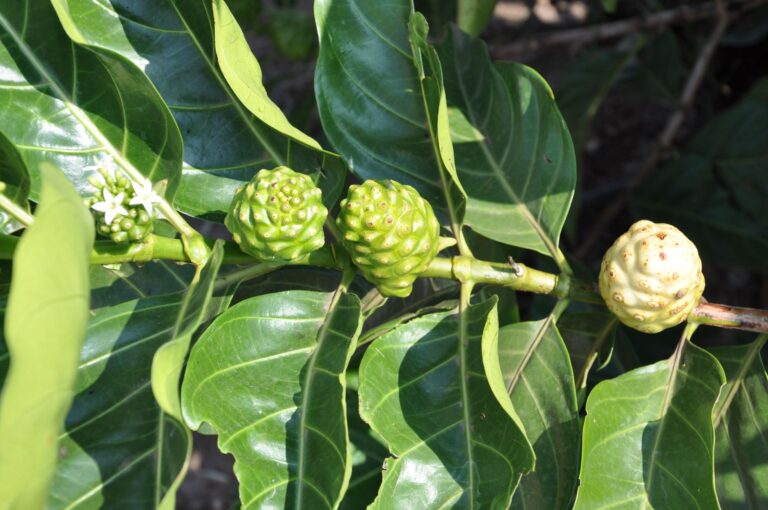


A handful of confirmed antioxidant flavonoids sit inside a fruit the body barely absorbs as food, and that mismatch defines the real case for Maclura pomifera. The syncarp, which is a fused mass of many tiny fruits, holds isosakuranetin, pomiferin, and osajin, compounds that scavenge free radicals in cell culture. The small brown seeds inside carry more usable nutrition than the bitter flesh, the milky latex can irritate skin, and the insect-repellent reputation is weaker than porch folklore suggests.
This breakdown walks curious foragers and natural-remedy tinkerers through what the hedge apple really offers, separating the lab-confirmed flavonoids from the marketing myths, and flagging the parts that can irritate skin or upset a stomach.
What Osage Orange Is and Where It Grows
Osage orange is the fruit of Maclura pomifera, a deciduous tree native to a narrow band of the south-central United States that settlers planted across the continent. The Osage Nation shaped the wood into bows and war clubs, and early farmers used the thorny trees as living fences long before barbed wire existed. That fence-row heritage is why the tree still marks old property lines in states far outside its native range.
The fruit is a syncarp, meaning many tiny fruits fused into one mass that looks like a wrinkled lime-green brain between 3 and 6 inches across. It falls to the ground in late summer and fall, and regional names shift with the map: hedge apple in the Midwest, monkey ball in the South, bois d’orange in Louisiana, and Osage in nearly every state where the tree took hold. Arkansas adopted Maclura pomifera as its state tree in 1842, partly because fence-row Osage once defined the prairie landscape.
Names You Will Hear in the Field
- Hedge apple: the most common name east of the Mississippi, tied to fence-row planting.
- Monkey ball: a Southern nickname referring to the round, brain-like texture.
- Bois d’orange: French-influenced Louisiana name meaning “wood of the orange.”
- Osage: shortened form honoring the Indigenous nation associated with the tree’s traditional use.
The tree sits in the mulberry family, Moraceae, alongside fig, mulberry, and breadfruit. That family link matters because the milky latex and the flavonoid chemistry follow patterns found across the group, which is why skin reactions sometimes appear in people who already react to fig sap or mulberry leaves.
What’s Actually Inside the Flesh and the Seeds
The fleshy part of an Osage orange is about 80 percent water, with modest fiber, a small amount of vitamin C, and a thin spread of antioxidant flavonoids. The osage orange nutritional value of the flesh itself is thin: almost no calories, no meaningful protein, and no significant fat, with a dense texture, an intensely bitter taste, and latex that oozes from any cut. Most people who try a bite do not try a second one.
The seeds tucked inside the syncarp tell a different story. Cracked out, rinsed, and dried, the brown seeds have a faintly nutty, sunflower-seed-like profile and a more concentrated nutrient package than the surrounding flesh. Researchers have isolated isosakuranetin, pomiferin, and osajin from the fruit, and pomiferin gets particular attention in phytochemistry literature for its strong in vitro antioxidant signal.
Osage Orange Compared to Other Moraceae Fruits
| Fruit | Calories per 100 g (fresh) | Notable Compounds | Culinary Use |
|---|---|---|---|
| Osage orange flesh | ~50 kcal | Pomiferin, isosakuranetin, latex | Rarely eaten; seeds occasionally roasted |
| Mulberry | ~43 kcal | Anthocyanins, resveratrol, vitamin C | Fresh, dried, jams |
| Fig | ~74 kcal | Calcium, potassium, ficin | Fresh, dried, preserves |
| Breadfruit | ~103 kcal | Carbohydrates, carotenoids | Cooked starch staple |
Placed beside its mulberry-family cousins, Osage orange is nutritionally thin as a fruit and chemically dense as a botanical specimen. The seeds matter more than the flesh, and the extracted compounds matter more than either part as a whole food.
Those compounds, however, behave differently once you separate folk tradition from laboratory data.
What the Evidence Supports and What It Does Not
Antioxidant and anti-inflammatory activity in laboratory studies is the most defensible benefit tied to osage orange fruit benefits. Pomiferin and related flavonoids scavenge free radicals in cell culture, which is a legitimate starting point for research. What that does not mean is that eating the fruit delivers those effects inside a human body, because the compounds are poorly absorbed from raw flesh and human clinical trials in Osage orange specifically are essentially absent.
Immune support, cancer-fighting, and blood-sugar claims circulate online with confident language and zero citations. They rest on test-tube research, on rodent studies of related flavonoids, and on folk use that has never been tested in a controlled setting. Treat those claims as folklore until a peer-reviewed human study shows otherwise.
The insect-repellent story is the most tested claim and the most overstated. A 2004 Iowa State University study found a marginal effect on some mosquito species and no measurable effect on spiders, despite decades of porch-shelf folklore about placing hedge apples around the house. For real protection, your time is better spent on proven repellents than on fruit bowls by the door.
Traditional uses in fence rows, livestock forage, and tool handles are well documented and verifiable. Those historical roles built the tree’s reputation in the American landscape, and they remain the most honest reason to plant or appreciate one today. The hedge apple health benefits story, by contrast, leans on chemical possibility rather than human proof.
Eating the Fruit, the Seeds, and the Parts to Skip
The raw flesh of an Osage orange is technically non-toxic in small amounts, but it tastes intensely bitter, releases sticky latex, and offers almost no nutritional return for the effort. Most foragers skip the flesh entirely rather than push through a slice. The compound fruit sits firmly outside the grocery aisle for a reason.
The seeds are the practical entry point for anyone who wants to try Osage orange as a wild food. Crack the syncarp open with a heavy knife, rinse the brown seeds in cool water, dry them thoroughly on a towel, and either roast them lightly in a low oven or grind them into a coarse flour for occasional baking. The flavor is mild and earthy, and a small handful per sitting is plenty.
Safe Preparation Steps
- Split the syncarp with a sturdy knife on a cutting board, working around the stem end where latex pools.
- Extract the seeds by hand, dropping them into a bowl of cool water to loosen the pulp.
- Rinse thoroughly until the water runs clear and the slimy coating is gone.
- Dry completely on a towel for several hours, since moisture trapped under the shell invites mold.
- Roast lightly at 250°F for 10 to 15 minutes for a snack, or grind raw for use as a coarse flour.
Infusions and tinctures use small amounts of chopped fruit or seed steeped in hot water or high-proof alcohol. Treat these as experimental folk preparations rather than standardized remedies, because potency varies with the source tree, the ripeness of the fruit, and the steeping time. Topical applications of the milky sap show up in traditional folk medicine, but the latex can irritate sensitive skin, so any skin contact should be tested on a small patch of inner wrist first and washed off promptly if it stings.
The same chemistry that turns a few slices into a curiosity turns repeated handling into a real exposure.
Toxicity, Allergies, and What Too Much Looks Like
Osage orange is not classified as a poison, but it does carry real cautions tied to osage orange side effects and safety. The seeds and the milky sap contain compounds that become problematic in large quantities, so the practical ceiling for most adults is a small handful of prepared seeds rather than a bowlful. Children exploring the fruit should be taught to keep it out of their mouths, because their lower body weight pushes the dose higher relative to their size.
Mild digestive upset, nausea, or cramping is the most common reaction when the bitter flesh is eaten raw, and it serves as a built-in warning that the body is rejecting the dose. A 2 to 3 seed snack is a reasonable adult portion for a first try. Eating 10 or more raw seeds in one sitting increases the risk of stomach upset and is not recommended.
Reactions to Watch For
- Digestive upset: nausea, cramping, or loose stools after eating raw flesh or many seeds.
- Skin irritation: redness or itching where milky sap contacts the skin, especially in people sensitive to mulberry-family plants.
- Pet distress: vomiting or drooling in dogs and cats that chew on fallen fruit.
- Livestock risk: documented toxicity in cattle and horses that consume large amounts of leaves or fruit.
Skin contact with the milky sap can trigger dermatitis in sensitive individuals, and the same irritation risk applies to pets that chew on fallen fruit. Livestock toxicity has been documented in some cases, which is a useful proxy for understanding where the human safety line sits, especially for children exploring the fruit on a fall walk.
Putting Osage Orange to Work Without the Hype
Treat Osage orange as a curious traditional resource rather than a daily supplement. Approach it the way you would any other untested folk preparation: small amounts, short duration, and clear observation of how your body responds. The folklore that surrounds it is interesting, the chemistry is real, and the gap between those two facts is where caution belongs.
For bug- and spider-related hopes, a hedge apple on the porch is harmless folklore, but citronella candles, cedar blocks, and proven essential-oil blends are the realistic choice if repellent performance matters. Do not rely on Osage orange to protect a pantry or a sleeping porch.
Practical Ways to Use It
- Roasted seeds: crack, rinse, dry, and toast lightly for an occasional nutty snack.
- Seed flour: grind dried seeds coarse and fold a tablespoon into quick breads or pancakes.
- Tree planting: establish a windbreak, wildlife shelter, or natural fence row with thorny saplings.
- Landscape feature: use a mature tree as shade and a conversation piece in a low-maintenance yard.
If you forage, learn to distinguish Osage orange from look-alike fallen gourds and unripe melons, and always confirm the tree’s thorny branches and milky sap before harvesting. The most defensible use of this tree remains ornamental and practical, the kind of role a hedge apple has played on the American landscape for two centuries.
The Bottom Line
Osage orange is a tree with a real botanical identity, a small set of well-characterized antioxidant compounds, and a large pile of unverified folk claims stacked on top. The flesh is bitter, the seeds are the only commonly eaten part, and the milky sap deserves respect. Treat it as a wild curiosity worth understanding rather than a remedy worth relying on, and your experience with it stays both safe and genuinely interesting.
FAQ
Is Osage orange safe to eat?
The seeds are safe in small amounts once rinsed and dried, and the raw flesh is non-toxic in tiny portions but intensely bitter and latex-laden. Most adults tolerate a small handful of prepared seeds, while children and pets should be kept away from the fruit because of their lower body weight and the sap’s irritation risk.
What are the health benefits of Osage orange?
Laboratory studies show antioxidant and anti-inflammatory activity from flavonoids like pomiferin and isosakuranetin, which is the most defensible benefit. Claims about immune support, cancer prevention, or blood-sugar control rest on test-tube research and folk tradition rather than human clinical trials.
Can Osage orange repel insects?
A 2004 Iowa State University study found only a marginal effect on some mosquito species and no effect on spiders, despite persistent porch-shelf folklore. For meaningful insect control, rely on proven repellents rather than hedge apples placed around the house.
What nutrients are in Osage orange fruit?
The flesh is mostly water and fiber with modest vitamin C and trace flavonoids, offering almost no calories, protein, or fat. The seeds carry more concentrated nutrients, including fatty acids, plant protein, and the same antioxidant compounds that researchers have isolated from the fruit.
Are there side effects from eating Osage orange?
Eating raw flesh in quantity can cause nausea, cramping, or diarrhea, and the milky sap can irritate skin on contact. Allergic reactions are uncommon but possible, especially in people sensitive to mulberry-family plants, and the same latex risk applies to dogs and cats that chew on fallen fruit.
Why is it called hedge apple?
Settlers planted the thorny trees in tight rows to create living fences, or hedges, across the prairie long before barbed wire was available. The fruit that dropped from those fence-row trees became known as hedge apples, a name that stuck across the Midwest where the practice was most common.