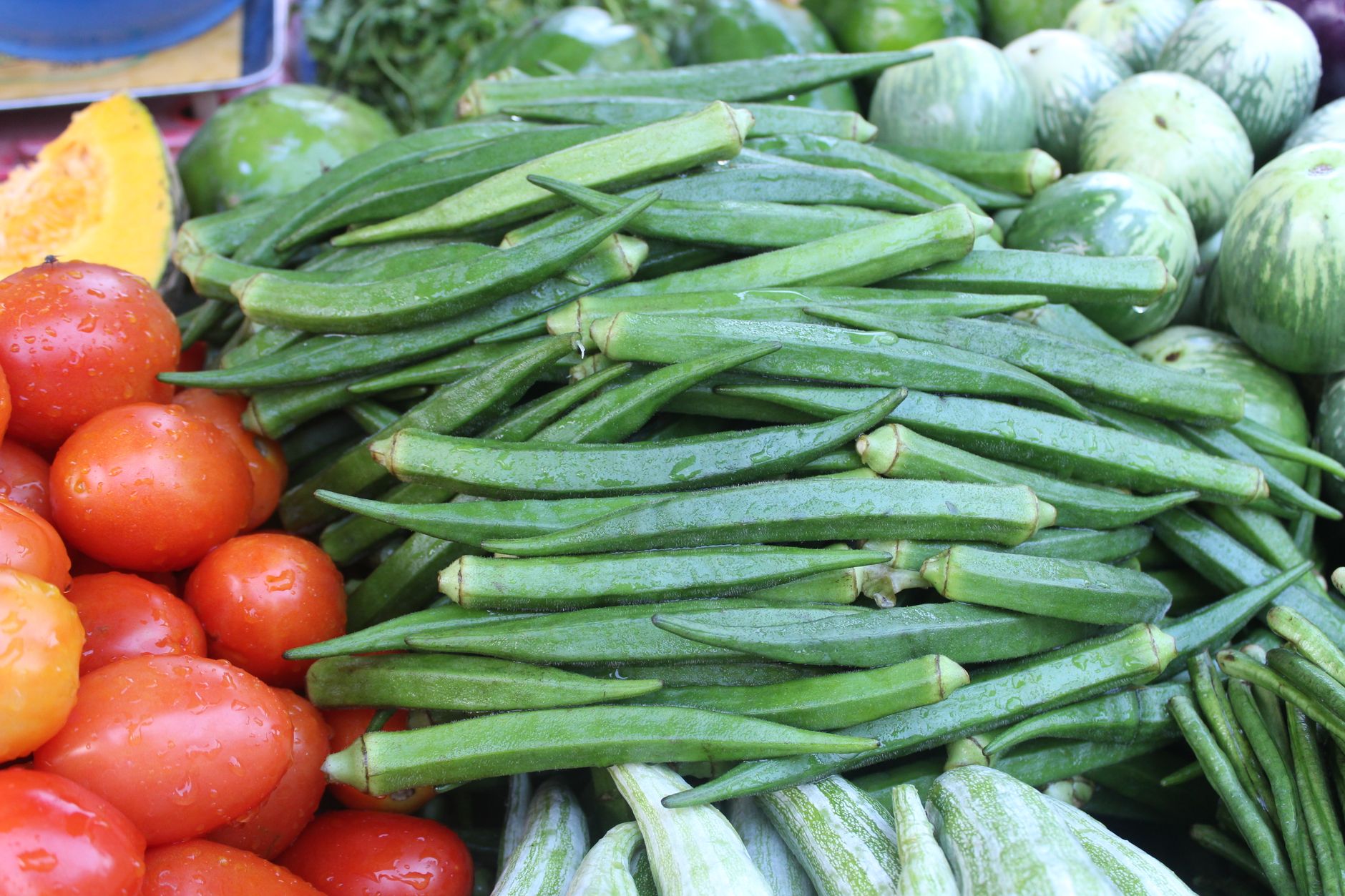

A single green pod delivers more health value than most shoppers realize, packing fiber, vitamin C, folate, and antioxidants into roughly 33 calories per cup. Each 100-gram serving delivers about 33 calories, 3 grams of fiber, and 1.9 grams of plant protein, plus meaningful amounts of vitamin C, vitamin K, folate, magnesium, and potassium. The same pod carries mucilage, a slippery soluble fiber that slows carbohydrate absorption and feeds gut bacteria, which is why researchers have studied okra for blood sugar and cholesterol balance. It also adapts to the kitchen, crisping into a roasted snack or thickening a stew, depending on how you handle it.
Below is a practical breakdown of what okra contains, the benefits backed by real evidence, the risks and drug interactions to respect, and the cooking techniques that turn a polarizing texture into an advantage.
Okra Is a Nutrient-Dense Pod From the Mallow Family
Every summer the long green pods appear at Southern farmers’ markets and South Asian groceries in the same week, yet they get used in strikingly different ways. That range starts with the plant itself, Abelmoschus esculentus, a member of the Malvaceae family alongside hibiscus, cotton, and cacao.
India, Nigeria, and Sudan dominate global production. The United States grows meaningful commercial volumes across Louisiana, Texas, and Georgia, and you’ll hear the pod called okra, gumbo, or lady’s finger depending on the region.
Macronutrients and Calories Per Serving
A 100-gram portion of raw okra comes in at roughly 33 calories, with about 7.5 grams of carbohydrates, 3.2 grams of fiber, and 1.9 grams of protein. Fat content sits below 0.2 grams, making it a low-energy-density food that fills a plate without crowding out other nutrients.
Micronutrient Highlights
The pod supplies about 23 mg of vitamin C, 53 µg of vitamin K, and 60 µg of folate per 100 g, along with magnesium, potassium, and trace calcium and iron. The vitamin K matters most for blood clotting, which becomes important if you take anticoagulants such as warfarin.
The Defining Trait: Mucilage
Okra’s signature texture comes from mucilage, a gel-forming soluble fiber that oozes out when pods are cut or cooked. The same substance slows stomach emptying, traps starches during digestion, and feeds beneficial gut bacteria, which is the foundation for every metabolic claim that follows.
| Nutrient (per 100 g raw) | Amount | % Daily Value (approx.) |
|---|---|---|
| Calories | 33 kcal | , |
| Carbohydrates | 7.5 g | 3% |
| Fiber | 3.2 g | 11% |
| Protein | 1.9 g | 4% |
| Vitamin C | 23 mg | 26% |
| Vitamin K | 53 µg | 44% |
| Folate | 60 µg | 15% |
| Magnesium | 57 mg | 14% |
| Potassium | 299 mg | 6% |
The Health Benefits of Okra Are Graded by Strength of Evidence
Sorting okra’s benefits by evidence quality matters more than listing them equally. The postprandial blood sugar effect is the most reproducible finding, while broader cardiovascular and anti-inflammatory claims rely on smaller or preliminary studies.
Strongest Human Evidence: Postprandial Blood Sugar
When okra is eaten with a carbohydrate meal, mucilage forms a viscous gel in the gut that traps starches and slows glucose absorption. Small human feeding studies have shown post-meal glucose blunting of roughly 20 to 30 percent when okra or its extract is added to rice or bread.
Promising but Preliminary: Cholesterol and Triglycerides
Soluble fiber binds bile acids in the intestine, forcing the liver to pull circulating LDL cholesterol to manufacture more. A few small human trials and consistent rodent studies have shown modest reductions in LDL and triglycerides, though large randomized trials in humans remain limited.
Antioxidant and Anti-Inflammatory Contribution
Flavonoids, polyphenols, and vitamin C in the pods help counter oxidative stress, which drives atherosclerosis and chronic inflammation. Quercetin and rutin in particular have shown lipid-peroxidation-lowering activity in lab studies.
Digestive Support
The soluble fiber feeds beneficial gut bacteria and adds bulk to stool, which can ease constipation when intake rises gradually alongside plenty of water.
Traditional Uses With Limited Clinical Proof
Topical mucilage has served as a folk gargle for sore throats and a wash for irritated eyes, and Ayurvedic and Caribbean traditions include okra for blood sugar balance. These uses carry real cultural weight but only preliminary clinical backing.
Okra’s value as a supportive food is well established; its value as a treatment for diabetes is not.
Okra’s Soluble Fiber and Antioxidants Drive Its Metabolic Effects
Mechanism is where okra stops sounding like folklore and starts sounding like a measurable intervention. The same gel that makes the pods slimy in a pan is doing work in the gut you can track on a glucose curve.
How Mucilage Lowers Glucose Spikes
When mucilage meets stomach acid, it hydrates into a thick gel that physically traps starches and slows their conversion to glucose. The result is a flatter blood sugar curve after a carbohydrate-heavy meal, especially when okra is added directly to rice, bread, or pasta dishes.
The Cholesterol Pathway
Bile acids are made from circulating cholesterol, and soluble fiber drags those bile acids out of the gut before they can be reabsorbed. That action forces the liver to pull more LDL from the blood to rebuild its bile supply, and over weeks the cycle can lower LDL levels by a small but meaningful margin.
Glycemic Index in Context
The pods themselves score low on the glycemic index, yet their sticky mucilage is what slows starch absorption when rice, bread, or potatoes sit on the same plate. A bowl of white rice with okra and tomatoes behaves differently from the same rice eaten alone.
Antioxidant Action in the Vessel Wall
Quercetin and rutin reduce lipid peroxidation, the oxidative damage to LDL that makes it stick to artery walls. That mechanism helps explain why okra appears in cardiovascular research even though large outcome trials are still missing.
What the Evidence Does Not Yet Show
No large, long-duration randomized trial has shown that eating okra prevents heart attacks or puts diabetes into remission. The pod nudges metabolic markers, but it does not replace prescribed care.
Side Effects, Drug Interactions, and Who Should Limit Okra
The same compounds that make okra useful can also make it risky for some people, and most mainstream guides skip that part entirely.
Drug and Nutrient Interactions
The high vitamin K content can interfere with warfarin and other anticoagulants by promoting clotting factors. Okra’s glucose-lowering effect may also compound diabetes medications such as insulin or metformin, raising hypoglycemia risk if doses aren’t adjusted.
Oxalates and Kidney-Stone Risk
Okra contains meaningful oxalate levels, a cautious signal for anyone with a history of calcium-oxalate kidney stones. A serving here and there is usually fine, but daily large portions deserve a conversation with a clinician.
FODMAPs and IBS Sensitivity
Fructans in okra are FODMAPs, fermentable carbs that can trigger gas, bloating, and cramping in people with irritable bowel syndrome or small intestinal bacterial overgrowth. Smaller portions and gradual introduction help most sensitive eaters tolerate it.
Allergic Reactions
Rare but documented, especially in people sensitive to other Malvaceae plants like hibiscus or cotton. Itching, hives, or swelling after eating the pod warrants avoidance and a conversation with an allergist.
A Safe Upper Range for Healthy Adults
Around 100 to 200 grams per day is a reasonable ceiling for healthy adults, ramped up slowly with plenty of water so the gut has time to adapt to the fiber load.
| Risk Factor | Why It Matters | Action to Take |
|---|---|---|
| Anticoagulants (warfarin) | High vitamin K can offset dosing | Talk with a clinician |
| Diabetes medication | Mucilage may compound glucose-lowering effect | Monitor blood sugar closely |
| History of oxalate kidney stones | Oxalates can raise stone risk | Limit portions, hydrate well |
| IBS or SIBO | Fructans ferment and cause gas | Start with small servings |
| Malvaceae allergy | Rare cross-reactivity is possible | Avoid and consult an allergist |
Cooking Okra Well Means Controlling the Slime
The texture people either love or refuse is the easiest part to manage once you see what’s driving it. Mucilage escapes the pod when water and cut surfaces meet, so the goal is to minimize both.
Dry-Heat Methods That Lock the Surface
Roasting at 230°C (450°F) for 15 to 20 minutes, or pan-searing whole pods over high heat, keeps the interior dry enough that little mucilage escapes. The pods caramelize, blister, and taste closer to a green bean than to gumbo.
Using Acid to Cut Perceived Slime
A splash of vinegar, a squeeze of lemon, or a few chopped tomatoes changes the pH of the cooking liquid and reduces the slippery mouthfeel. Acid also brightens the flavor in a way that fat alone cannot.
Pre-Treatments Worth Trying
- 30-minute vinegar soak: submerge whole pods in water with a tablespoon of vinegar to draw out surface moisture
- Cornstarch toss: a light coating absorbs surface water and encourages browning in the pan
- Brief high-heat fry: a 60 to 90 second sear seals the pod before any slow cooking begins
- Leave pods whole: every cut releases mucilage, so slicing should happen after cooking when possible
When Slime Is the Point
Low-and-slow stews and long braises maximize mucilage release, which is exactly why gumbo and okra soup thicken the way they do. Pick the technique that matches the dish.
Fresh, Frozen, and Dried Compared
Nutrient retention is similar across forms, but each behaves differently in the kitchen. Frozen pods hold their shape best for sautés, dried slices excel in stews, and fresh whole pods are ideal for roasting.
From Gumbo to Okra Water, Traditional and Modern Uses Worth Knowing
Okra shows up in roughly four culinary styles around the world, and each one makes different use of the pod’s texture.
Everyday Savory Dishes
Bhindi masala in India, gumbo in Louisiana, Middle Eastern bamia with garlic and tomato, Caribbean callaloo-style stews, and simple okra-and-tomato sides across the Mediterranean all lean on the pod for body, flavor, or both. Roasting whole baby okra with olive oil and salt is a quick entry point for skeptics.
The Okra Water Trend
Sliced pods soaked in water overnight produce a mucilaginous drink marketed for blood sugar support. The benefits track closely with eating the whole cooked pod, because the same soluble fiber ends up in the glass.
Functional Uses Beyond the Plate
Beyond the kitchen, mucilage has long served as a natural thickener in soups and as a traditional gargle for sore throat relief. Modern research has not validated these folk uses, but the safety profile supports cautious experimentation.
Selection and Storage
Choose bright-green, firm pods under 10 cm long. Refrigerate them unwashed in a paper-lined container for up to four days. Avoid any pods that feel slimy, look blemished, or bend without snapping.
Pairing for Blood Sugar Balance
Combine okra with a lean protein source and a whole grain for a balanced meal that leverages its glucose-modulating effect. A roasted okra and chickpea bowl over quinoa is an easy template to repeat.
Putting It All Together for Safe, Smart Okra Use
Three to five weekly servings of 80 to 150 grams each, prepared with high heat and acid, is a realistic starting point for most healthy adults. Anyone on anticoagulants, blood-sugar-lowering medication, or with a history of oxalate kidney stones should talk with a clinician before making okra a daily habit. Pick one new recipe this week, perhaps a roasted okra and chickpea bowl, and pay attention to how your body responds with and without a starchy side.
FAQ
What are the main health benefits of eating okra?
Okra’s most reproducible benefits are blunting post-meal blood sugar spikes, supporting LDL cholesterol reduction, easing constipation through soluble fiber, and supplying vitamin C, vitamin K, and folate. Effects on blood sugar are backed by small human feeding studies, while broader cardiovascular outcomes still need larger trials.
Does okra help lower blood sugar?
Eating okra with a carbohydrate meal can blunt postprandial glucose by roughly 20 to 30 percent in small studies, because mucilage traps starches and slows absorption. It is a supportive food, not a replacement for prescribed diabetes care.
Can you eat okra raw and is it safe?
Most people can safely eat the pods uncooked, and doing so preserves about twice the vitamin C that boiling destroys, though the fuzzy exterior and slimy center take some getting used to. Wash the pods thoroughly, trim the caps, and slice just before serving.
What are the side effects of eating too much okra?
Excess intake can cause gas, bloating, and cramping from the fructans, may interfere with warfarin because of vitamin K, and can add oxalate load for people prone to kidney stones. Ramp up gradually and stay within roughly 100 to 200 grams per day.
How much okra should you eat per day?
A practical range for healthy adults is 80 to 150 grams per serving, three to five times a week. Higher daily amounts make sense only with clinical guidance, especially for anyone on blood thinners or diabetes medication.
Is okra good for pregnant women?
Okra’s folate content supports pregnancy nutrition, and cooked okra is generally safe in normal food amounts. Talk with your obstetrician before using concentrated okra extracts or supplements.