
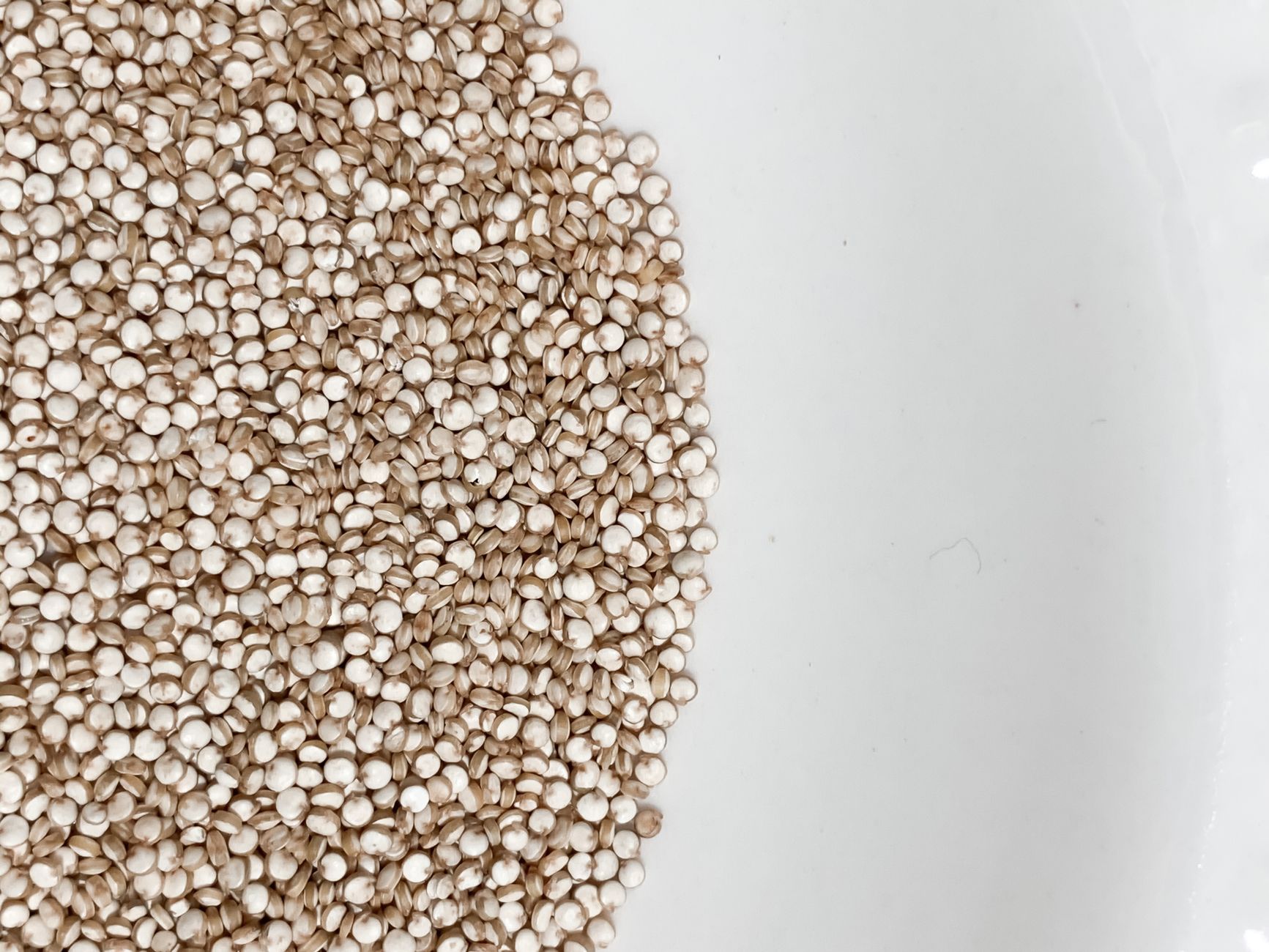

Blending soaked, sprouted, or cooked quinoa seeds (Chenopodium quinoa) with water and then straining out the solids yields a plant-based drink that supplies all nine essential amino acids from a single seed, helping it stand out in the dairy-free aisle. A one-cup serving of unsweetened commercial it runs close to 70 calories, with about 2 to 3 grams of protein, 1 to 2 grams of fat, and roughly 12 grams of carbohydrate. Because quinoa is a pseudo-cereal seed rather than a true grain, the resulting beverage stays naturally gluten-free, lactose-free, and cholesterol-free.
Below is a full walkthrough of how it’s made, the nutrition breakdown, the proven benefits, the real side effects, how it stacks up against almond, soy, oat, and cow’s milk, and whether the homemade route is worth your effort.
Quinoa Milk and How It’s Made from Seed to Glass
Start with whole quinoa seeds and rinse them under cold water for 30 to 60 seconds to strip away the bitter saponin coating. Soak, sprout, or cook the seeds until tender, then blend them with fresh water at roughly a 1:4 seed-to-water ratio. Strain the mixture through a nut-milk bag or fine mesh, and the cloudy liquid that passes through is your finished milk, with the fiber and most solids left behind in the bag.
Sprouting Changes the Flavor and Digestibility
Soaking quinoa for 8 to 12 hours, then draining and letting it germinate for another 12 to 24 hours, breaks down some of the phytates and saponins that give plain quinoa its bitter edge. Sprouted quinoa blended into milk tastes nuttier and slightly sweeter, and many people find it easier on the stomach. Commercial brands usually skip sprouting for shelf stability, which is why store-bought versions taste mildly earthy without the grassy note you get from a fully sprouted homemade batch.
Commercial vs. Homemade Ingredients
A typical store-bought carton lists water, quinoa, a small amount of sunflower or canola oil, sea salt, and fortifiers like calcium carbonate, vitamin D2, and vitamin B12. A homemade version can be as simple as rinsed quinoa, water, and a pinch of salt, with optional dates or vanilla for sweetness. Skipping the oil and fortifiers at home means your batch will be thinner, lower in calories, and missing the calcium and D that a fortified carton provides.
Quinoa Milk Nutrition Facts and Calorie Profile
For an unsweetened commercial quinoa milk, a one-cup serving delivers about 70 calories, 2 to 3 grams of protein, 1 to 2 grams of fat, 12 grams of carbohydrate, and 0 grams of sugar unless the brand adds sweetener. Saturated fat stays below 1 gram, and there is no cholesterol or lactose. Sodium runs around 90 to 120 milligrams, and the carbohydrate split is mostly starch and fiber with very little natural sugar, which is why unsweetened versions taste faintly savory rather than sweet.
Why the Amino Acid Profile Matters
Quinoa seeds contain all nine essential amino acids, which most other plant milks do not. Almond milk is almost pure fat and water with negligible protein. Oat milk has more protein than almond but its amino acid balance is incomplete. Soy milk comes closest to quinoa on protein quality, with a similarly complete profile. The catch is quantity: even though quinoa milk’s protein quality is high, the concentration per cup is closer to 2 to 3 grams, far below the 7 to 8 grams in cow’s milk or fortified soy.
Fortification Closes the Gap with Dairy
Plain quinoa milk on its own provides only trace amounts of calcium, vitamin D, and vitamin B12, so a fortified version is the only practical way to match what dairy delivers. Most US brands fortify to roughly 350 milligrams of calcium, 2.5 micrograms of vitamin D, and 1 to 2 micrograms of B12 per cup, which lands in the same range as a glass of cow’s milk. Check the label: unfortified organic versions exist, and they are nutritionally thin compared to either dairy or fortified soy.
Thin nutrition raises the real question of what drinking it actually does for you.
| Nutrient (per 1 cup, unsweetened) | Average Range |
|---|---|
| Calories | 60–80 |
| Protein | 2–3 g |
| Total fat | 1–2 g |
| Saturated fat | less than 1 g |
| Carbohydrate | 10–13 g |
| Fiber | 0.5–1 g |
| Calcium (fortified) | 300–350 mg |
| Vitamin D (fortified) | 2–3 mcg |
| Vitamin B12 (fortified) | 1–2 mcg |
The Real Health Benefits of Drinking Quinoa Milk
The standout reason to try this beverage is that you get a complete-protein, dairy-free milk that is also nut-free, soy-free, and gluten-free, a combination that is genuinely hard to find. Almond milk fails the nut-free test, soy milk fails the soy-free test, and oat milk often contains enough residual gluten to bother people with celiac disease. Quinoa milk sidesteps all three.
Heart-Friendly Macronutrient Mix
With under 1 gram of saturated fat per cup, no cholesterol, and roughly 20 milligrams of magnesium plus 150 milligrams of potassium, the profile supports cardiovascular goals better than whole cow’s milk. Quinoa also contains small amounts of ferulic acid and quercetin, two polyphenols that show up in lab studies as anti-inflammatory, though the doses from one cup of milk are modest. A reasonable framing: this drink won’t fix your cholesterol, but swapping it for whole dairy trims saturated fat without costing you protein quality.
Gentler on Sensitive Stomachs
For people who bloat after dairy, the absence of lactose and A1 casein is the obvious win. For people who bloat after soy or almond, the simpler ingredient list in quinoa milk (no gums in some brands, no high-FODMAP legumes, no tree-nut proteins) often goes down easier. Sprouted versions may be even gentler because the sprouting process lowers the FODMAP load slightly compared to cooked whole quinoa.
Practical tip: if a plant milk gives you gas, try a sprouted or “no gums” version for two weeks. The fiber and emulsifier load matters more than the brand name on the front.
Quinoa Milk Side Effects, Allergens, and Saponin Concerns
The honest downside list starts with saponins. Quinoa seeds are coated in these natural soap-like compounds, and they taste bitter and can irritate the gut lining in large amounts. Rinsing raw quinoa under running water for 30 to 60 seconds removes most of them, and commercial brands rinse their quinoa before processing, so saponin levels in store-bought milk are very low. Homemade versions made from unrinsed or lightly rinsed quinoa may carry more, and that’s where bitter flavor, nausea, or loose stools tend to show up.
Allergy and Cross-Reactivity Notes
Quinoa allergy is rare but documented, especially in people already sensitive to other seeds like sesame, mustard, or sunflower. Cross-reactivity with latex has also been reported in a small number of case studies. If you carry an epinephrine injector for any seed or latex allergy, treat it the same way you would any new seed-based product: try a teaspoon first, not a full glass. Children under one year should not drink it as a dairy replacement; it lacks the fat, protein density, and B12 to support infant growth on its own.
Nutrient Gaps in Unfortified Brands
Pouring an unfortified carton into a toddler’s sippy cup as a 1:1 swap for whole milk is one of the costliest mistakes a parent can make with plant milks. The protein is one-third what dairy provides, the fat is a fraction, and calcium plus D are essentially absent without fortification. Guidance from the American Academy of Pediatrics has flagged this exact issue with most non-soy plant milks, reinforcing the need for fortified options in young children. Fortified it is safer than unfortified, but for a child under five, a pediatrician or registered dietitian should sign off on the swap before you commit.
That caution sits against a wider choice of alternatives parents might weigh instead.
Quinoa Milk Compared with Cow, Almond, Soy, and Oat Milk
Against the four milks you actually see in a US grocery cooler, it is the most allergen-friendly and the lowest in protein. Cow’s milk wins on protein per cup and on naturally occurring B12 and calcium. Soy milk wins on protein per cup among plant options and on amino acid completeness. Almond milk wins on calorie lightness and price. Oat milk wins on creaminess in coffee. it does not win any single category, but it is the only one of the five that combines complete protein with a nut-free, soy-free, and gluten-free label.
Side-by-Side Nutrition Snapshot
| Per 1 cup, unsweetened | Calories | Protein | Fat | Calcium* | Vit D* | B12* |
|---|---|---|---|---|---|---|
| Cow’s milk (2%) | 120 | 8 g | 5 g | 285 mg | 2.5 mcg | 1.1 mcg |
| it | 70 | 2–3 g | 1.5 g | 320 mg | 2.5 mcg | 1.5 mcg |
| Soy milk | 80 | 7 g | 4 g | 300 mg | 2.5 mcg | 2.4 mcg |
| Almond milk | 30 | 1 g | 2.5 g | 450 mg | 2.5 mcg | 2.0 mcg |
| Oat milk | 120 | 3 g | 5 g | 350 mg | 2.5 mcg | 1.0 mcg |
*Values reflect fortified versions where applicable. Unfortified plant milks provide little to none of these micronutrients.
Allergen, Diet, and Price Fit
For a household juggling nut allergies and a vegan lifestyle, it costs about $5 to $7 per quart, which is roughly twice the price of almond or soy. At that price, you pay a premium of about 25 to 35 cents per cup over oat, mostly because quinoa grain itself costs more per pound than oats or soybeans. If you only need a splash in coffee, that premium is hard to justify. If you need a true dairy replacement that checks every allergen box, it can be worth it.
Best Culinary Uses
it works well in smoothies, chia puddings, and warm cereals where the slightly nutty flavor complements the dish. In coffee, it can curdle if the cup is very hot, similar to almond milk, so pour it in once the coffee is drinkable rather than boiling. For baking, it substitutes one-for-one for dairy in muffins and quick breads, though yeasted breads rise better with a higher-protein milk like soy or dairy.
Buying and Making Quinoa Milk at Home
Sprouted homemade it wins on freshness and ingredient control, but the store-bought route wins on calcium, D, and B12 fortification. A practical path: keep a fortified carton on hand for daily calcium and B12, and make small batches at home when you want clean-ingredient milk for smoothies or recipes that don’t need fortification.
Tested Homemade Recipe
- Rinse one cup of raw quinoa under cold running water for 60 seconds, swishing with your hand to dislodge the saponins.
- Soak for 8 hours in three cups of filtered water, then drain and rinse again.
- Sprout for 12 to 24 hours in a covered bowl, rinsing twice, until tiny white tails appear.
- Blend the sprouts with four cups of water, two pitted dates, and a teaspoon of vanilla until completely smooth, about 60 seconds on high.
- Strain through a nut-milk bag, squeezing out every drop, then transfer to a sealed glass jar.
The finished batch keeps three to four days refrigerated. Give the jar a hard shake before each pour because the solids settle quickly, and never leave it at room temperature for more than two hours.
Where to Find Commercial Brands
In the US, it shows up most often in natural food stores like Whole Foods, Sprouts, and co-ops, plus online retailers. Expect to see it in shelf-stable cartons near the other plant milks, though some smaller producers only sell refrigerated versions. A few mainstream grocery chains now stock it in the natural foods aisle, but availability is still spotty compared to almond, soy, or oat. A typical quart runs $5 to $7, and shelf-stable cartons last unopened for about 9 to 12 months, which makes stockpiling online a practical workaround for the scarcity issue.
Diet-Specific Verdicts
For keto, unsweetened it at 70 calories and 12 grams of carbohydrate per cup is too high in carbs to drink freely, though a splash in coffee fits most macro budgets. For low-FODMAP, sprouted versions in small servings (under half a cup) are often tolerated, while cooked-quinoa commercial versions can trigger symptoms in sensitive people. For thyroid concerns, quinoa is not a goitrogenic food like soy or cruciferous vegetables, so it does not interfere with thyroid medication the way soy can. For babies under one, the AAP recommends breast milk or formula as the primary drink; plant milks, including quinoa, are not nutritionally adequate substitutes at that age.
Quick note: if a recipe calls for it and you don’t have it, plain oat or soy works as a one-to-one swap in most baked goods. For smoothies, almond milk gets you the closest flavor profile and the lowest calorie load.
The Bottom Line
it earns its place in a crowded plant-milk aisle by being the rare option that is simultaneously nut-free, soy-free, gluten-free, and complete in amino acids, even if its protein concentration is modest. Treat it as a specialty tool rather than a daily staple: pour a fortified carton when allergen safety matters most, and make small homemade batches when ingredient purity matters most. Anyone managing a seed allergy, a child’s diet, or a tight allergen list will find it useful; anyone chasing the cheapest or highest-protein cup will be happier with soy.
FAQ
What is quinoa milk made from?
Producers combine soaked, sprouted, or cooked quinoa seeds with water and then strain the mixture to remove the pulp. Commercial versions add a small amount of oil, salt, and fortifiers like calcium and vitamin D.
Is quinoa milk good for you?
A fortified version delivers complete protein, calcium, vitamin D, and B12 with very little saturated fat and no lactose. It is a strong option for people who need a dairy-free, nut-free, and soy-free milk, though protein content is lower than dairy or soy.
Does quinoa milk contain lactose?
No. it is naturally lactose-free because it is made from a seed, not from animal milk. It is also free of casein and whey, the two proteins that drive most dairy allergies.
What are the side effects of drinking quinoa milk?
Possible side effects include bloating or loose stools from fiber or FODMAPs, bitter taste or nausea from residual saponins in poorly rinsed homemade batches, and rare allergic reactions in people sensitive to other seeds. Choose a rinsed or sprouted version and start with a small serving if you have a sensitive gut.
How does quinoa milk compare to cow’s milk?
Cow’s milk has about three times the protein and naturally more B12, but it has far less saturated fat, no cholesterol, and no lactose. A fortified it can match the calcium and vitamin D of dairy, while an unfortified version cannot.
Can you make quinoa milk at home?
Yes. Blend one cup of rinsed and sprouted quinoa with four cups of water, strain through a nut-milk bag, and store in the fridge for three to four days. Adding dates and vanilla improves the flavor, though homemade versions will lack the calcium and D fortification of a commercial carton.